n8n Form Trigger + AI Agent: Build a Smart Intake Form
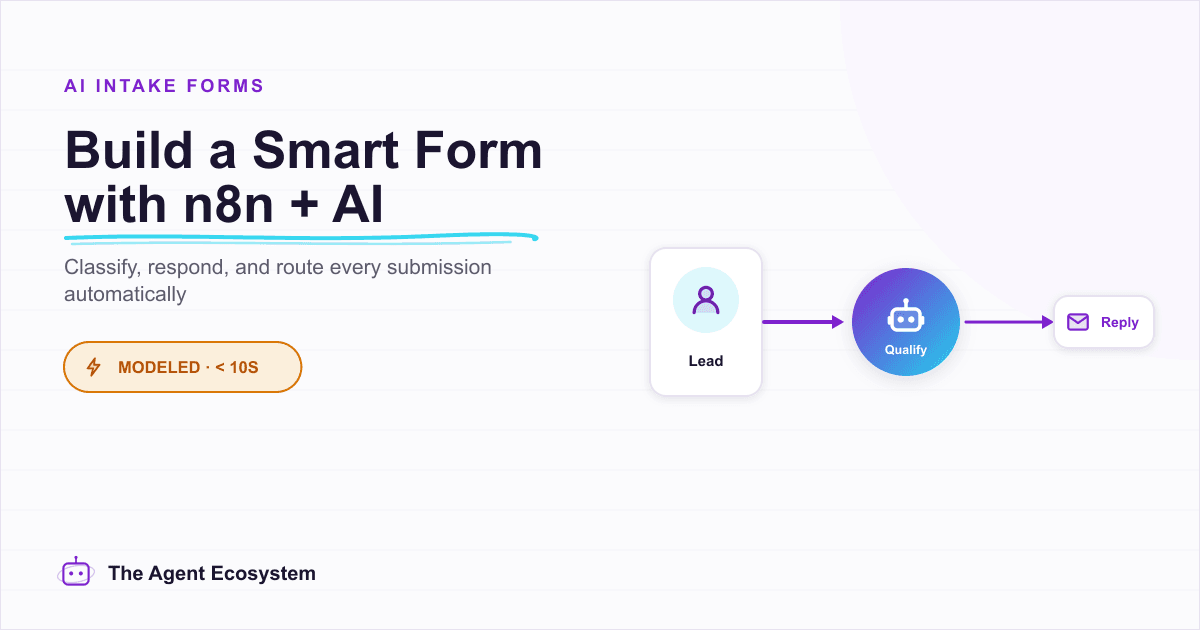
A contact form that sits in an inbox helps nobody. Wire n8n's Form Trigger to an AI agent and every submission gets classified, answered, and routed the moment it arrives.
Tag
A contact form that sits in an inbox helps nobody. Wire n8n's Form Trigger to an AI agent and every submission gets classified, answered, and routed the moment it arrives.
Should an n8n workflow fire the instant an event happens (a webhook, push) or check on a timer (polling, pull)? The wrong pick means missed events or wasted executions. Here is the decision framework plus how to wire each trigger.
The built-in AI nodes cover the common cases. But batching rows, reshaping API responses, and building scoring functions hit a wall fast. The Code node fills the gap with JavaScript wherever the visual nodes cannot reach.
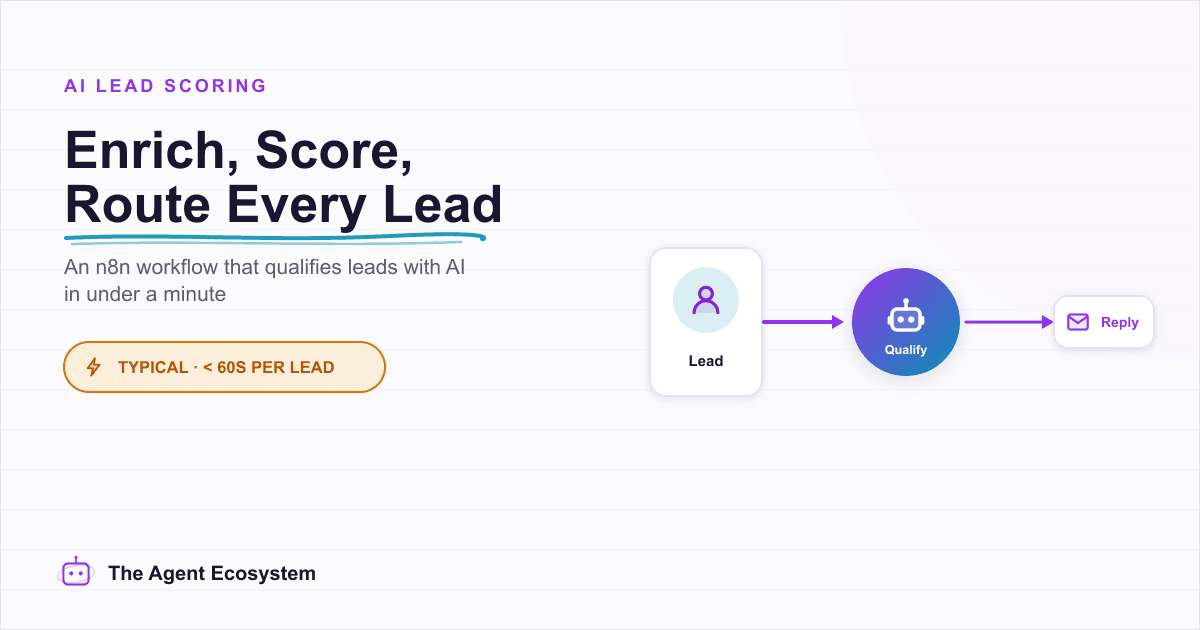
A new lead arrives with nothing but a name and email. An n8n workflow pulls company data, scores the lead with an AI agent against your ICP, and routes it to the right rep or drip sequence before anyone opens a browser tab.
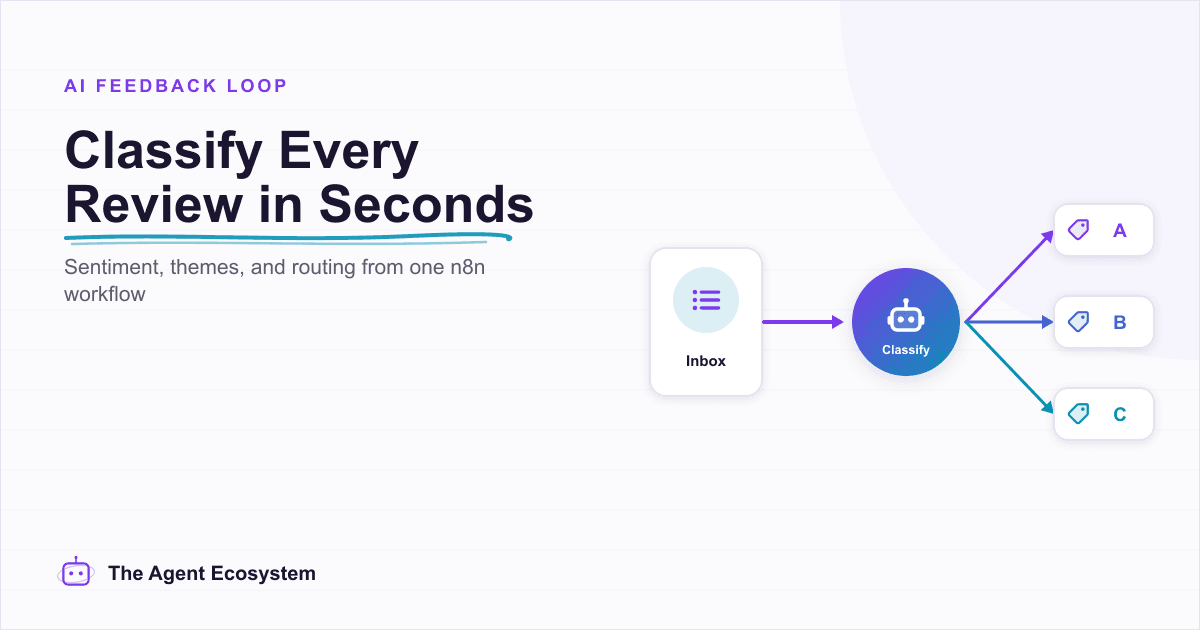
Customer feedback arrives from five places and nobody reads most of it. An n8n workflow with an AI agent classifies every piece by sentiment and theme, routes urgent complaints immediately, and builds a weekly digest your product team can act on.
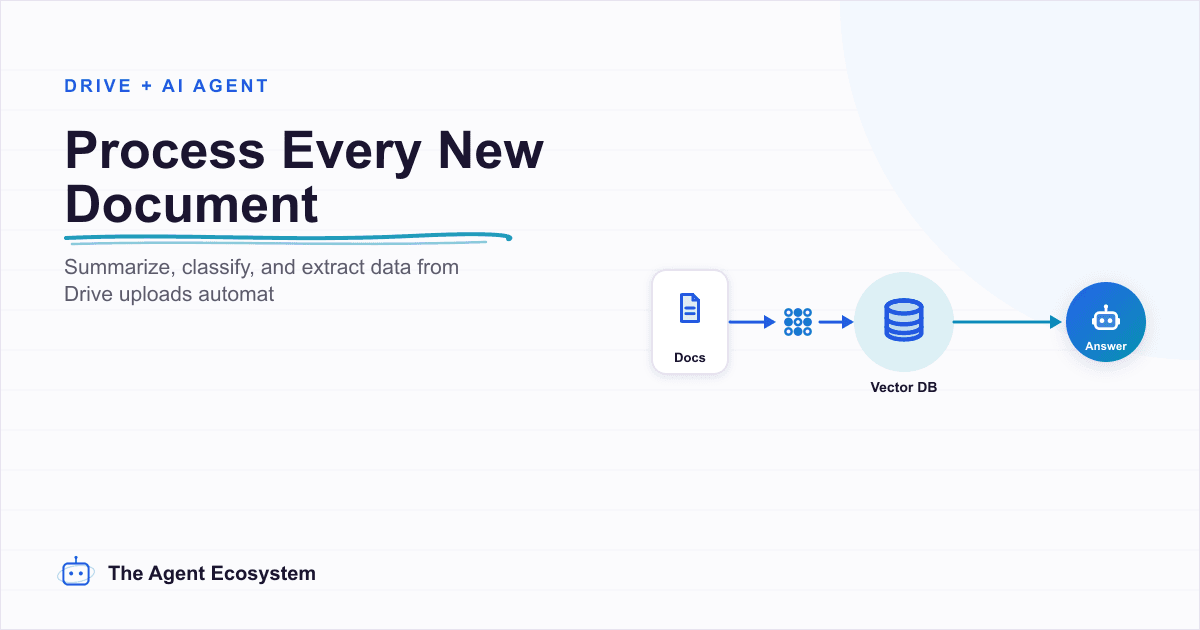
A contract lands in a shared Drive folder and sits unread for three days. An n8n workflow detects the file, extracts the text, runs it through an AI agent, and posts a structured summary with key dates and parties before anyone opens it.
Most n8n frustration is a data-shape misunderstanding, not a broken node. Every connection carries an array of items, each with a json key. Once you can picture that shape, $json, $('Node Name'), and the 'Referenced node has no data' error all make sense.
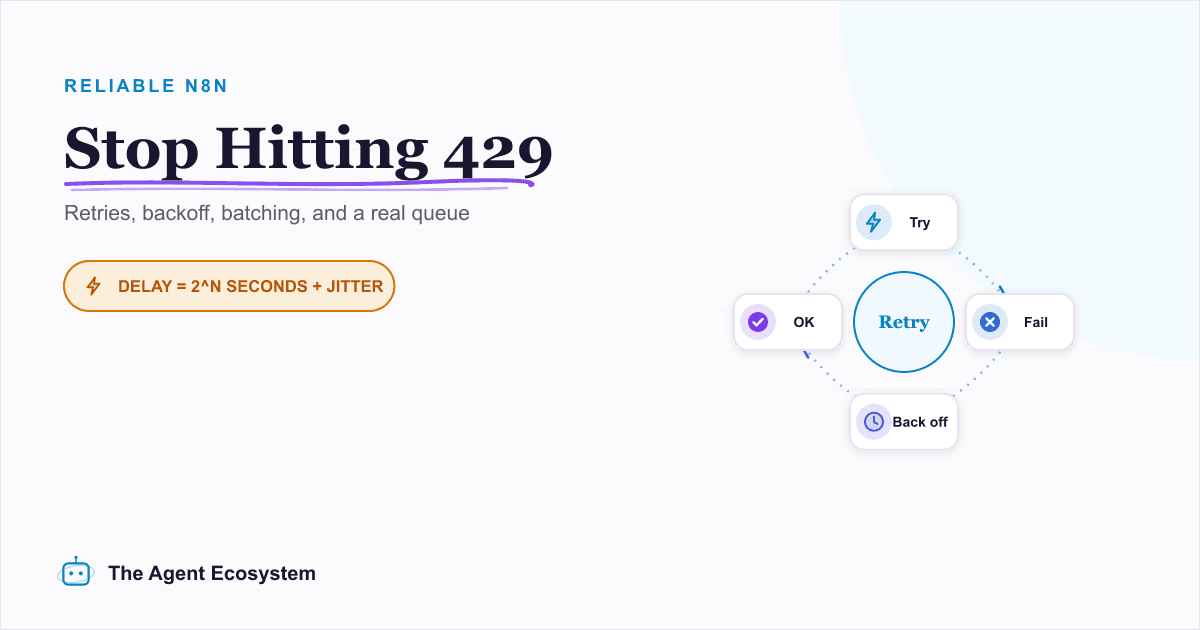
A Loop Over Items node fanning rows into an LLM keeps hitting 429 Too Many Requests, and every guide fixes it differently. Here is the full ladder: node retry, batching, Wait, hand-rolled backoff, and a real queue, with the built-in caps most posts bury.
Your scheduled n8n workflow ran an hour off, stacked runs on top of each other, or silently never fired. All three are fixable once you know where n8n looks for cron, timezone, and concurrency. Here is the honest, docs-verified recipe.
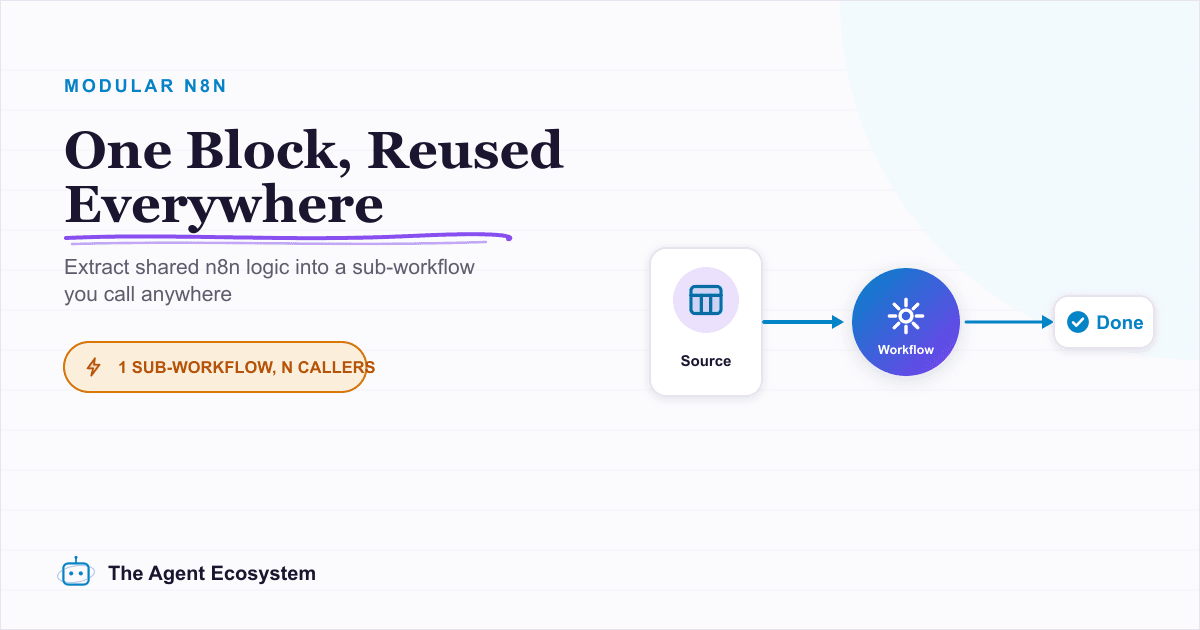
Your n8n canvas hit 40 nodes and you keep copy-pasting the same blocks. A sub-workflow is the fix: a workflow that starts with the When Executed by Another Workflow trigger, so others call it like a function. Here is how data crosses the boundary and when to extract.
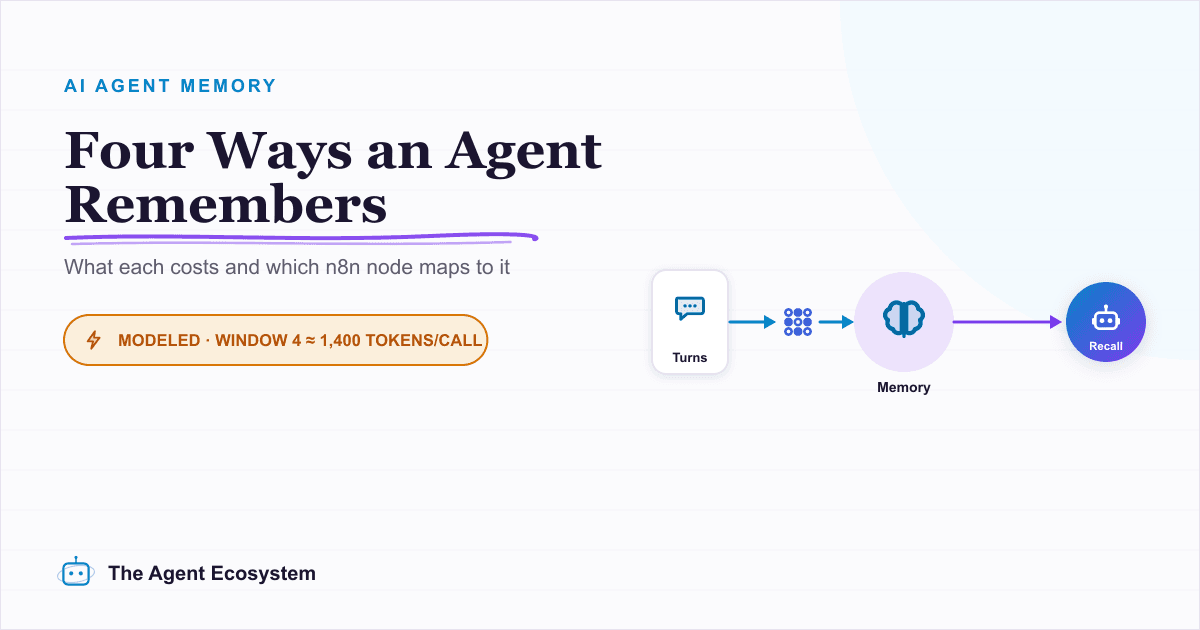
Agent memory is not something the model has; it is which past turns your framework re-sends each call. This compares the four ai agent memory types, full buffer, window, summary, and vector-backed, what each costs in tokens, and which map to real n8n nodes or patterns you wire.
A single LLM call costs a fraction of a cent, until you multiply by 10,000 runs a month. Here is the reproducible token math: chars over 4 for tokens, the input and output rates, and the per-run times volume multiply, with one support-reply run priced across five models.
An AI agent is a language model with hands. Without guardrails it can follow a malicious instruction, leak data, loop until your bill spikes, or return output the next node cannot parse. This guide maps the five ways an n8n agent breaks to the exact control that stops each.
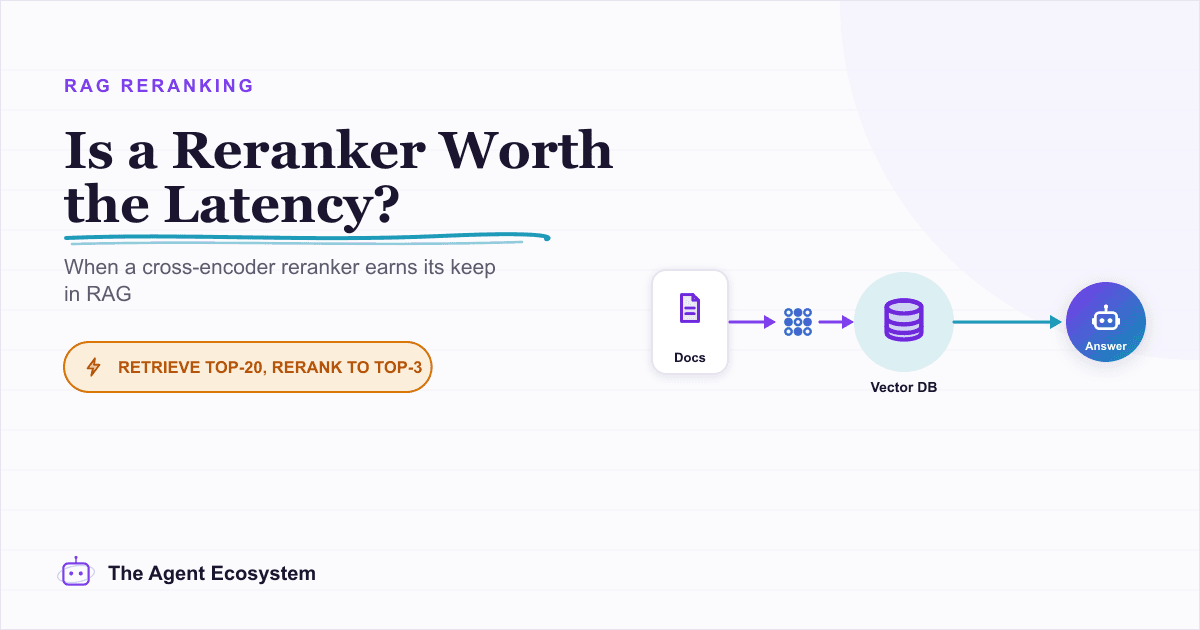
RAG reranking re-sorts the chunks you already retrieved so the best one rises to the top, but it cannot recover a chunk you never retrieved. Here is what a cross-encoder reranker actually does, when it is worth the latency and cost, the real 2026 options (Cohere, Voyage, BGE),
To reduce AI API costs you need levers that change the bill by a verifiable mechanism, not vague advice. This hub names all seven, right-size the model, prompt caching, the Batch API, routing and fallback, local versus API, token discipline, and RAG over long-context, with a
There is no single best AI agent framework, only the best fit for your task and whether you build in code or no-code. This honest 2026 chooser puts CrewAI, LangGraph, AutoGen, and n8n on one table, flags that AutoGen is in maintenance mode, and ends with a decision tree plus the
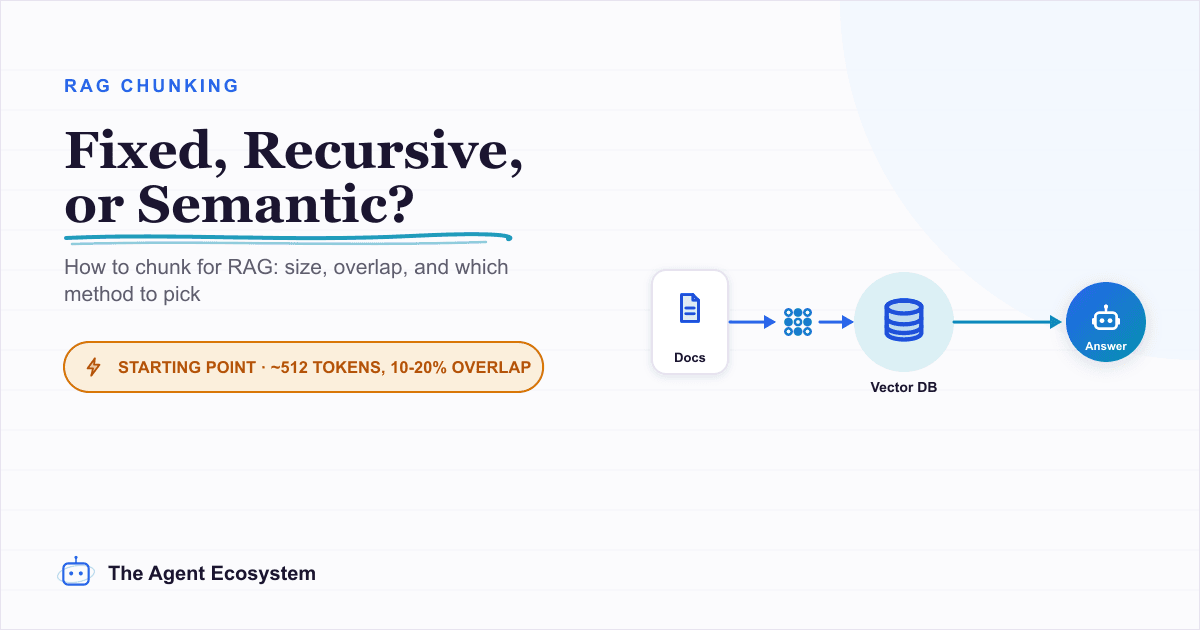
RAG chunking strategies decide whether the right passage is whole, findable, and small enough to rank before your model sees it. Here is how fixed, recursive, and semantic splitting differ, what chunk size and overlap to start with, why the public benchmarks disagree, and a
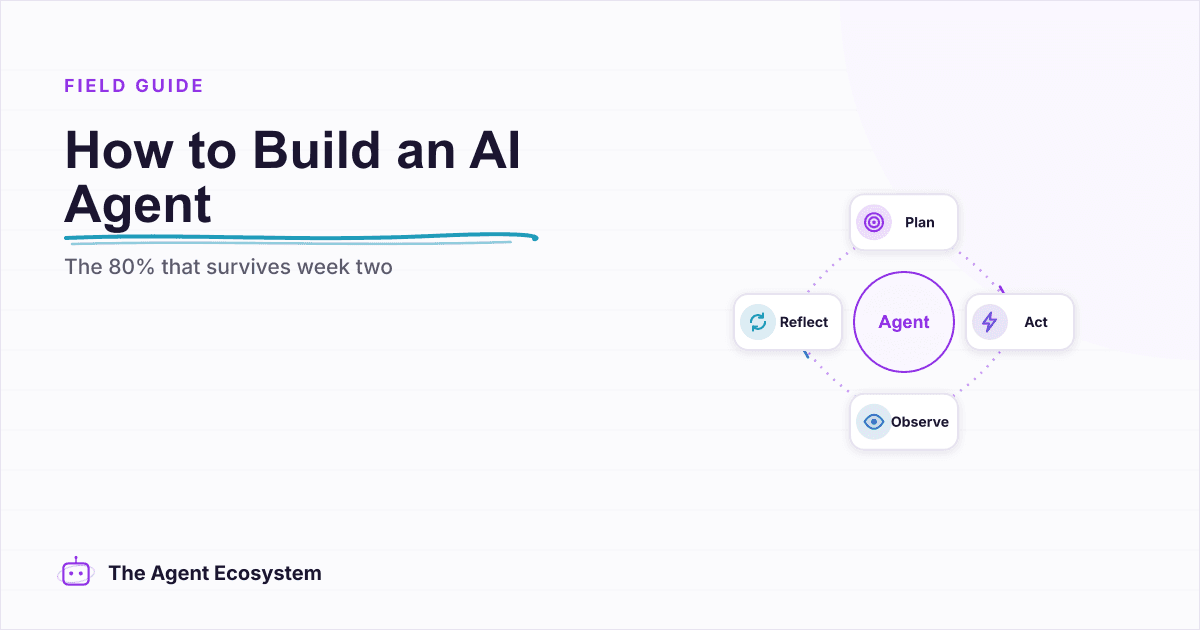
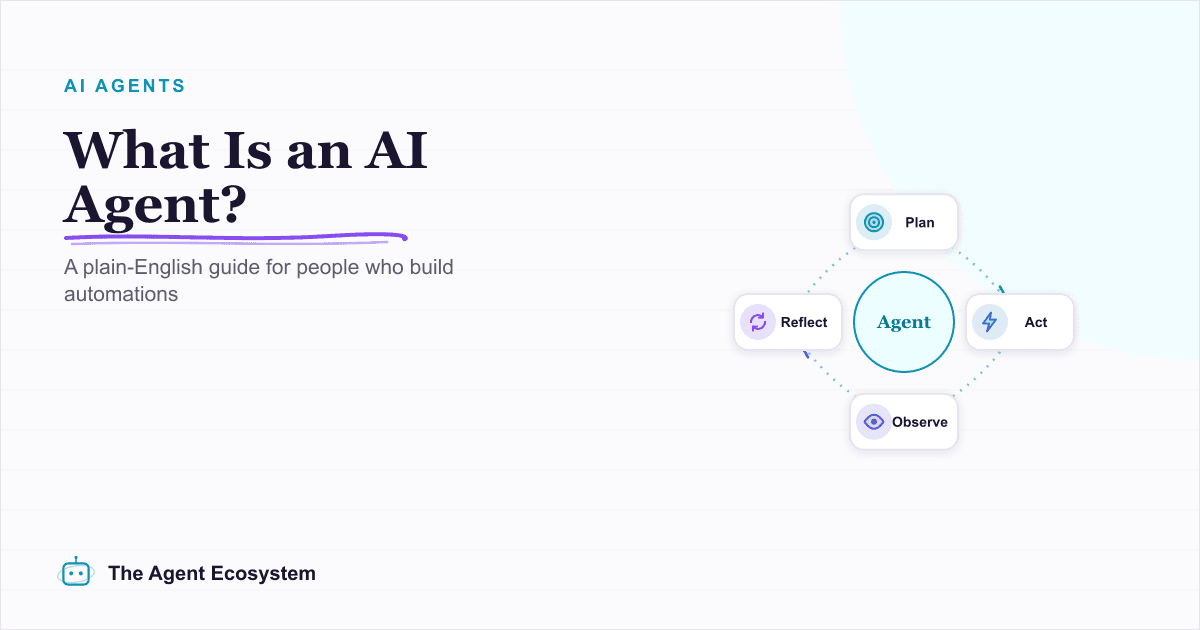
An AI agent is a language model running in a loop that decides its own next action, not a chatbot and not a chain. Here is how the perceive-decide-act-observe loop works, how an agent differs from a chatbot, chain, and workflow, and a checklist for when you actually need one.
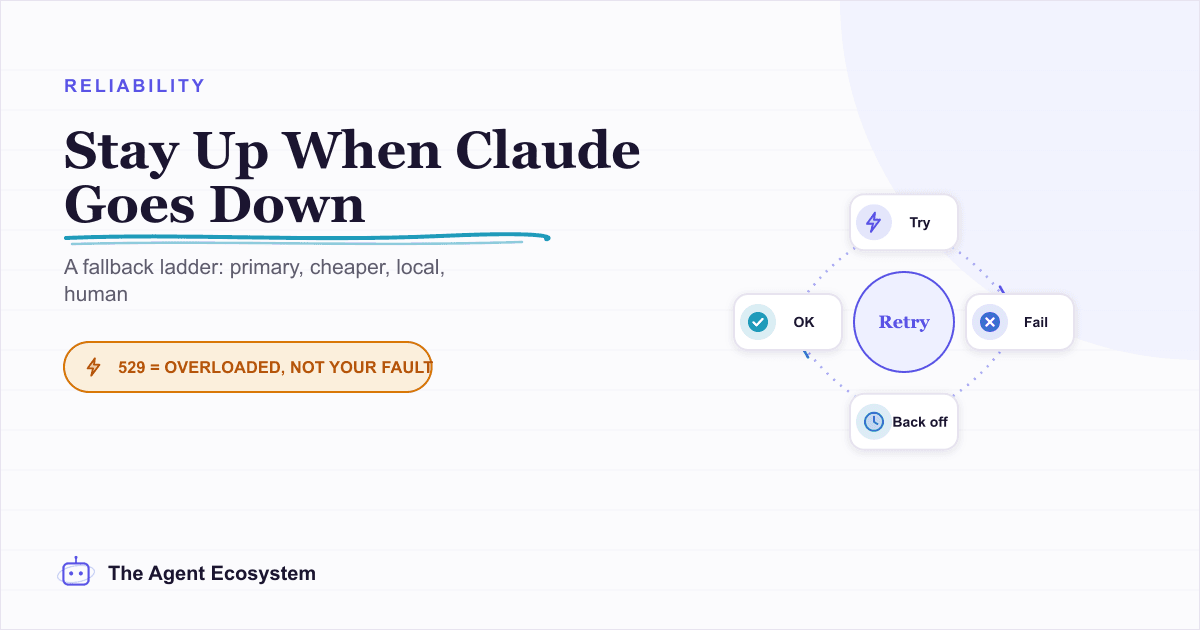
The model call is the least reliable step in your n8n workflow. Build a multi model fallback ladder (primary, cheaper, local, human) plus a budget guard so a 429, a 529 overload, or a blown budget degrades gracefully instead of killing the run.
An AI agent is non-deterministic, so 'it worked when I tried it' is not testing. Use n8n's built-in Evaluation feature, a golden test set, and the right scoring metrics to test n8n AI agents and prove a change made it better, not worse.
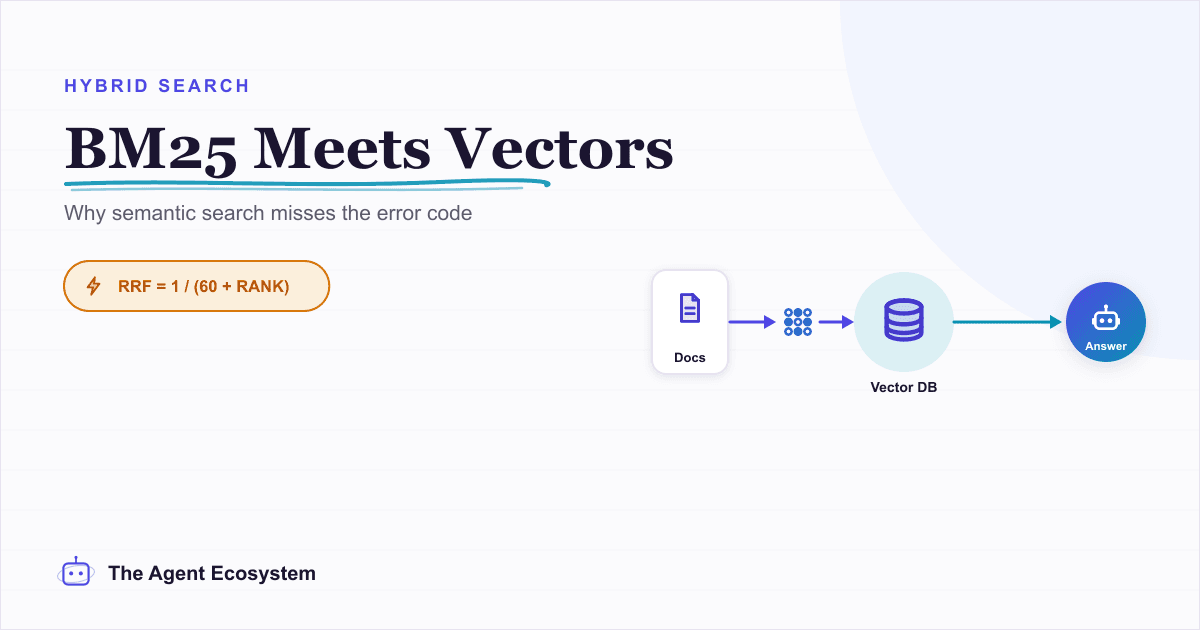
Vector search nails meaning but misses exact tokens like SKUs, error codes, and function names. Hybrid search adds a BM25 keyword leg and fuses both with Reciprocal Rank Fusion. Here is when each wins and how to wire it in n8n with Qdrant or pgvector.
Prompt caching stores the unchanging part of your Claude prompt once and bills every later read at a tenth of the price, same model, same output. Here is the token math, the break-even point, and how to wire it into an n8n agent loop.
Most "local RAG" setups still send your documents to a cloud embeddings API. This guide closes every leak: local embeddings via Ollama, a self-hosted Qdrant or PGVector store, and a local answering model, all in n8n.
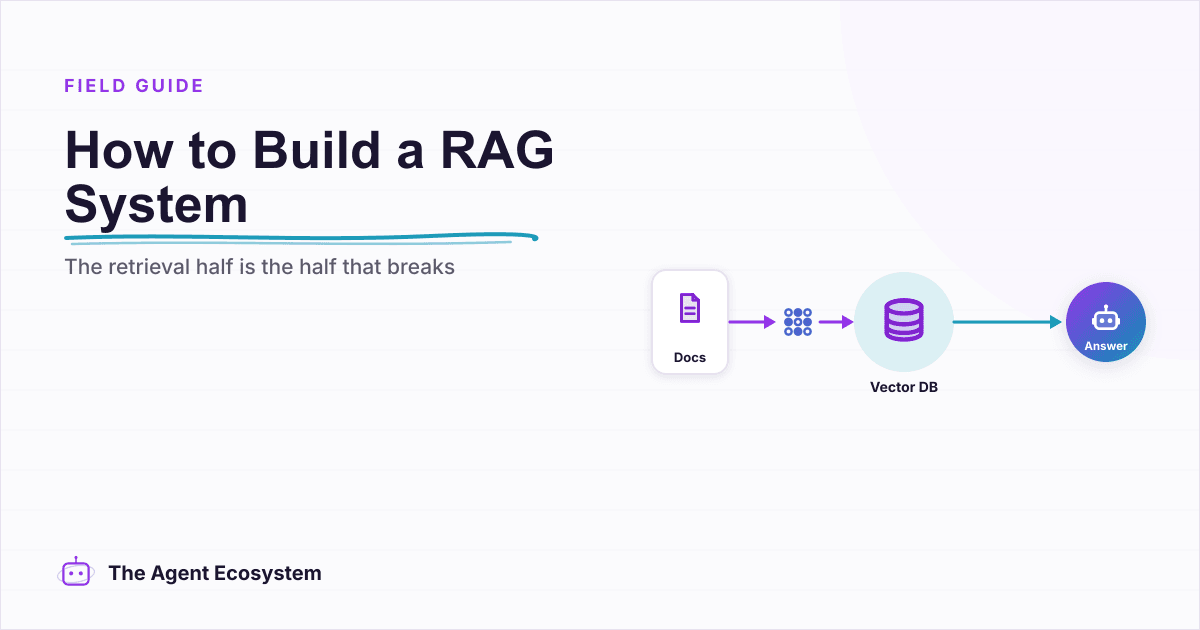
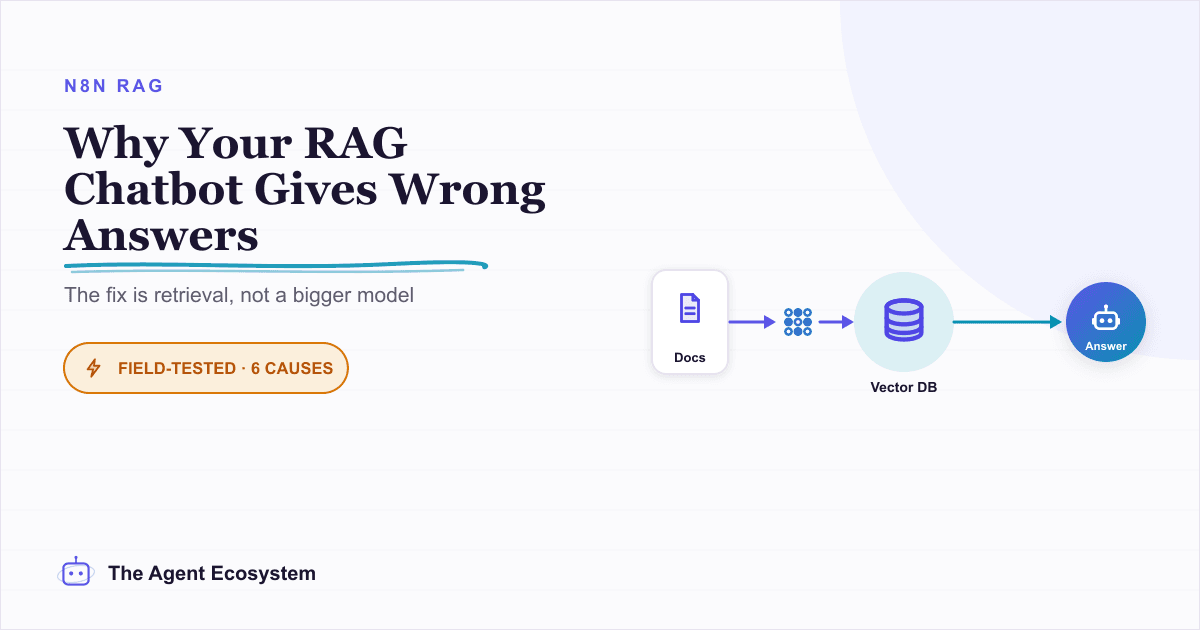
When your n8n RAG chatbot returns wrong answers, the fix is retrieval, not the model. This guide walks 6 fixable causes: chunking, overlap, top-k, embeddings, metadata filtering, and reranking.
Add a working AI chat widget to any website using n8n's Chat Trigger node and the @n8n/chat embed snippet. No React, no SaaS widget, about $7.25 per 1,000 conversations on Claude Haiku 4.5.
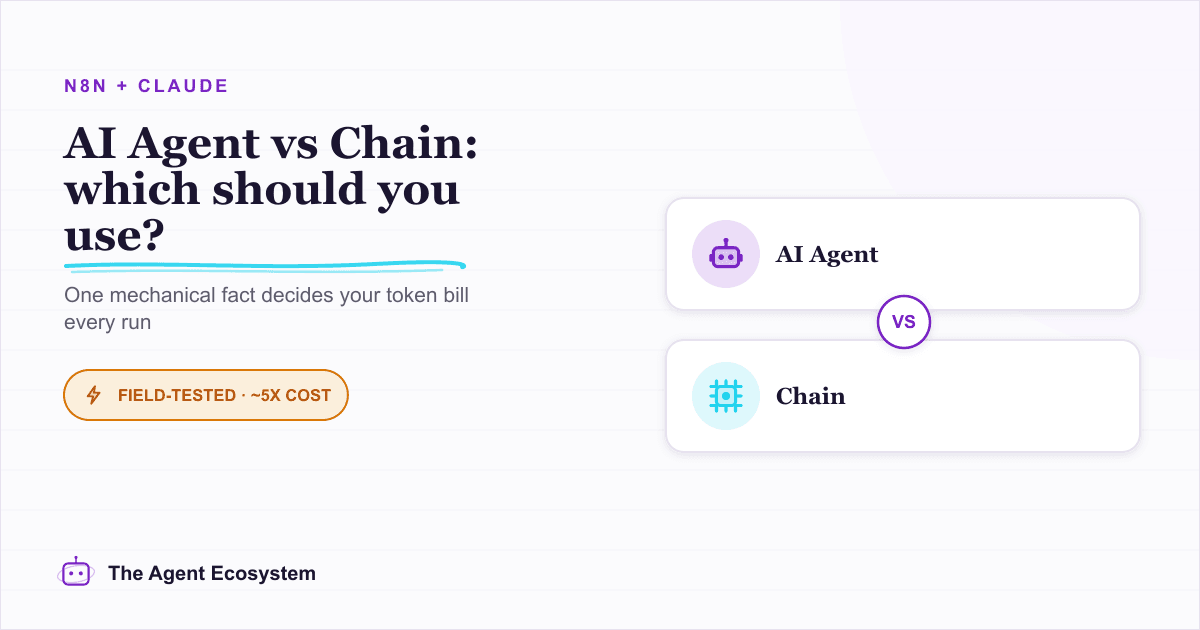
Every n8n builder reaches for the AI Agent by reflex, but a Basic LLM Chain costs roughly 5x less per 1,000 runs on Haiku 4.5. Learn the one mechanical rule that decides which node to use.
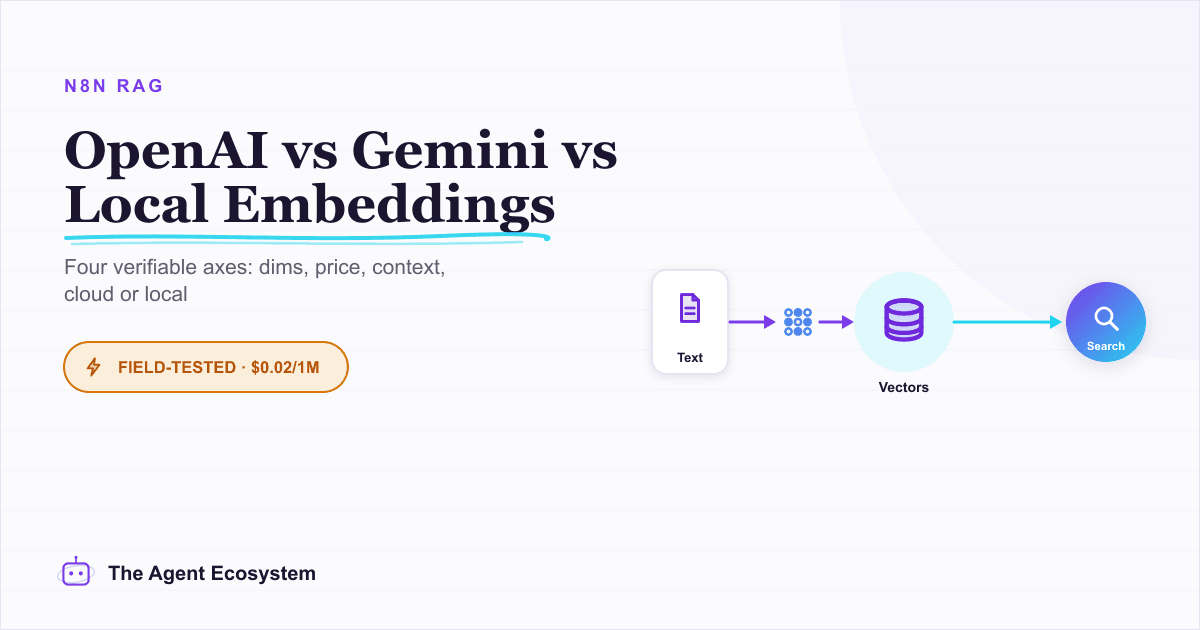
Choosing between n8n RAG embeddings comes down to four verifiable axes: dimensions, price per 1M tokens, max input context, and cloud vs local. This guide compares OpenAI, Gemini, and Ollama options so you pick the one you can live with.
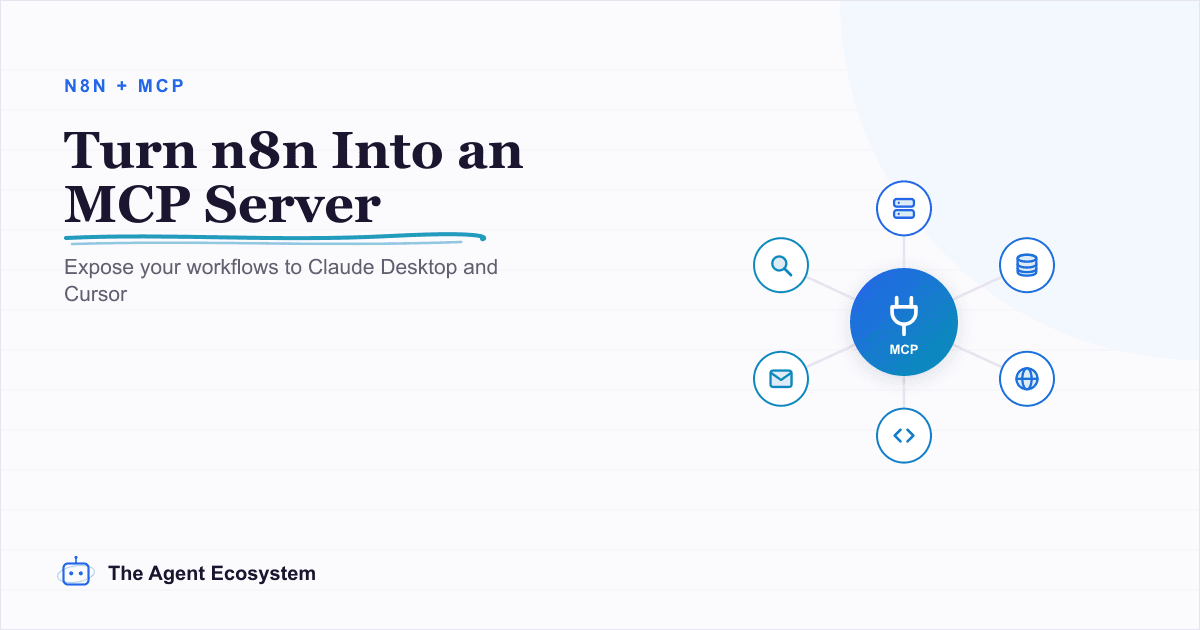
Stop leaving Claude Desktop to run n8n workflows by hand. The MCP Server Trigger node turns your existing workflows into callable tools so Claude and Cursor can invoke them directly.
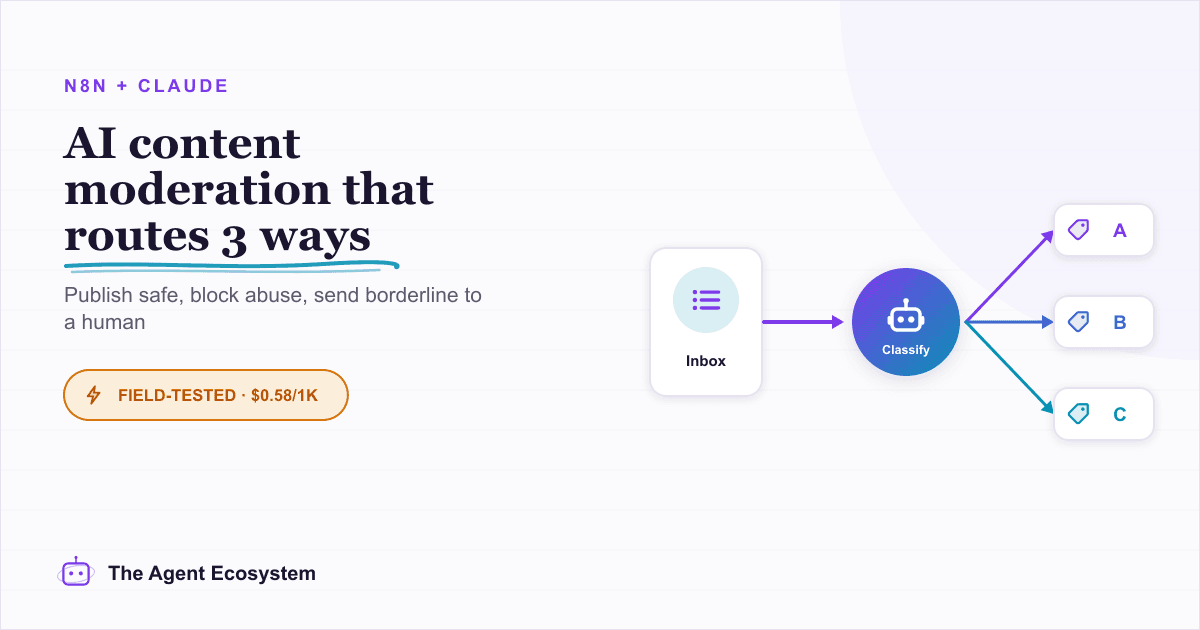
Build an n8n AI content moderation workflow using the Text Classifier node: safe content publishes instantly, unsafe gets blocked and logged, and uncertain submissions route to a human queue for about $0.58 per 1,000 items.
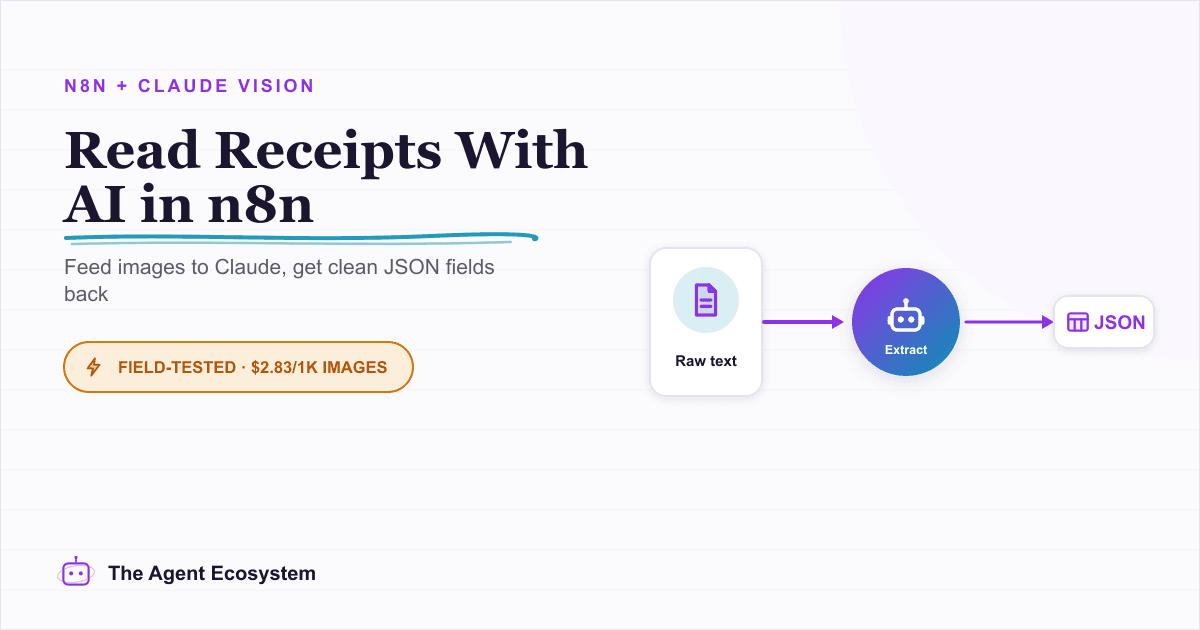
Set up n8n AI image analysis with Claude's Anthropic node to read receipts, screenshots, and forms. Get clean JSON fields back for $2.83 per 1,000 images on Haiku 4.5.
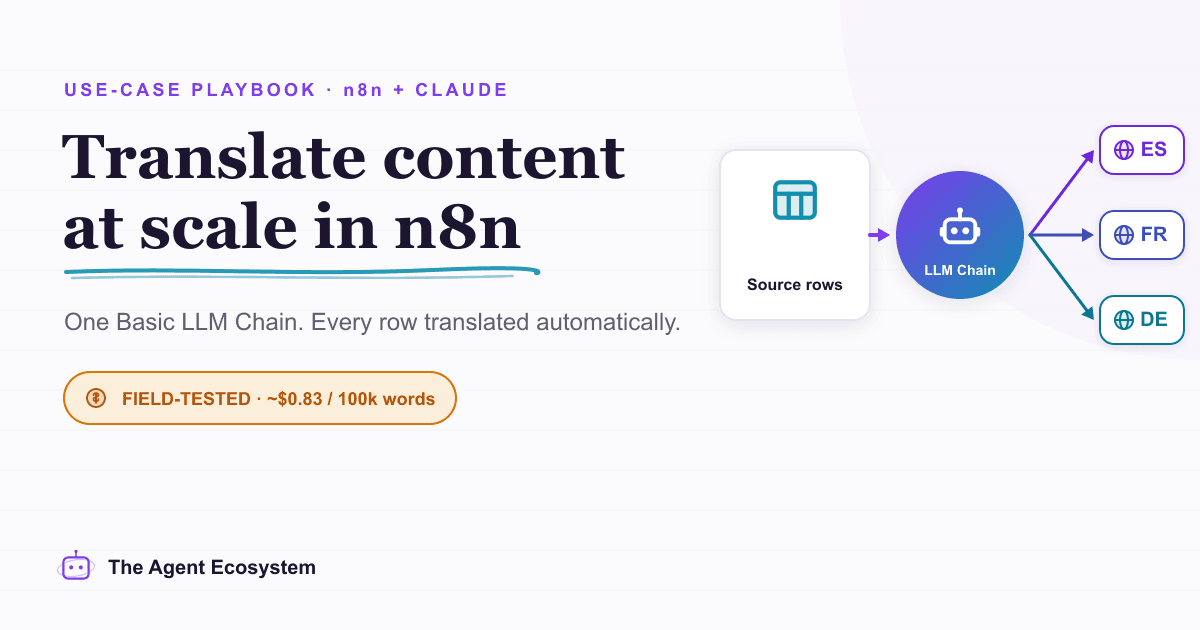
Build a repeatable n8n AI translation pipeline using the Basic LLM Chain node and Claude. Translate blog posts, support replies, and product copy in bulk for about $0.83 per 100,000 words.
Wire a spreadsheet straight into an AI node and it dies on row 47. n8n batch processing AI with Loop Over Items and a Wait node fixes that, for about $1.35 per 1,000 rows on Claude Haiku 4.5.
Skip the Express server. An n8n AI API endpoint takes three nodes: a Webhook node receives the HTTP request, an AI node runs Claude, and a Respond to Webhook node returns clean JSON to the caller.
Your n8n AI workflow passed every test, then a 429 killed a whole overnight batch with no alert. This guide wires 3 defenses: Retry On Fail, a fallback model, and a global Error Workflow.
The n8n Question and Answer Chain retrieves passages from your own vector store and answers from them, not from the model's memory. Index once for about $0.01, then answer 1,000 questions for about $2.50 on Claude Haiku 4.5.
The n8n Basic LLM Chain is the simplest AI building block: one prompt in, one model response out, no tools, no memory, no loops. Wire it up in minutes and keep your token bill predictable at about $1.40 per 1,000 calls on Claude Haiku 4.5.
Your n8n AI agent can send emails, issue refunds, and delete records. Gate the irreversible ones with Send and Wait for Response. Here is the exact build, the decision table, and what can go wrong.
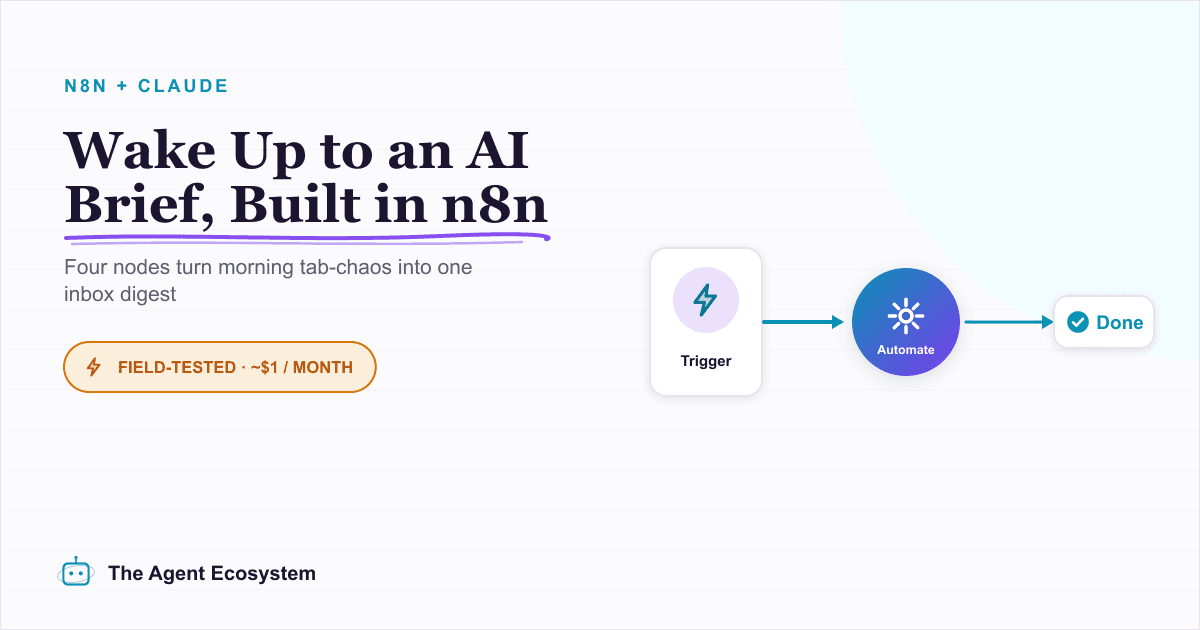
An n8n daily digest wires a Schedule Trigger, an RSS fetch, a Claude Summarization Chain, and a delivery node into one unattended workflow that drops a short brief in your inbox every morning for about $1/month.
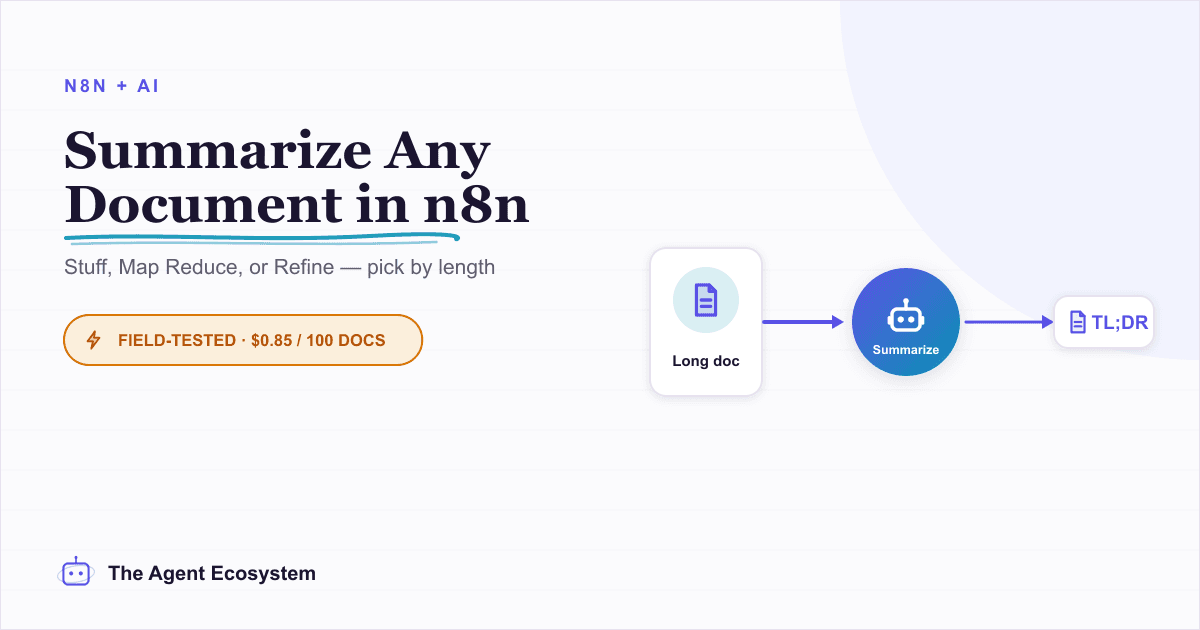
Use the n8n Summarization Chain node to automatically condense transcripts, PDFs, and long articles into one-paragraph summaries. Costs $0.85 per 100 documents on Claude Haiku 4.5, with three method options for any document length.
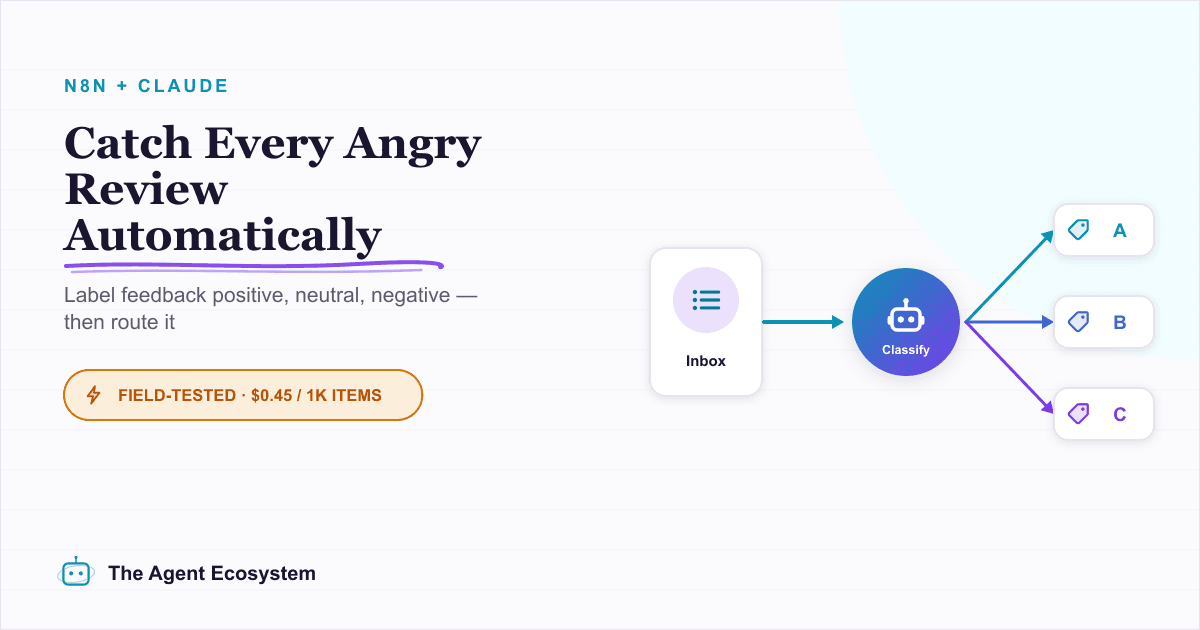
Set up n8n sentiment analysis to classify every review, survey reply, or support message automatically. Route negatives to an instant alert and positives to a testimonial ask, for about $0.45 per 1,000 items.
Finished the n8n AI tutorial and wondering what to actually build? These 8 n8n AI automation ideas come with the exact nodes, the honest Chain-vs-Agent call, and the right Claude model for each job.
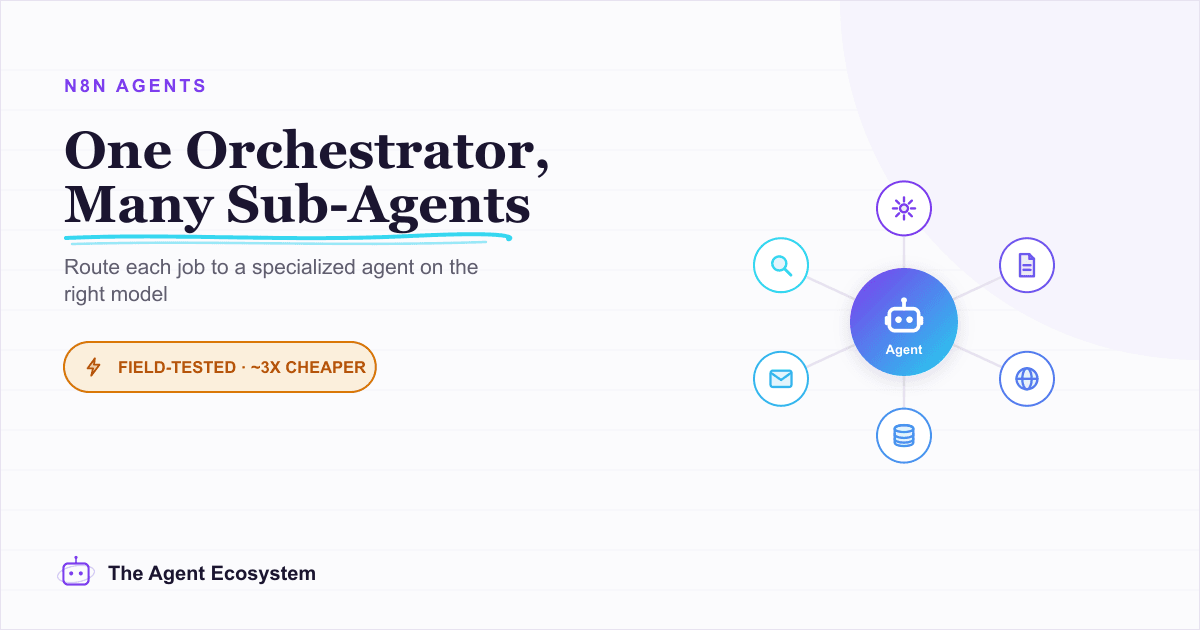
Your single n8n AI Agent has 10+ tools and keeps picking the wrong one. n8n multi-agent orchestration fixes this: one coordinator routes each job to a small, specialized sub-agent on the right model.
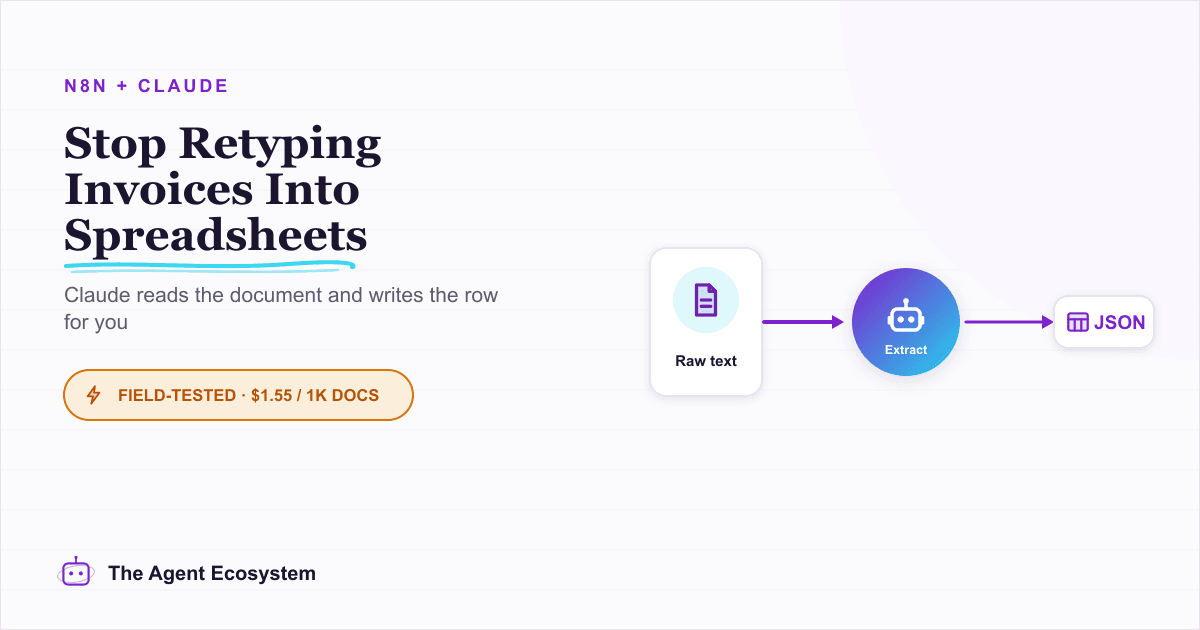
Build an n8n AI document extraction agent that reads invoices, receipts, and emails, then writes clean structured data to a sheet. Uses Claude and the Information Extractor node. Costs $1.55 per 1,000 documents on Haiku 4.5.
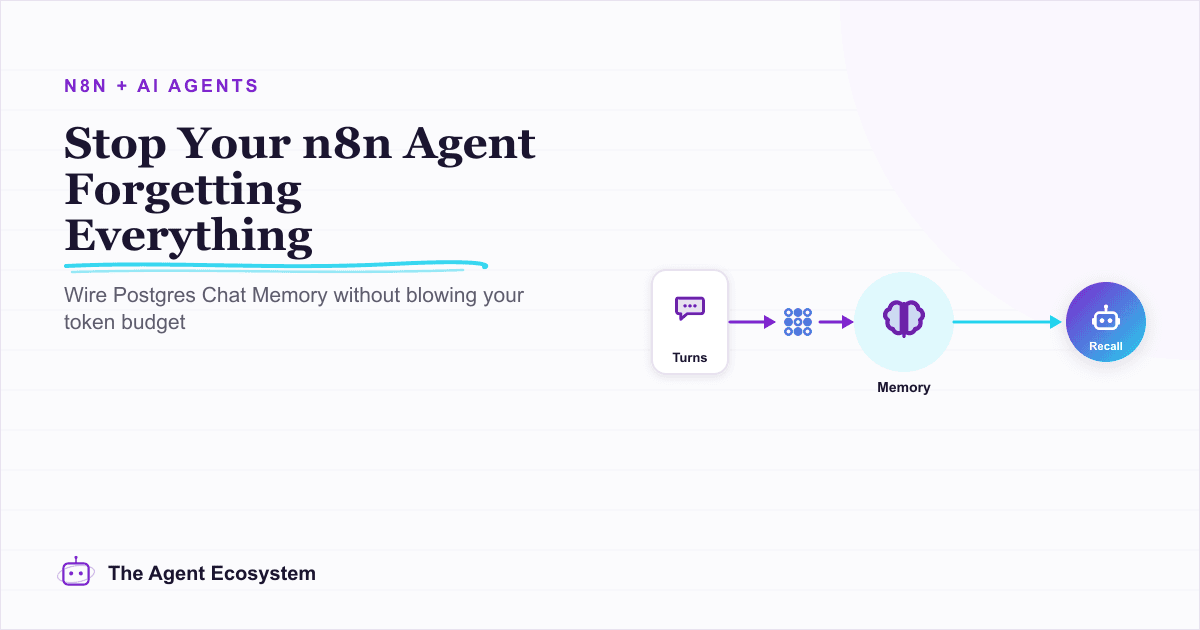
Your n8n agent forgets every message because the model is stateless. Add Postgres Chat Memory, set a per-user Session Key, and tune Context Window Length to keep conversations coherent without blowing your token budget.
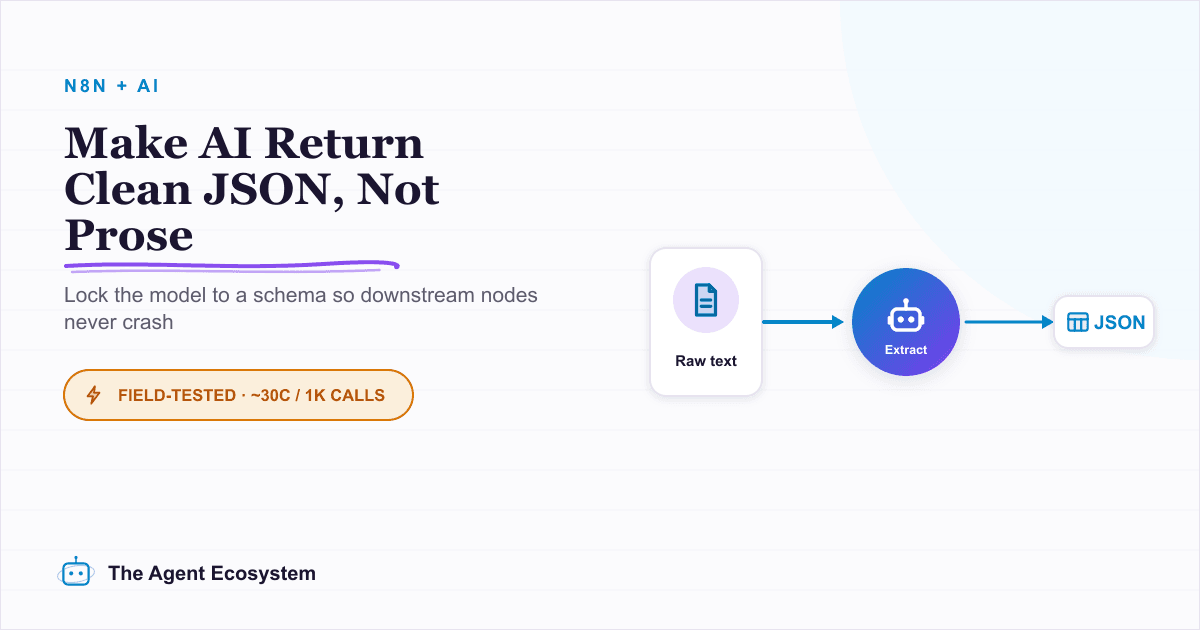
Your n8n AI step returns a paragraph when the next node needs clean fields. The Structured Output Parser sub-node fixes this by constraining the model to a JSON schema you define, for roughly 30 cents per 1,000 calls on Claude Haiku 4.5.
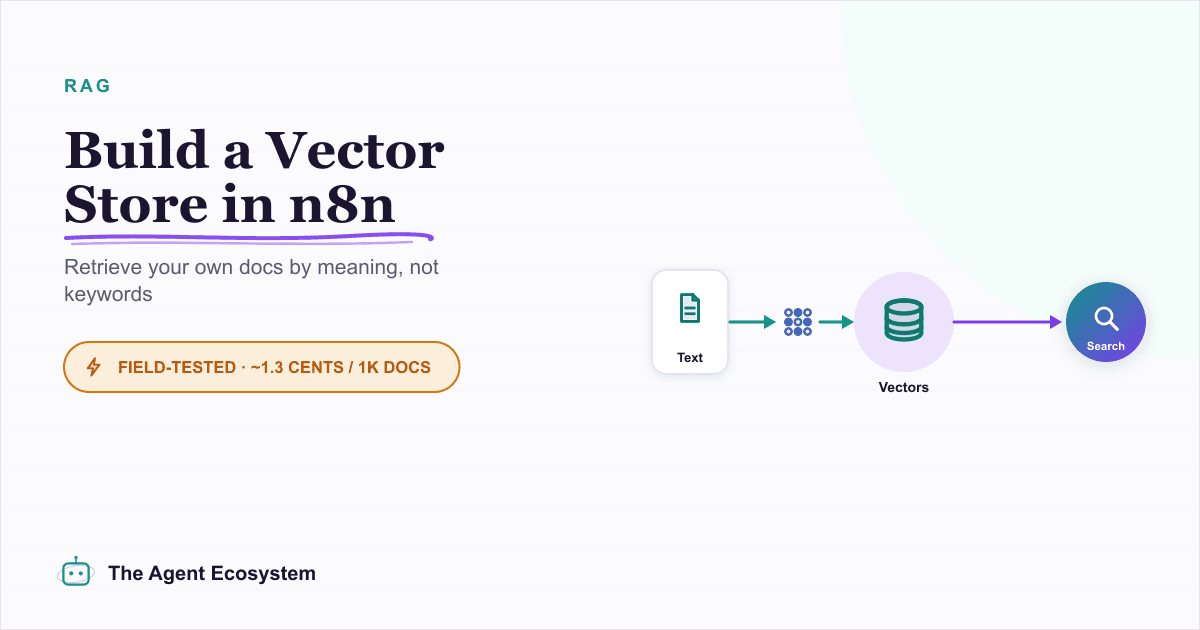
Build an n8n vector store that retrieves your own documents by meaning, not keywords. Embedding 1,000 docs costs ~1.3 cents; Supabase free-tier storage costs $0. Full node wiring and step-by-step setup inside.
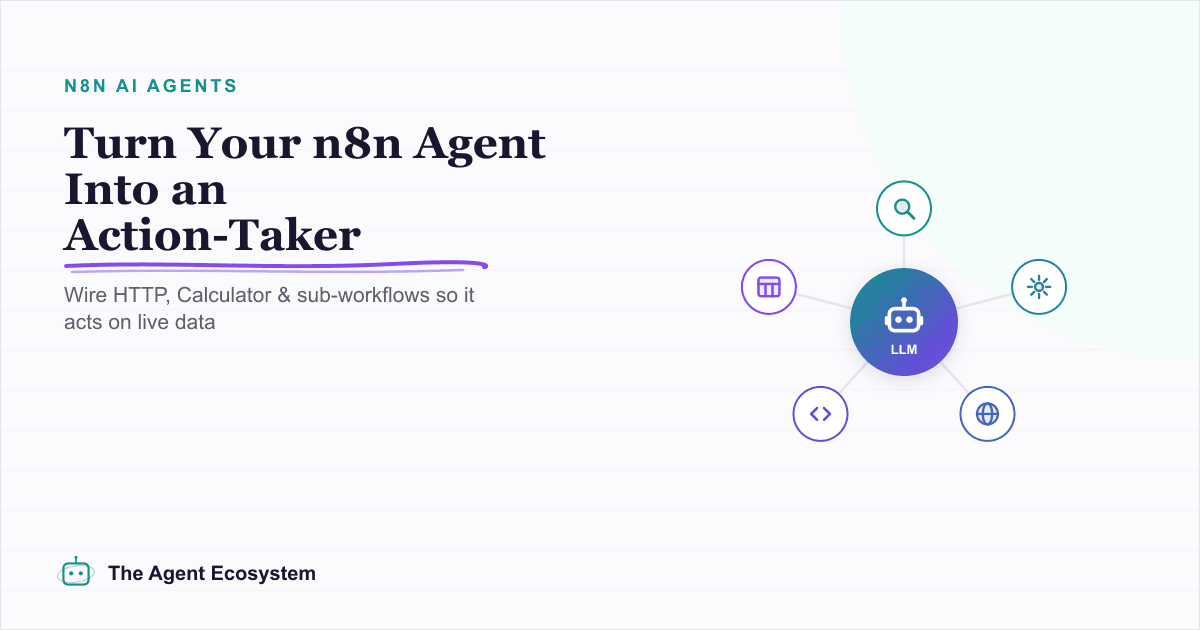
Your n8n AI Agent answers from stale training data until you attach real tools. This guide shows you exactly how to wire HTTP Request, Calculator, and Workflow tools so your agent acts on live data.
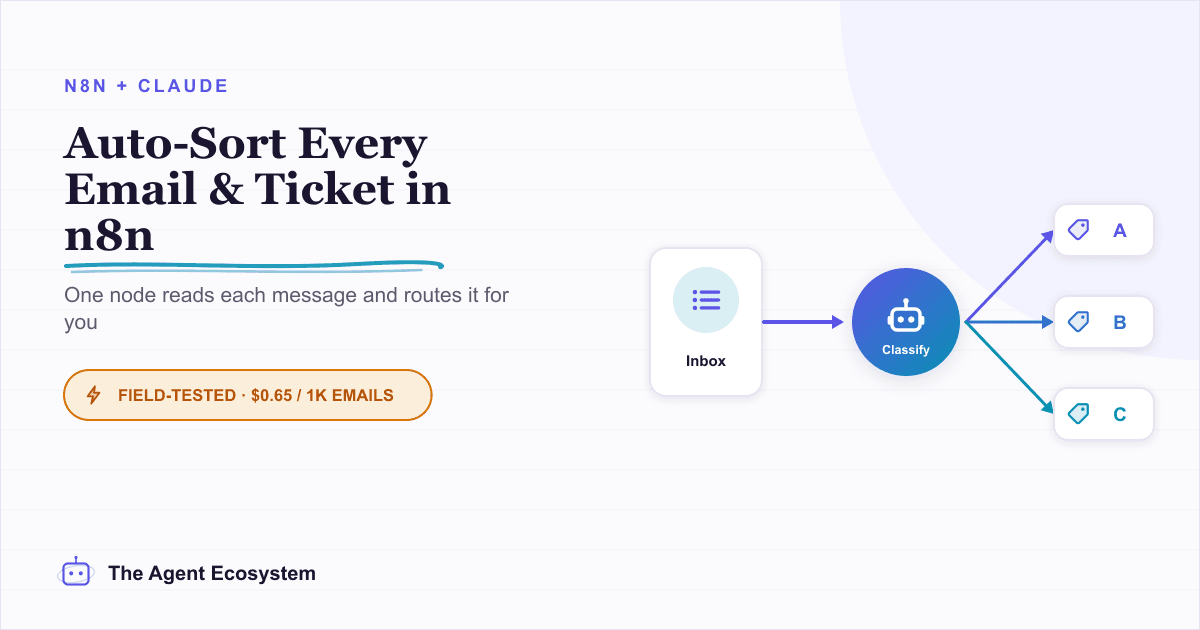
The n8n AI Text Classifier node reads each inbound message, picks the right category, and branches your workflow automatically. Costs $0.65 per 1,000 emails on Claude Haiku 4.5. Here is exactly how to build it.
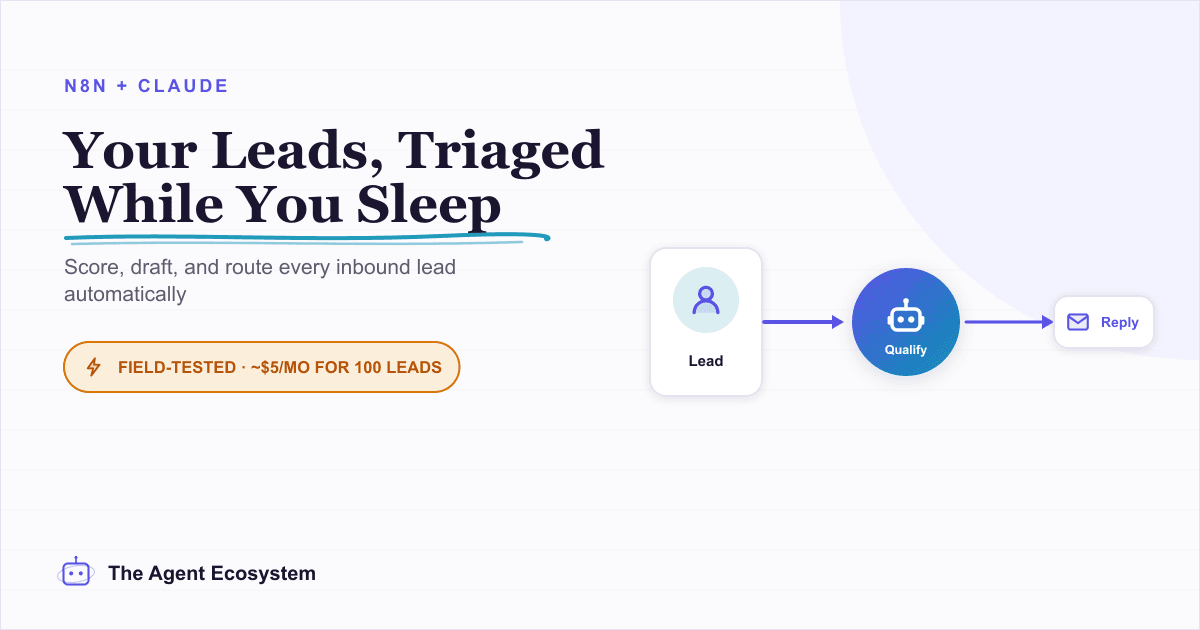
An n8n AI lead generation agent triages every inbound lead the moment it lands: scoring intent, drafting a personalized reply, and pinging you on the hot ones. Real cost: about $5/month for 100 leads on Claude Sonnet 4.6.
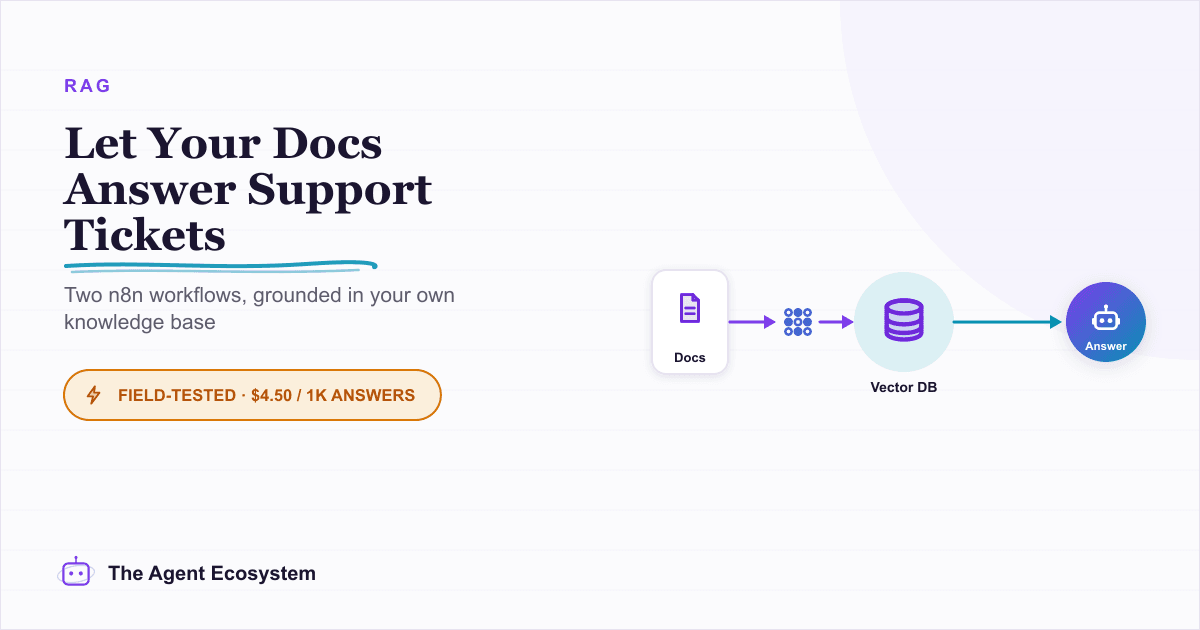
Build an n8n AI customer support bot that answers repeat questions from your own docs using RAG. Two workflows, about $4.50 per 1,000 answers on Claude Haiku 4.5, and $0 platform cost if you self-host.
I built the exact same order-status AI agent in n8n, Make.com, and LangChain, then compared setup effort, cost model, portability, and who each platform actually suits.
There is a 25x cost spread between the cheapest and priciest LLM tier for the exact same n8n AI Agent workflow. This post prices all three providers across 11 model tiers so you can pick the right Chat Model sub-node and stop overpaying.
Your n8n AI agent can chat, but it cannot act beyond the nodes you hard-wired. The MCP Client Tool and MCP Server Trigger change that: one gives your agent a server's worth of tools, the other turns your workflows into tools Claude can call.
Turn a Google Sheet into a real datastore for your n8n automations. This guide covers the full CRUD mapping, the Append or Update Row upsert, API quota limits, and when to move to a real database.
Build an n8n client onboarding automation that sends a Claude-written welcome email, creates a Notion project page, and logs the client in a CRM sheet, all in under 30 seconds after a new client signs.
Build an AI-powered n8n Telegram bot in under an hour using three nodes and zero platform fees. Get a shareable t.me link, no business verification required, and a bot that replies around the clock.
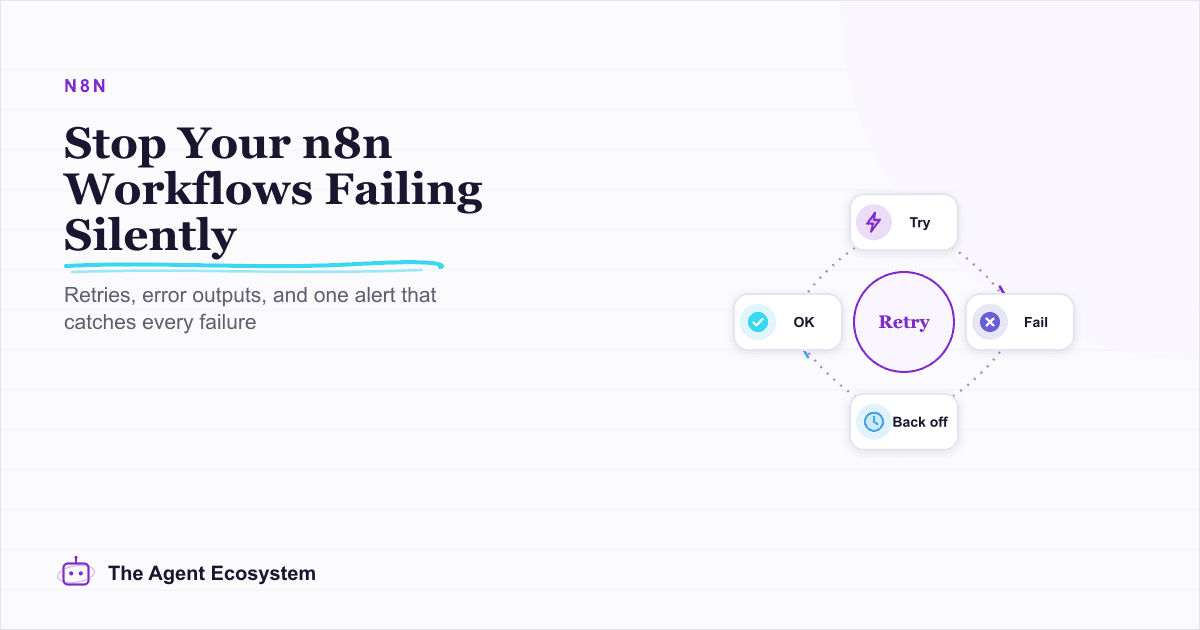
n8n does zero error handling by default. Learn to add three layers: node retries, inline error outputs, and one Error Workflow that alerts you whenever any workflow fails silently.
Connect n8n, Claude, and Twilio to build a WhatsApp AI agent that answers customer FAQs instantly. Test free on the Twilio sandbox, then go live for $0.005 per reply.
Self-hosted n8n stores every workflow in one database file. This guide shows you the free CLI-to-Git backup method, the exact export commands, and the encryption key step most tutorials skip.
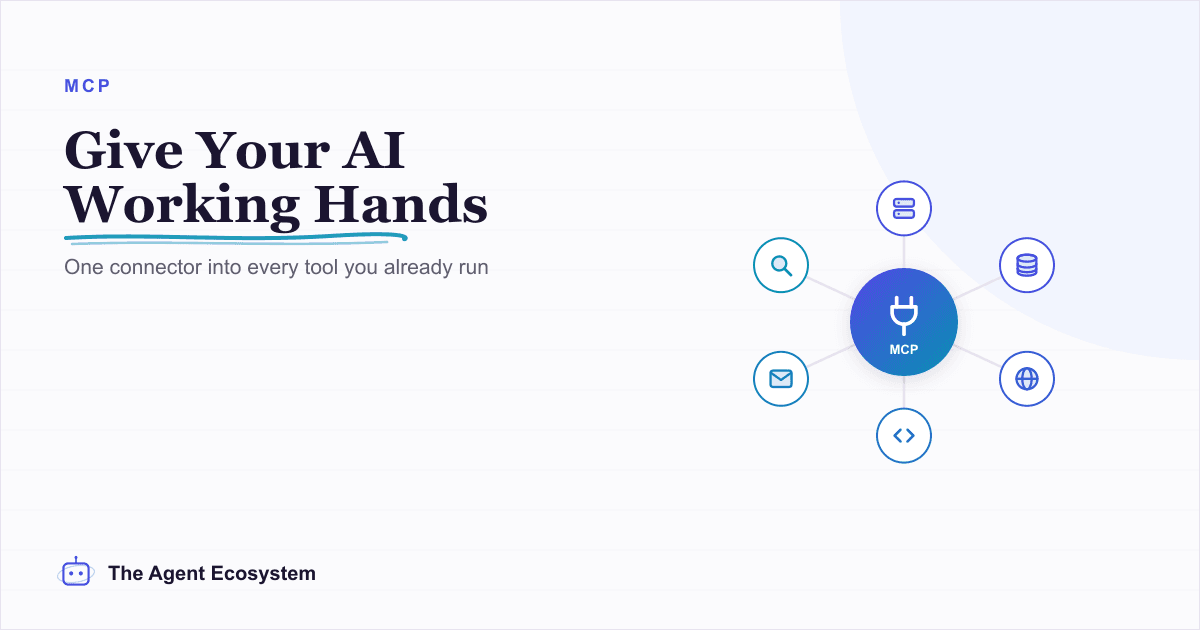
MCP servers give your AI assistant working hands: connect it to GitHub, Supabase, Zapier, and n8n with one standard protocol. First server live in about 20 minutes, free to start.
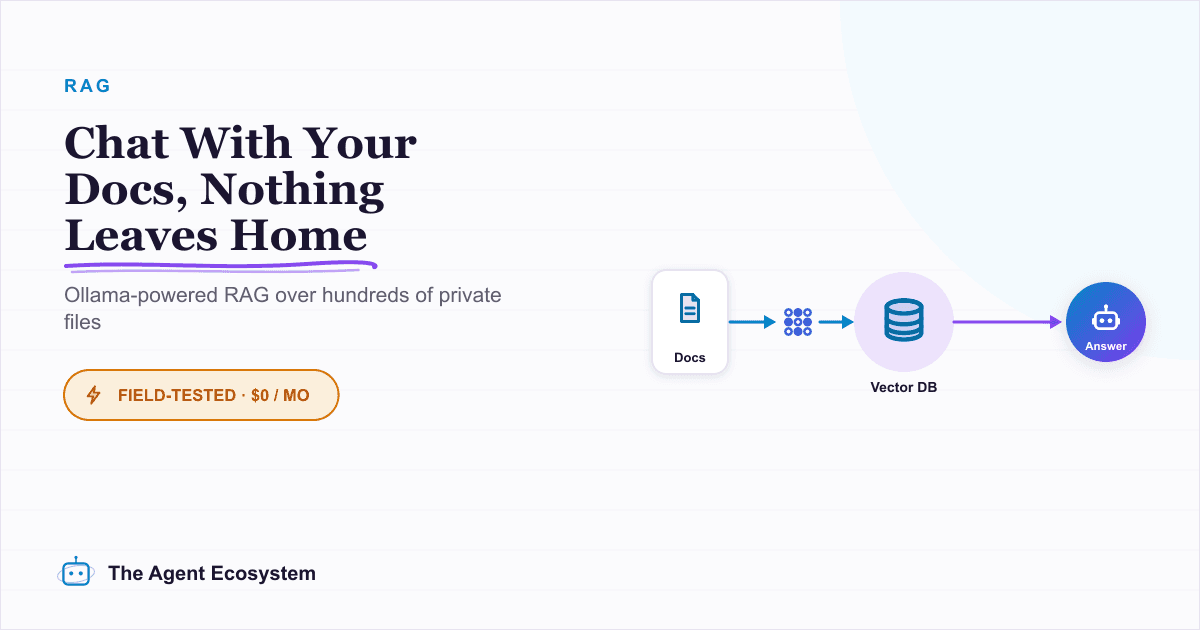
Local RAG with Ollama lets you ask questions across hundreds of private documents without uploading a single file to the cloud. This guide covers three paths from 20-minute desktop setup to n8n pipelines, all at $0 running cost.
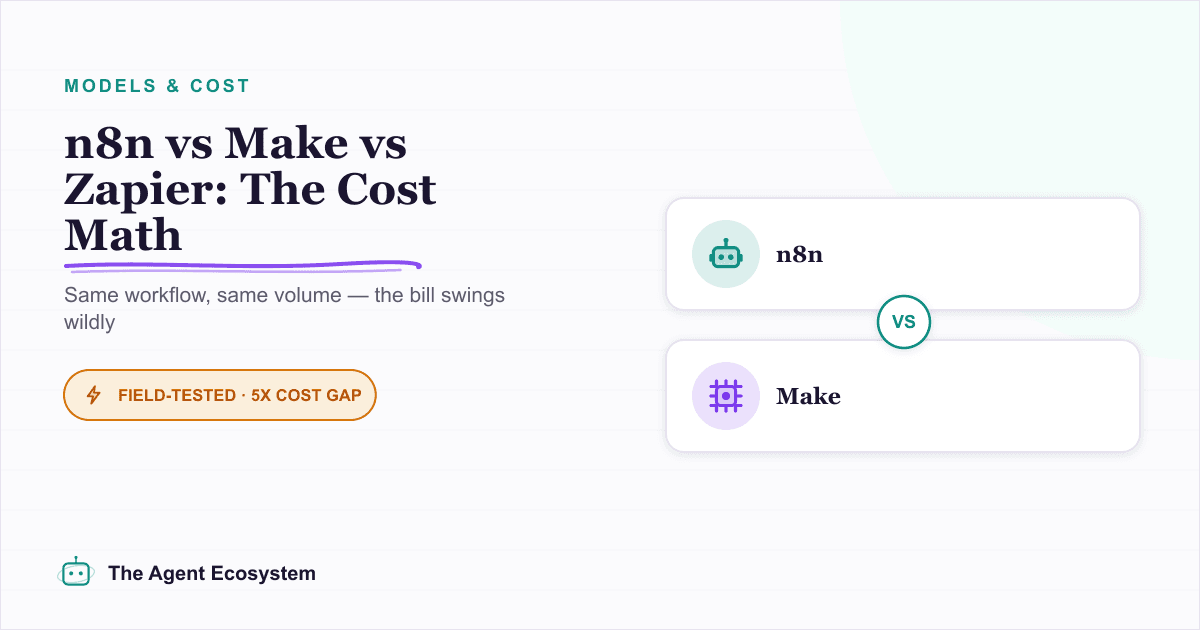
Zapier, Make, and n8n meter completely different units. The same 6-step workflow at 1,000 runs/month can cost 5x more on one platform than another. Here is the exact math for solopreneurs in 2026.
DeepSeek is retiring deepseek-chat and deepseek-reasoner on 2026-07-24. Replace them with deepseek-v4-flash or deepseek-v4-pro now using this step-by-step migration checklist for n8n, LangChain, and code configs.
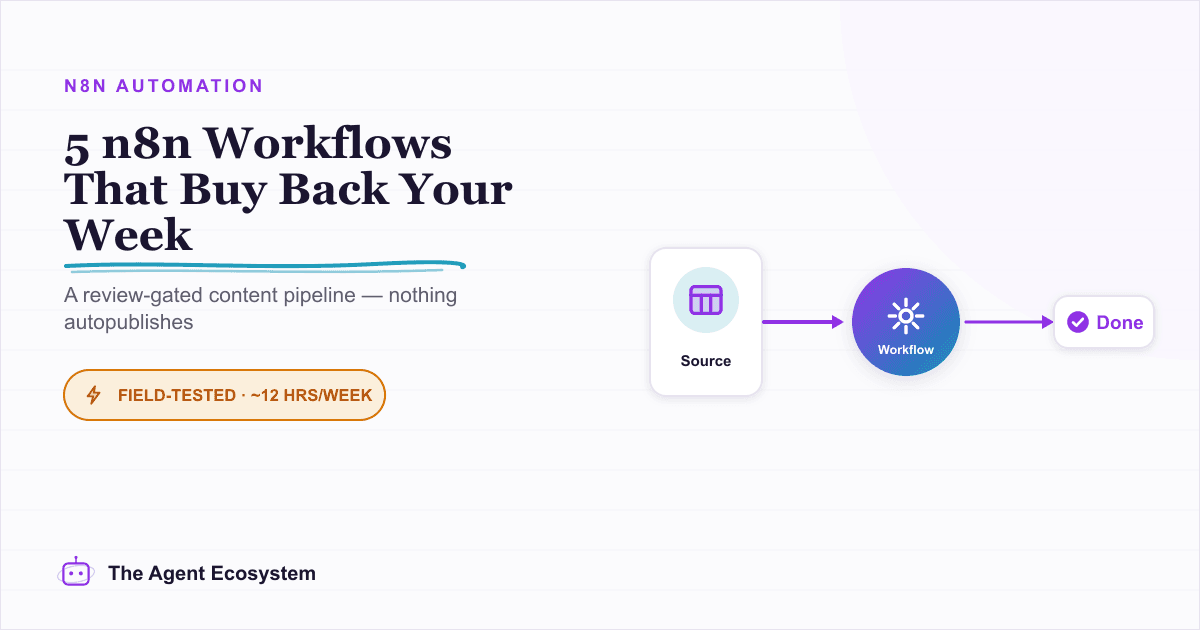
Five n8n workflows that replace source scanning, topic sorting, first-draft writing, pin prep, and changelog monitoring with a review-gated queue. Nothing autopublishes. You stay in control.
4 Gemini 2.0 Flash models were shut down on 2026-06-01. If your n8n, Make.com, or Zapier workflows still call those model strings, they are throwing errors right now. Here is the exact swap list.
Five recent Claude API updates can reduce wasted tokens and lower your bill in n8n agents and custom pipelines. Here is exactly what changed, why it matters, and what to test before changing production workflows.
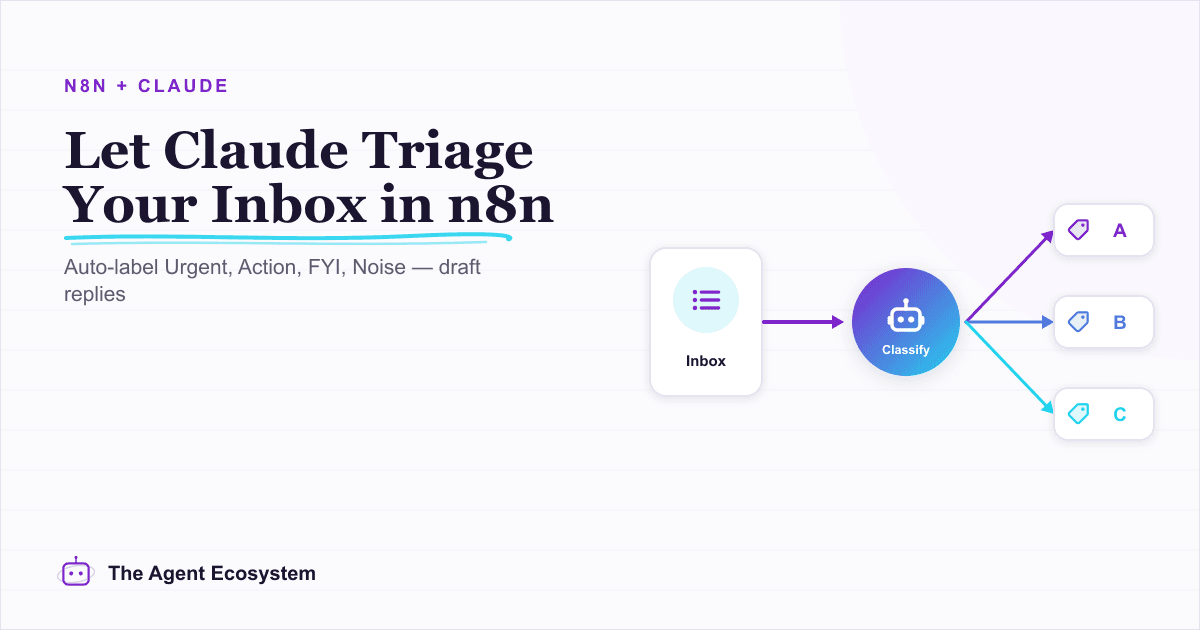
Build a Claude-powered email triage agent in n8n that classifies, labels, logs, and drafts replies without autosending, so you review only the emails that need action.
Self-hosting n8n on a VPS gives solopreneurs unlimited workflows, full data ownership, and a monthly bill under $10. This guide walks you through the exact 7-step setup.
The credential test fails because n8n looks inside its container, not at Ollama on your host. This guide shows the exact Base URL for every setup: native, Docker Desktop, and Linux server.
Running a local LLM cuts your AI API bill to $0 and keeps client data off third-party servers. This breakdown of Ollama, LM Studio, and Jan tells you exactly which tool fits a solo operator's workflow.