How to Evaluate a New Model Release for Your Own Work
Nine dated model releases landed across 5 days in one week. Treating each as a project is how teams end up evaluating none of them.
219 tested guides on AI agents, n8n, RAG, and automation — newest first.
Nine dated model releases landed across 5 days in one week. Treating each as a project is how teams end up evaluating none of them.
Every hardware guide answers with a table of model names against card names that was stale on publication. The arithmetic underneath does not go stale, and it includes the KV cache that turns a model that fits into one that crashes.
A lab says its system resolved ten open problems in mathematics. Most capability announcements fail at the first question, because there is no artifact to inspect.
The headline numbers travelled further than the detail. Almost none of that ceiling is aimed at the people quoting it nervously, and the first contact is a question.
Two documents share almost the same name and do entirely different jobs. Reading them as one set of commitments is the fastest way to answer the wrong question.
Two labeling regimes took effect on the same day, and that was not a coincidence. One of them has a size threshold and the other does not, which inverts the usual assumption.
For years the answer was a matter of taste. Since 2 August 2026 it is a legal duty in the EU, the exemption is narrower than teams hope, and the deadline has already passed.
Most AI vendor evaluations test the demo and skip the contract. The questions that matter are the ones whose answers you cannot discover later.
The most instructive AI security incidents of 2026 had nothing to do with models. One was a poisoned package on PyPI, the other an endpoint handing admin tokens to any caller. Both ended with code running where your credentials live.
A major exchange shipped a standardised way for agents to reach trading, wallets and payments. The risk is not really about the model's judgement.
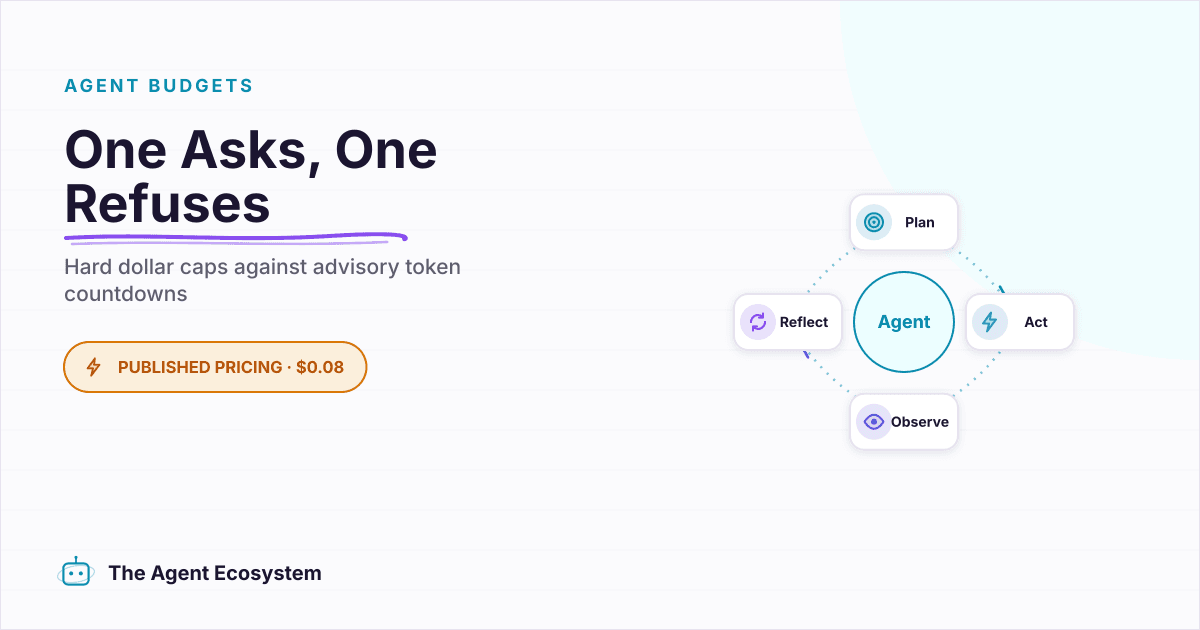
Two mechanisms are both called budgets and behave nothing alike. A session budget is a dollar ceiling the platform enforces by refusing new requests; a task budget is a token countdown only the model can see. Here is what each guarantees and where each breaks.
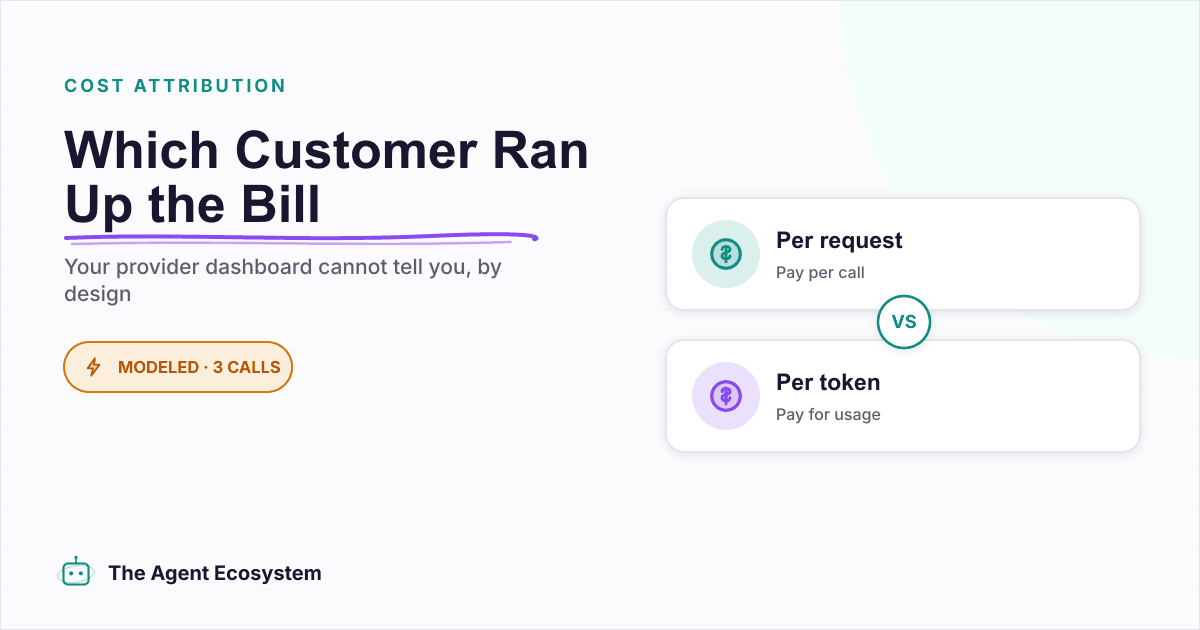
Your provider bill shows one total for one API key. Your customers are not API keys. Here is why the vendor user fields will not split it for you, and the five-step ledger that will.