Everyone's Selling AI Agent Factories. You Just Need n8n.
The mid-2026 enterprise agent-infrastructure push, read from a solo builder's seat.
AI-drafted, reviewed by Muhammad Qasim Hammad on July 31, 2026. See our AI disclosure.
Table of contents
- What is the enterprise AI agent infrastructure push?
- What does an "AI Factory" actually bundle?
- Do you actually need agent infrastructure, or is n8n enough?
- How do the two setups actually compare?
- My take: buy the heavy stack only when scale forces you
- When have you actually outgrown n8n?
- Where I land on this
Your feed this summer is full of "AI agent factories": server racks, orchestration CPUs, and toolkits for running thousands of autonomous agents in production. It looks like the price of entry to agentic AI just went up. For a solopreneur or a small team, it did not, and the gap between what enterprises are buying and what you actually need to ship is the whole story.
What is the enterprise AI agent infrastructure push?#
This ai agent infrastructure push is the mid-2026 move by big vendors to sell integrated stacks for running fleets of autonomous agents. HPE expanded its "AI Factory" portfolio with NVIDIA for agentic AI, adding the NVIDIA Vera CPU for agent orchestration and the NVIDIA Agent Toolkit for managing production agents, per Artificial Intelligence News as of early July 2026.
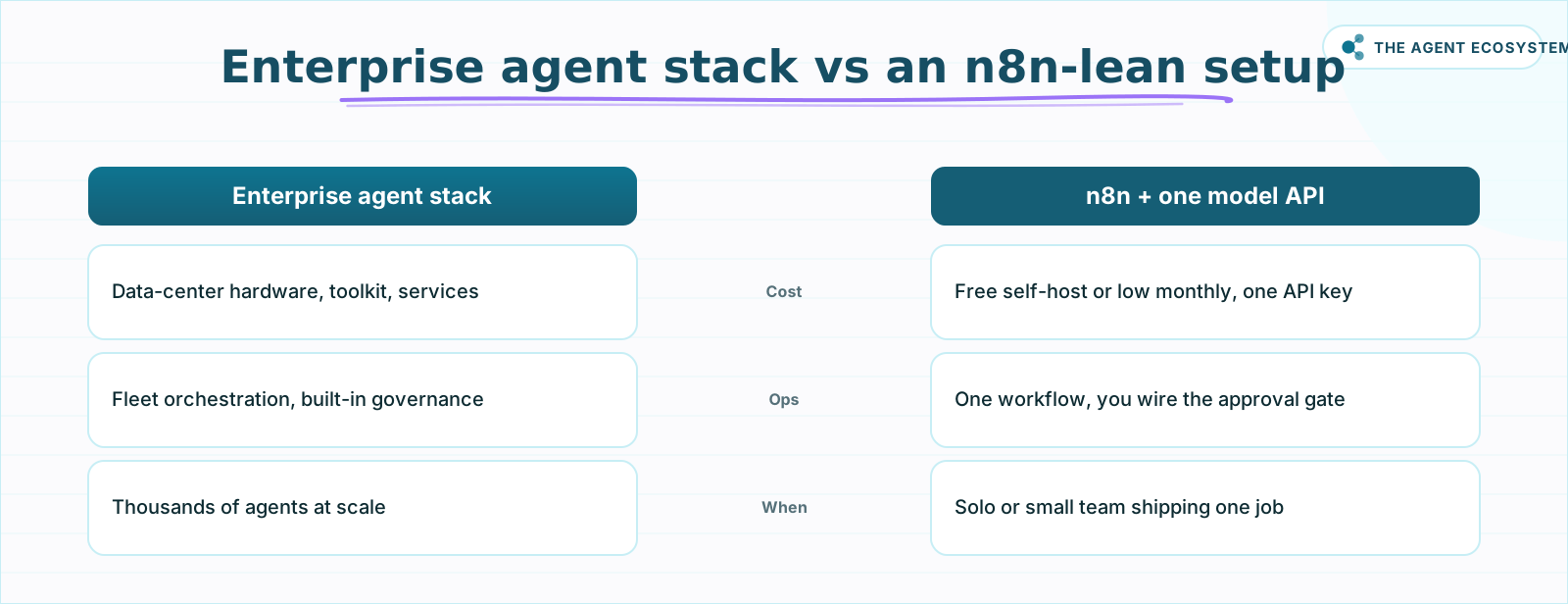 The enterprise stack wins on scale and governance; the lean setup wins on cost and time to ship. Source: author's analysis, external figures attributed in the
The second signal is geographic. NAVER, Korea's search and cloud giant, will launch an AI Agent Platform in Korea in the second half of 2026, according to the same reporting. Two very different players, a US hardware alliance and a Korean platform company, are converging on the same bet: that the next phase of AI is not one clever model but swarms of agents that plan, call tools, and run with limited human input. That bet is credible at their scale. Treat all of this as of early July 2026, and verify before relying, since vendor portfolios and launch dates move fast.
What does an "AI Factory" actually bundle?#
An "AI Factory" is a pre-integrated stack of compute, orchestration, and governance sold as one unit. In the HPE and NVIDIA case that means data-center hardware, the NVIDIA Vera CPU positioned for agent orchestration, and the NVIDIA Agent Toolkit for managing autonomous agents in production, per Artificial Intelligence News, dated to early July 2026.
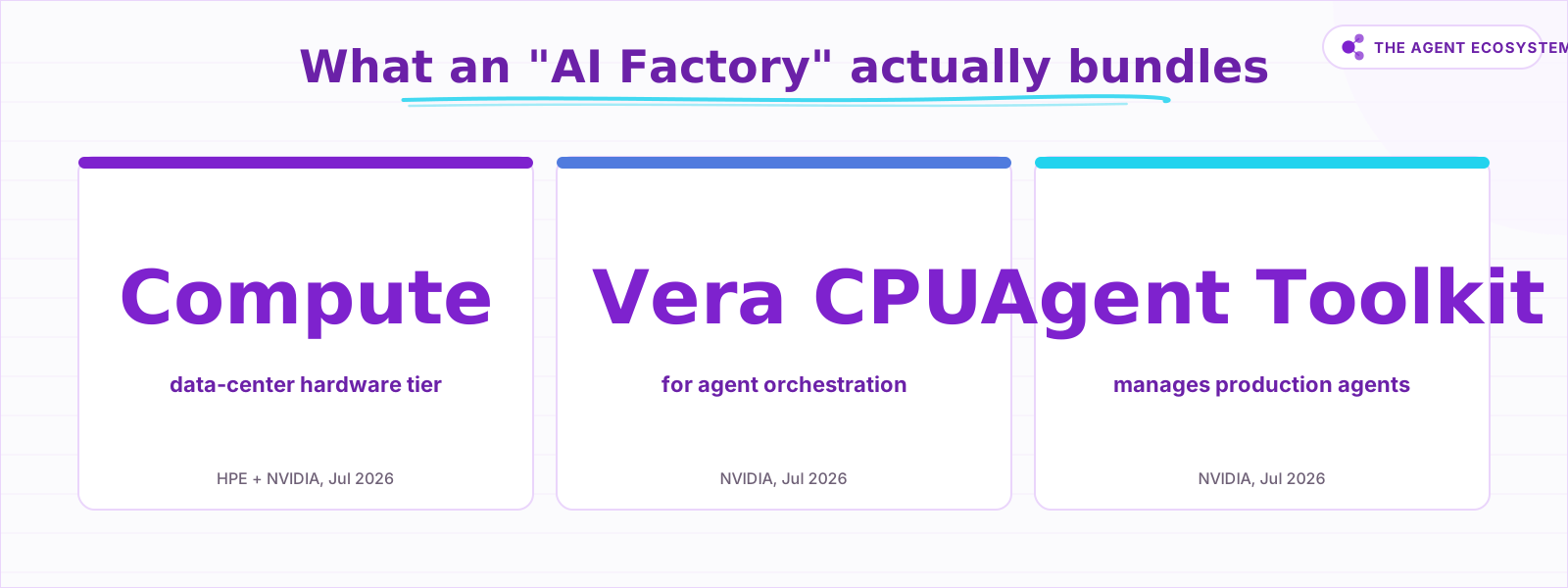 The HPE and NVIDIA AI Factory pairs data-center compute with the NVIDIA Vera CPU and Agent Toolkit. Source: Artificial Intelligence News, as of early July 2026.
Strip the branding and the pitch is coherent. When you run hundreds or thousands of agents that spawn sub-agents, hit tools, and hold state across long tasks, you need real orchestration, observability, and guardrails, and you need them at a hardware tier a laptop cannot touch. I will concede this plainly: at that volume, the heavy stack earns its keep. The honest question is not whether this tooling is good. It is whether your workload looks anything like the workload it was built for.
Do you actually need agent infrastructure, or is n8n enough?#
For most solo and small-team work, you do not need any of it. You can ship the same outcome with n8n plus one model API and a human-approval step. The enterprise stack solves fleet-scale orchestration and governance; a single reliable workflow with a person in the loop solves the job most small builders actually have in front of them.
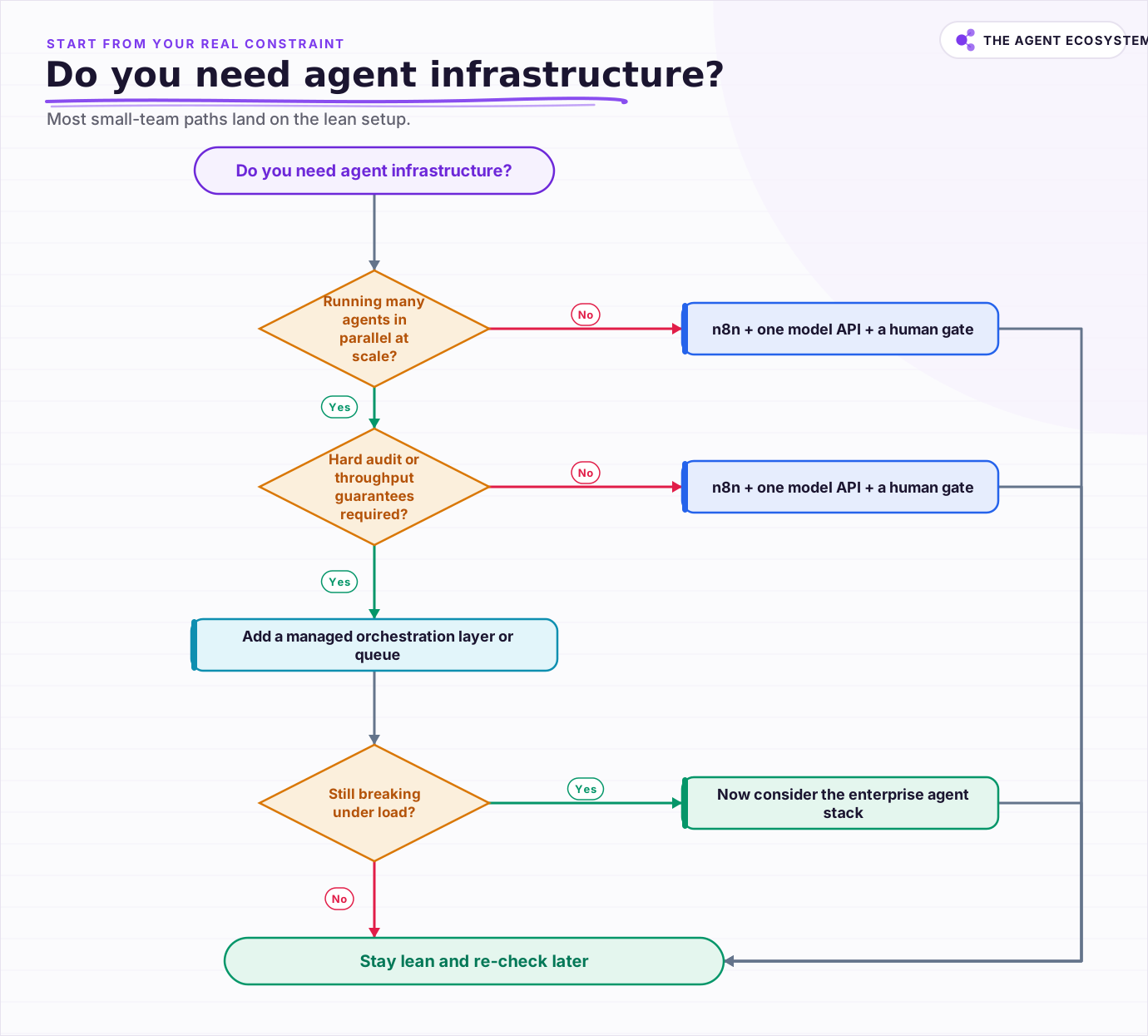 Start from your real constraint; most small-team paths land on the lean setup. Source: author's framework, early July 2026.
Here is the counter-argument, stated fairly. If you are coordinating many agents in parallel, need audit trails for compliance, or must guarantee throughput under load, a workflow tool and one API key will strain. Those are real limits, and pretending otherwise would be dishonest. But notice the shape of that list: it is a scale-and-governance problem, not a capability problem. Nothing on it says the enterprise stack builds better agents. It says the enterprise stack runs more of them, under more rules, more reliably. That is a different purchase than the one most readers here are weighing.
How do the two setups actually compare?#
On the numbers that decide a small build, the lean setup wins on cost and speed, and the enterprise stack wins on scale and governance. The table below lays out the capability trade honestly. Every figure external to it is attributed and dated in this post; the qualitative rows are my read, not a benchmark.
| Capability | Enterprise agent stack | n8n-lean setup |
|---|---|---|
| Orchestration ceiling | Thousands of agents, fleet-scale | Dozens of workflow runs, one flow at a time |
| Setup cost | Data-center hardware plus toolkit and services | Free self-host or low monthly, one model API |
| Governance | Built-in audit, oversight, production controls | You wire your own logs and approval gate |
| Time to first agent | Weeks of integration | An afternoon |
| Best fit | Large orgs running agents at volume | Solo and small teams shipping one job |
Table: capability comparison of an enterprise agent platform versus an n8n plus single-API setup. Source: author's analysis, external figures attributed inline, as of early July 2026.
The row I care most about is time to first agent. A solo builder does not lose to a big org on model quality; you both call the same frontier APIs. You lose, if you lose, on time spent standing up infrastructure you did not need. That is the trap the "factory" framing sets, and it is worth naming out loud.
My take: buy the heavy stack only when scale forces you#
My take is simple and cost-conscious: do not buy agent infrastructure until your scale actually demands it. Until then it is cost and complexity you do not need, and the "everyone is building agent factories" narrative is marketing pressure, not a technical requirement for a small team. Buy the plumbing when the water pressure breaks it, not before.
I would default to n8n plus one model API plus a human-approval gate for essentially every small-team agent I can think of shipping this year. That is a preference, not a measurement, and I want to be clear about the line. I have not run HPE's factory or NVIDIA's toolkit, so I am not claiming the lean setup is faster or cheaper in some test I ran. I am claiming that for the jobs a solopreneur faces, the outcome is the same and the overhead is lower, and that judgment is mine to defend, not a benchmark to cite.
There is also a governance wrinkle worth flagging, because it cuts toward my view rather than against it. Agentic AI is expected to stress-test "human oversight" rules, and the EU's high-risk-AI transparency obligations land around 2 August 2026, per AI Governance reporting as of early July 2026. A workflow you can read top to bottom, with a human approving the consequential step, is easier to explain to a regulator than an opaque fleet. Small can be an oversight advantage, not just a budget one.
The strongest case against me is that scale sneaks up on you, and re-platforming later is painful. I take that seriously. My answer is that you migrate when the signals below actually fire, and not one quarter before. Premature infrastructure is still premature, even when the demo is impressive. If you want the cost side of this argued in detail, my breakdown of the real monthly cost of a solopreneur AI stack applies the same skeptical math to the model-API bill.
When have you actually outgrown n8n?#
You have outgrown the lean setup when scale, concurrency, or compliance stops being hypothetical and starts breaking your runs. The signals are concrete: many agents in parallel, hard audit requirements, throughput you cannot meet, or orchestration logic your workflow tool can no longer express. Until one is true, heavier infrastructure is a solution shopping for a problem.
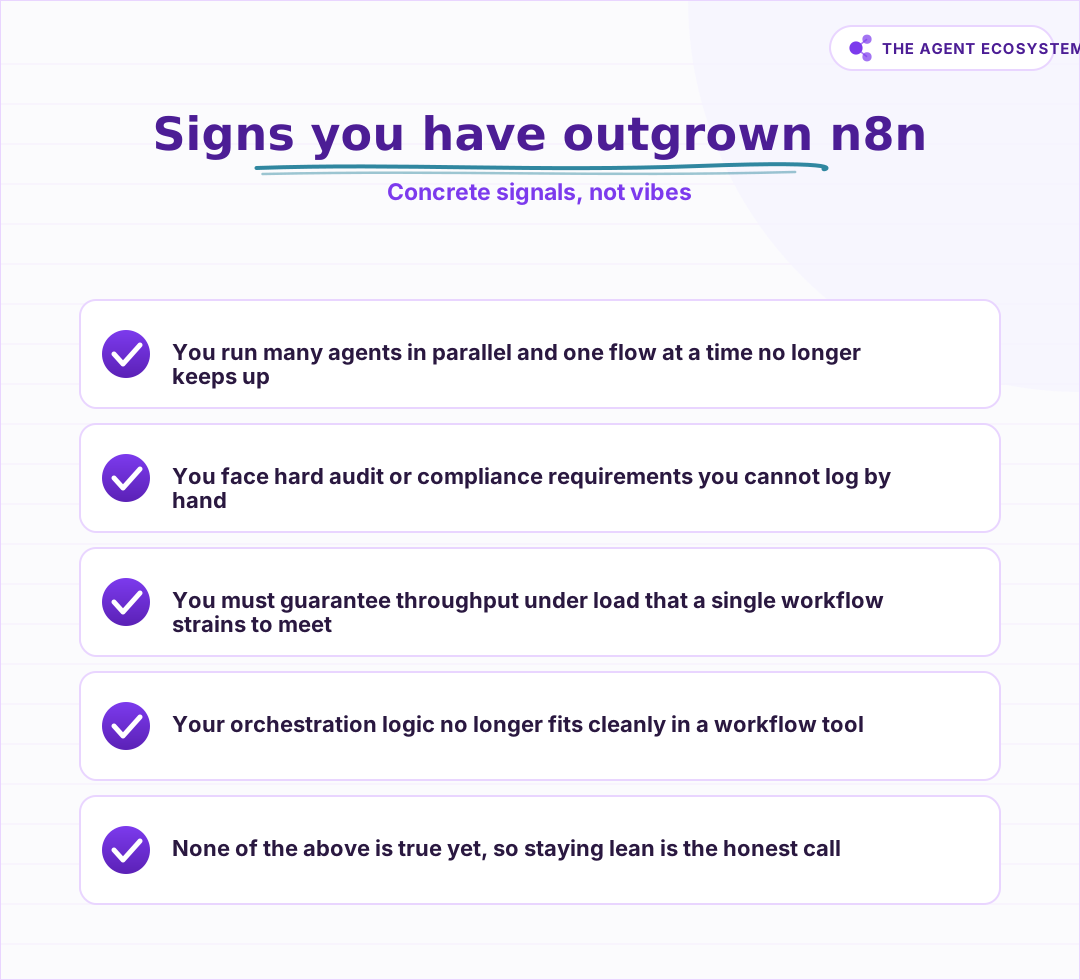 These are scale-and-governance signals, not capability gaps. Until one fires, heavier infrastructure is premature.
If you do cross that line, the move is not automatically an "AI Factory." It might be a managed orchestration layer, a queue, or a purpose-built agent framework long before it is a data-center contract. The point of the checklist is to make the decision on evidence from your own system, the same way my walkthrough of multi-agent orchestration in n8n pushes you to prove you need coordination before you build it.
Where I land on this#
Where I land is on the side of the small builder: the agent-factory wave is genuine enterprise infrastructure, and for a solopreneur it is mostly noise. Concede the enterprise stack its real wins at scale and under governance, then ship your one job with n8n, one model API, and a person in the loop.
The developments are real and worth watching. HPE and NVIDIA's factory, NAVER's platform, and the EU oversight deadline all tell you where the frontier of scale is heading. But the frontier of scale is not your frontier yet. If you want the starting kit instead of the factory, my roundup of n8n workflows that save a solopreneur real time is the version of this stack I would actually stand up first.
Frequently asked questions
What is the enterprise AI agent infrastructure push in 2026?
Do I need agent infrastructure, or is n8n enough?
What does an AI Factory actually bundle?
When have I actually outgrown n8n for agents?
Does AI governance favor big infrastructure or small setups?
Sources
Primary references and vendor documentation used while drafting and reviewing this article.
Written by

Muhammad Qasim Hammad is an AI agent and automation expert and the founder of Cart Gaze LLC (cartgaze.com). He builds product for the love of it: when an idea lands, a working prototype is usually running within hours, built with the same AI agents and automations he sells. He puts his own output at roughly 20× what it was before agents, and the Agentic OS behind this site is the working proof, documented in public with the tools he actually ran and what they really cost.
AI & Automation Services
Want a pipeline like this running in your business?
I'm Qasim — I design and ship AI agents and n8n automations for solo operators and small teams. Tell me what's eating your team's week, and I'll scope a fix.
Related reading
MCP and A2A: Do These Agent Protocols Matter If You Use n8n?
MCP and A2A are the two agent protocols everyone names, but they solve different problems. MCP connects one agent to tools and data and already ships as an n8n node; A2A coordinates agents across vendors and is aimed at the enterprise. Here is what each means for a solopreneur

I Built the Same AI Agent in n8n, Make and LangChain: The Honest Difference
I built the exact same order-status AI agent in n8n, Make.com, and LangChain, then compared setup effort, cost model, portability, and who each platform actually suits.
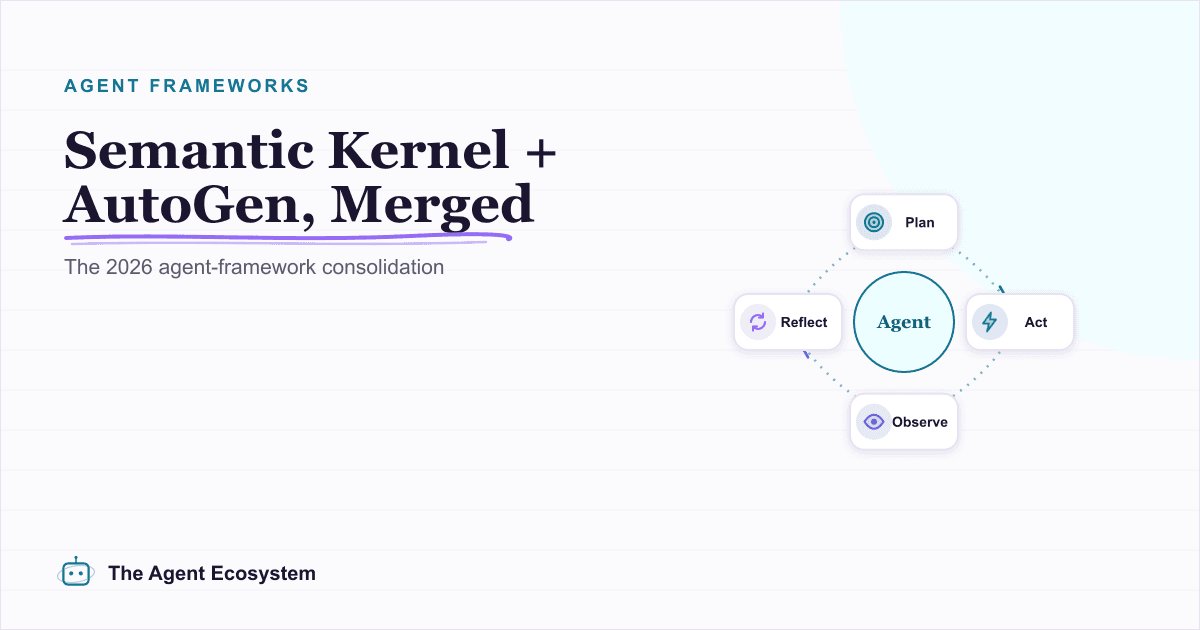
Semantic Kernel + AutoGen Merged: The 2026 Agent Framework Shift
Microsoft folded two of its biggest open-source agent projects, Semantic Kernel and AutoGen, into a single production SDK with version 1.0. Here is what the Microsoft Agent Framework bundles, where it sits against LangGraph, CrewAI, and OpenAI's Agents SDK, and how a small team
A2A: How AI Agents from Different Vendors Coordinate
A2A (Agent2Agent) is an open, Linux Foundation-governed protocol that lets AI agents from any vendor discover each other and hand off tasks. Here is how Agent Cards work, how A2A differs from MCP, and whether your small team needs it yet.
Best AI Agent Framework in 2026: CrewAI vs LangGraph vs AutoGen vs n8n
There is no single best AI agent framework, only the best fit for your task and whether you build in code or no-code. This honest 2026 chooser puts CrewAI, LangGraph, AutoGen, and n8n on one table, flags that AutoGen is in maintenance mode, and ends with a decision tree plus the
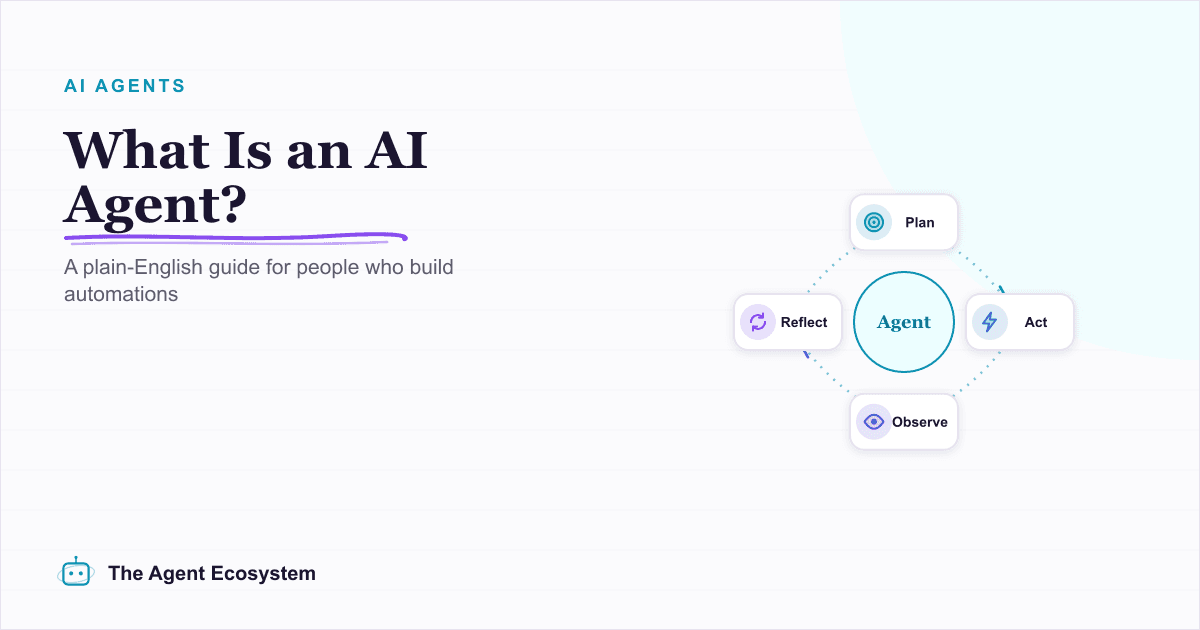
What Is an AI Agent? A Plain-English Guide for Builders
An AI agent is a language model running in a loop that decides its own next action, not a chatbot and not a chain. Here is how the perceive-decide-act-observe loop works, how an agent differs from a chatbot, chain, and workflow, and a checklist for when you actually need one.