Semantic Kernel + AutoGen Merged: The 2026 Agent Framework Shift
Microsoft folded Semantic Kernel and AutoGen into one production SDK, and it signals where the whole agent-framework space is heading.
AI-drafted, reviewed by Muhammad Qasim Hammad on July 16, 2026. See our AI disclosure.
Table of contents
You have been tracking four or five agent frameworks at once, unsure which one is safe to build a small team's stack on, and Microsoft just collapsed two of the biggest into one. If you were weighing Semantic Kernel against AutoGen, that decision no longer exists the way it did last year, and the reason tells you something about where the whole space is heading.
What is the Microsoft Agent Framework merger?#
The Microsoft Agent Framework is one production SDK for .NET and Python that merges Semantic Kernel and AutoGen, per the Microsoft Agent Framework devblog dated 3 April 2026. It keeps AutoGen's simple agent abstractions and adds Semantic Kernel's enterprise features, so you stop choosing between the two projects and build on a single supported path.
For a builder, the practical meaning is that two libraries you might have evaluated separately now share one roadmap. The framework combines AutoGen's lightweight agent abstractions with Semantic Kernel's session-based state, type safety, middleware, and telemetry, and it adds graph-based workflows for explicit multi-agent orchestration. That is the Microsoft Agent Framework story in one line: the easy on-ramp of one project, the production plumbing of the other.
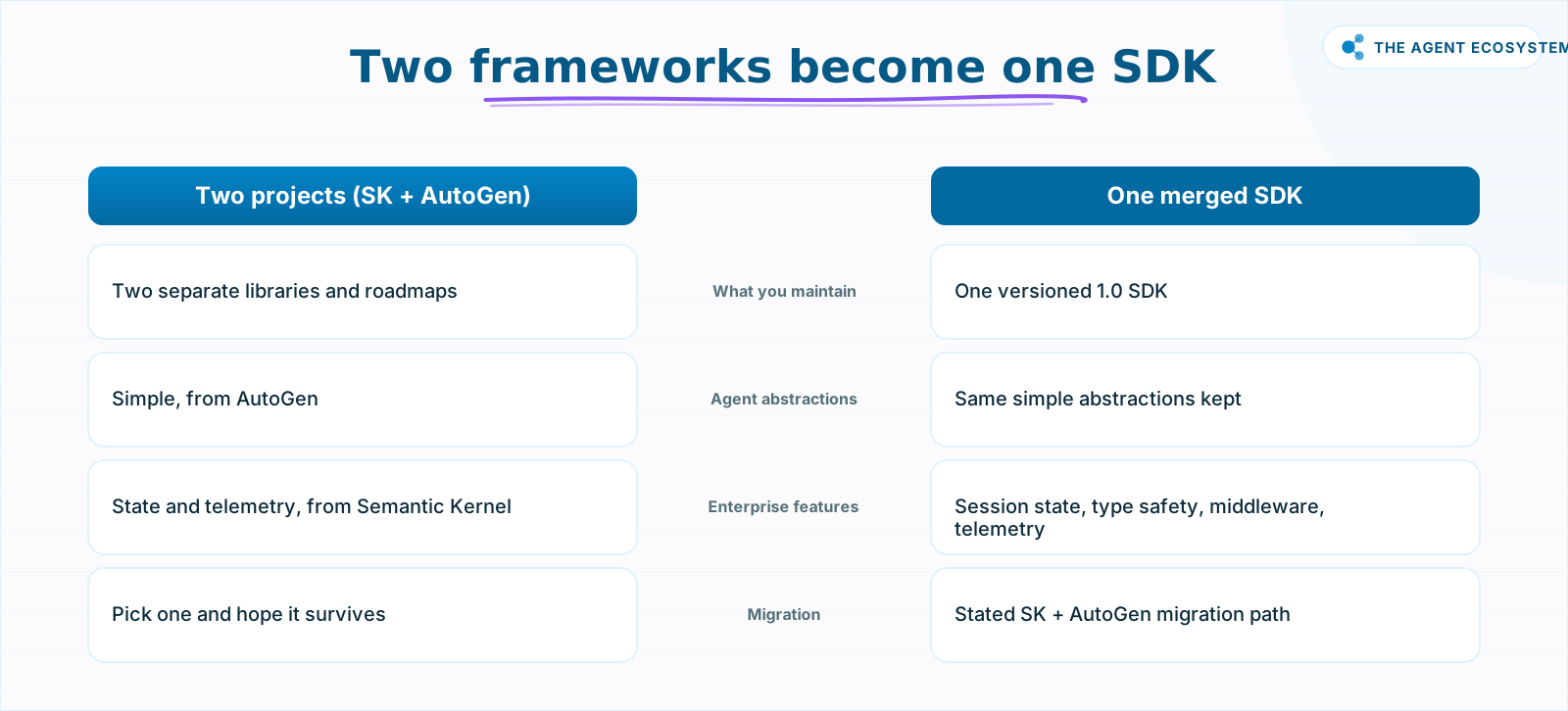 Before, you chose between Semantic Kernel and AutoGen; version 1.0 merges both into one SDK. Framing per the Microsoft Agent Framework devblog dated 3 April
If you already had Semantic Kernel or AutoGen code in a project, this is the difference between maintaining a bet on a research-flavored library and standing on a versioned 1.0 SDK with a stated migration path. That reduces the "will this project survive" tax you pay when you pick any young framework, which for a small team is often the deciding cost.
What does version 1.0 actually bundle?#
Version 1.0 bundles four things worth naming: simple agent abstractions from AutoGen, enterprise features from Semantic Kernel, graph-based workflows for orchestration, and native MCP support. Per the Microsoft Agent Framework devblog dated 3 April 2026, A2A 1.0 support is listed as coming soon rather than shipped today.
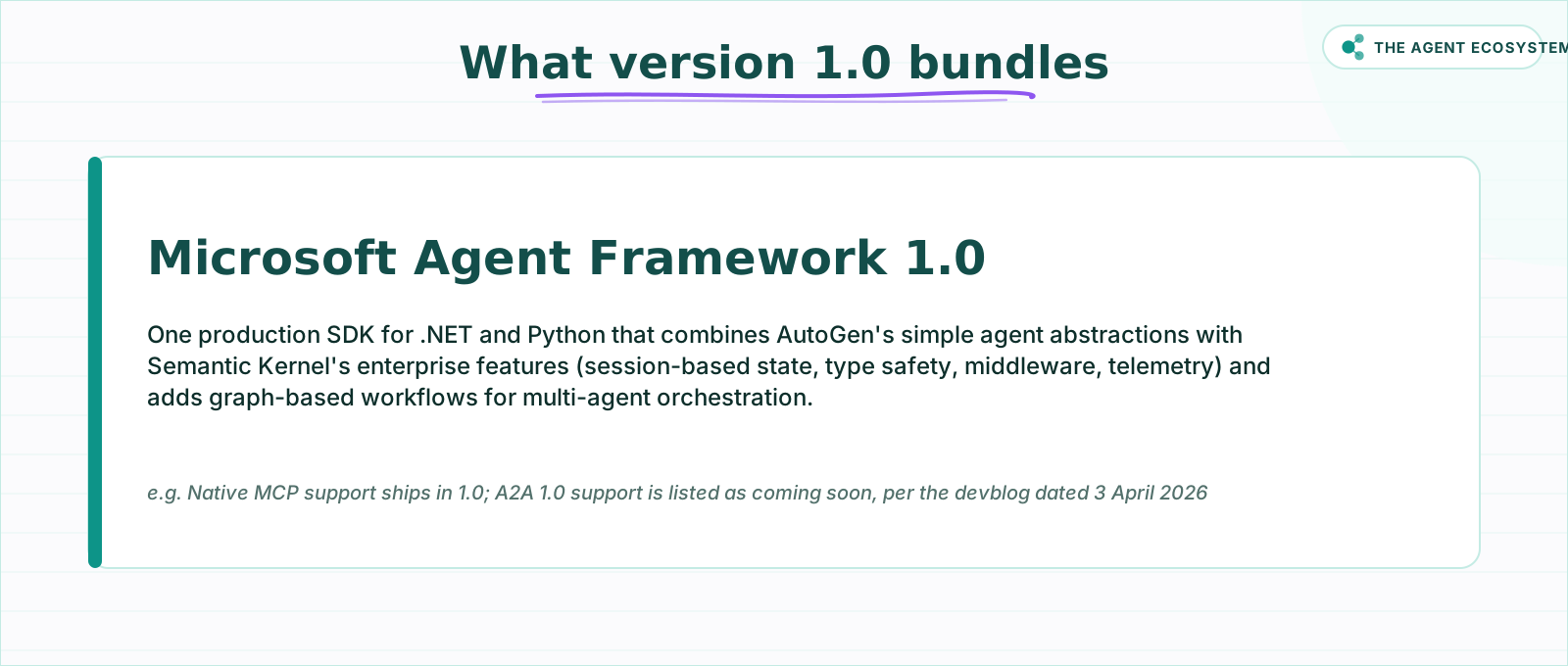 The four things version 1.0 pulls into one SDK. Per the Microsoft Agent Framework devblog dated 3 April 2026.
The enterprise features are the part that matters when you move from a demo to something on-call. Session-based state means a conversation survives across turns without you hand-rolling storage. Type safety catches wiring mistakes before runtime. Middleware gives you a place to hook auth, logging, and guardrails. Telemetry means you can actually see what an agent did. Native MCP support (the tool-connection protocol) means the same agent can call MCP tools without a custom bridge, and if you want a primer on wiring tools to an agent at all, our walkthrough of n8n AI agent tools covers the pattern in a no-code setting. Treat the A2A "coming soon" note as a to-verify item, not a promise you can build against yet.
Where does it sit in the 2026 landscape?#
It sits as the enterprise-first option with a Semantic Kernel plus AutoGen migration path, next to three other camps. Per the Microsoft Agent Framework devblog dated 3 April 2026, LangGraph owns the explicit-graph camp, CrewAI owns the role-based crew metaphor, and OpenAI's Agents SDK owns the minimalist, assume-GPT camp. Each camp reflects a different mental model.
The honest way to read this table is that these are not ranked from best to worst. They are four ways of thinking about the same problem, and the right pick is the one that matches how your head already works. If you reason in nodes and edges, the graph camp feels native. If you reason in teams of specialists, the crew metaphor fits. If you reason in enterprise concerns like state, telemetry, and a supported upgrade path, the Microsoft option is aimed at you.
| Framework | Camp | Best for |
|---|---|---|
| Microsoft Agent Framework | Enterprise-first, SK + AutoGen migration | Teams wanting supported state, telemetry, and a migration path |
| LangGraph | Explicit graph | Builders who think in nodes and edges |
| CrewAI | Role-based crews | Teams modeling agents as named specialists |
| OpenAI Agents SDK | Minimalist, assume-GPT | Small builds that lean on one model provider |
Source: framing per the Microsoft Agent Framework devblog dated 3 April 2026 (as of early July 2026, verify before relying).
Which camp should you actually pick?#
Pick the camp that matches how you already reason about agents, not the one with the loudest release notes. Ask three questions in order: do you think in graphs, in named roles, or in enterprise state and telemetry? Your honest answer points at one camp, and switching camps later is expensive, so choose the mental model first.
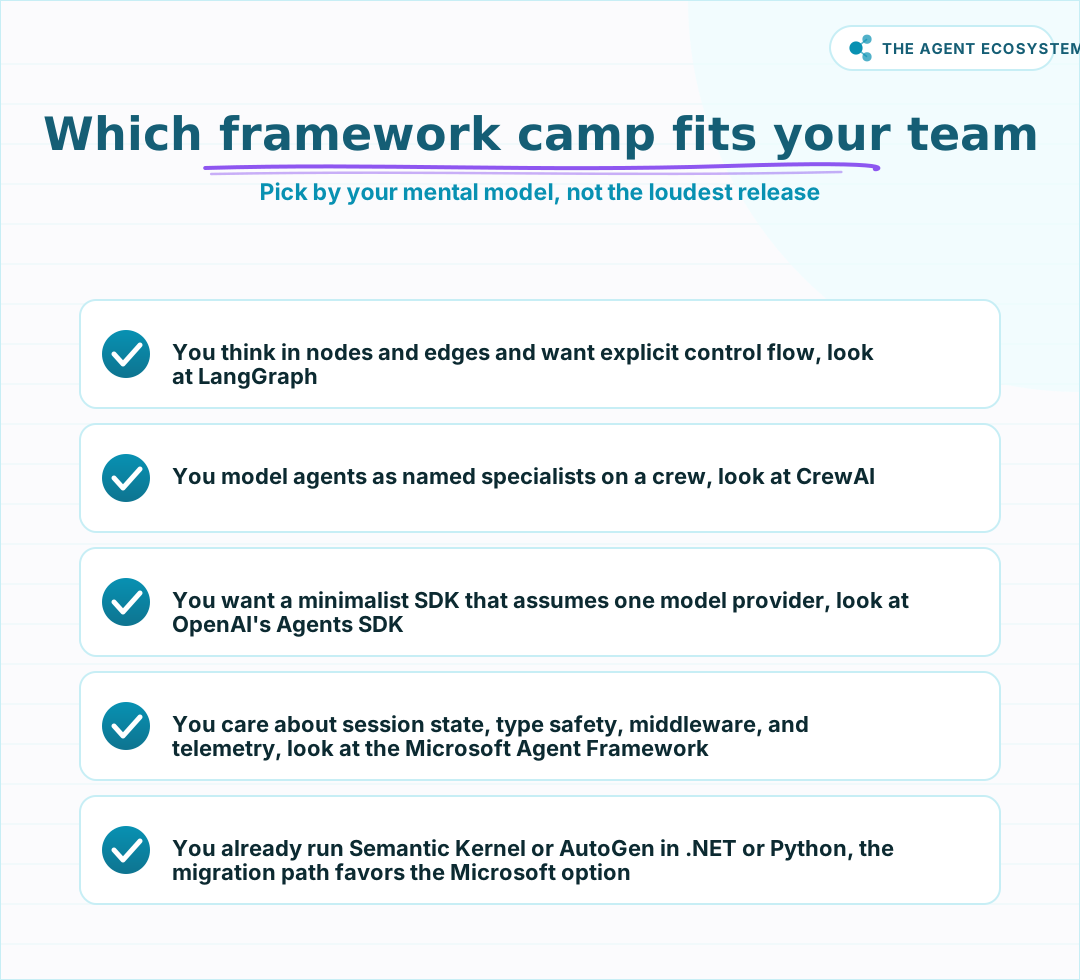 Match the camp to how you already reason about agents. Camps per the Microsoft Agent Framework devblog dated 3 April 2026.
Two practical constraints usually break a tie. The first is your existing code: if you already run Semantic Kernel or AutoGen, the Microsoft Agent Framework gives you a stated migration path instead of a rewrite, which is a real reason to stay. The second is language and platform: this SDK targets .NET and Python per the devblog dated 3 April 2026, so a Node-first team weighs that before committing. If you are still deciding whether a single agent or a chained pipeline even fits your job, our breakdown of an AI agent versus a chain is the cleaner first question to settle.
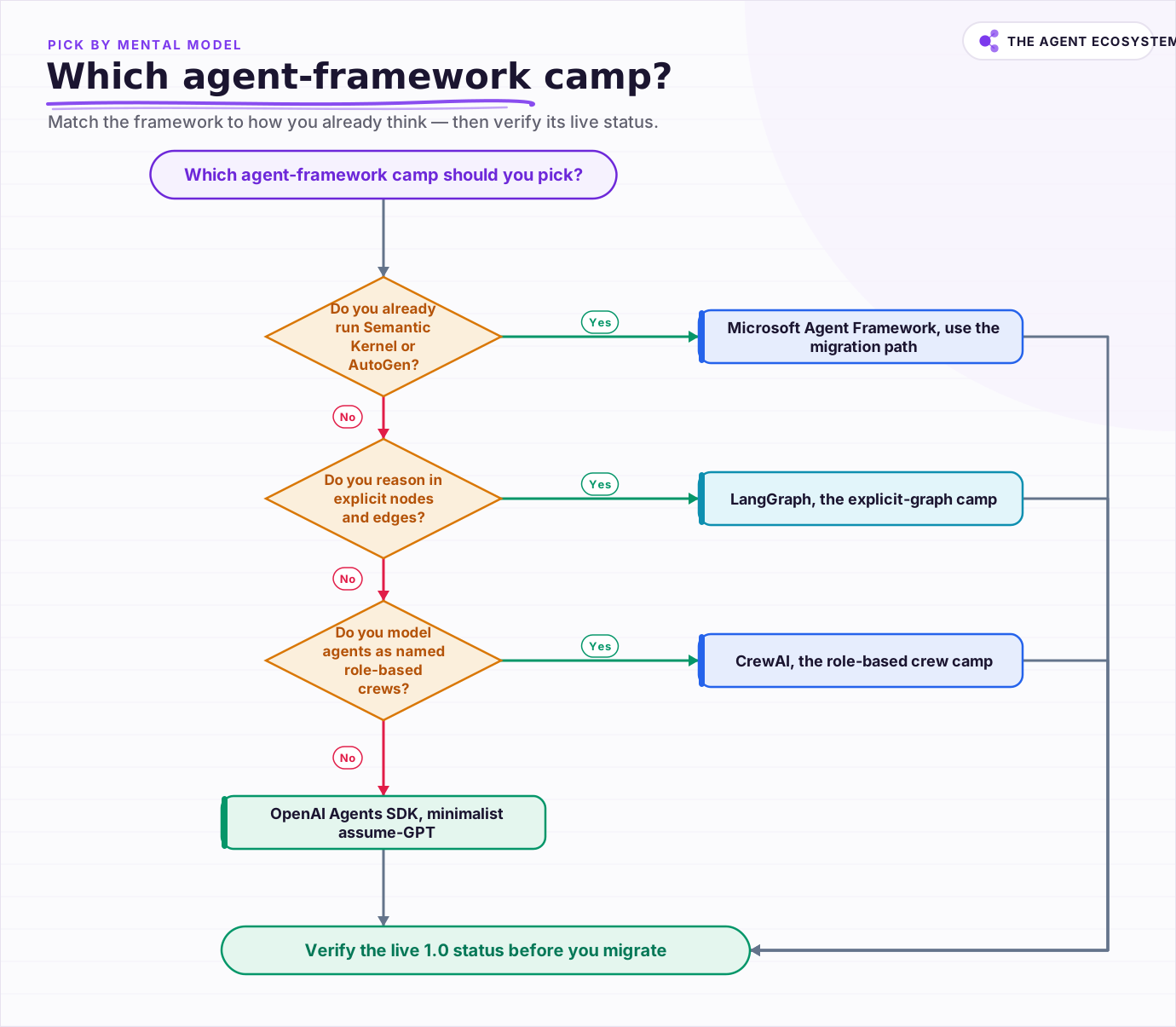 Start from your mental model; every path ends at verify the framework's live status before you migrate. Camps per the Microsoft Agent Framework devblog dated 3
What does the merger signal for builders?#
A merger like this is a maturing signal, not just a product update. When a large vendor folds two of its own popular projects into one supported SDK, it is telling you the experimentation phase is ending and consolidation is starting, which for a small team means fewer live bets to hedge and clearer defaults to build on.
That consolidation cuts both ways, and it is worth being sober about it. Fewer frameworks means less churn and a safer floor, but it also means the camp you pick shapes your architecture for a long time, so the choice deserves a real conversation rather than a coin flip. If your work spans several agents talking to each other, our guide to n8n multi-agent orchestration shows the coordination problem these frameworks are all trying to solve.
How should a small team act on this now?#
Act by naming your mental model first, then re-verifying the framework's live status before you migrate any code. For most small teams the takeaway is calm: the space is consolidating, so pick the camp that fits your head, confirm the 1.0 details on the vendor page, and stop hedging across five libraries you will never fully learn.
The deeper point is that this merger is one data point in a broader settling of the agent stack, and settling is good news for anyone who has to ship. You get fewer moving frameworks, clearer defaults, and supported upgrade paths, which is exactly what a two-person team needs. Choose deliberately, verify the dated facts once, and then spend your energy on the agent, not the framework debate.
Frequently asked questions
What is the Microsoft Agent Framework?
Does the Microsoft Agent Framework replace Semantic Kernel and AutoGen?
Does the Microsoft Agent Framework support MCP and A2A?
How does it compare to LangGraph, CrewAI, and OpenAI's Agents SDK?
Which agent framework should a small team pick in 2026?
Sources
Primary references and vendor documentation used while drafting and reviewing this article.
Written by

Muhammad Qasim Hammad is an AI agent and automation expert and the founder of Cart Gaze LLC (cartgaze.com). He builds product for the love of it: when an idea lands, a working prototype is usually running within hours, built with the same AI agents and automations he sells. He puts his own output at roughly 20× what it was before agents, and the Agentic OS behind this site is the working proof, documented in public with the tools he actually ran and what they really cost.
AI & Automation Services
Want a pipeline like this running in your business?
I'm Qasim — I design and ship AI agents and n8n automations for solo operators and small teams. Tell me what's eating your team's week, and I'll scope a fix.
Related reading
Best AI Agent Framework in 2026: CrewAI vs LangGraph vs AutoGen vs n8n
There is no single best AI agent framework, only the best fit for your task and whether you build in code or no-code. This honest 2026 chooser puts CrewAI, LangGraph, AutoGen, and n8n on one table, flags that AutoGen is in maintenance mode, and ends with a decision tree plus the

MCP and A2A: Do These Agent Protocols Matter If You Use n8n?
MCP and A2A are the two agent protocols everyone names, but they solve different problems. MCP connects one agent to tools and data and already ships as an n8n node; A2A coordinates agents across vendors and is aimed at the enterprise. Here is what each means for a solopreneur
A2A: How AI Agents from Different Vendors Coordinate
A2A (Agent2Agent) is an open, Linux Foundation-governed protocol that lets AI agents from any vendor discover each other and hand off tasks. Here is how Agent Cards work, how A2A differs from MCP, and whether your small team needs it yet.
Everyone's Selling AI Agent Factories. You Just Need n8n.
HPE and NVIDIA's AI Factory, NVIDIA's Vera CPU and Agent Toolkit, and NAVER's coming platform are real enterprise agent infrastructure. For a small team, they are mostly noise. Here is where the heavy stack earns its keep, and why I would still default to n8n and one API.
I Built the Same AI Agent in n8n, Make and LangChain: The Honest Difference
I built the exact same order-status AI agent in n8n, Make.com, and LangChain, then compared setup effort, cost model, portability, and who each platform actually suits.
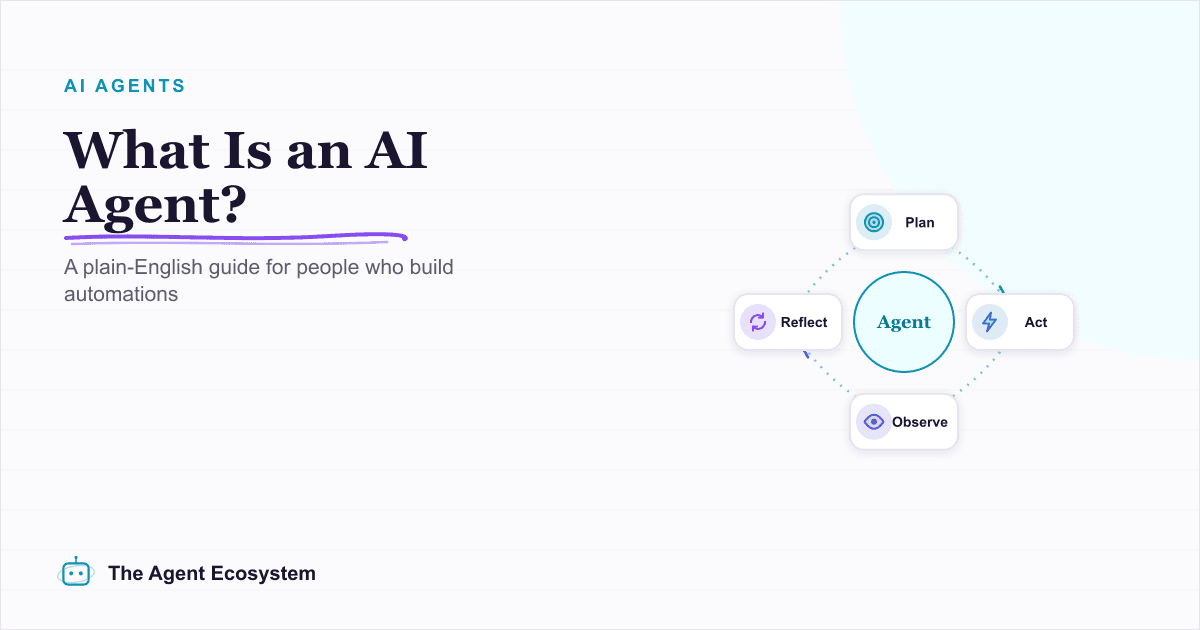
What Is an AI Agent? A Plain-English Guide for Builders
An AI agent is a language model running in a loop that decides its own next action, not a chatbot and not a chain. Here is how the perceive-decide-act-observe loop works, how an agent differs from a chatbot, chain, and workflow, and a checklist for when you actually need one.