MCP and A2A: Do These Agent Protocols Matter If You Use n8n?
A builder synthesis: which agent protocol a small n8n team should actually adopt now.
AI-drafted, reviewed by Muhammad Qasim Hammad on July 4, 2026. See our AI disclosure.
Table of contents
You keep seeing MCP and A2A in every agent thread, and the framing sounds like you must adopt both or fall behind. On a small team shipping automations in n8n, that pressure is mostly noise. One of these protocols is already a node you can wire today; the other is aimed at a coordination problem you probably do not have yet.
Do agent protocols on n8n matter for a small team?#
Agent protocols matter unevenly for a small n8n team. MCP earns attention now because n8n already ships an MCP Client Tool node, so you can connect an agent to external tools today. A2A targets multi-agent, multi-vendor coordination and, per the Linux Foundation, is enterprise-facing, so most small builders can wait.
The split is cleaner than the hype suggests. Per the MCP maintainers and the Linux Foundation's A2A announcement dated 9 April 2026, MCP wires a single agent to tools and data, while A2A lets agents from any framework discover each other and hand off tasks. Those are different jobs. One extends what your agent can touch; the other coordinates a fleet of agents you would have to be running first. As of early July 2026, verify before relying, but the mechanics point a small team squarely at MCP.
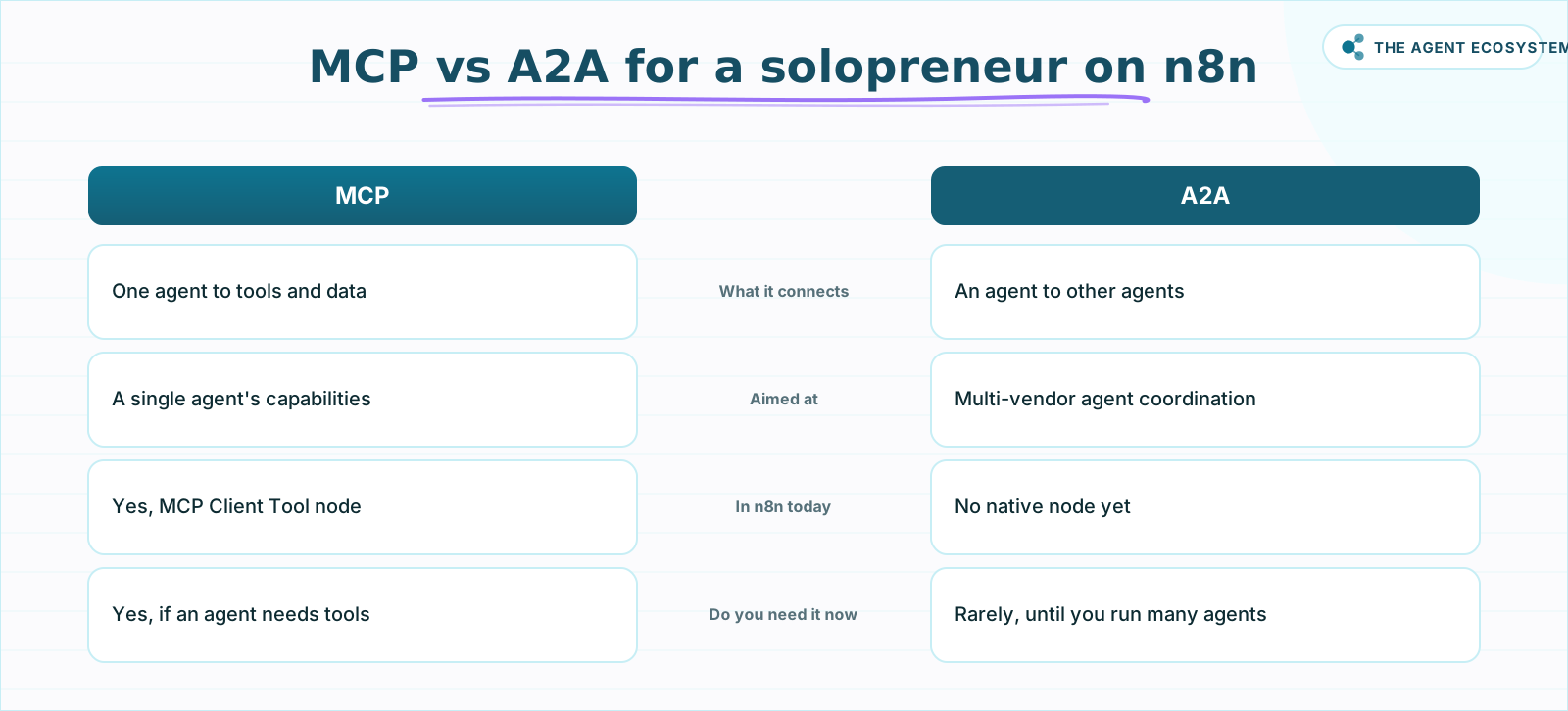 Drawn from the MCP maintainers and the Linux Foundation A2A announcement dated 9 April 2026. MCP extends one agent; A2A links many.
For someone shipping one or two workflows a week, that mechanical difference is the whole decision. You almost certainly have tools you want an agent to reach. You almost certainly do not yet have several independent agents from different vendors that need to negotiate work between themselves.
What is MCP and why can you use it in n8n today?#
MCP is an open protocol that connects one agent to tools and data through a standard interface, and n8n exposes it as an MCP Client Tool node. That means your n8n agent can call an external MCP server's tools without custom glue, which is why MCP is the protocol you can actually adopt on n8n this week, not next year.
The timing is about to get better. Per the MCP maintainers' blog, the next specification is at release candidate now and the final spec ships 28 July 2026. Its headline change is that MCP becomes stateless at the protocol layer, so a remote MCP server that once needed sticky sessions and a shared session store can run behind a plain round-robin load balancer. The same release aligns MCP authorization with OAuth 2.1 and OpenID Connect, which makes hosting a secured remote server realistic for a small team. As of early July 2026, verify before relying; builder write-ups flag roughly 6 breaking changes production servers must handle before the date.
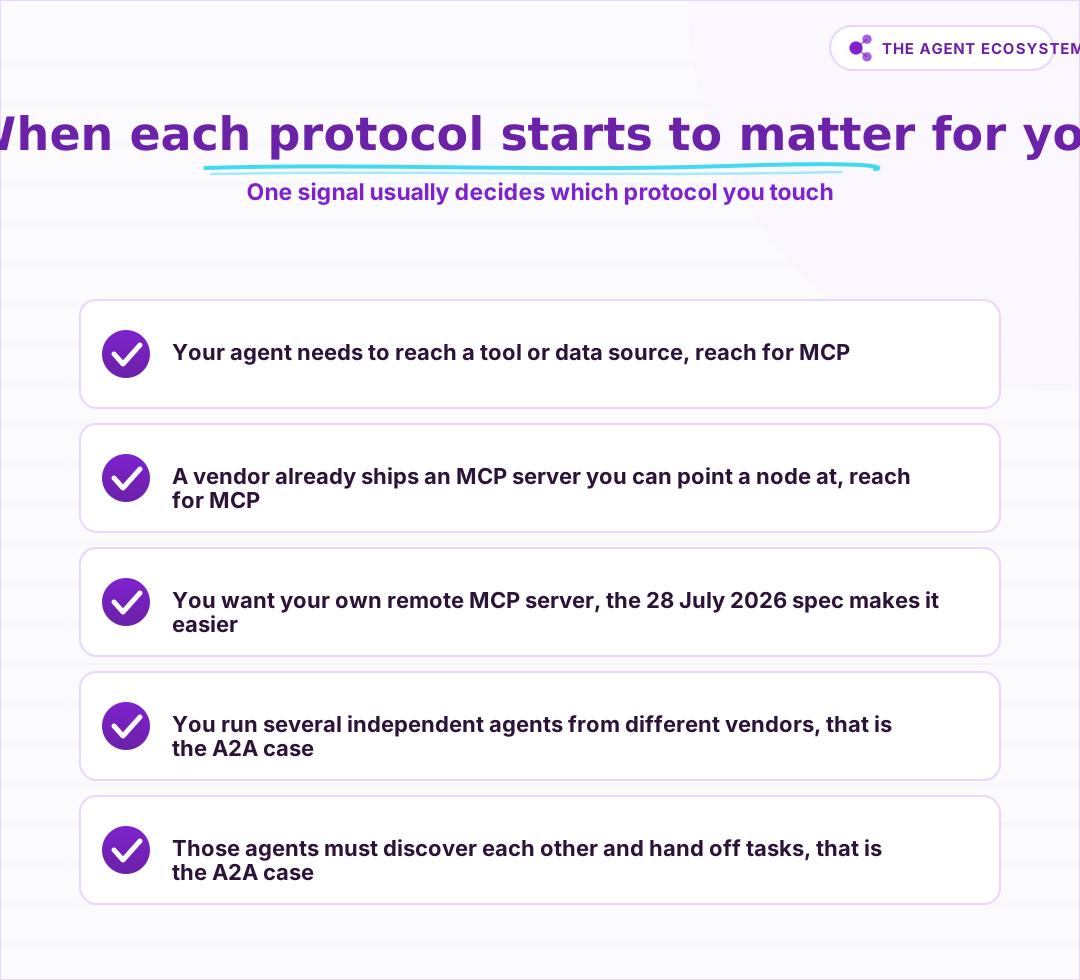 Signals drawn from the mechanics of each protocol; MCP triggers early, A2A only once you run separate agents.
If you already read our n8n MCP AI agent walkthrough, the node itself is not new. What changes on 28 July 2026 is that running your own remote MCP server gets meaningfully simpler and easier to secure.
What is A2A and do most n8n builders need it yet?#
A2A is an open protocol, first built by Google in April 2025 and now governed by the Linux Foundation, that lets agents from any framework discover each other and exchange tasks across vendors. It targets multi-agent, cross-platform coordination, so most solo or small-team n8n builders do not need it yet.
The adoption signals are real but enterprise-shaped. Per the Linux Foundation announcement dated 9 April 2026, A2A passed 150+ production organizations and 22,000+ GitHub stars, with SDKs in 5 production languages, alongside A2A v1.0, signed Agent Cards, and GA support inside Microsoft Copilot Studio, Azure AI Foundry, and Amazon Bedrock AgentCore. Those are the environments where agents from different teams and vendors collide. On a small team, your agents usually live inside one n8n instance, so the agent-to-agent handoff A2A standardizes is a problem you have not hit. As of early July 2026, verify before relying.
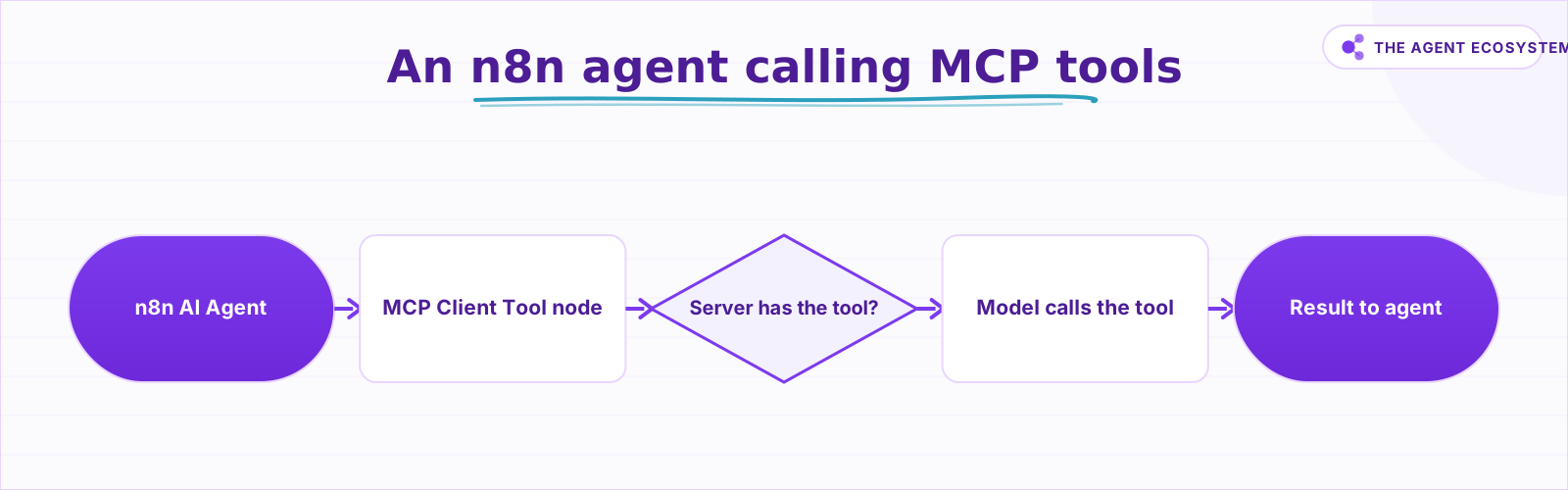 The n8n MCP Client Tool node lets one agent discover and call an external server's tools; the model still invokes each tool.
None of this means A2A is irrelevant forever. It means the coordination it solves shows up later, once you run genuinely separate agents that cannot simply be sub-workflows in the same instance.
MCP vs A2A: which should you reach for on n8n?#
Reach for MCP first on n8n, because it connects your agent to tools and data and already exists as a node. Treat A2A as a later concern, because it coordinates separate agents across vendors, which small teams rarely run. The two are complementary: MCP extends one agent, A2A links many.
Here is the plain mapping, drawn from the MCP maintainers and the Linux Foundation A2A announcement dated 9 April 2026.
| Protocol | What it connects | Do you need it on n8n? |
|---|---|---|
| MCP | One agent to tools and data | Yes, usable today via the MCP Client Tool node |
| A2A | An agent to other agents | Rarely yet; it is aimed at multi-vendor enterprise coordination |
The honest read for a small team is a sequence, not a versus. Wire MCP now to give your one agent real reach, keep an eye on the 28 July 2026 spec for easier remote servers, and revisit A2A only when you actually run multiple independent agents. Our MCP servers solopreneur guide covers the day-one MCP setup in depth.
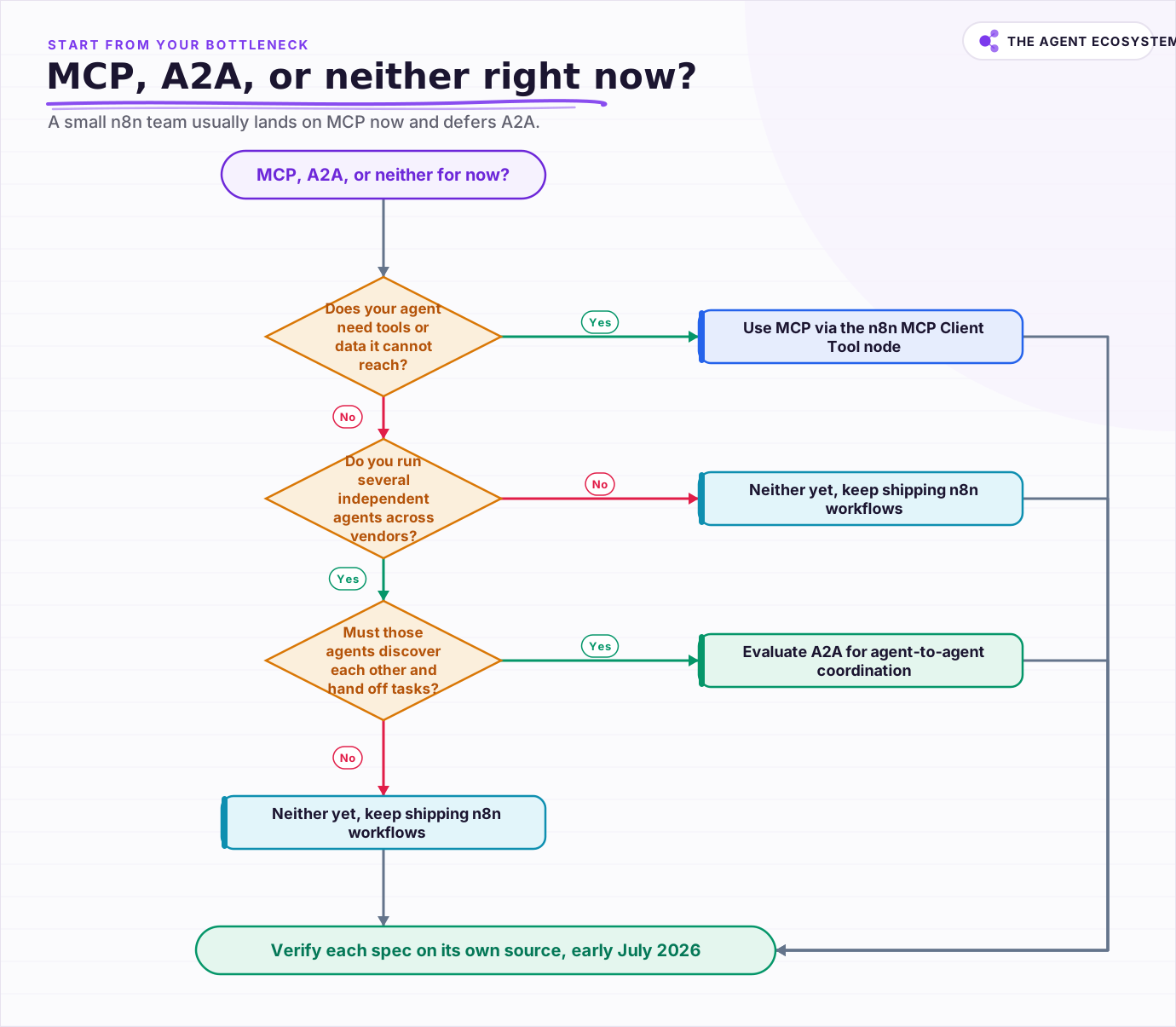 Start from what your bottleneck is; a small team usually lands on MCP now and defers A2A.
So what should a small n8n team actually do?#
For most small n8n teams, the practical move is to adopt MCP now and defer A2A. MCP gives your single agent tools and data through an existing node, and its 28 July 2026 spec makes remote servers easier to run and secure. A2A stays on the watchlist until you genuinely coordinate multiple independent agents.
Keep the framing simple. If your bottleneck is what one agent can do, that is MCP, and you can act this week. If your bottleneck is many agents negotiating tasks across vendors, that is A2A, and it is probably not your bottleneck yet. When you do reach real multi-agent work inside n8n, our n8n multi-agent orchestration guide is the next step. Everything above is dated to early July 2026, so verify each spec and milestone on its own source before you build.
Frequently asked questions
What is the difference between MCP and A2A?
Can I use MCP in n8n right now?
Does a small n8n team need A2A?
What changes in the 28 July 2026 MCP spec?
Are MCP and A2A competitors?
Sources
Primary references and vendor documentation used while drafting and reviewing this article.
- MCP blog: 2026-07-28 release candidate (stateless core, OAuth 2.1/OIDC, Extensions)
- MCP 2026 roadmap (Extensions framework, Tasks, MCP Apps, deprecation policy)
- Linux Foundation: A2A surpasses 150 organizations, lands in major cloud platforms (9 April 2026)
- IBM: what the Agent2Agent (A2A) protocol connects and how it differs from MCP
- WorkOS: MCP 2026 spec and agent authentication
Written by

Muhammad Qasim Hammad is an AI agent and automation expert and the founder of Cart Gaze LLC (cartgaze.com). He builds product for the love of it: when an idea lands, a working prototype is usually running within hours, built with the same AI agents and automations he sells. He puts his own output at roughly 20× what it was before agents, and the Agentic OS behind this site is the working proof, documented in public with the tools he actually ran and what they really cost.
AI & Automation Services
Want a pipeline like this running in your business?
I'm Qasim — I design and ship AI agents and n8n automations for solo operators and small teams. Tell me what's eating your team's week, and I'll scope a fix.
Related reading
A2A: How AI Agents from Different Vendors Coordinate
A2A (Agent2Agent) is an open, Linux Foundation-governed protocol that lets AI agents from any vendor discover each other and hand off tasks. Here is how Agent Cards work, how A2A differs from MCP, and whether your small team needs it yet.

Function Calling vs MCP vs Tools: Give an Agent Capabilities
You keep seeing function calling, tool use, and MCP used as if they compete. They do not. Tools are the functions, function calling is the model mechanism that calls them, and MCP is the standard that shares them across clients. Here is how the three layers stack and which to
How to Use n8n with MCP: Client, Server, and AI Agent Setup
Your n8n AI agent can chat, but it cannot act beyond the nodes you hard-wired. The MCP Client Tool and MCP Server Trigger change that: one gives your agent a server's worth of tools, the other turns your workflows into tools Claude can call.
MCP's Biggest Update Ships July 28: Stateless, OAuth, Simpler Scaling
The Model Context Protocol's 2026-07-28 revision is at release candidate now. It makes the core stateless, aligns authorization with OAuth 2.1 and OpenID Connect, and reports about six breaking changes production servers must handle first. Here is what it means if you ship
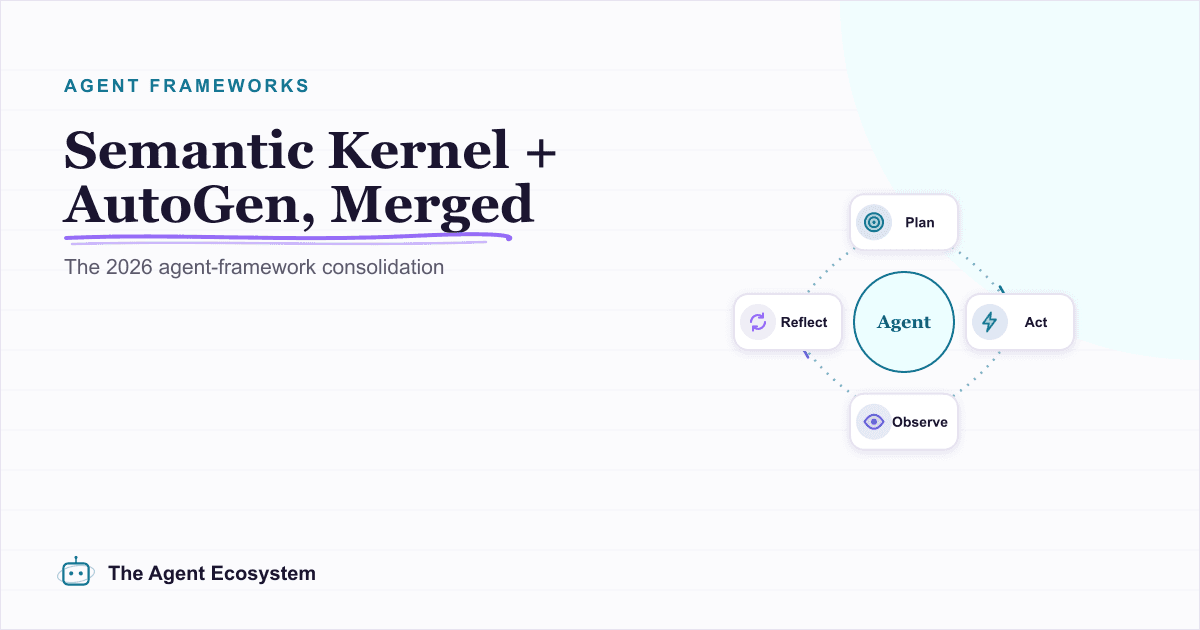
Semantic Kernel + AutoGen Merged: The 2026 Agent Framework Shift
Microsoft folded two of its biggest open-source agent projects, Semantic Kernel and AutoGen, into a single production SDK with version 1.0. Here is what the Microsoft Agent Framework bundles, where it sits against LangGraph, CrewAI, and OpenAI's Agents SDK, and how a small team
Everyone's Selling AI Agent Factories. You Just Need n8n.
HPE and NVIDIA's AI Factory, NVIDIA's Vera CPU and Agent Toolkit, and NAVER's coming platform are real enterprise agent infrastructure. For a small team, they are mostly noise. Here is where the heavy stack earns its keep, and why I would still default to n8n and one API.