Multi-Model Fallback in n8n: Stay Up When Claude Is Down or Over Budget
A fallback ladder for n8n: primary, cheaper, local, human.
AI-drafted, reviewed by Muhammad Qasim Hammad on June 30, 2026. See our AI disclosure.
Table of contents
Your n8n workflow passed every manual test, ran clean for weeks, and then one afternoon a model call came back 529 overloaded during a traffic spike. The run died, no output was written, and no alert fired. The model call is the least reliable step in the whole workflow, because it fails on conditions the provider controls, not on input you can validate. A multi-model fallback assumes the primary will sometimes fail and routes the work down a ladder of cheaper, local, and human options so one bad call never kills the run.
A Postgres node fails when your query is wrong. A model node fails when the provider is rate-limited, overloaded, or slow, none of which you control. You defend against that with a ladder, not a single node.
Why does a single-model n8n workflow fall over?#
A single-model workflow has exactly one way to answer, so when that model returns an error the whole run stops. The failure is not a bug in your logic; it is the provider being rate-limited, overloaded, or slow at the wrong moment. Without a fallback path, a transient 529 becomes a dropped job and a silent gap in your output.
The fix is to plan for the failure instead of hoping it does not happen. A fallback ladder escalates one rung at a time: the primary model with retries, then a cheaper secondary, then a local model, then a human. Each rung fires only when the one above it cannot deliver, so most traffic never leaves the top rung and the cost of resilience stays near zero.
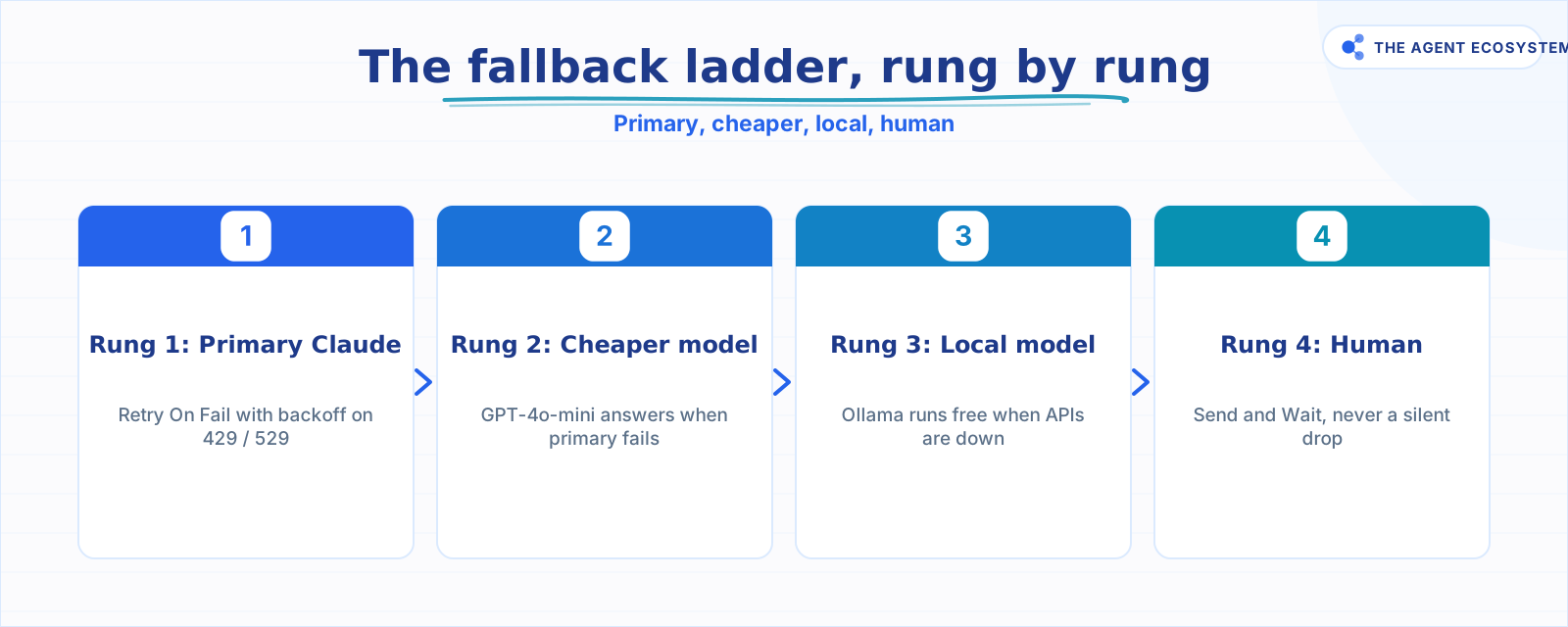 Each rung fires only when the rung above cannot deliver, so most traffic never leaves Rung 1.
The structural insight worth repeating: normal nodes fail on input you control, and the model node fails on provider conditions you do not. That is why you build the model step as a sequence of options rather than a single call, and why classifying the error correctly is the first real decision.
When should you retry versus fail over to another model?#
Retry the transient, provider-side errors and fail over only when retries run out. A 429 clears with a short wait, so retry it after honoring retry-after. A 529 or a 504 timeout means the provider is struggling, so retry briefly then fail over. Never retry a 400, 401, or 403; those are your bug, and retrying just fails slower.
| Status | Type | Cause | Action |
|---|---|---|---|
| 429 | rate_limit_error | Your account hit a limit | Wait retry-after, retry primary |
| 529 | overloaded_error | Global overload, not your quota | Fail over fast |
| 504 | timeout_error | Request timed out | Retry once, then fail over |
| 400 | invalid_request_error | Malformed request | Do not retry, fix it |
| 401 / 403 | auth / permission | Credential problem | Do not retry, alert a human |
In n8n you wire the retry with node settings, named verbatim: turn on Retry On Fail, set Max Tries (2 to 5), and set Wait Between Tries (up to 5000 ms). One gotcha: if On Error is set to a Continue value, the retry settings are ignored, so set them together deliberately. The Anthropic SDKs already retry connection errors, 408, 409, 429, and 5xx about twice with exponential backoff, so your n8n retry sits on top of that, or replaces it if you call the raw API. The n8n error-handling guide covers these node settings in depth.
How do you build the fallback ladder in n8n?#
Build it rung by rung off the error output. Rung 1 is your primary Claude node with Retry On Fail. The quickest two-model net is the AI Agent node's Enable Fallback Model option, which connects one backup chat model when the primary fails. For three or more rungs, you hand-wire the error lane instead.
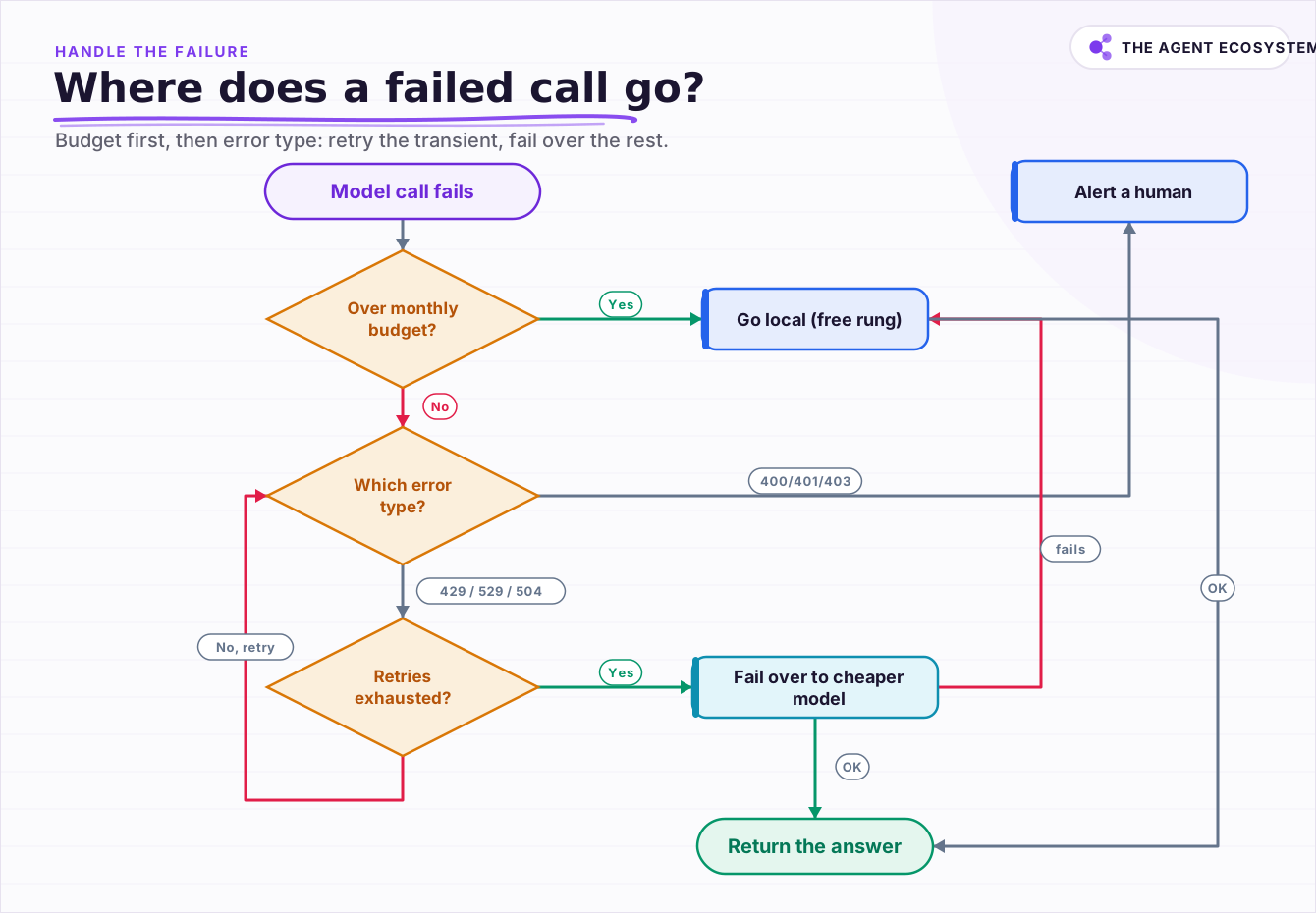 Budget first, then error type: retry the transient, fail over the rest, end on a human.
The hand-wired ladder uses one setting as its backbone: set On Error to Continue (using error output) on each model node, so a failure passes down the error lane instead of stopping the run. Route the primary's error lane into a cheaper model (say GPT-4o-mini), route that node's error lane into an Ollama Chat Model for a local rung, and route the local node's error lane into Send and Wait for Response so a human catches whatever the machines could not. A bare "Continue" silently drops items, so always use the error-output variant.
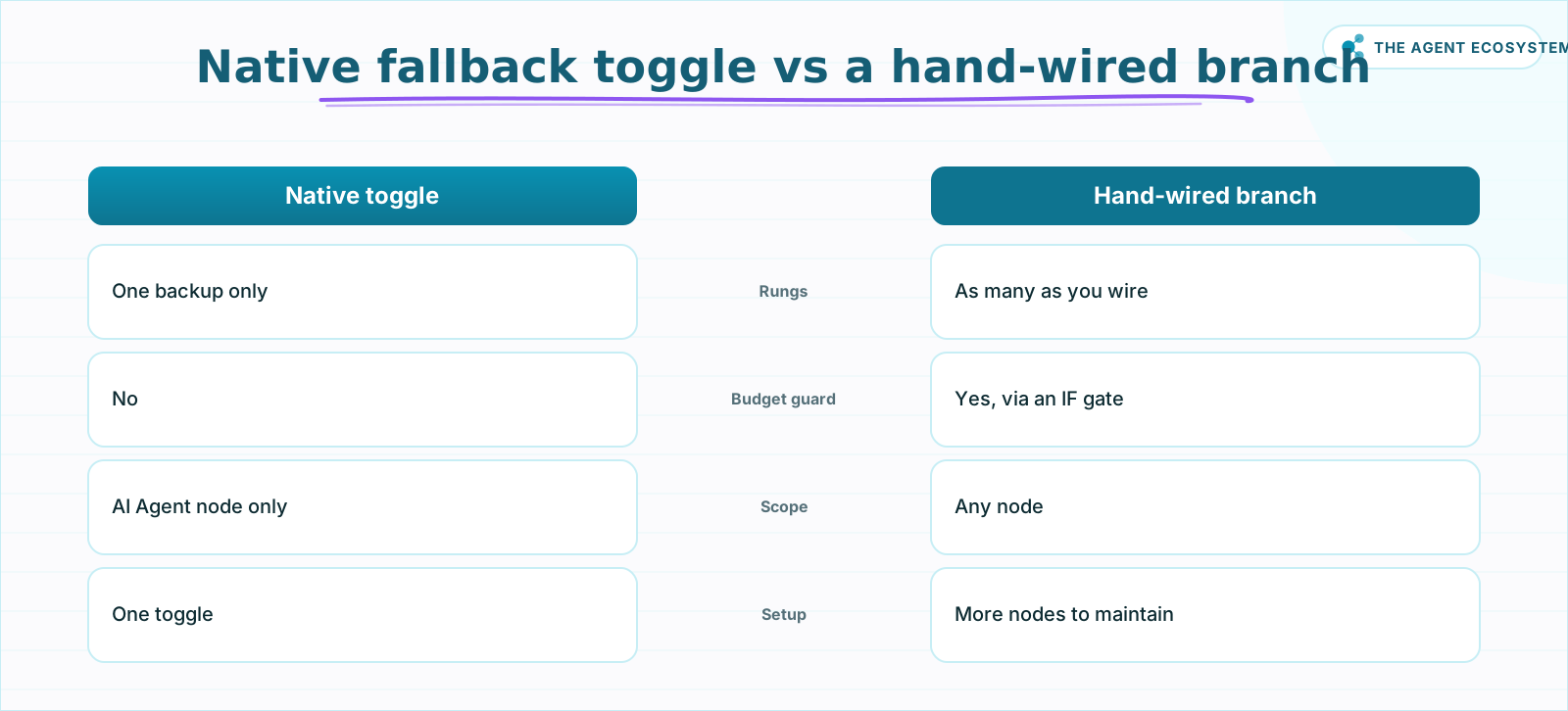 Use the native toggle for a quick two-model net; hand-wire when you need three-plus rungs or a budget guard.
The native toggle is the right call for a fast two-model net with no extra wiring. Hand-wire when you need three or more rungs, a budget guard, or fallback on non-agent nodes. Most production systems outgrow the single toggle the first time the budget or a third rung matters.
How do you add a budget guard so you never blow the plan?#
Keep a running monthly spend counter in a store, and check it with an IF or Switch gate before each call. If you are over budget, skip the paid rungs entirely and drop straight to the free local model or a human queue. That is why over budget is the first branch in the flowchart, ahead of the error check.
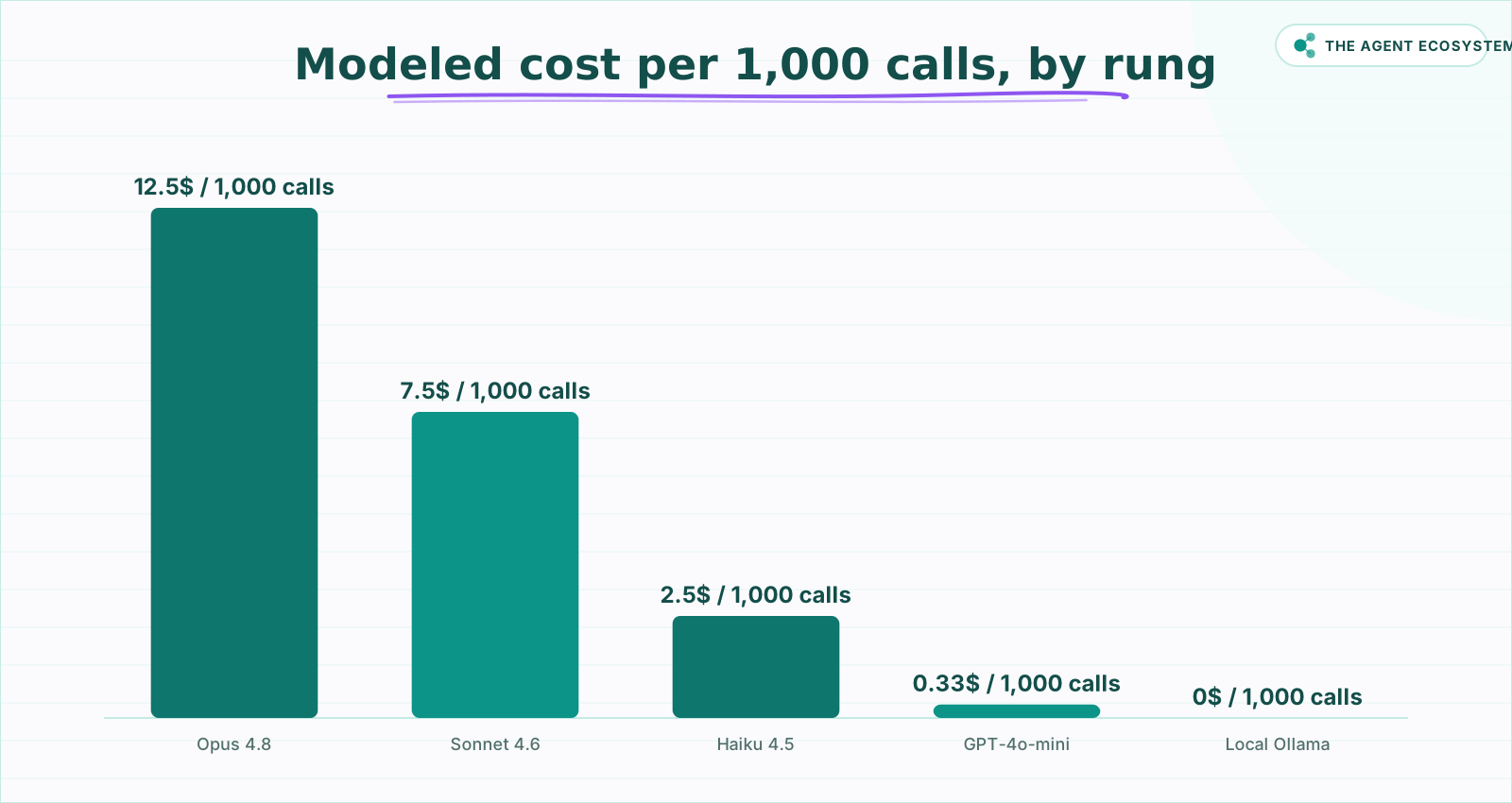 Modeled from June-2026 prices at 1,000 in + 300 out tokens per call. Local marginal token cost is $0; hardware not counted.
The cost gap is what makes degrading almost free. Modeled at 1,000 input and 300 output tokens per call on June-2026 prices, an Opus 4.8 call is $0.0125 and a GPT-4o-mini call is $0.00033, roughly 38 times cheaper, while a local Ollama call has $0 marginal token cost. So routing overflow traffic to a cheaper rung barely dents quality-weighted spend. Reset the counter monthly with a Schedule Trigger, and set the cap below your Claude tier's spend ceiling (Tier 1 tops out at $500/mo) so your own guard trips before billing does. For tighter control of the primary's spend, the Claude API cost control guide pairs well with this gate.
What is the catch with multi-model fallback?#
The catch is that a cheaper rung is not a free swap; a Haiku, GPT-4o-mini, or local answer is not an Opus answer. The danger is a fallback that silently degrades quality with no trace, its own kind of outage. The fixes are small but non-negotiable: tag every response with its rung, and alert on every fallback.
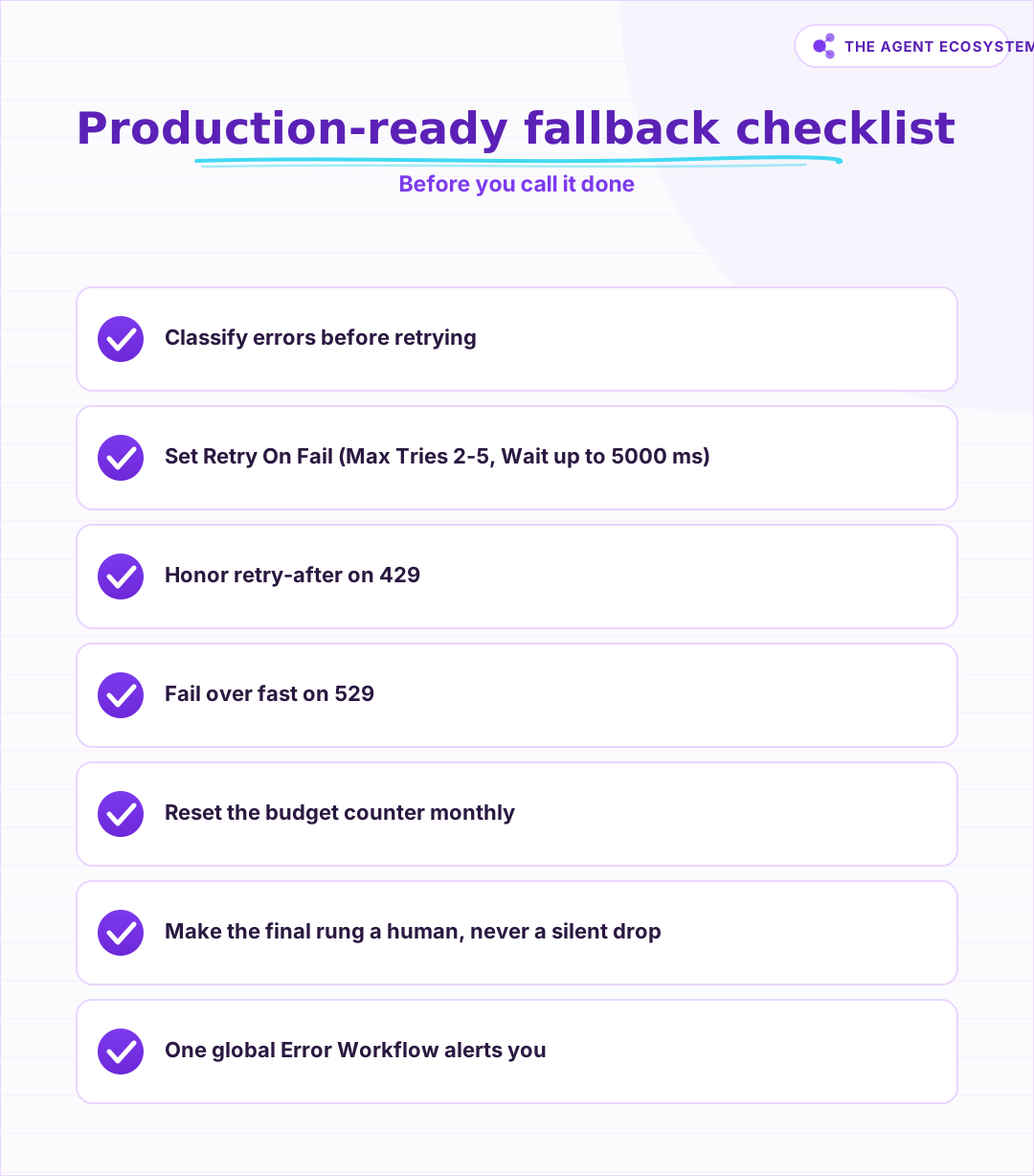 If you cannot tick all seven, a 2am 529 can still take the run down silently.
Three more traps catch people. Output-shape mismatch: different providers format differently, so normalize with structured output or a parser, or the next node chokes when a fallback fires. Native fallback is one-deep, so reach for the hand-wired ladder past two models. And no Error Workflow means no alert: add one global Error Trigger workflow that messages you, so even the human rung and the silent failures surface where you can see them. To cut the cost of the primary rung itself before any fallback, prompt caching trims the repeated portion of every call.
What should you set up this week?#
Start with the two-rung version you can ship today. Turn on the AI Agent node's Enable Fallback Model option, connect a cheaper backup model, and add a global Error Trigger workflow that messages you when anything fails. That alone converts most silent 529 deaths into a graceful swap plus an alert.
Then harden it as the workflow earns it. Add the budget IF gate that drops to a local model when you cross your cap, add the Ollama and human rungs on the error lane, and tag each response with the rung that produced it. Re-run a forced-failure test (point the primary at a bad key) and confirm the run degrades instead of dying. The goal is simple: no single model call should ever be able to take the whole workflow down.
Frequently asked questions
Is a 529 error my fault?
Should I retry a 429 or fail over immediately?
Does n8n have a built-in fallback model?
How do I keep the budget guard from blocking real work?
Won't a cheaper fallback give worse answers?
Sources
Primary references and vendor documentation used while drafting and reviewing this article.
- Claude API errors (429, 529, 504, 400/401/403)
- Claude rate limits (retry-after, tiers, $500 Tier 1 ceiling)
- Claude pricing (Opus/Sonnet/Haiku per MTok)
- OpenAI GPT-4o-mini pricing
- n8n AI Agent node (Enable Fallback Model)
- n8n error handling (Error Trigger, error workflow)
- n8n Ollama Chat Model node (local rung)
- Anthropic SDK auto-retry behavior
Written by

Muhammad Qasim Hammad is an AI agent and automation expert and the founder of Cart Gaze LLC (cartgaze.com). He builds product for the love of it: when an idea lands, a working prototype is usually running within hours, built with the same AI agents and automations he sells. He puts his own output at roughly 20× what it was before agents, and the Agentic OS behind this site is the working proof, documented in public with the tools he actually ran and what they really cost.
AI & Automation Services
Want a pipeline like this running in your business?
I'm Qasim — I design and ship AI agents and n8n automations for solo operators and small teams. Tell me what's eating your team's week, and I'll scope a fix.
Related reading
Keep n8n AI Workflows From Breaking: Retry, Fallback Models, and Error Branches
Your n8n AI workflow passed every test, then a 429 killed a whole overnight batch with no alert. This guide wires 3 defenses: Retry On Fail, a fallback model, and a global Error Workflow.

How to Build an AI Agent: The 80% That Survives Week Two
Most tutorials get you a working agent in ten minutes and skip what breaks it in week two. Sixteen lessons covering the loop, tool descriptions, memory, fallbacks, guardrails, evaluation, and the cost levers that decide your bill.
Rate-Limit-Proof n8n AI Workflows: Queues, Retries, Backoff
A Loop Over Items node fanning rows into an LLM keeps hitting 429 Too Many Requests, and every guide fixes it differently. Here is the full ladder: node retry, batching, Wait, hand-rolled backoff, and a real queue, with the built-in caps most posts bury.
How to Make Your n8n Workflows Reliable: Error Handling, Retries, and Alerts
n8n does zero error handling by default. Learn to add three layers: node retries, inline error outputs, and one Error Workflow that alerts you whenever any workflow fails silently.
Claude vs GPT vs Gemini in n8n: Tested Cost and Speed
There is a 25x cost spread between the cheapest and priciest LLM tier for the exact same n8n AI Agent workflow. This post prices all three providers across 11 model tiers so you can pick the right Chat Model sub-node and stop overpaying.
Cut Your AI API Bill: 7 Levers That Actually Work
To reduce AI API costs you need levers that change the bill by a verifiable mechanism, not vague advice. This hub names all seven, right-size the model, prompt caching, the Batch API, routing and fallback, local versus API, token discipline, and RAG over long-context, with a