Q4_K_M, GPTQ-4bit, AWQ: the names encode 2 separate choices, and the format matters more than the bit count. Measured quality by level on Llama-3.1-8B, the memory math including the KV cache, and which formats your hardware can actually run.
Most small businesses decide what data may reach their AI tools retroactively, when a client asks. Eleven lessons on the inventory, the three data tiers, what zero retention actually covers, and why the model is rarely the leak.
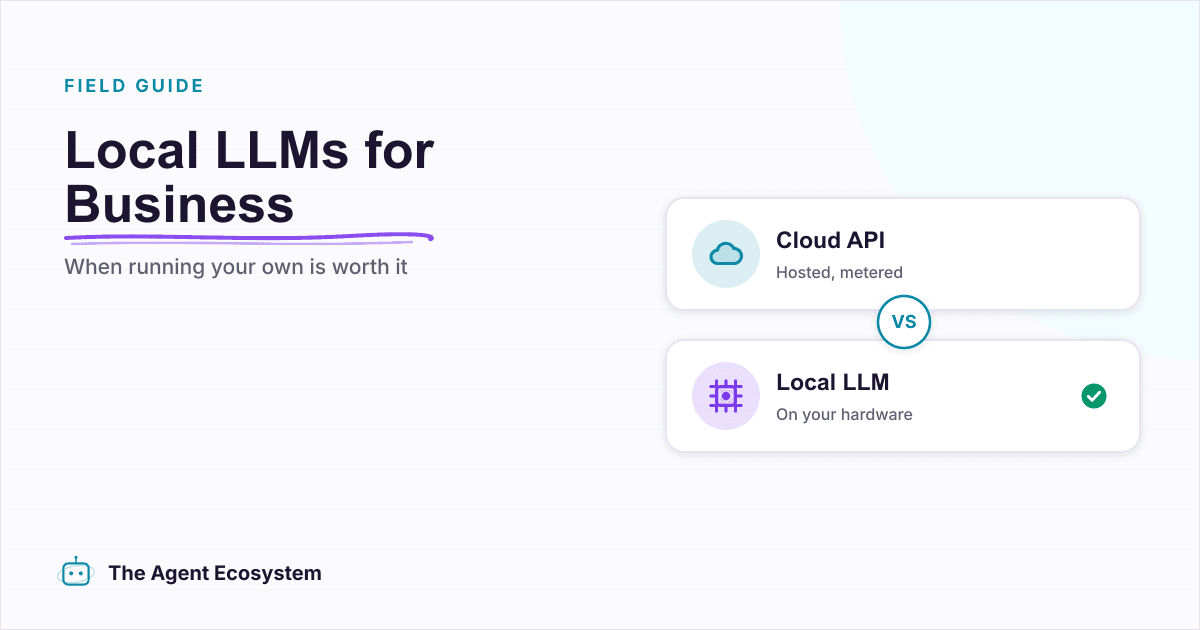
Local is free is the sentence that starts most bad local-LLM projects. Eleven lessons on naming a real reason, the costs that never appear on an invoice, sizing hardware to the model, proving privacy properly, and knowing when to give it back.
The fastest way to damage a small business with AI is to put a bot in front of customers before it knows when to stop. Twelve lessons on triage before answers, grounding in your own documentation, escalation that carries context, and why deflection rate flatters you.
Almost every AI automation ROI claim is unfalsifiable. Twelve lessons on the four cost meters people miss, why time saved is the weakest number you have, computing payback instead of a percentage, and deciding the kill threshold before you need it.
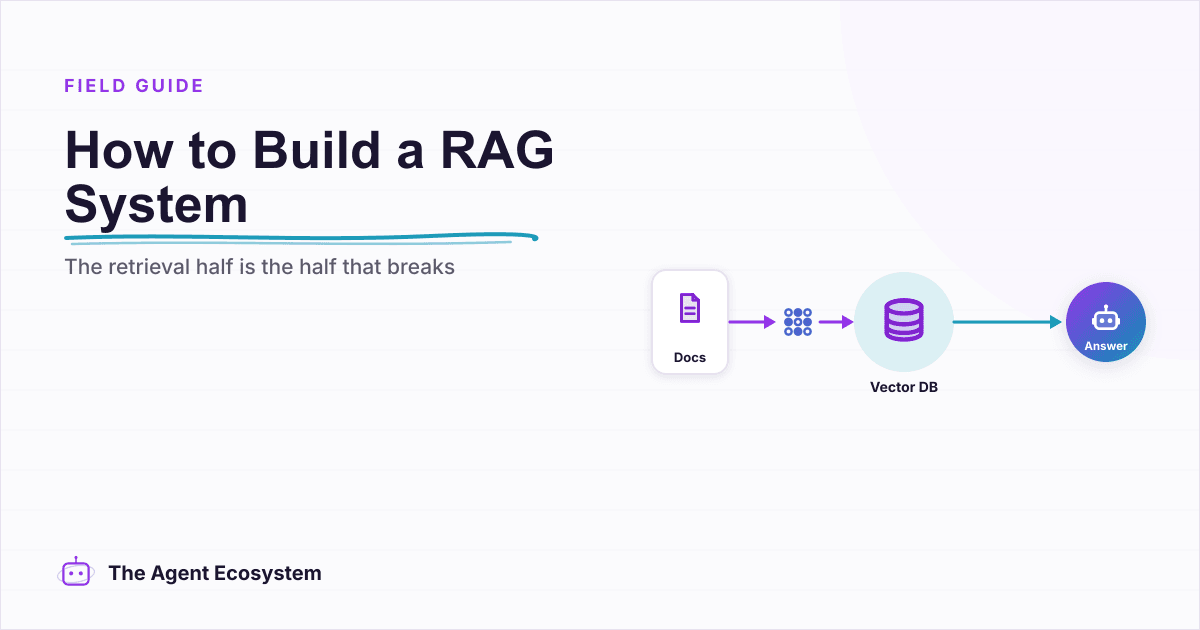
Most RAG systems fail at retrieval, not at the model. Twelve lessons on chunking for the question, hybrid search for exact strings, re-ranking, making it refuse, and measuring retrieval separately from generation.
Every model comparison you read was written against someone else's task. Twelve lessons on building the evaluation that produces your answer, pricing the choice properly, and making it reversible before the model changes underneath you.
You do not have an automation problem, you have a which-of-these-forty-things problem. Thirteen lessons on picking the first job, counting the baseline, building three automations that survive, and knowing when to stop.
The choice is arithmetic with one unknown, and the unknown is your duty cycle. Almost nobody measures it before signing for a month of reserved capacity.
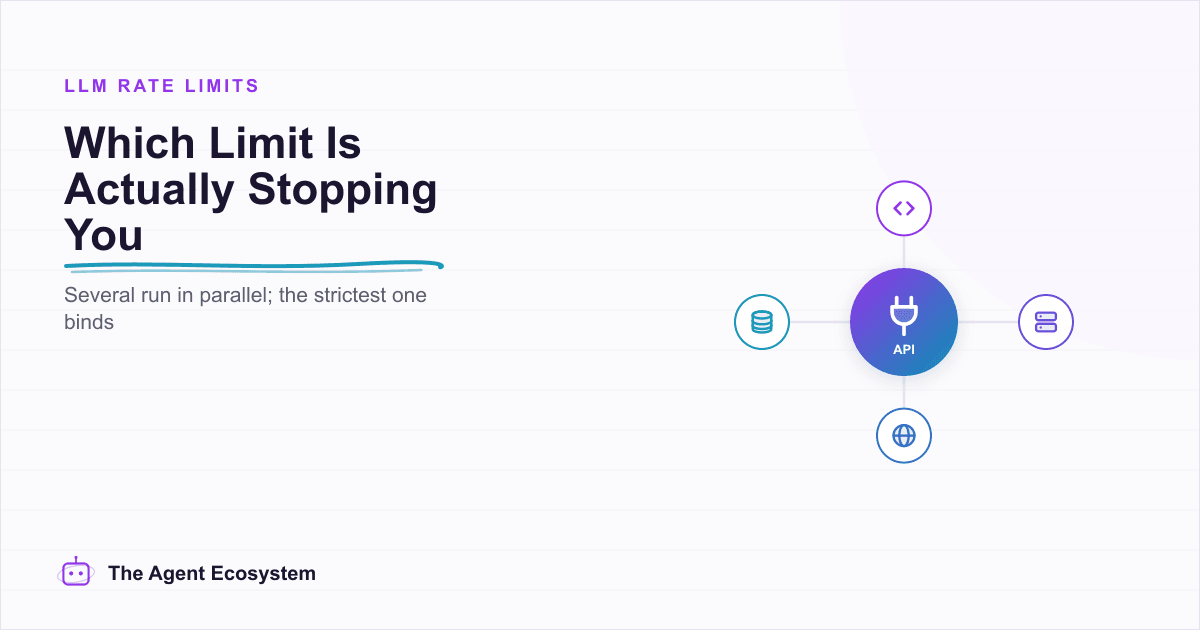
The first 429 usually gets blamed on request volume, and the real cause is usually a token ceiling nobody tracked. Which dimensions providers enforce, why token-bucket replenishment rejects bursts that look well under the limit, and why your output ceiling quietly spends quota.
Somebody will ask what good looks like, and there is a number ready for them. The ranges disagree because the denominators disagree, not because the industries do.
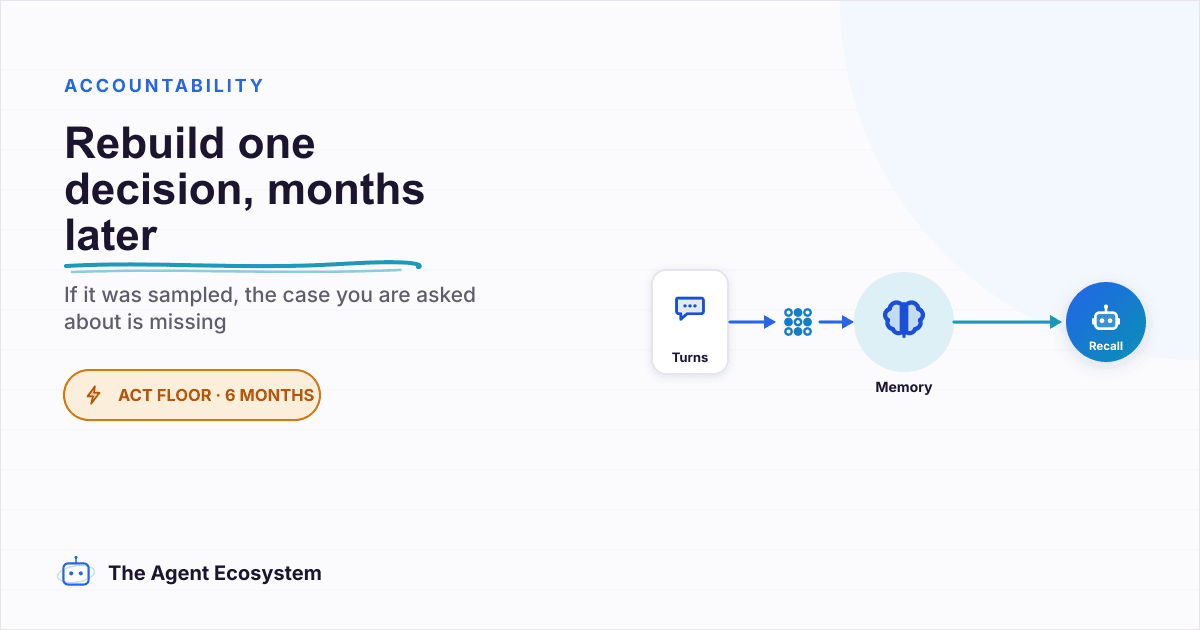
Somebody asks what your agent did on 14 March for one specific customer. Most teams find out the answer is no on the day the question is asked, not the day the log was designed.
The build estimate was 3 weeks and it was roughly right. The maintenance is the part nobody quoted, and it is predicted by a number you can count before committing.
An agent you deployed emailed a customer the wrong refund amount. The answer is always a person or a company, never the software, and which one is decided long before the incident.
Your provider bill is one number and your pricing page charges per seat. The arithmetic connecting them is usually done once, with an average, and the average describes a user who does not exist.
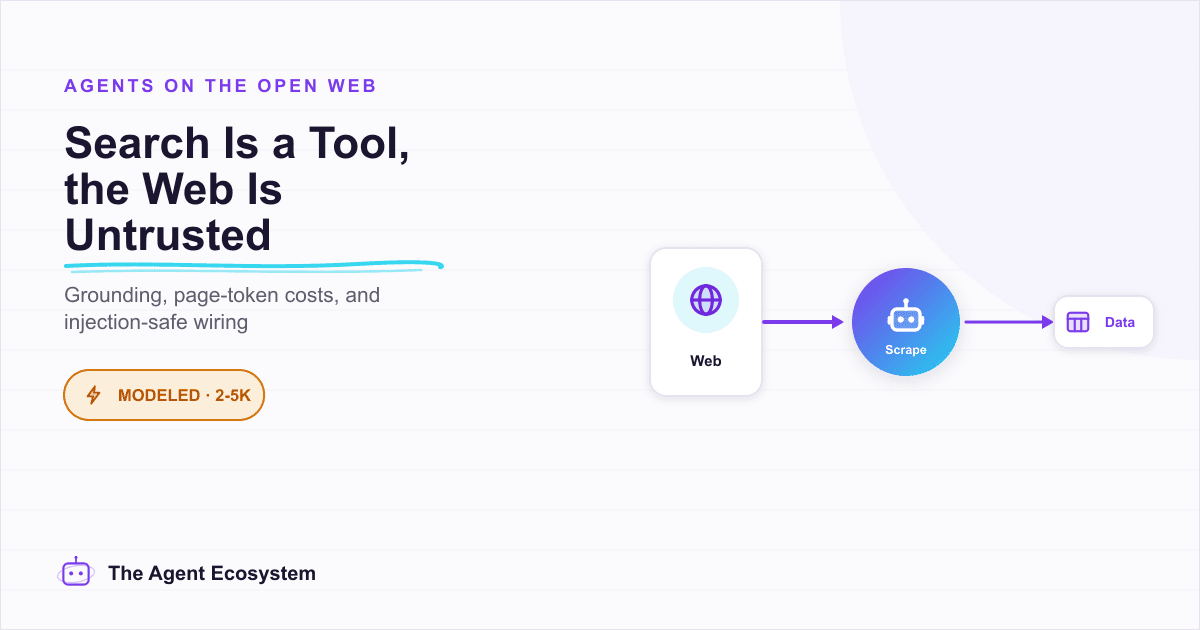
A search tool turns post-cutoff questions from hallucination bait into retrievable facts, and it brings 3 problems with it: choosing sources, paying for pages that become tokens, and reading text that may be aimed at the model rather than the user. This is the wiring guide: the
Most tutorials get you a working agent in ten minutes and skip what breaks it in week two. Sixteen lessons covering the loop, tool descriptions, memory, fallbacks, guardrails, evaluation, and the cost levers that decide your bill.
Same model, same tools, same prompt, 2 different machines: one answers when you type, the other triages your inbox at 6am and escalates what it couldn't handle. The difference is supervision, and removing it changes everything: latency stops mattering, durable state starts, and
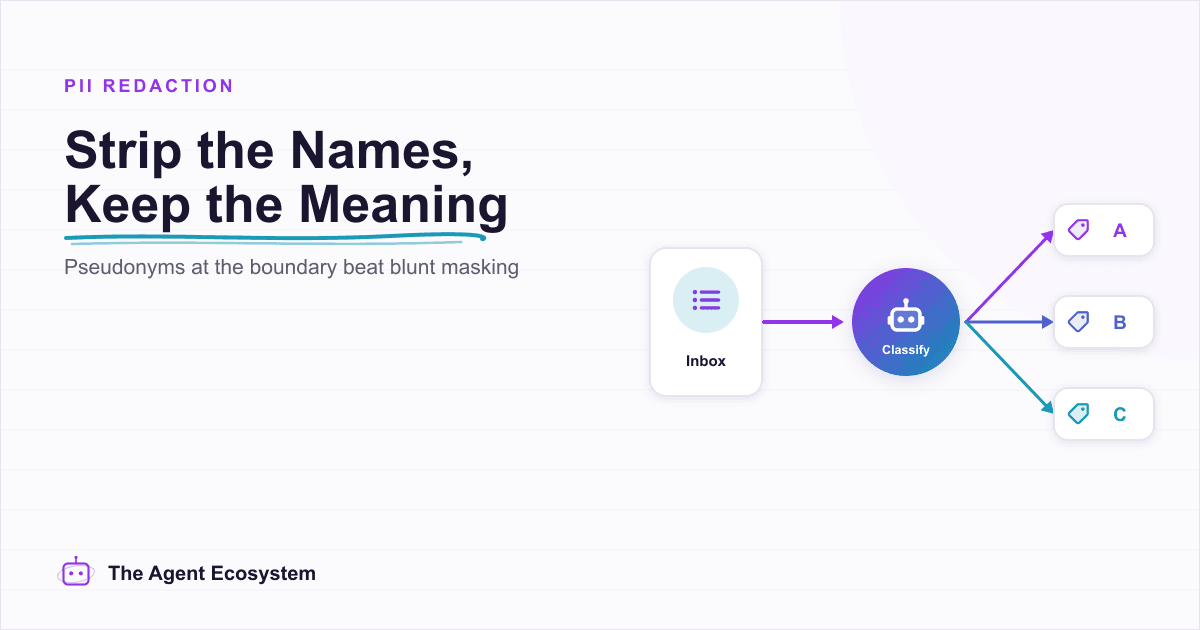
Every prompt containing personal data becomes 5 copies of that data: provider logs, your traces, caches, eval exports, bug reports. This is the redaction architecture that actually holds: a single boundary function, layered detectors, consistent pseudonyms like [PERSON_1] that
A 500-token answer takes 8 seconds either way; streaming decides whether the user reads for 8 seconds or stares at a spinner for 8 seconds. This is the mechanism: time to first token and cadence as the 2 numbers that define perceived speed, the buffering layers that silently
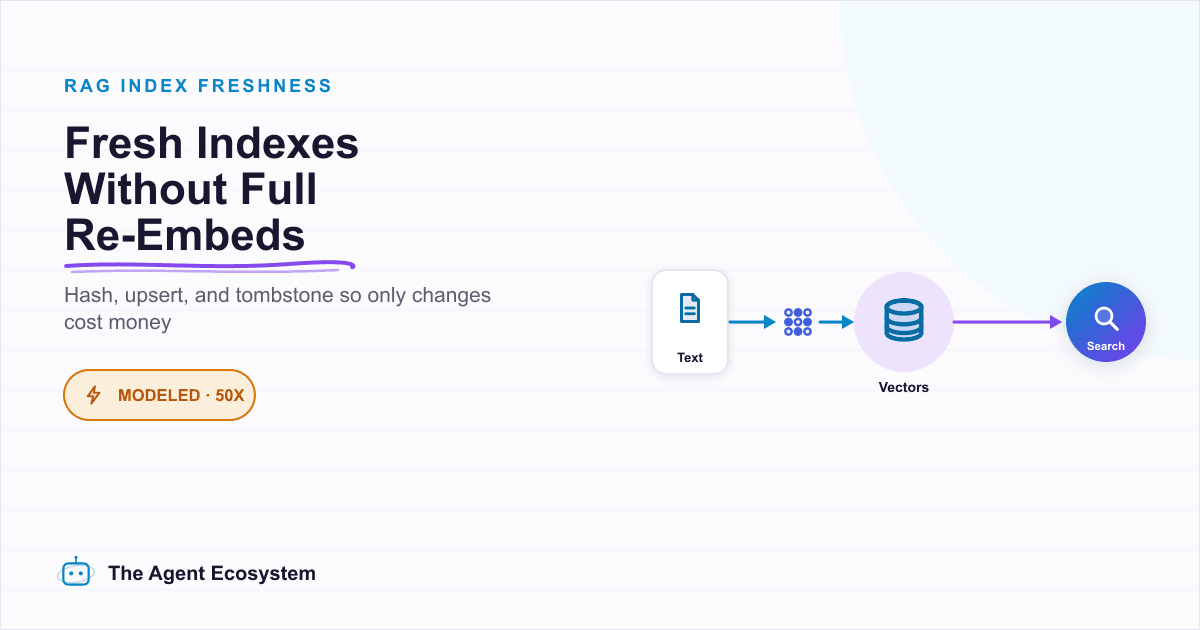
A RAG bot is only as current as its last ingest, and re-embedding the whole corpus nightly pays for thousands of unchanged documents to pick up a handful of edits. This is the incremental alternative: hash to detect changes, upsert by stable chunk IDs, tombstone deletes, and
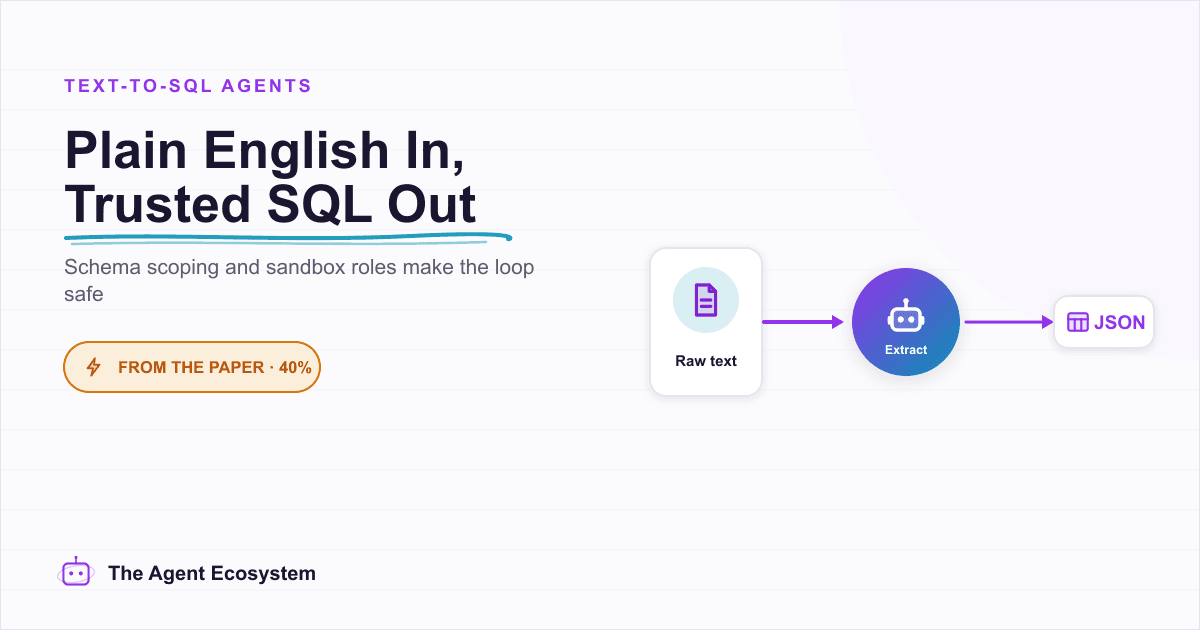
A text-to-SQL agent turns 'how many customers churned?' into a real query against a real database. The models are good enough to try this in 2026, but accuracy is mostly a schema problem and safety is entirely a database problem. This is the loop that makes generation reliable,
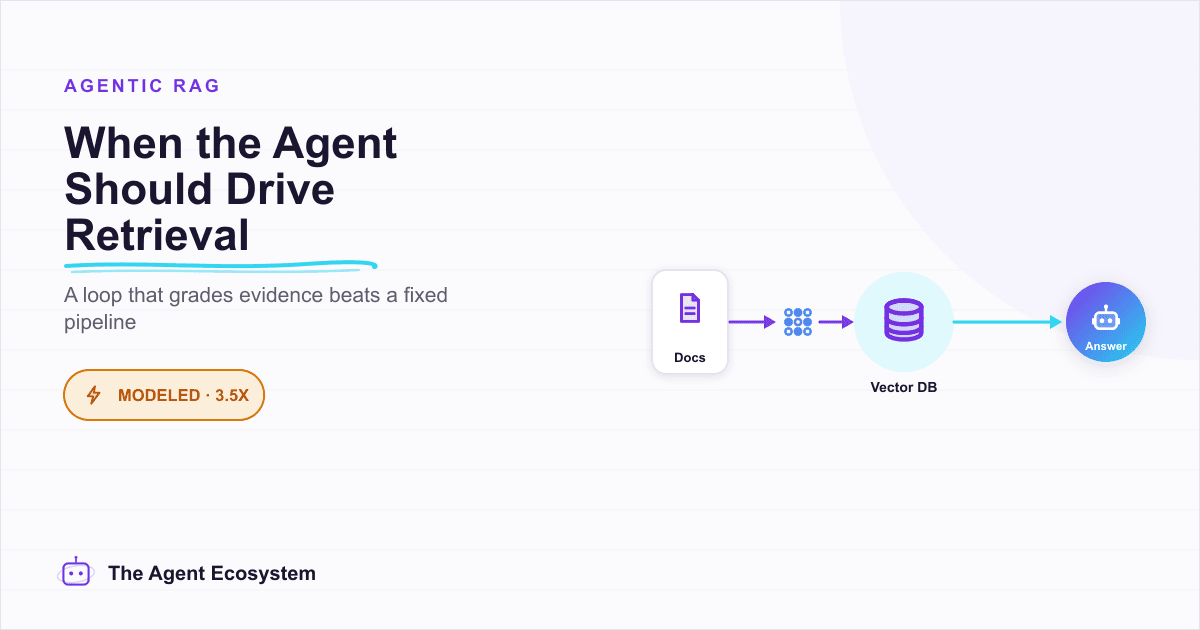
Classic RAG runs 1 fixed retrieval pass and hopes the chunks are right. Agentic RAG puts a model in charge of the search itself: rewriting queries, grading what came back, and retrying until the evidence covers the question. This is the mechanism behind the loop, the modeled 2
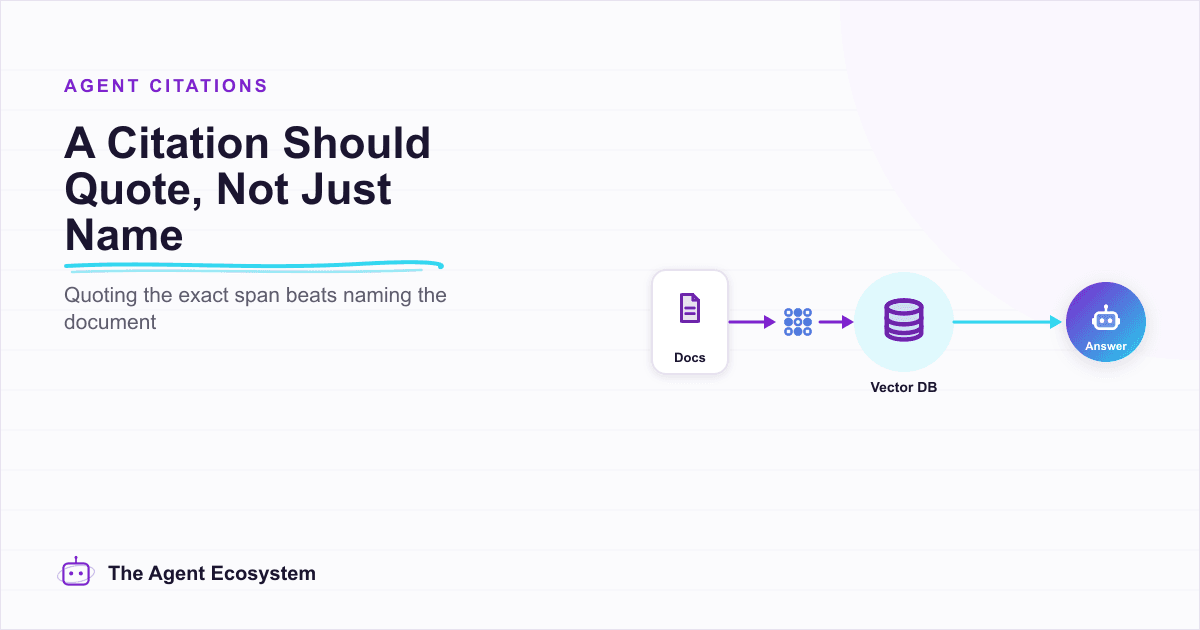
Naming a document is not the same as quoting it. This is the mechanism behind a real inline citation, the specific difference between a citation that is correct and one that is faithful, and why a confidently-wrong citation does more damage than an honest gap. Citations reduce