Installing a community MCP server means running someone else's code with your credentials, and nothing resembling an app-store review checks it first. Here is what the research and the official spec actually document about tool poisoning, supply-chain risk, confused-deputy
When an agent calls a tool on a user's behalf, most systems today can only see the agent, not the person. Here is what RFC 8693 token exchange and the newly shipped ID-JAG pattern actually do about that, and why a single shared credential stops working the moment more than one
An AI agent with real tool access is only as safe as its weakest credential and its execution boundary. This post covers the containment half of agent security: scoping every tool to its own narrow credential instead of one shared key, and running anything that executes code
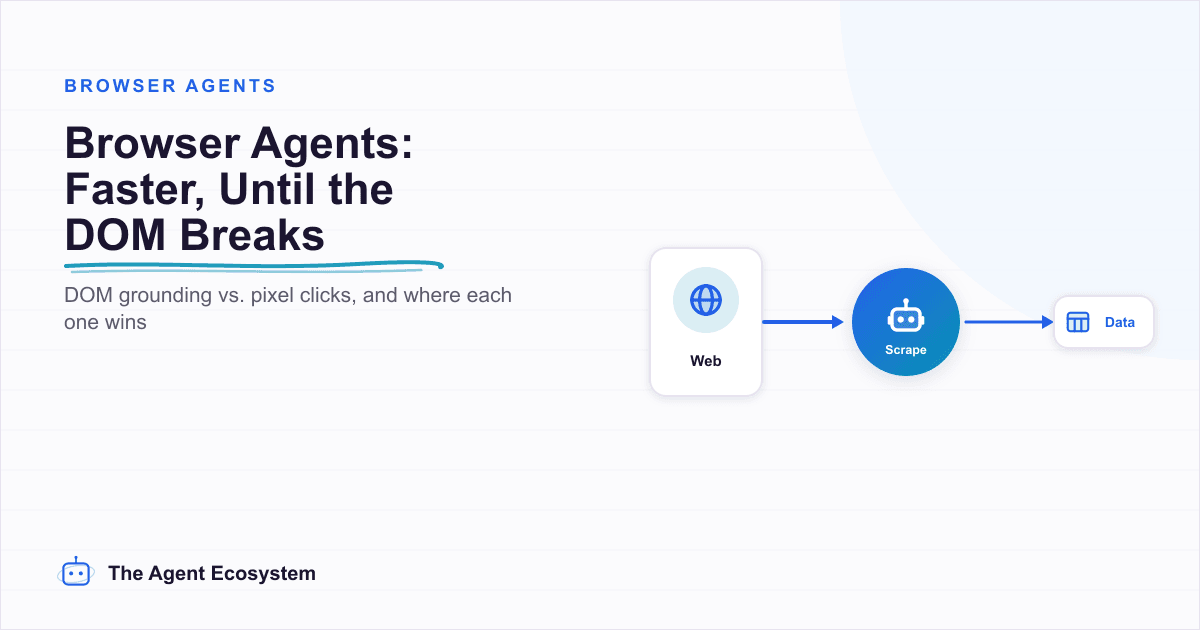
Browser agents and computer-use agents both drive real interfaces, but they read the page in completely different ways: one asks the browser for a structured list of elements, the other looks at a screenshot and guesses. That difference is why a DOM-aware browser agent is
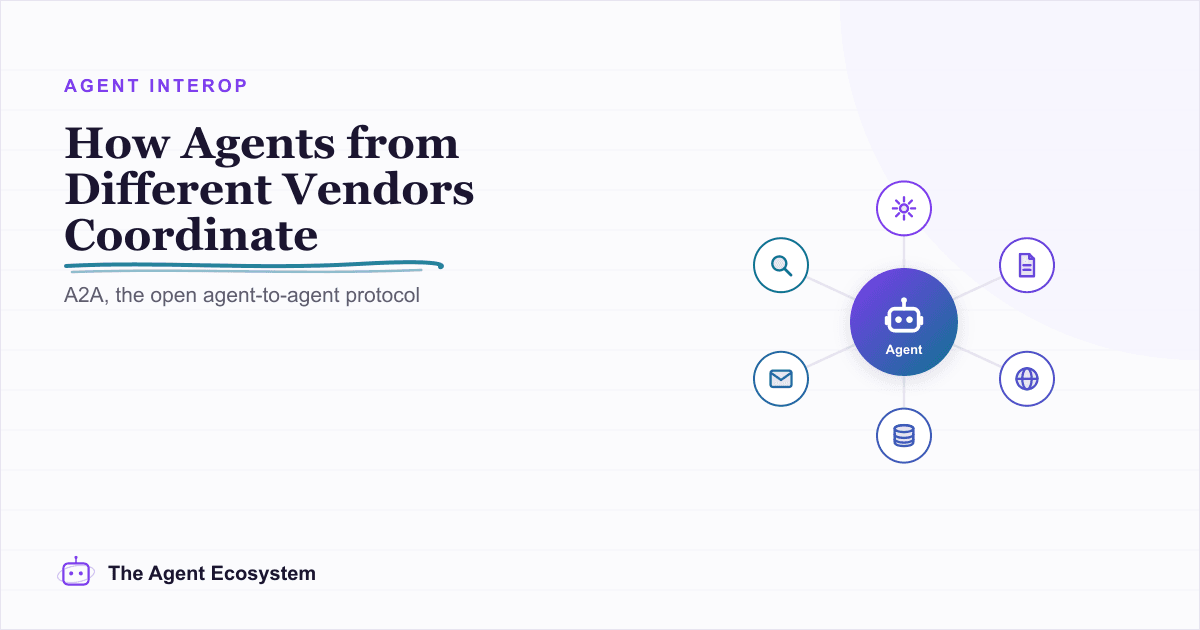
A2A (Agent2Agent) is an open, Linux Foundation-governed protocol that lets AI agents from any vendor discover each other and hand off tasks. Here is how Agent Cards work, how A2A differs from MCP, and whether your small team needs it yet.
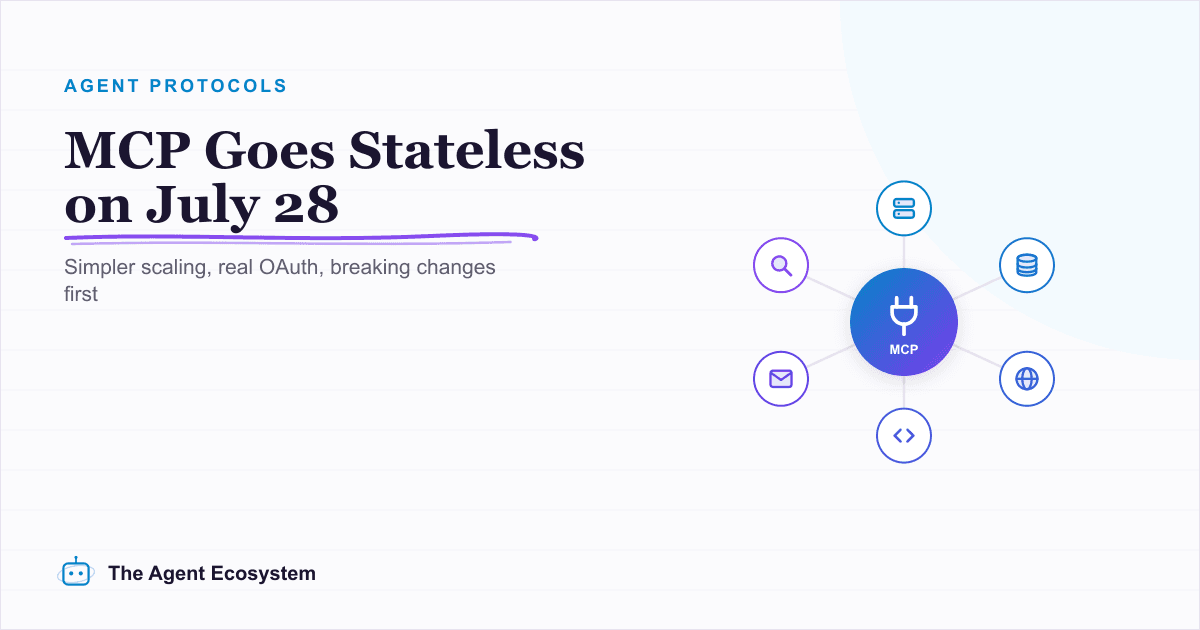
The Model Context Protocol's 2026-07-28 revision is at release candidate now. It makes the core stateless, aligns authorization with OAuth 2.1 and OpenID Connect, and reports about six breaking changes production servers must handle first. Here is what it means if you ship
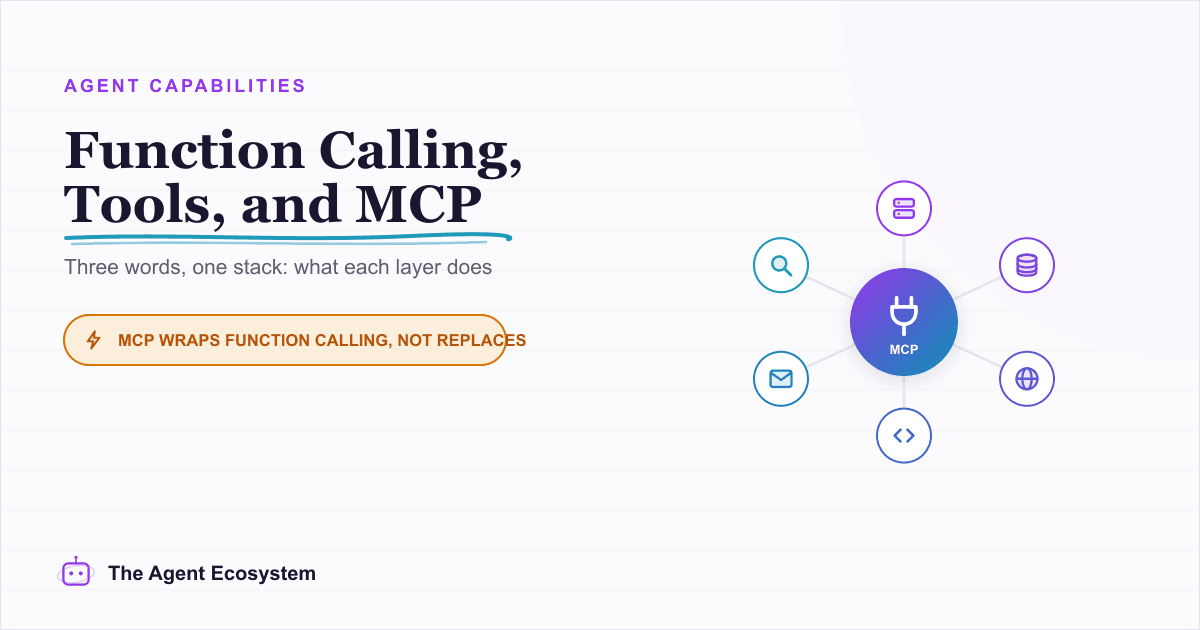
You keep seeing function calling, tool use, and MCP used as if they compete. They do not. Tools are the functions, function calling is the model mechanism that calls them, and MCP is the standard that shares them across clients. Here is how the three layers stack and which to
Three terminal AI coding agents compete in 2026: Claude Code, OpenAI's Codex CLI, and Google's new Antigravity CLI after Gemini CLI retired on 18 June. This honest comparison covers the model behind each, MCP and sandbox support, and what the usable tier really costs.
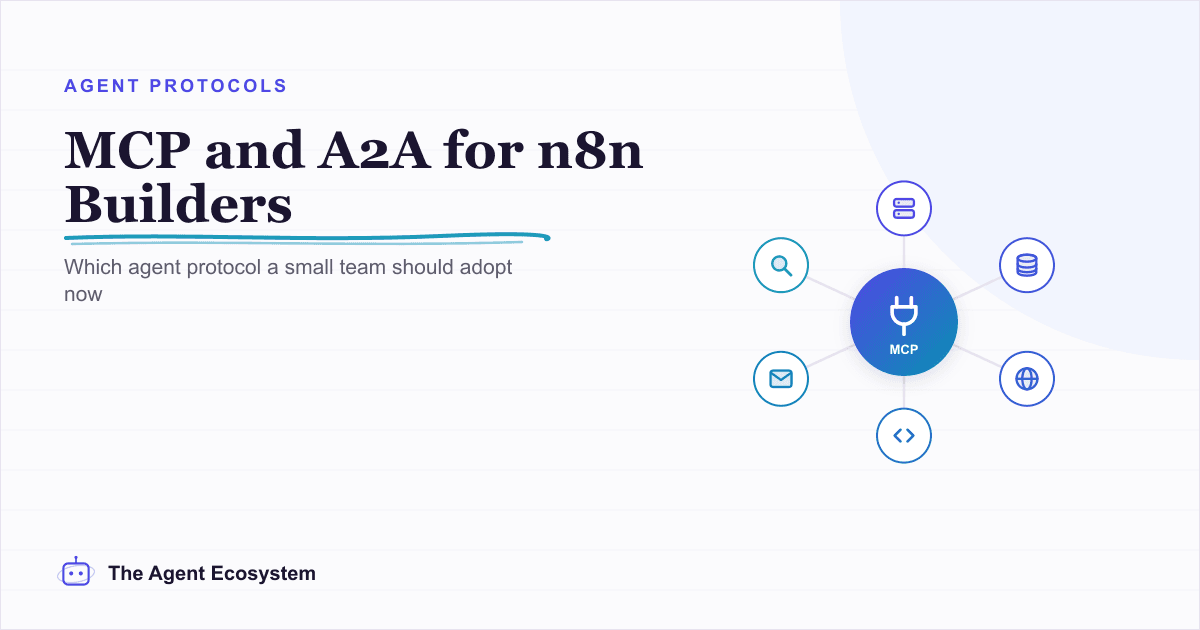
MCP and A2A are the two agent protocols everyone names, but they solve different problems. MCP connects one agent to tools and data and already ships as an n8n node; A2A coordinates agents across vendors and is aimed at the enterprise. Here is what each means for a solopreneur
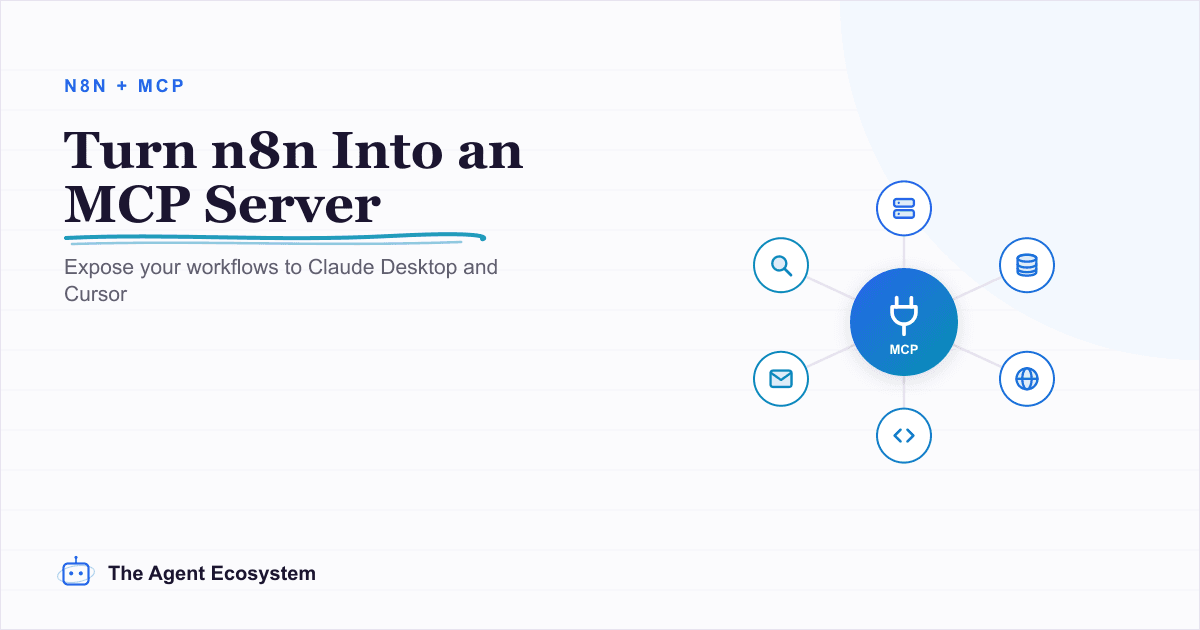
Stop leaving Claude Desktop to run n8n workflows by hand. The MCP Server Trigger node turns your existing workflows into callable tools so Claude and Cursor can invoke them directly.
I built the exact same order-status AI agent in n8n, Make.com, and LangChain, then compared setup effort, cost model, portability, and who each platform actually suits.
Your n8n AI agent can chat, but it cannot act beyond the nodes you hard-wired. The MCP Client Tool and MCP Server Trigger change that: one gives your agent a server's worth of tools, the other turns your workflows into tools Claude can call.
MCP servers give your AI assistant working hands: connect it to GitHub, Supabase, Zapier, and n8n with one standard protocol. First server live in about 20 minutes, free to start.
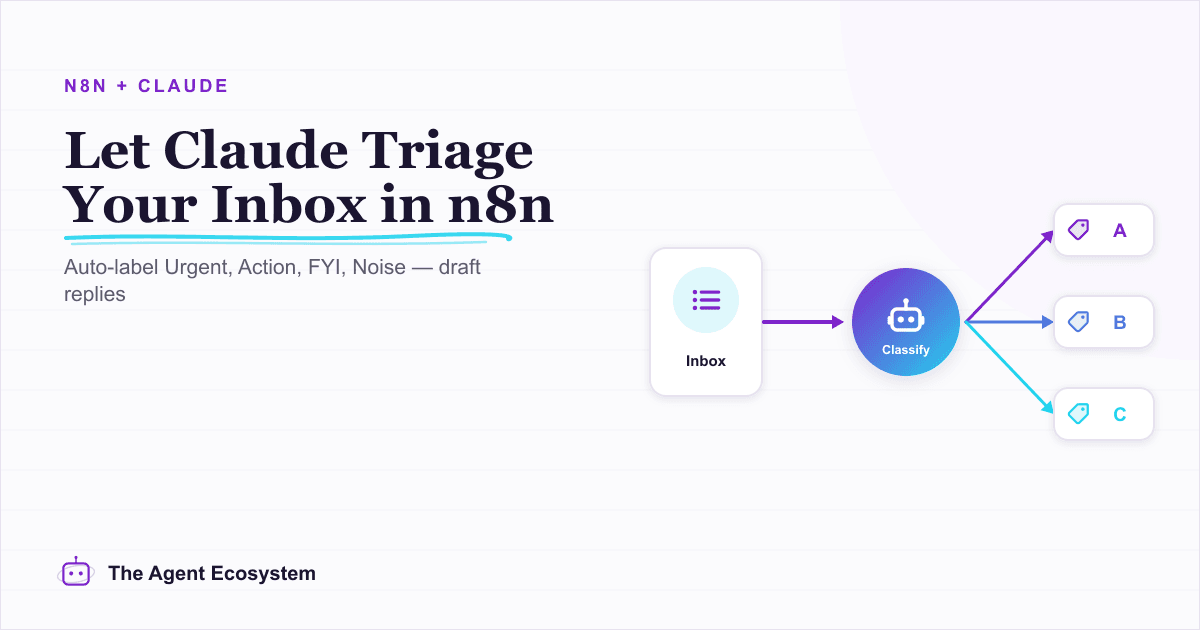
Build a Claude-powered email triage agent in n8n that classifies, labels, logs, and drafts replies without autosending, so you review only the emails that need action.
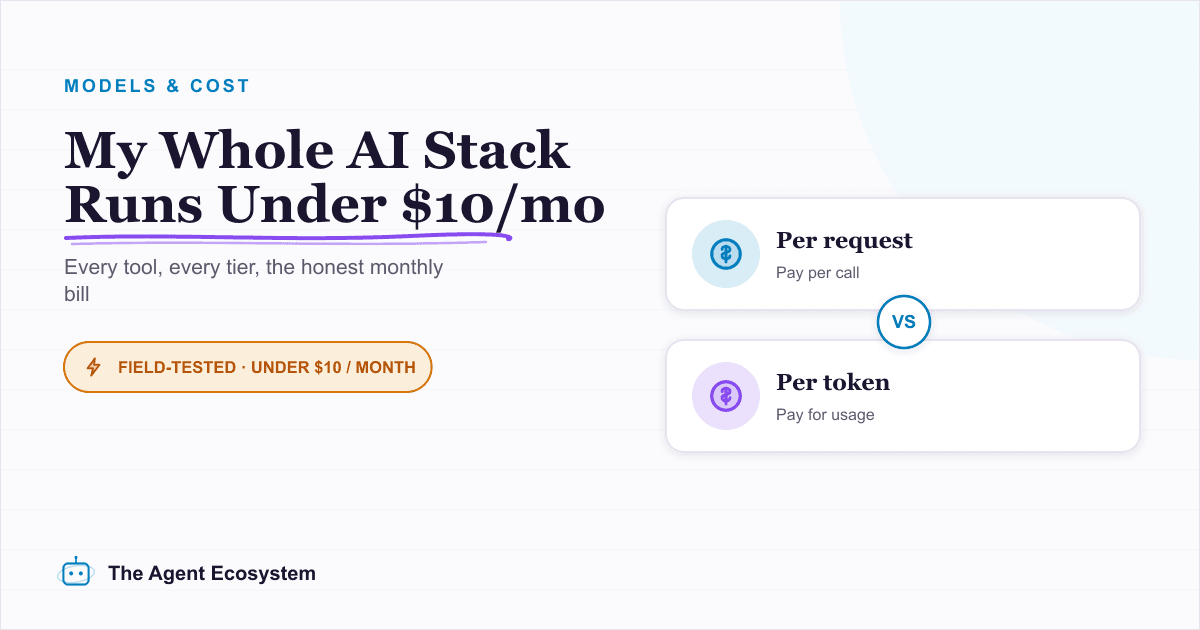
Most "AI stack" posts hide the bill. Mine runs under $10/month. Here is every tool, the exact tier, the real cost, and the job each layer does for my one-person content business.