How to Build an n8n AI Agent for E-Commerce Return Eligibility
An n8n AI agent that applies your actual return policy to a specific order's purchase date and category, and answers eligibility with the reasoning attached.
AI-drafted, reviewed by Muhammad Qasim Hammad on August 18, 2026. See our AI disclosure.
Table of contents
"Can I return this?" sounds like a simple question, but answering it correctly means checking the purchase date against your return window, whether the category is final-sale, and whether the stated condition still qualifies, three separate facts a support rep has to pull together every single time. Wire an n8n AI agent to apply your actual return policy against a specific order, and it can answer that question correctly in seconds instead of a rep juggling a policy doc and an order lookup at the same time.
This is a different job from a general FAQ bot answering from your docs or a Shopify agent reporting an order's shipping status. Eligibility is not a lookup and it is not retrieval; it is applying a rule to a fact. The agent needs the policy as structured logic and the order's purchase date and category as data, then it combines the two.
What does "eligible for return" actually depend on?#
Three facts decide most return requests: how many days have passed since the purchase or delivery date, whether the item's category is excluded from returns entirely, such as final-sale or personalized items, and whether the stated condition, unopened, worn once, damaged, meets what the policy requires for that category.
Write these as an explicit rule table before the agent touches a single request. "30 days from delivery, except final-sale and intimate apparel, item must be unworn with tags" is something a rep can verify against; "does this seem reasonable to return" is not, and it is exactly the kind of vague standard that produces inconsistent answers depending on who or what is asked.
Build the table directly from your published policy page, not a rep's memory of how it usually works, and keep the 2 in sync deliberately. A policy that changed 6 months ago but was never updated in the rule table produces confidently wrong answers that are worse than no automation at all, since they carry the same tone of certainty as a correct one.
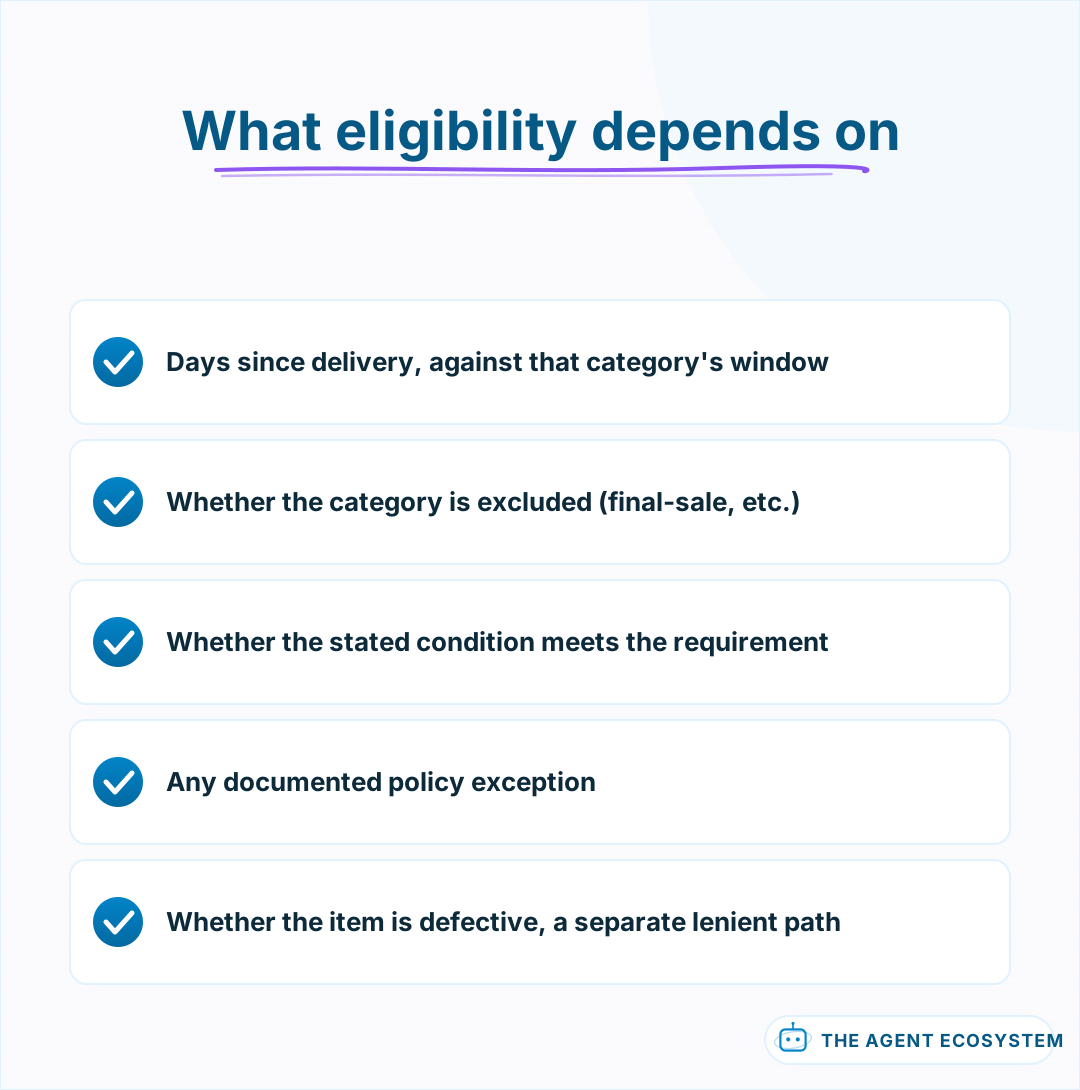 Three checkable facts, not a judgment call on each request.
How does the agent combine the policy with a specific order?#
Look up the specific order first: the purchase or delivery date and the item's category. Calculate days elapsed against the policy's window for that category, since a 30-day window and a 14-day window for a different category are common on the same store, and applying the wrong one is the single most common way this goes wrong.
| What the agent checks | Where it comes from | What it decides |
|---|---|---|
| Days since delivery | Order lookup | Inside or outside the return window |
| Item category | Order lookup | Which policy rule applies |
| Stated condition | The customer's message | Meets the category's condition requirement |
| Any policy exception | The policy rule table | Final-sale, holiday extension, defect override |
Defects are worth a rule of their own: a defective item usually gets a different, more lenient path than a change-of-mind return, and conflating the two treats a customer with a legitimate manufacturing problem the same as someone who just changed their mind.
Gift purchases complicate the date math specifically, since a gift given weeks after purchase should often be evaluated from the delivery or gift-open date, not the original order date, if your policy makes that distinction. If it does not, that gap is worth raising with whoever owns the policy rather than letting the agent silently pick one interpretation.
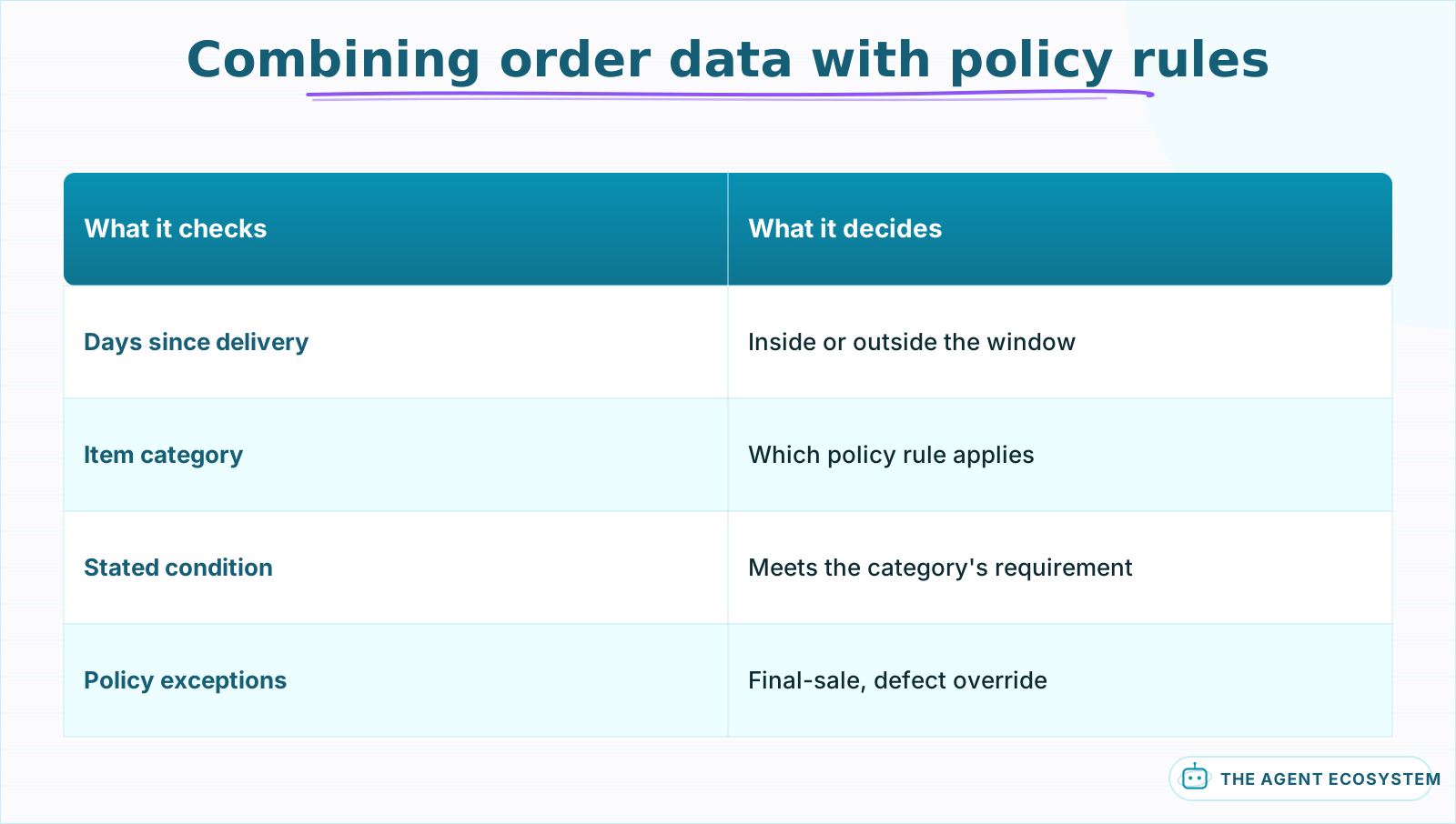 Order data and policy rules combine into one checkable answer.
What does the agent actually tell the customer?#
Give a clear, specific answer with the reasoning attached, the same auditability discipline as a HubSpot lead score or a resume screen: "Eligible: delivered 12 days ago, within your 30-day window, category allows returns" is checkable. "You should be able to return that" is not, and it leaves a rep unable to verify the answer without redoing the whole lookup.
When the request falls outside a clean rule, an item near the exact boundary of the window, a condition that is ambiguous from the description alone, a category with a documented past exception, say so and route it to a human rather than forcing a yes or no the policy does not clearly support. An honest "let me have someone confirm this" beats a confident wrong answer on a policy question.
Quote the specific policy line the answer relies on, not just the conclusion. A customer who sees "per our policy, items must be returned within 30 days of delivery, and yours was delivered 12 days ago" can verify it themselves; one who just sees "yes, you're eligible" has to take the agent's word for it, which is a worse experience even when the answer is correct.
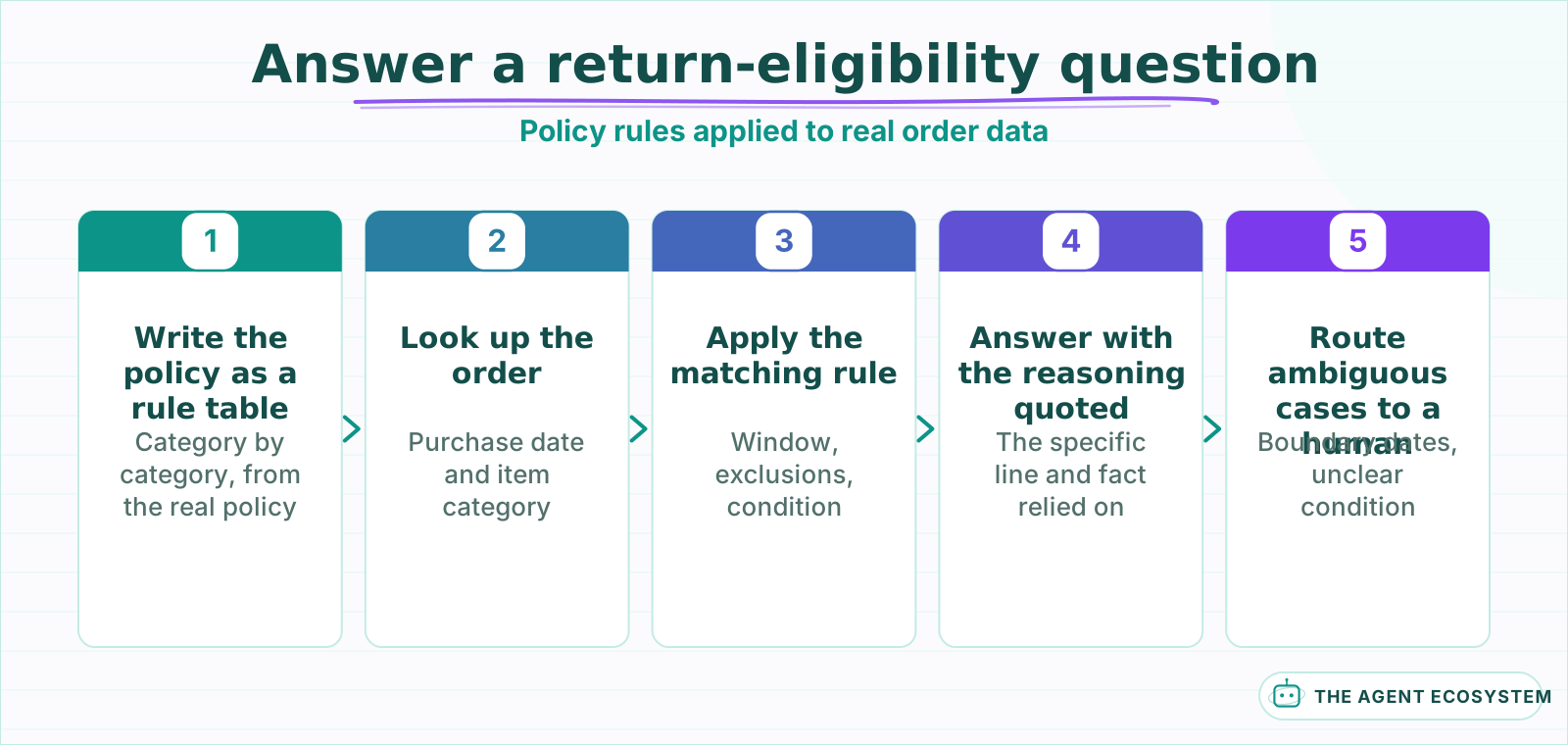 Every answer traces back to a specific policy line and order fact.
Should the agent approve a return on its own?#
Confirming eligibility and answering the question is safe to automate from the start: it is information the customer can act on, not an action that moves money or ships a label on its own, so a wrong answer here costs a follow-up message, not a shipped mistake.
Actually issuing a return label, refund, or store credit is a different category and should go through the same permanent human-approval gate a Stripe or Shopify refund proposal does, for the same reason: it moves real money, and that gate should not loosen over time no matter how reliable the eligibility answers have proven.
Split the workflow at exactly that line: the agent answers "yes, here's why" or "no, here's why" or "let me check," and a human or a separate, explicitly triggered action handles the label and the refund once eligibility is confirmed. The agent's authority stops at the answer.
Mechanically, that split is a small addition: an "eligible, proceed with label" outcome routes to a Slack or email approval step with the order and reasoning attached, and only a human's confirmation triggers the actual refund or shipping-label action. The agent answering correctly makes that human step faster, not unnecessary.
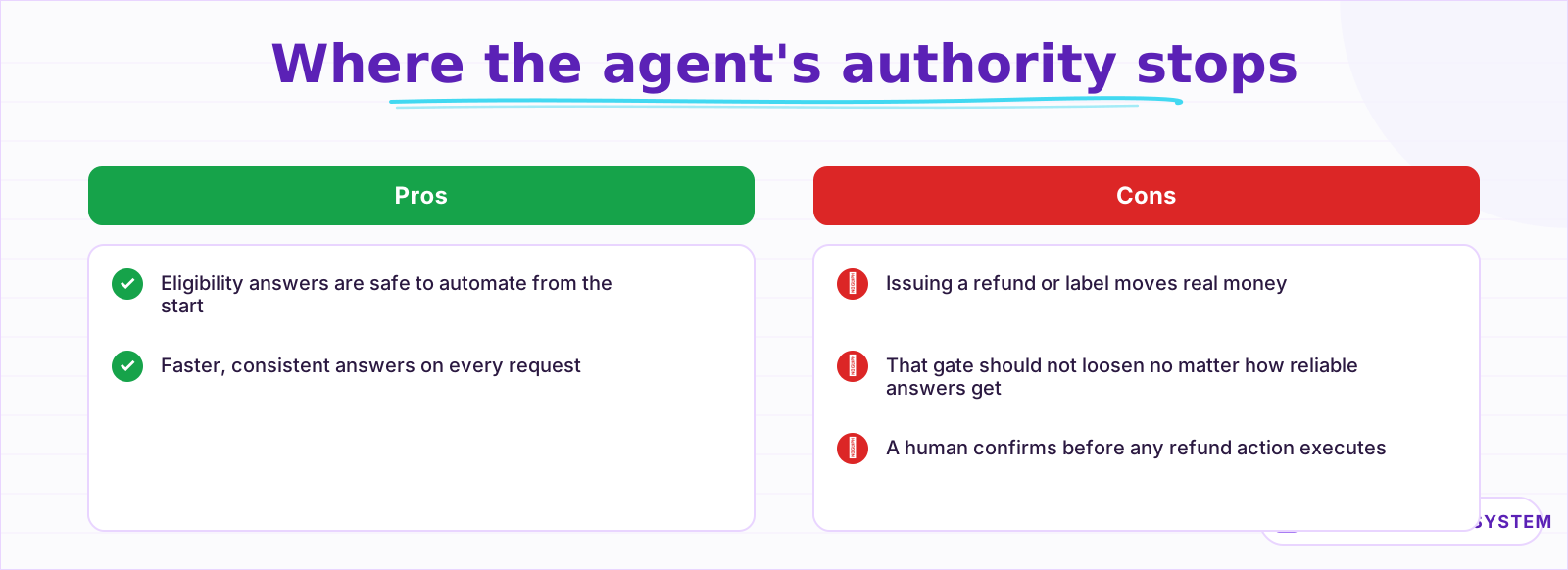 One is information; the other moves real money and should stay gated.
What breaks, and how do you debug it?#
The most common error is a stale or incomplete policy rule table: a category added to the catalog after the rule table was written has no matching rule, and the agent either guesses or, if instructed correctly, should treat an unmatched category as needing a human, not as automatically eligible or ineligible.
Turn on Return Intermediate Steps on the AI Agent node and check exactly which rule and which order fact the decision hinged on. A wrong eligibility answer is almost always a stale date calculation, a category that changed since the policy was documented, or a rule table gap, not the model reasoning incorrectly from correct inputs; fix the data before assuming the logic is wrong.
Time zones cause a quieter version of the same problem. If the order timestamp and the policy's "days" are calculated in different time zones, a request right at the boundary of the window can come out eligible or not depending on which zone did the math, so pick one, usually the store's own time zone, and use it consistently everywhere the calculation happens.
Is this worth building for your store?#
Build it when return questions are a real, recurring share of your support volume and your policy already has enough structure to write down cleanly as explicit, category-specific rules rather than one blanket sentence covering everything you sell in the store.
A store with one simple 30-day-no-exceptions policy barely needs this; a store with category-specific windows, final-sale exclusions, and a defect path benefits from having those rules applied the same way every time, regardless of which rep or channel answers.
The honest payoff is consistency and speed on a question every customer asks the same way, not a smarter read on ambiguous cases than a person would get. Every answer traces back to the same policy table and the same order fact, and the genuinely unclear cases still land with a human, exactly where they belong.
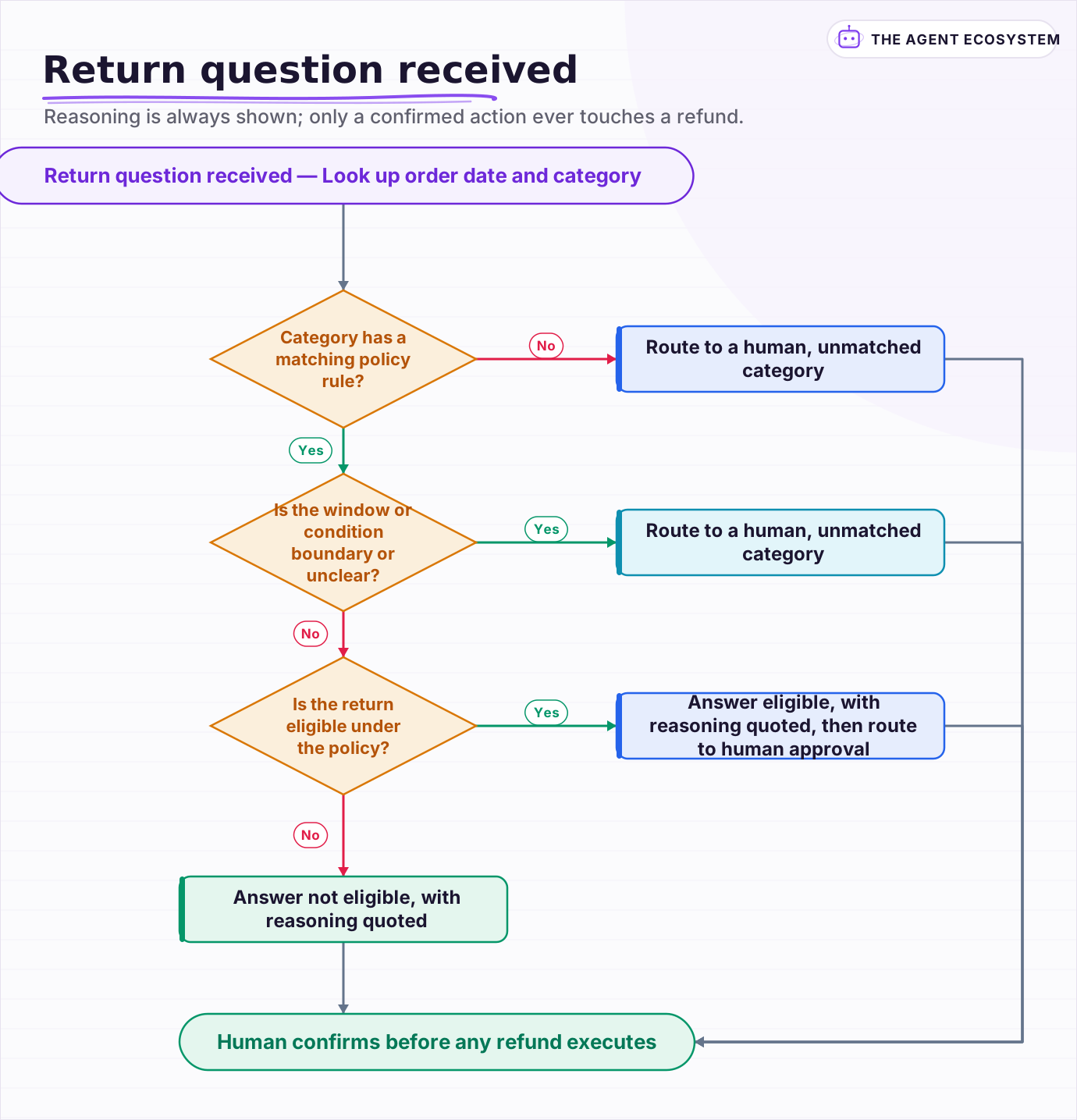 Reasoning is always shown; only a confirmed action ever touches a refund.
Frequently asked questions
Can an n8n AI agent determine if a return is eligible?
Should an AI agent issue refunds for eligible returns automatically?
How is a return-eligibility agent different from a general FAQ support bot?
What should an e-commerce return agent do with an ambiguous request?
Why did my return-eligibility agent give a wrong answer?
Sources
Primary references and vendor documentation used while drafting and reviewing this article.
Written by

Muhammad Qasim Hammad is an AI agent and automation expert and the founder of Cart Gaze LLC (cartgaze.com). He builds product for the love of it: when an idea lands, a working prototype is usually running within hours, built with the same AI agents and automations he sells. He puts his own output at roughly 20× what it was before agents, and the Agentic OS behind this site is the working proof, documented in public with the tools he actually ran and what they really cost.
AI & Automation Services
Want a pipeline like this running in your business?
I'm Qasim — I design and ship AI agents and n8n automations for solo operators and small teams. Tell me what's eating your team's week, and I'll scope a fix.
Related reading
How to Automate Customer Support with AI Without Losing People
The fastest way to damage a small business with AI is to put a bot in front of customers before it knows when to stop. Twelve lessons on triage before answers, grounding in your own documentation, escalation that carries context, and why deflection rate flatters you.

How to Build an n8n AI Agent for Shopify Order Support
An n8n AI Agent can look up a Shopify order's real fulfillment status and draft a grounded reply to a "where is my order" question in seconds. Here is how to wire Shopify in as a read-heavy tool, what changed in how Shopify issues API credentials in 2026, and why refunds should
How to Build an n8n AI Agent for Bookkeeping Categorization
Pulling a vendor and a total off an invoice is the easy half of bookkeeping automation. Deciding which category it belongs to and catching the duplicate that already got entered last month is the harder half. Here is how to build an n8n AI agent for that step, one that flags
How to Build an n8n AI Agent for Real Estate Lead Qualification
An n8n AI Agent can text a new real estate lead the 1 or 2 questions that actually separate a serious buyer from someone browsing, then route a qualified lead to the right agent within minutes. Here is how to build the qualification logic, why it should ask explicit questions
How to Build an n8n AI Agent for Property Management Maintenance Triage
An n8n AI agent can read a tenant's maintenance request the moment it arrives, sort it by real urgency and category, and route it to the right vendor before a property manager opens it. Here is how to build the triage logic, why certain safety issues must always bypass it
How to Build an n8n AI Agent for Legal Intake and Document Triage
Before an attorney can act on a new inquiry, someone has to sort it by practice area, check for a conflict of interest, and gather the basic facts a first call will need. Here is how to build an n8n AI agent for that intake step, one that never crosses into legal judgment, case