How to Build an n8n AI Agent for Real Estate Lead Qualification
An n8n AI Agent that asks the timeline, financing, and specificity questions that separate a serious buyer from a browser, before an agent's first call.
AI-drafted, reviewed by Muhammad Qasim Hammad on August 15, 2026. See our AI disclosure.
Table of contents
- What does lead qualification actually require the agent to find out?
- How does the agent actually gather this from a form submission?
- How do you turn the answers into a routed, qualified lead?
- Should the agent's follow-up messages send automatically?
- What breaks, and how do you debug it?
- Is this worth building for a small brokerage or a solo agent?
A "contact an agent" form fills out on a listing site at 11 PM, and by the time anyone from the brokerage reads it the next morning, the lead has already messaged 3 other agents. Wire an n8n AI Agent behind that form, and it can read the inquiry, ask the 2 or 3 questions that actually separate a serious buyer from someone browsing, and get a qualified lead in front of an agent within minutes, not the next business day.
The agent's job is triage, not a substitute for the agent's own judgment on the call. A qualified lead still needs a real conversation; what this changes is whether that conversation happens with someone who already knows the buyer's budget, timeline, and financing status, or starts from zero.
What does lead qualification actually require the agent to find out?#
Three things separate a lead worth a same-day call from one that can wait: timeline (are they looking now or in 6 months), financing status (pre-approved, still shopping for a lender, or paying cash), and specificity (a specific property or neighborhood versus a vague "looking around").
A lead with a real timeline and financing in place is worth interrupting an agent's day for; one still 6 months out is worth a nurture sequence, not a phone call tonight.
Write these as explicit qualifying questions the agent asks or infers from the form, not a vibe it reads from the inquiry's tone. "When are you hoping to move?" and "have you spoken with a lender yet?" produce answers you can act on; guessing seriousness from how the message is worded does not.
Buyer and seller leads need different questions entirely, so the agent's first job is often just sorting which one this is. A buyer's qualifying questions center on timeline and financing; a seller lead needs different signals, whether they are just curious about value or actually planning to list, and whether they are already working with an agent. Route to the right question set before asking anything specific.
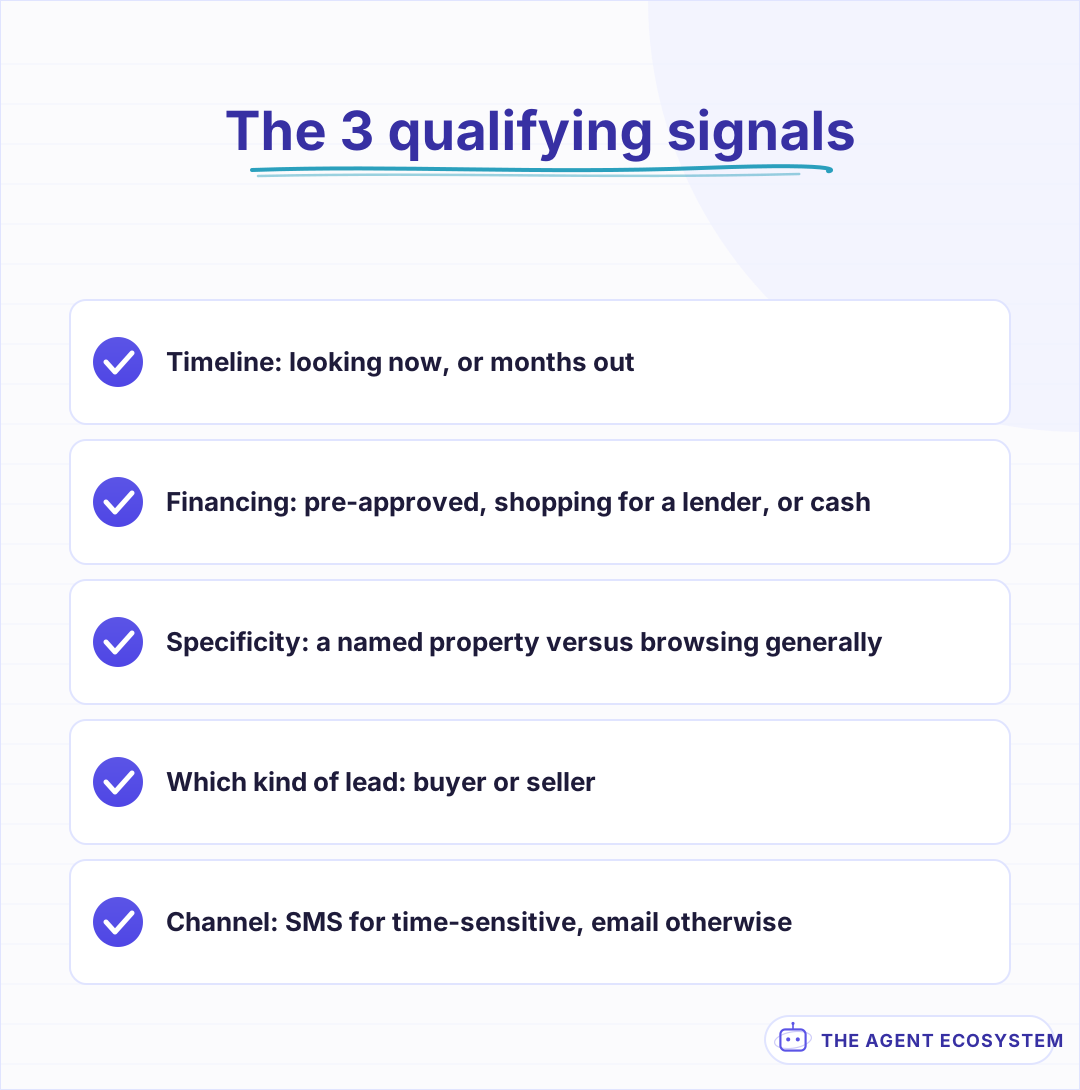 Explicit signals an agent can act on, not a tone-based guess.
How does the agent actually gather this from a form submission?#
Most inquiry forms do not ask for timeline or financing directly, so the agent's first job is often a follow-up message, by SMS or email, asking the 1 or 2 questions the form left out. Keep it to the minimum needed: a lead who has to answer 8 questions before anyone calls them back will abandon the conversation.
| What the form usually has | What qualification still needs | How the agent gets it |
|---|---|---|
| Name, email, property of interest | Timeline | A single follow-up question |
| Phone number | Financing status | A single follow-up question |
| A message | Budget range | Often inferred from the property inquired about |
Budget is the one field worth inferring rather than asking outright, at least on the first message; the property price they inquired about is a reasonable starting signal, and asking "what's your budget" cold in a first text can feel presumptuous before any rapport exists.
Channel matters as much as wording. A text gets read and answered in minutes; an email to a lead who submitted a form at 11 PM might sit unread until morning regardless of how fast your workflow sent it. If the form captured a phone number and the lead's own message reads as time-sensitive, default to SMS for the qualifying follow-up over email.
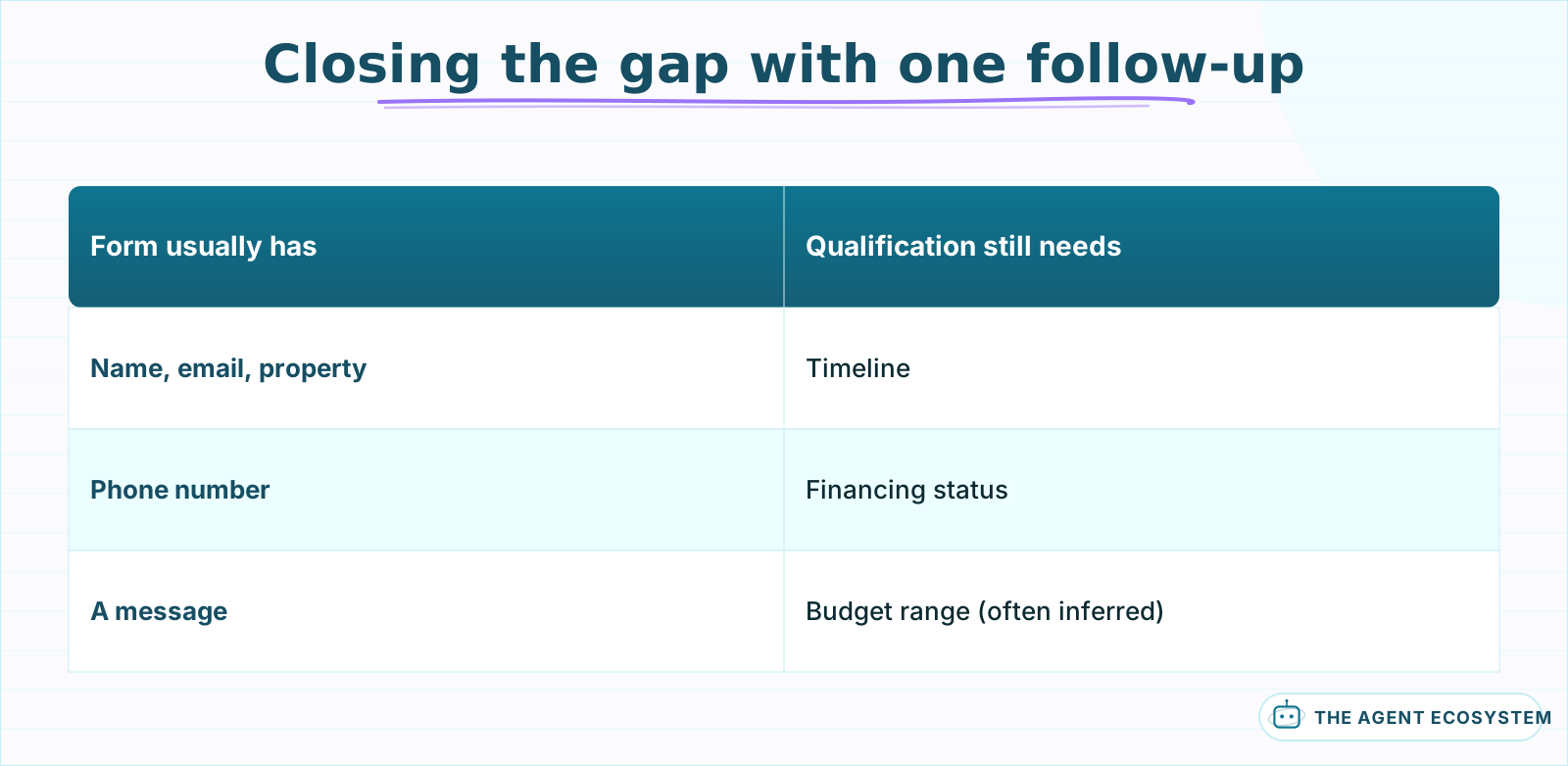 The gap between the two is exactly what the follow-up question fills.
How do you turn the answers into a routed, qualified lead?#
Score the lead against the same 3 explicit criteria and write the reasoning alongside the score, the same discipline that keeps a HubSpot lead-scoring agent auditable: "timeline under 30 days, pre-approved, asked about a specific listing" is something an agent can trust at a glance; a bare number is not.
Route by whatever rule your brokerage actually uses, whether that is the listing agent for that specific property, a round-robin among available agents, or a specialist for a particular neighborhood. Give the agent that routing rule explicitly rather than asking it to guess who seems like a good fit; the routing logic is a business rule your team owns, the same way it is on a Salesforce Case-routing agent.
Log the qualification result even for leads that do not clear the bar. A lead who is 6 months out and not yet pre-approved is not worth an agent's time today, but the information is worth keeping so a nurture sequence or a check-in in a few months has real context instead of starting over from a cold contact.
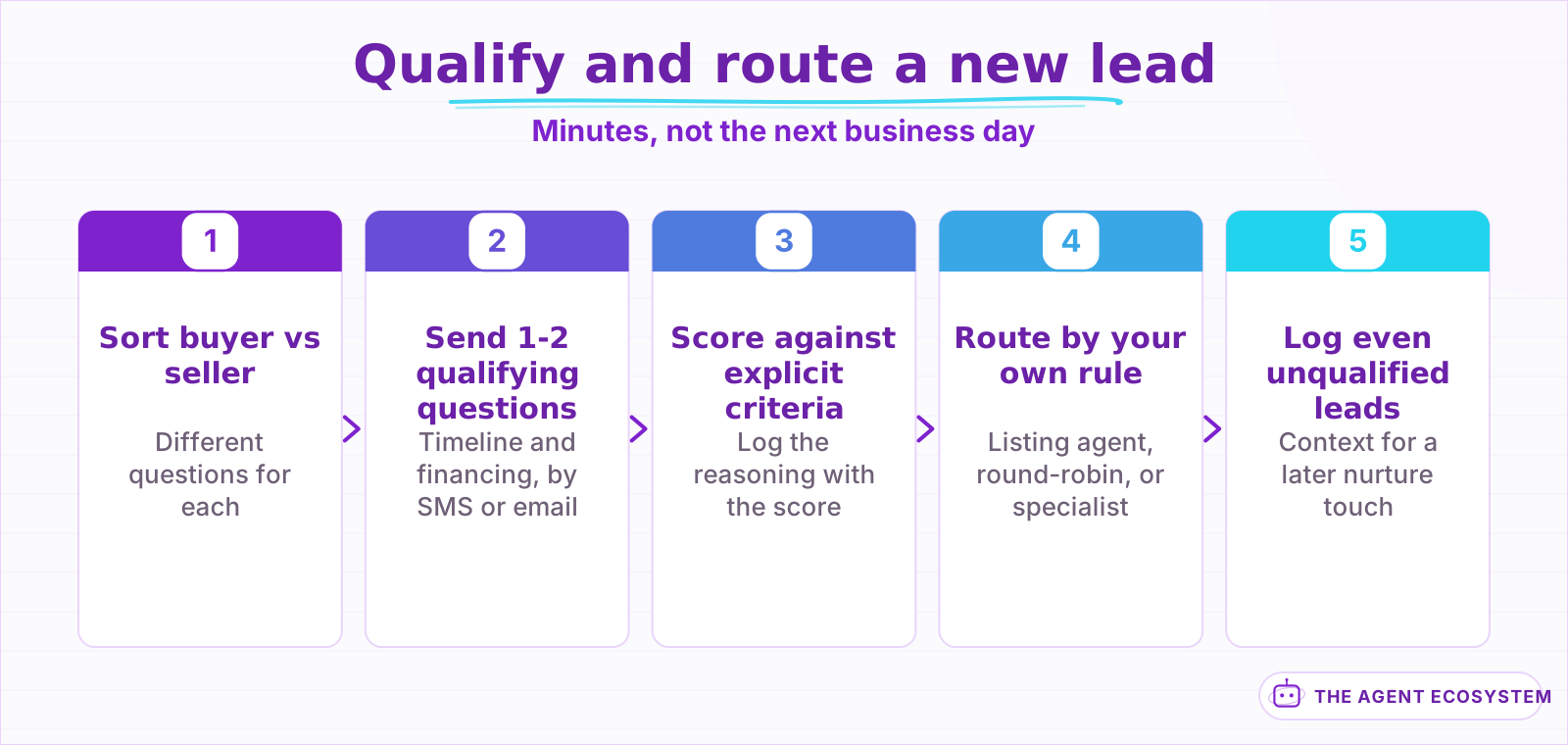 Sorting buyer versus seller comes before a single question gets asked.
Should the agent's follow-up messages send automatically?#
The initial qualifying questions are low-risk and reasonable to automate immediately: a text asking about timeline and financing is exactly the kind of message a fast-moving lead expects, and speed here is a real advantage over a lead sitting untouched overnight.
Treat anything beyond the qualifying questions with more care. A drafted message that answers a specific question about a property, a price, or an offer should go through a quick human check before sending, since real estate answers carry legal and factual weight a wrong guess can actually cost someone. Keep the agent's automated messages to qualification, not advice.
The line is easy to draw in practice: a question the agent asks is safe to automate, an answer the agent gives about pricing, condition, or terms is not. "When are you looking to move?" needs no review. "Is the seller open to negotiating?" is a real estate answer that should come from the agent handling the deal, not a workflow.
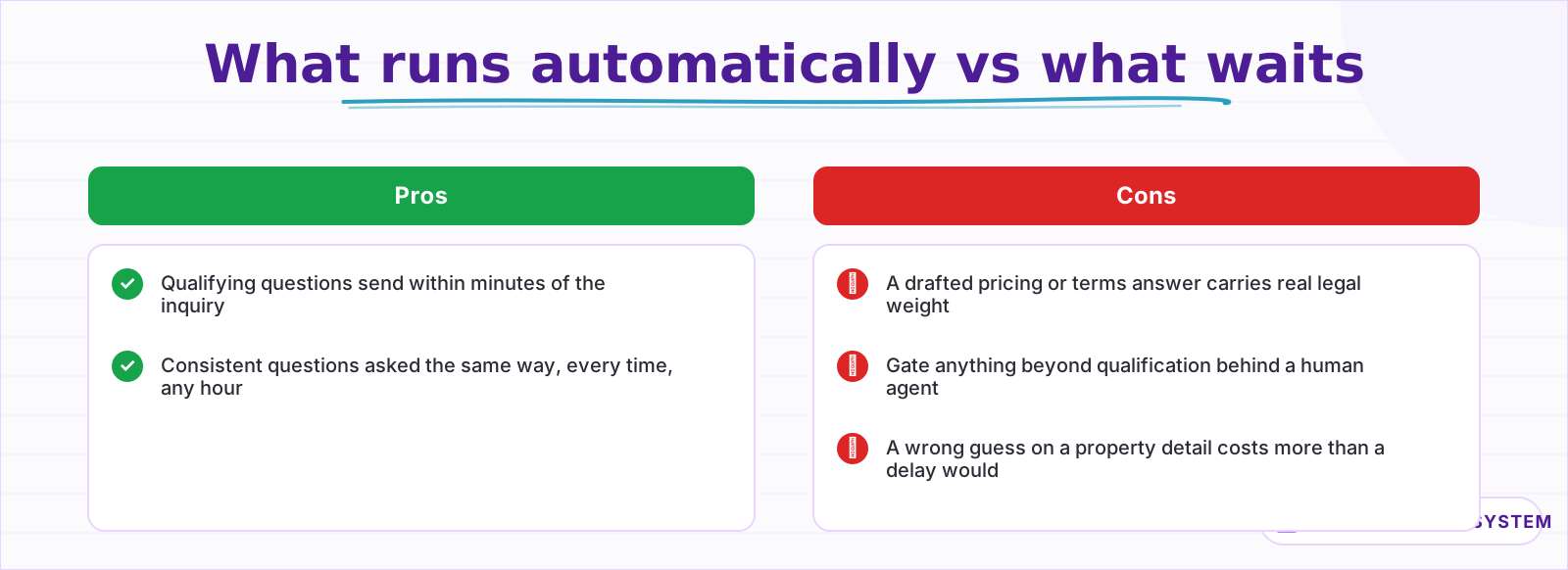 A question is safe to automate; an answer about terms is not.
What breaks, and how do you debug it?#
The most common failure is treating every inbound message the same regardless of source, which reads as broken rather than smart the moment a lead notices the mismatch between what they actually asked about and what the agent quietly assumed they meant.
A lead from a specific listing page's inquiry form has a clear property to anchor questions around; a lead from a general "contact us" form does not, and asking "are you still interested in the property you inquired about" to someone who never named one is the specific way this mistake shows up.
Turn on Return Intermediate Steps on the AI Agent node and check which source triggered the workflow and what data actually came with it before assuming the qualification logic is at fault. A second common gap is timezone: a lead who submits a form at what looks like 11 PM in your CRM's timezone might be submitting during business hours in their own, so do not let response-time assumptions bake in a timezone you have not actually confirmed.
Is this worth building for a small brokerage or a solo agent?#
Build it once lead volume is genuinely high enough that the delay before a first response, and not the agent's own selling skill on the call itself, is what is actually costing real deals, week after week, month after month.
A brokerage getting a handful of inquiries a week can likely respond fast enough by hand; one getting dozens a day across multiple listing sites cannot, and that gap is exactly where a few minutes of automated triage pays for itself.
The honest value is speed and consistency on the qualifying step, not a better read on the buyer than an experienced agent would get on a call. Every lead gets the same 2 or 3 questions asked the same way, at any hour, and the agent handling the actual conversation starts it already knowing what would otherwise take 10 minutes to establish.
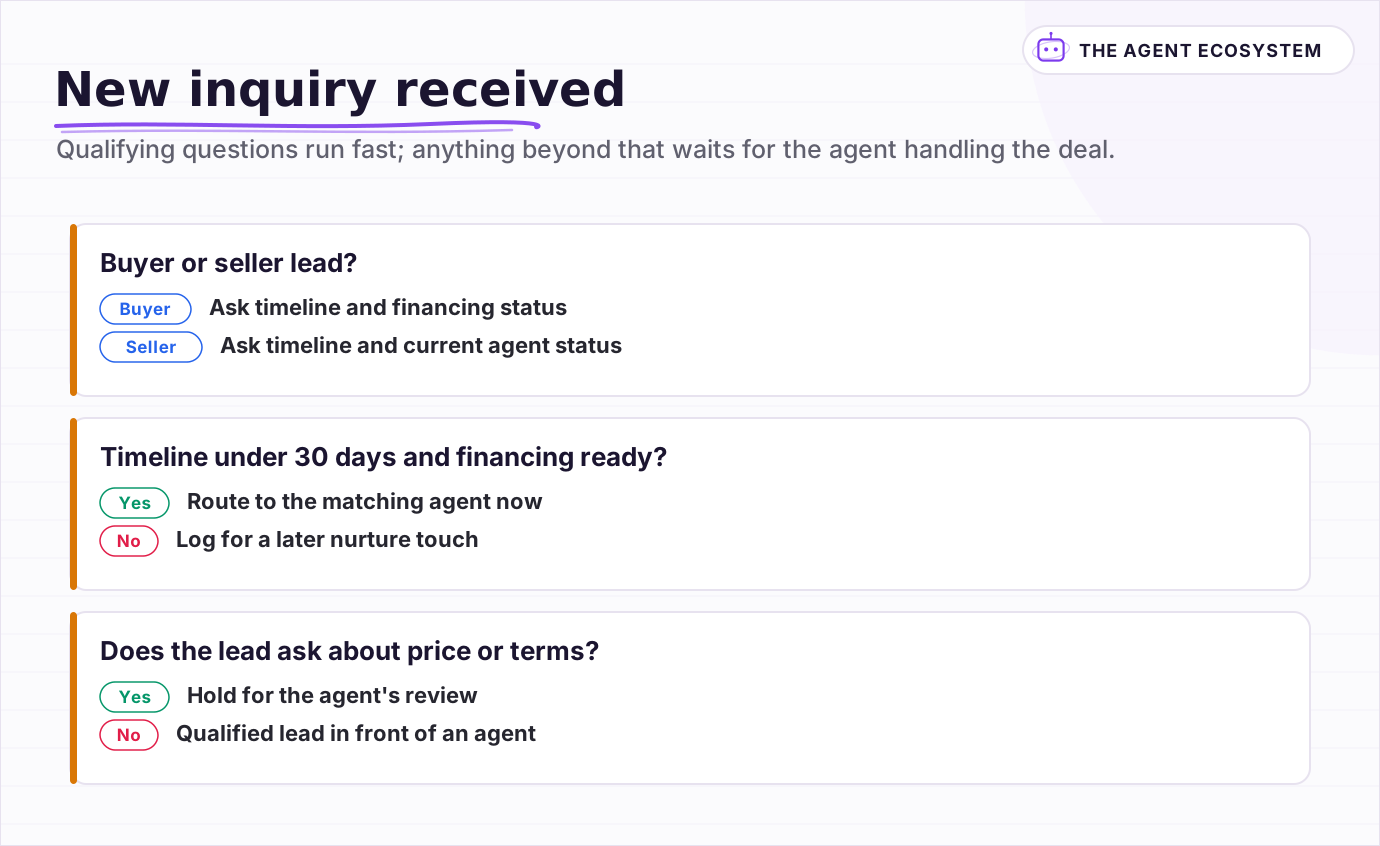 Qualifying questions run fast; anything beyond that waits for the agent handling the deal.
Frequently asked questions
Can an n8n AI Agent qualify real estate leads automatically?
What questions actually qualify a real estate lead?
Should an AI agent text real estate leads automatically?
How should a real estate AI agent route a qualified lead?
Is AI lead qualification worth it for a small brokerage?
Sources
Primary references and vendor documentation used while drafting and reviewing this article.
Written by

Muhammad Qasim Hammad is an AI agent and automation expert and the founder of Cart Gaze LLC (cartgaze.com). He builds product for the love of it: when an idea lands, a working prototype is usually running within hours, built with the same AI agents and automations he sells. He puts his own output at roughly 20× what it was before agents, and the Agentic OS behind this site is the working proof, documented in public with the tools he actually ran and what they really cost.
AI & Automation Services
Want a pipeline like this running in your business?
I'm Qasim — I design and ship AI agents and n8n automations for solo operators and small teams. Tell me what's eating your team's week, and I'll scope a fix.
Related reading
Build an AI Lead-Generation Agent in n8n (With Real Monthly Cost)
An n8n AI lead generation agent triages every inbound lead the moment it lands: scoring intent, drafting a personalized reply, and pinging you on the hot ones. Real cost: about $5/month for 100 leads on Claude Sonnet 4.6.

How to Build an n8n AI Agent for HubSpot Lead Scoring
An n8n AI Agent can score a new HubSpot lead the moment it arrives, log which rules fired, and route a task to the right rep, all against a rubric your sales team owns. Here is how to wire HubSpot in as a tool and keep the scoring auditable instead of a black box.
n8n AI Lead Enrichment: Score and Route Every New Lead Automatically
A new lead arrives with nothing but a name and email. An n8n workflow pulls company data, scores the lead with an AI agent against your ICP, and routes it to the right rep or drip sequence before anyone opens a browser tab.

How to Build an n8n AI Agent for Salesforce Data Hygiene and Case Routing
An n8n AI Agent can read a new Salesforce Lead or Case, decide what a rule engine cannot, and write the fix back through the Salesforce node. Here is how to wire it as a tool, keep it from guessing at fields it cannot infer, and gate every write behind a human check.
How to Build an n8n AI Agent for Property Management Maintenance Triage
An n8n AI agent can read a tenant's maintenance request the moment it arrives, sort it by real urgency and category, and route it to the right vendor before a property manager opens it. Here is how to build the triage logic, why certain safety issues must always bypass it
n8n Form Trigger + AI Agent: Build a Smart Intake Form
A contact form that sits in an inbox helps nobody. Wire n8n's Form Trigger to an AI agent and every submission gets classified, answered, and routed the moment it arrives.