How to Build an n8n AI Agent for Property Management Maintenance Triage
An n8n AI agent that sorts tenant maintenance requests by urgency and category, with real safety emergencies bypassing triage entirely.
AI-drafted, reviewed by Muhammad Qasim Hammad on August 18, 2026. See our AI disclosure.
Table of contents
- What does the agent actually need to classify?
- How does the agent turn a tenant's message into a routed ticket?
- How do you route the ticket once it's classified?
- Should the agent contact vendors or tenants directly?
- What breaks, and how do you debug it?
- Is this worth building for a small property management operation?
A tenant texts "the kitchen faucet is dripping" at the same urgency level as another tenant texting "I smell gas," and both sit in the same inbox until someone reads each one and decides what actually needs a plumber today versus a plumber this week. Wire an n8n AI agent into that intake, and it can read every request the moment it arrives, sort it by real urgency, and route it to the right vendor category, before a property manager opens a single message.
What does the agent actually need to classify?#
Two things decide how a request gets handled: urgency (can this wait, or does it need same-day attention) and category (plumbing, electrical, HVAC, appliance, structural, pest), since your vendor list is almost certainly organized by category and your response-time commitments are almost certainly organized by urgency.
Write the urgency tiers as concrete examples, not adjectives. "Emergency: active water damage, no heat below 50°F outside, no functioning lock on an entry door" is something the agent can pattern-match against a tenant's actual words; "urgent" alone invites the same kind of inconsistent judgment call that a vague scoring rubric produces anywhere else in this series.
Season and outside temperature change what counts as urgent for the same category. A slow drip is routine in July and still routine in January; no heat at all is routine to check on in July and an emergency in January. Build the season into the rule rather than a single static tier list that does not adjust for the time of year a request comes in.
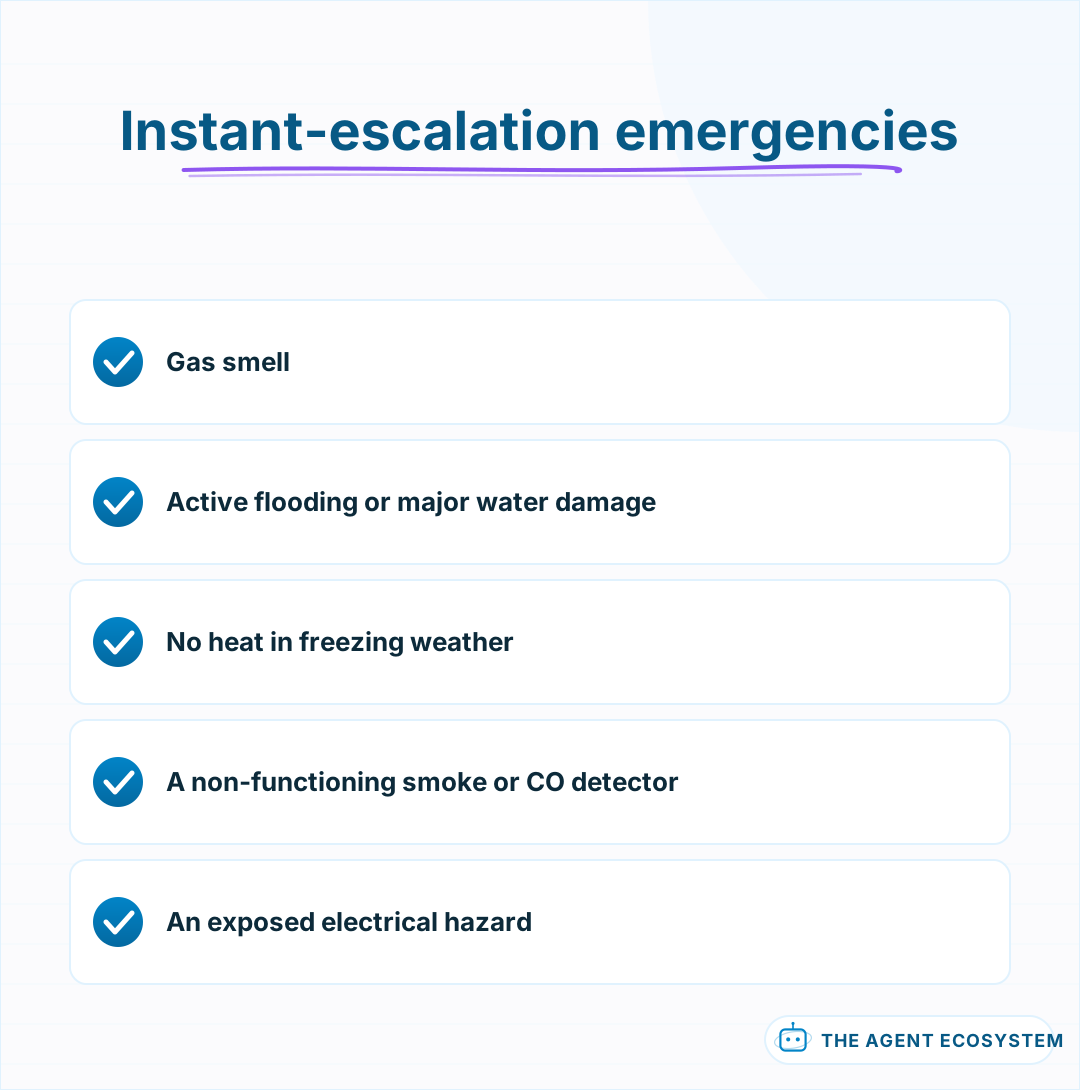 Hard-coded, never a case-by-case judgment call.
How does the agent turn a tenant's message into a routed ticket?#
A tenant's own words rarely map cleanly to your category list, so the agent's real job is translation: "water won't get hot" becomes an HVAC or plumbing ticket depending on whether it is the water heater or a fixture, "the door doesn't lock right" becomes locksmith or carpentry depending on whether the mechanism or the frame is the problem.
| Tenant's words | Category | Typical urgency |
|---|---|---|
| "No hot water at all" | Plumbing / water heater | Same-day |
| "Faucet drips slowly" | Plumbing | Routine |
| "Smells like gas near the stove" | Emergency, bypass triage | Immediate |
| "Outlet sparked when I plugged something in" | Electrical | Same-day, borderline emergency |
When the category is genuinely unclear from the description, have the agent ask one clarifying question rather than guessing at a vendor category and sending the wrong specialist out, which wastes a vendor visit and leaves the actual problem unresolved.
Photos attached to a request are worth routing straight through to the vendor unedited rather than having the agent describe them in words. A tenant's photo of a leak or a broken fixture tells a plumber more in one glance than any text description the agent could produce, so the agent's job is classification and routing, not replacing the photo with a summary.
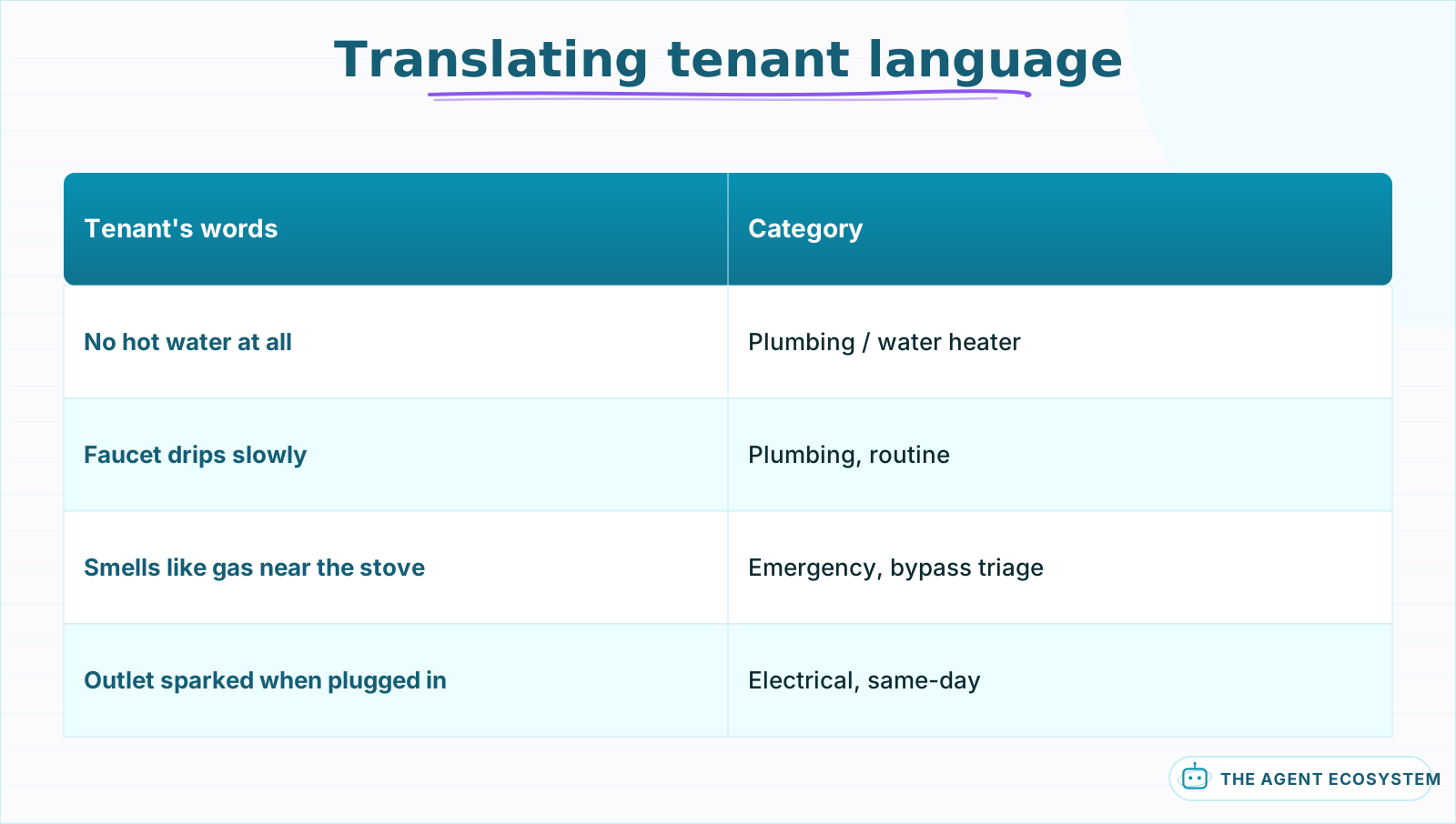 Tenant language rarely matches your category list directly.
How do you route the ticket once it's classified?#
Route by the same kind of explicit rule that keeps a Zendesk triage agent auditable: a fixed mapping from category to vendor or internal team, not a guess at who seems available. If you rotate between 2 plumbers, give the agent the actual rotation rule, alternating, by property, by availability, rather than leaving it to pick one.
Multi-unit context matters here in a way it does not for most other verticals in this series: a maintenance issue reported in one unit, a leak, a pest sighting, a heating failure, can be the first sign of a building-wide problem. Flag when the same category and location combination gets reported by more than one unit in a short window, since that pattern is worth surfacing to a property manager even if each individual report looks routine on its own.
Keep a running count per property, not just per ticket, so 3 separate "no hot water" reports across different units in the same building in one week surface as a pattern worth investigating, rather than 3 isolated tickets that each individually looked like a routine, single-unit fix.
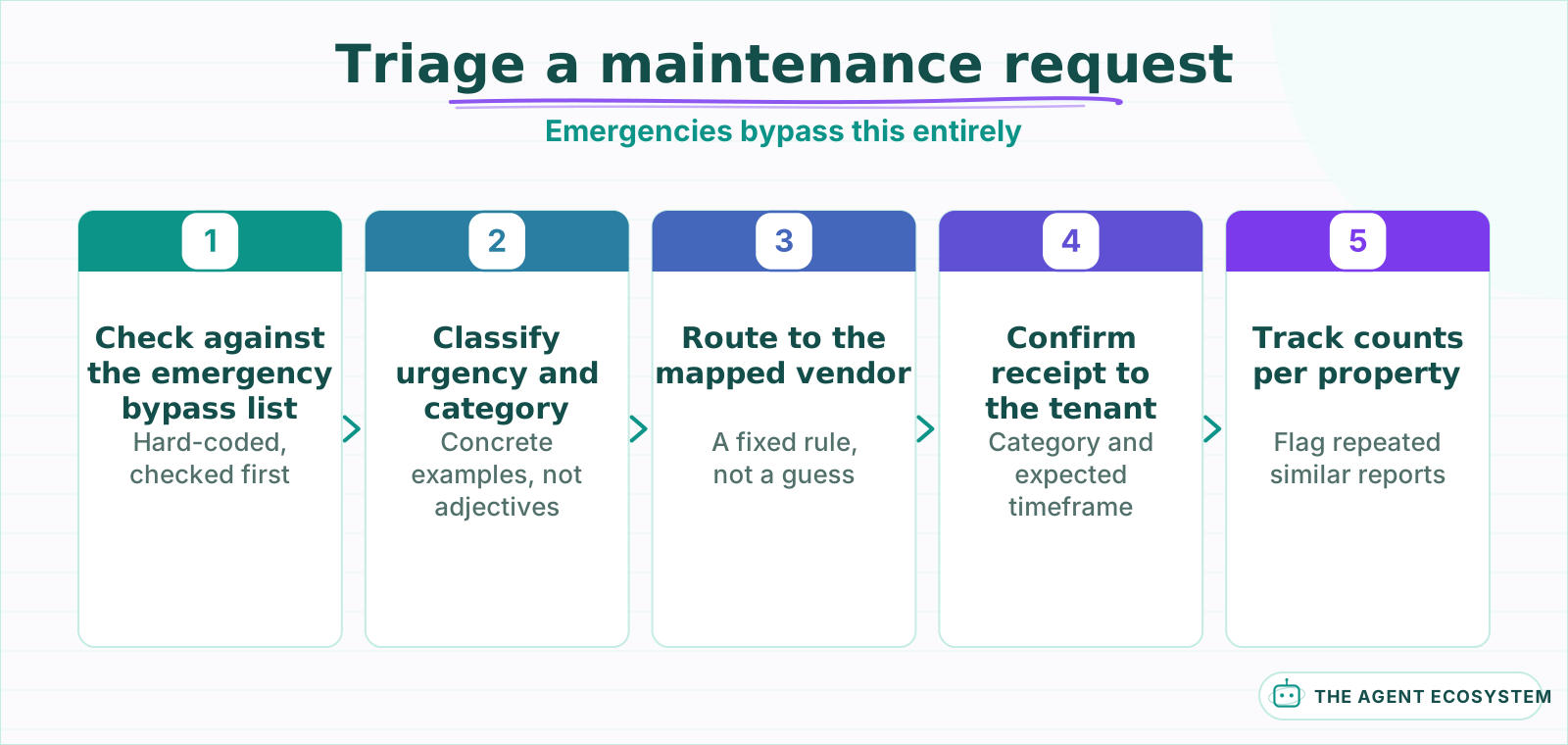 The pattern-detection step is what catches a building-wide problem early.
Should the agent contact vendors or tenants directly?#
Confirming receipt to the tenant, "we got your request, a plumber will contact you within 24 hours," is safe to automate immediately; it sets a clear expectation and costs nothing real if the timeline needs to shift slightly later on.
Actually dispatching a vendor, especially one that costs money to send out, deserves a quick human check before it goes out automatically, at least until the categorization has proven reliable across a real stretch of requests.
Never let the agent make a legal or liability-adjacent commitment on its own, promising a specific repair timeline the property cannot guarantee, or agreeing to a rent adjustment or compensation. Those decisions carry weight the agent's classification job was never meant to carry.
The confirmation message itself is worth keeping deliberately narrow. "We received your request and categorized it as [category], expected response within [timeframe]" is safe and useful; anything that speculates about cause, cost, or who is at fault for the damage should wait for a person who has actually seen the unit.
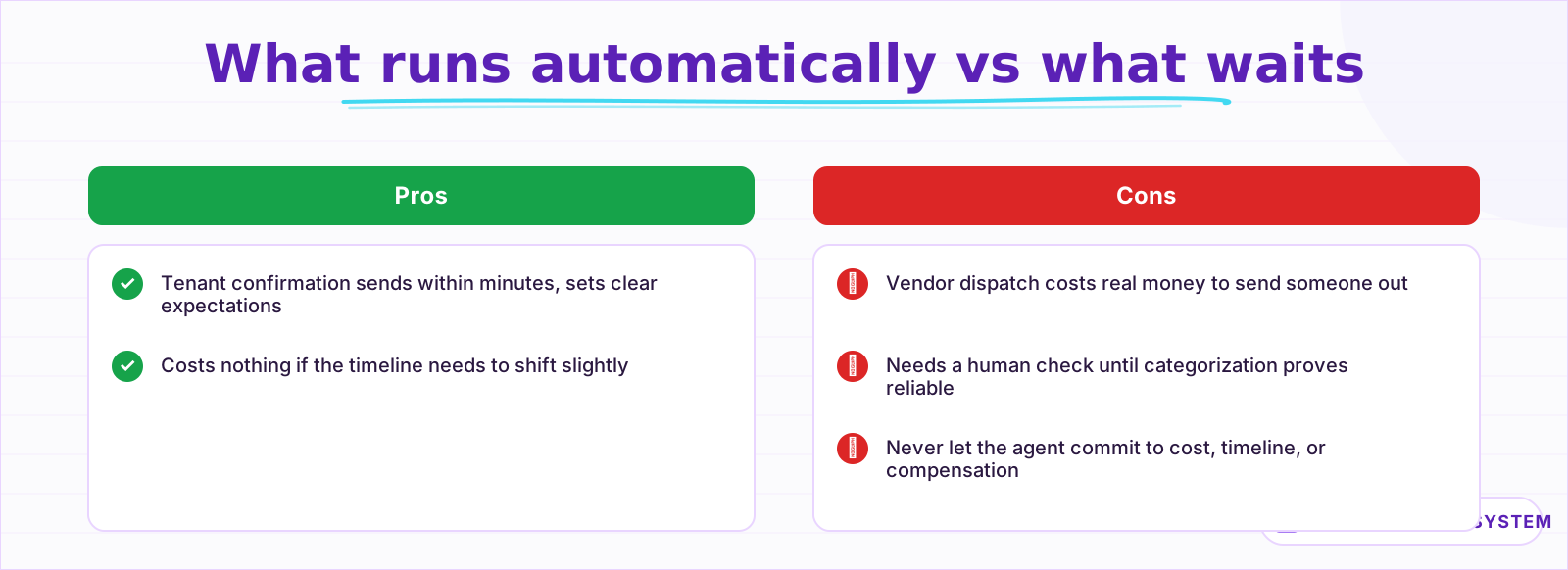 A confirmation costs nothing if wrong; a vendor visit costs real money.
What breaks, and how do you debug it?#
The most common failure is treating every unit and every tenant's phrasing the same when local context actually matters: "no heat" in a building with electric baseboard heaters points to a different fix than the same words in a building with a shared boiler.
A category rule that does not account for your specific building systems will misroute a real portion of requests, sending an HVAC vendor to a building that has no HVAC system to service in the first place.
Turn on Return Intermediate Steps on the AI Agent node and check which words in the tenant's message triggered the category and urgency the agent chose. A tenant describing the same problem in unusual terms, calling a circuit breaker panel "the fuse box," is a common source of a missed match; the general agent-not-working checklist covers the broader credential and trigger issues that show up the same way across every workflow in this series.
Is this worth building for a small property management operation?#
Build it when the volume of requests across your properties is high enough that manual triage is genuinely the bottleneck, several units or several properties generating a steady stream of maintenance messages across text, email, and a tenant portal all landing in different places.
A single small building with occasional requests can likely be triaged by a person just as fast as any workflow could manage it.
The honest value is speed and consistency on the sorting step, catching the genuine emergency instantly and routing the routine repair correctly the first time, not a better repair diagnosis than an experienced property manager would make. The hard-coded emergency bypass is the part that matters most: it is the one piece of this workflow where a delay has real safety consequences, not just an inconvenience.
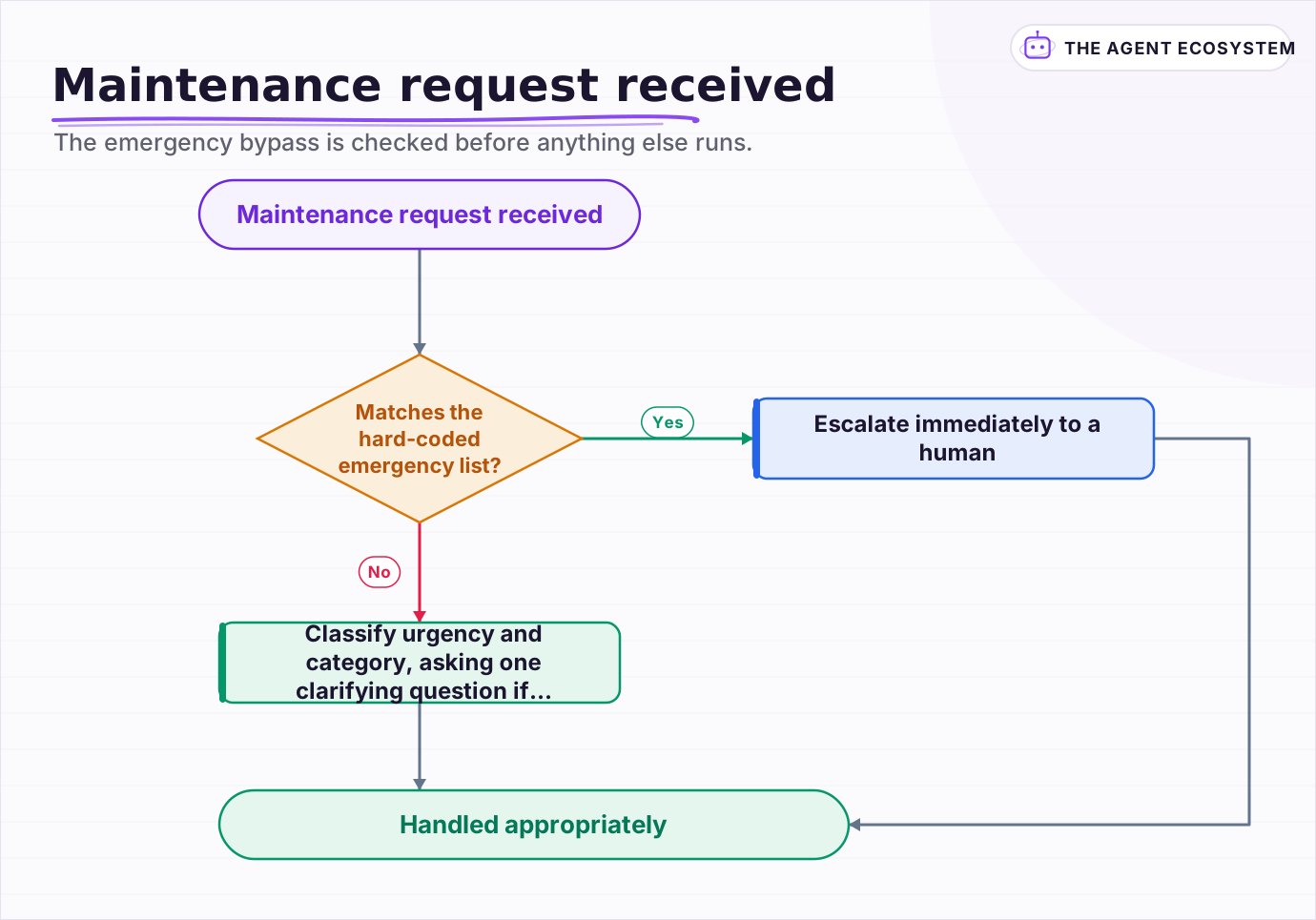 The emergency bypass is checked before anything else runs.
Frequently asked questions
Can an n8n AI agent triage tenant maintenance requests?
Should an AI agent ever decide a maintenance request is not an emergency?
How does an AI agent route a maintenance request to the right vendor?
Can an AI agent contact vendors or tenants automatically?
Why did my property-management AI agent route a request to the wrong vendor?
Sources
Primary references and vendor documentation used while drafting and reviewing this article.
Written by

Muhammad Qasim Hammad is an AI agent and automation expert and the founder of Cart Gaze LLC (cartgaze.com). He builds product for the love of it: when an idea lands, a working prototype is usually running within hours, built with the same AI agents and automations he sells. He puts his own output at roughly 20× what it was before agents, and the Agentic OS behind this site is the working proof, documented in public with the tools he actually ran and what they really cost.
AI & Automation Services
Want a pipeline like this running in your business?
I'm Qasim — I design and ship AI agents and n8n automations for solo operators and small teams. Tell me what's eating your team's week, and I'll scope a fix.
Related reading
How to Build an n8n AI Agent for Bookkeeping Categorization
Pulling a vendor and a total off an invoice is the easy half of bookkeeping automation. Deciding which category it belongs to and catching the duplicate that already got entered last month is the harder half. Here is how to build an n8n AI agent for that step, one that flags

How to Build an n8n AI Agent That Triages Zendesk Tickets
An n8n AI Agent can read a new Zendesk ticket, tag and prioritize it against rules you define, and route it to the right group, all before a human opens it. Here is how to wire Zendesk in as a tool, avoid the tag-replacement trap that silently deletes existing tags, and keep
How to Build an n8n AI Agent for Real Estate Lead Qualification
An n8n AI Agent can text a new real estate lead the 1 or 2 questions that actually separate a serious buyer from someone browsing, then route a qualified lead to the right agent within minutes. Here is how to build the qualification logic, why it should ask explicit questions
How to Build an n8n AI Agent for Restaurant Reservations and Reviews
A reservation request at 9 PM with an allergy note can sit unanswered until morning, and the allergy note itself is exactly the detail that cannot get lost. Here is how to build an n8n AI agent that confirms bookings against real availability, flags every allergy verbatim, and
n8n Form Trigger + AI Agent: Build a Smart Intake Form
A contact form that sits in an inbox helps nobody. Wire n8n's Form Trigger to an AI agent and every submission gets classified, answered, and routed the moment it arrives.
Auto-Categorize Emails & Tickets in n8n with the AI Text Classifier
The n8n AI Text Classifier node reads each inbound message, picks the right category, and branches your workflow automatically. Costs $0.65 per 1,000 emails on Claude Haiku 4.5. Here is exactly how to build it.