How to Build an n8n AI Agent for Bookkeeping Categorization
An n8n AI agent that categorizes extracted expenses against your real chart of accounts and flags duplicates, before anything reaches your books.
AI-drafted, reviewed by Muhammad Qasim Hammad on August 19, 2026. See our AI disclosure.
Table of contents
- How does the agent decide which category an expense belongs to?
- How does the agent catch a duplicate before it gets booked?
- What does the agent's output actually look like?
- Should the agent post entries directly to the books?
- What breaks, and how do you debug it?
- Is this worth building for a small business's books?
Pulling a vendor name and a total off an invoice is the easy half of bookkeeping automation. The harder half is what happens next: deciding which expense category that invoice belongs to, and catching the version of it that already got entered last month under a slightly different vendor name. Wire an n8n AI agent onto the categorization step, and it can apply your actual chart of accounts consistently and flag the duplicate before either one reaches your books.
How does the agent decide which category an expense belongs to?#
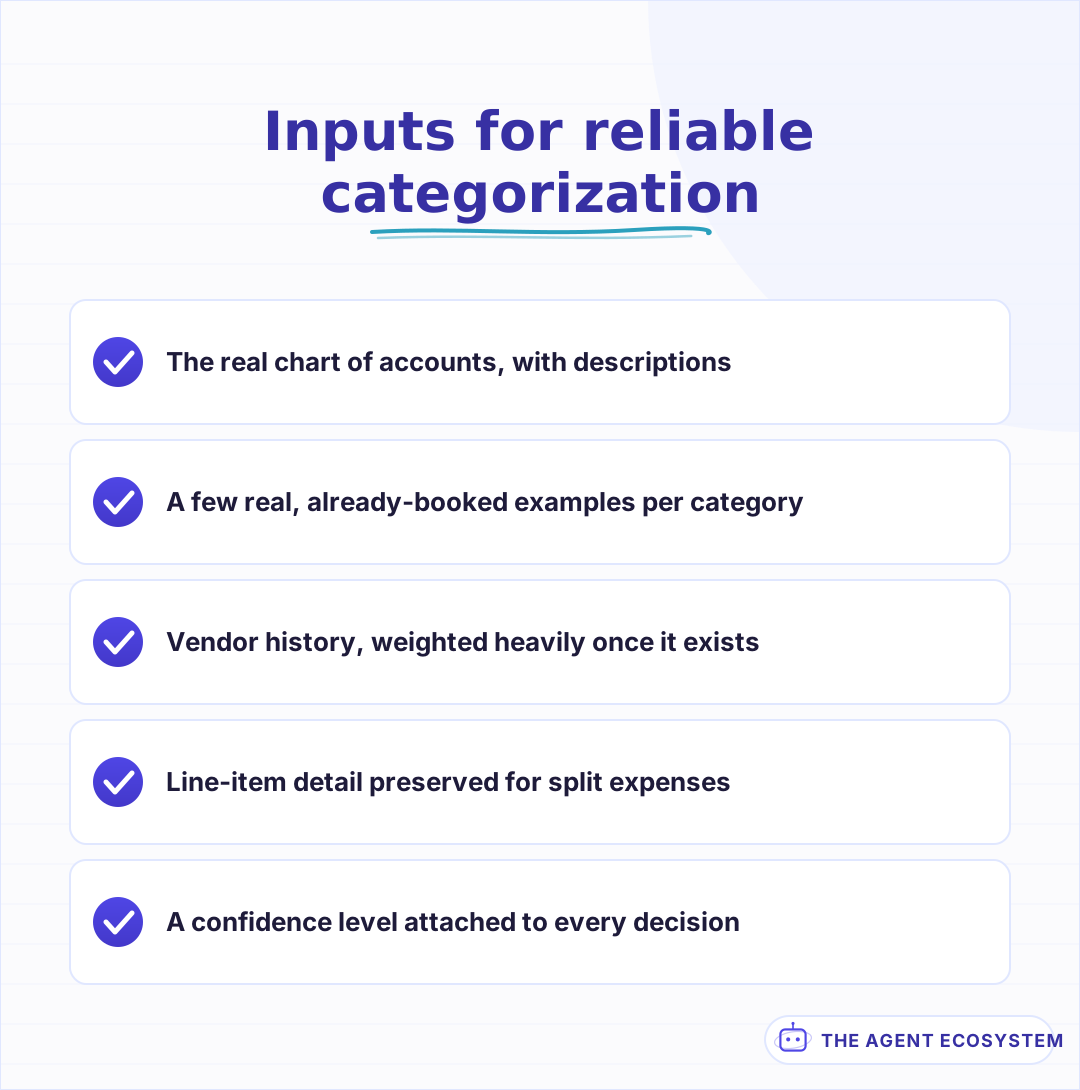
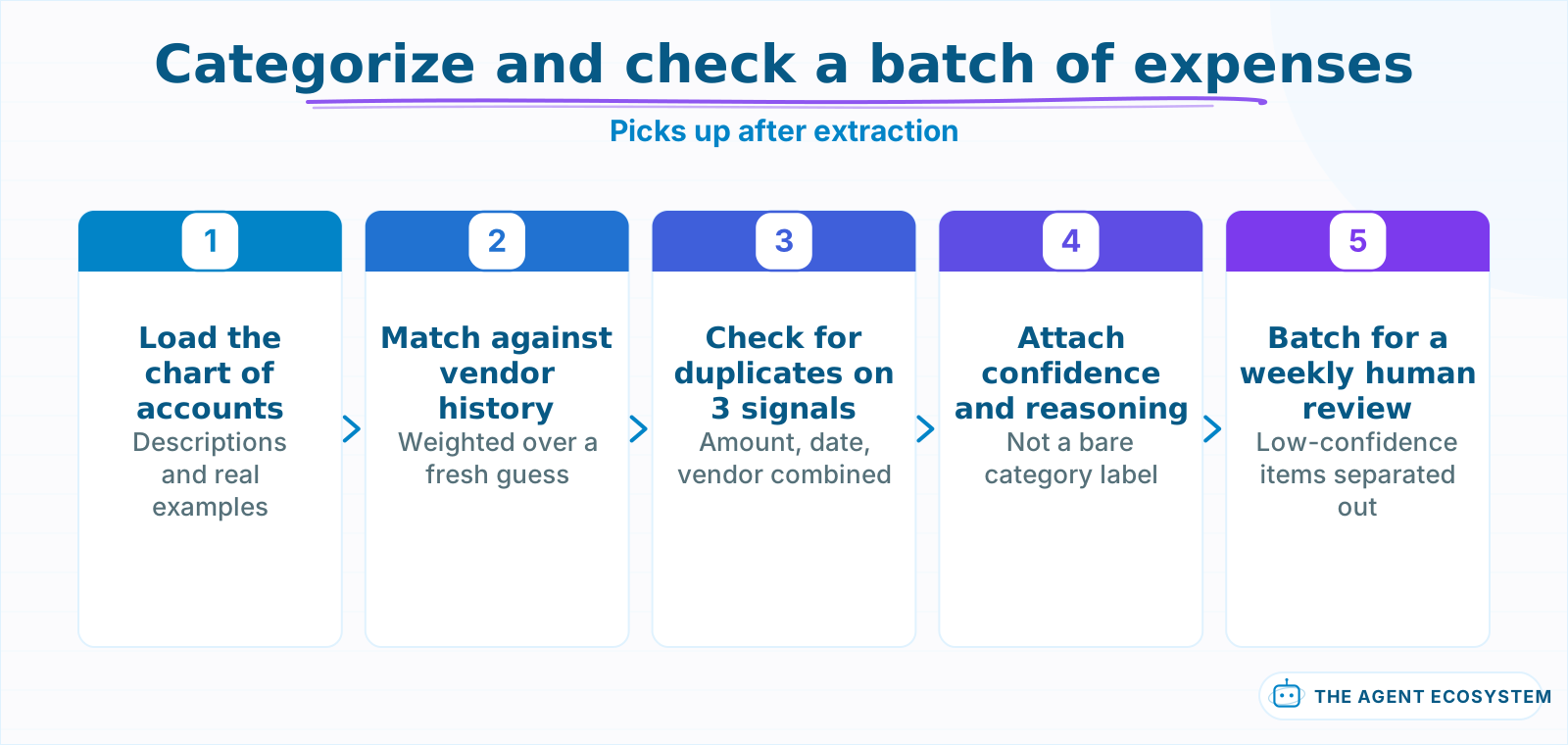
Give the agent your actual chart of accounts as a list, with a short description of what belongs in each category and, ideally, a few real examples already booked correctly, the same specificity a new hire on your bookkeeping team would need before touching a single real expense.
"Office Supplies: pens, paper, small equipment under $200" is something the agent can match against; "miscellaneous" as a catch-all invites everything ambiguous to land there instead of getting a real answer that actually helps come tax time, when someone has to sort it all out anyway.
Vendor history is the strongest signal once you have any: if the same vendor has been categorized the same way 10 times before, weight that heavily over a first-principles guess at what the vendor name suggests. A new, unfamiliar vendor is exactly the case worth a lower-confidence flag rather than a silent guess.
Some expenses genuinely split across categories, and forcing a single label loses real information. A single Amazon order with office supplies and a piece of equipment in the same cart is honestly 2 line items, not one; if your extraction step preserves line-item detail, let the categorization work at that level rather than picking one category for the whole invoice.
 Specificity a new hire on the bookkeeping team would also need.
How does the agent catch a duplicate before it gets booked?#
A duplicate rarely looks identical. The same expense can arrive twice with a slightly different vendor name format, "AMZN Mktp" versus "Amazon," a rounding difference of a cent, or a date off by a day between when it was charged and when the statement recorded it.
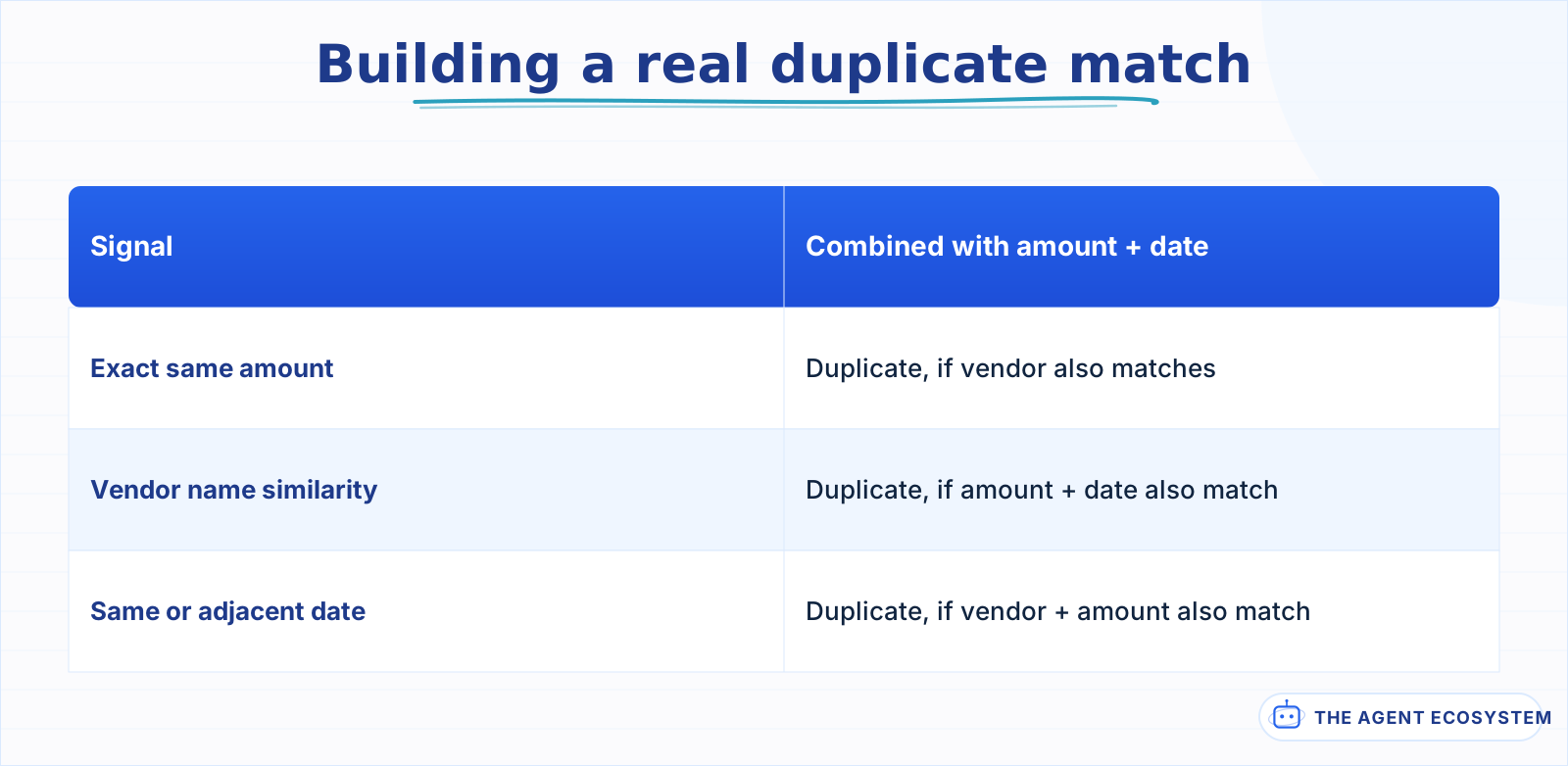
Match on the combination that actually indicates a duplicate: same or near-identical amount, same or adjacent date, and a vendor name that resolves to the same underlying company, not any single signal checked alone.
| Signal | Weak match alone | Strong match combined |
|---|---|---|
| Exact same amount | Common by coincidence | Duplicate, if paired with vendor + date |
| Vendor name similarity | Different formatting is normal | Duplicate, if paired with amount + date |
| Same or adjacent date | Common for unrelated expenses | Duplicate, if paired with amount + vendor |
Flag a suspected duplicate for review rather than silently dropping it. An expense that looks like a duplicate but is not, 2 genuinely separate purchases from the same vendor on the same day, is common enough that an automatic delete would eventually remove something real.
Recurring subscriptions deserve a related but distinct rule. A monthly software charge for the same amount from the same vendor is expected every month, not a duplicate, so the check needs to distinguish "this exact charge already exists this period" from "this vendor and amount recur predictably every period," or every legitimate subscription renewal gets wrongly flagged.
 No single signal proves a duplicate on its own.
What does the agent's output actually look like?#
For each expense, the agent should produce a category, a confidence level, the specific reasoning behind the call, and a duplicate flag if one applies, not just a bare category label sitting alone with nothing backing it up for a reviewer to check.
"Categorized as Software Subscriptions, high confidence, vendor has 8 prior entries in this category" is something a bookkeeper can approve in seconds; a bare category label with no reasoning attached has to be re-verified from scratch before anyone can actually trust it.
Low-confidence categorizations deserve their own queue, separate from the ones the agent is confident about. Batch-approving a page of high-confidence, well-reasoned categorizations takes a bookkeeper a minute; mixing in the genuinely uncertain ones forces re-checking everything at the same careful pace, which erases most of the time saved.
Track the agent's accuracy over time by category, not just overall. A rubric that is 98% reliable on rent and utilities but consistently shaky on a newer, less-defined category like "professional development" is worth knowing about specifically, since the fix is tightening that one category's description, not the whole rubric.
 Low-confidence items get their own queue, not mixed into the fast pile.
Should the agent post entries directly to the books?#
No, not without a human confirming each batch first, the same discipline as any agent that touches money elsewhere in this series. Categorization and duplicate detection are judgment calls worth automating; actually writing to the ledger is the action that should always wait for a person to confirm, even once the categorization has proven reliable for months.
Batch the review rather than approving one expense at a time. A bookkeeper reviewing 40 categorized expenses in one sitting, sorted with the low-confidence ones separated out, is a realistic weekly habit; an approval interrupting them 40 separate times throughout the day is not, and a workflow that demands the second one will get ignored.
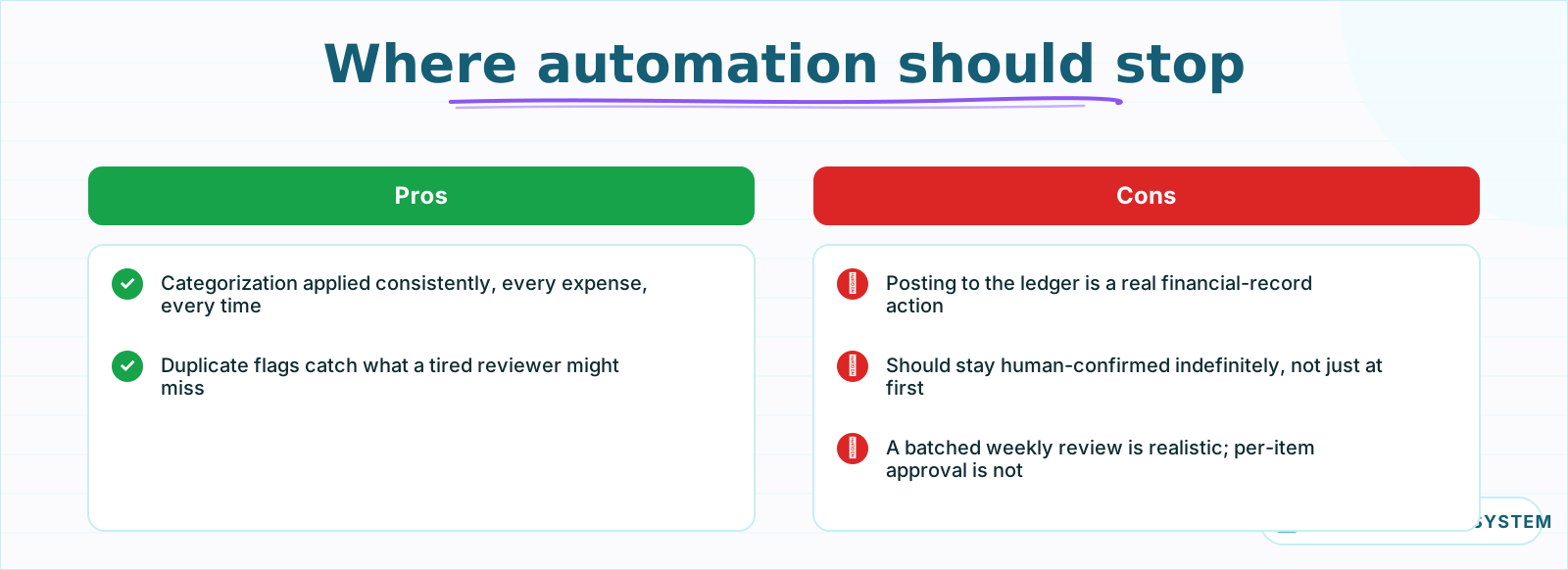 One is a judgment call worth automating; the other is a permanent human gate.
What breaks, and how do you debug it?#
The most common failure is a category rubric that goes stale as your business changes. A new recurring vendor, a new category you started using last quarter, or a chart-of-accounts restructuring that the agent's instructions never got updated for all produce confident, wrong categorizations that look no different from correct ones until someone checks.
Turn on Return Intermediate Steps on the AI Agent node and review exactly which prior examples or vendor history the agent's decision leaned on. Run a periodic reconciliation comparing a sample of agent-categorized entries against what your bookkeeper or accountant would have chosen by hand; a consistent pattern of disagreement in one category is the rubric telling you it needs an update, not a one-off mistake to shrug off.
Is this worth building for a small business's books?#
Build it once expense volume is high enough that categorization and duplicate-checking eat real time every week or month, not just an occasional annoyance worth living with, and a handful of recurring expenses is easy enough to keep straight from memory alone.
Dozens of vendors across multiple cards and accounts is where a consistent rule, applied by something that never gets tired of it, actually pays off week after week.
The honest value is consistency and a real duplicate-catch rate, not better accounting judgment than a bookkeeper already has. Every expense gets checked against the same chart of accounts and the same duplicate logic, every time, and the person who used to spend an hour on the mechanical sorting gets that hour back for the parts of the job that actually need a professional's judgment.
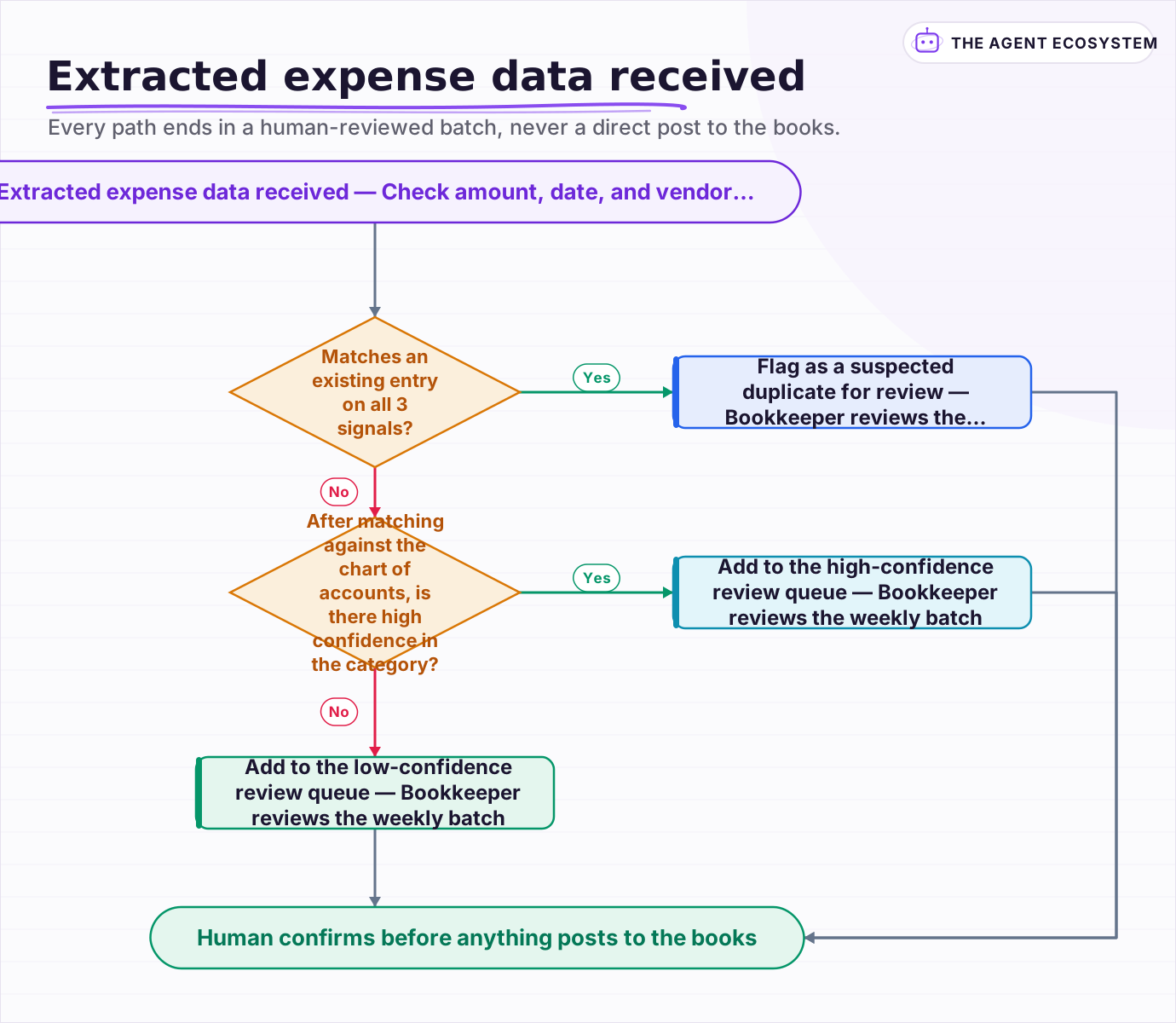 Every path ends in a human-reviewed batch, never a direct post to the books.
Frequently asked questions
Can an n8n AI agent categorize business expenses automatically?
How does an AI agent catch duplicate expenses?
How is this different from AI document extraction for invoices?
Should an AI agent post categorized expenses directly to the books?
Why does my bookkeeping AI agent miscategorize a recurring expense?
Sources
Primary references and vendor documentation used while drafting and reviewing this article.
Written by

Muhammad Qasim Hammad is an AI agent and automation expert and the founder of Cart Gaze LLC (cartgaze.com). He builds product for the love of it: when an idea lands, a working prototype is usually running within hours, built with the same AI agents and automations he sells. He puts his own output at roughly 20× what it was before agents, and the Agentic OS behind this site is the working proof, documented in public with the tools he actually ran and what they really cost.
AI & Automation Services
Want a pipeline like this running in your business?
I'm Qasim — I design and ship AI agents and n8n automations for solo operators and small teams. Tell me what's eating your team's week, and I'll scope a fix.
Related reading
How to Build an n8n AI Agent for Property Management Maintenance Triage
An n8n AI agent can read a tenant's maintenance request the moment it arrives, sort it by real urgency and category, and route it to the right vendor before a property manager opens it. Here is how to build the triage logic, why certain safety issues must always bypass it

Auto-Categorize Emails & Tickets in n8n with the AI Text Classifier
The n8n AI Text Classifier node reads each inbound message, picks the right category, and branches your workflow automatically. Costs $0.65 per 1,000 emails on Claude Haiku 4.5. Here is exactly how to build it.
n8n AI Feedback Analysis: Classify Sentiment and Route Urgent Complaints Automatically
Customer feedback arrives from five places and nobody reads most of it. An n8n workflow with an AI agent classifies every piece by sentiment and theme, routes urgent complaints immediately, and builds a weekly digest your product team can act on.
How to Build an n8n AI Agent for Legal Intake and Document Triage
Before an attorney can act on a new inquiry, someone has to sort it by practice area, check for a conflict of interest, and gather the basic facts a first call will need. Here is how to build an n8n AI agent for that intake step, one that never crosses into legal judgment, case
How to Build an n8n AI Agent for Stripe Billing Support
An n8n AI Agent can look up a customer's charges, invoices, and subscription status and draft a grounded answer to a billing question in seconds. Here is how to wire Stripe in as a read-heavy tool and why refunds and subscription changes should stay gated behind a human
How to Build an n8n AI Agent for E-Commerce Return Eligibility
Answering "can I return this" correctly means checking the purchase date, the item's category, and its condition against your actual policy, all at once. Here is how to build an n8n AI agent that applies your return policy as explicit rules, quotes the specific line it relied