How to Build an n8n AI Agent for Legal Intake and Document Triage
An n8n AI agent that gathers facts, checks for conflicts, and sorts documents during client intake, strictly stopping short of any legal judgment.
AI-drafted, reviewed by Muhammad Qasim Hammad on August 20, 2026. See our AI disclosure.
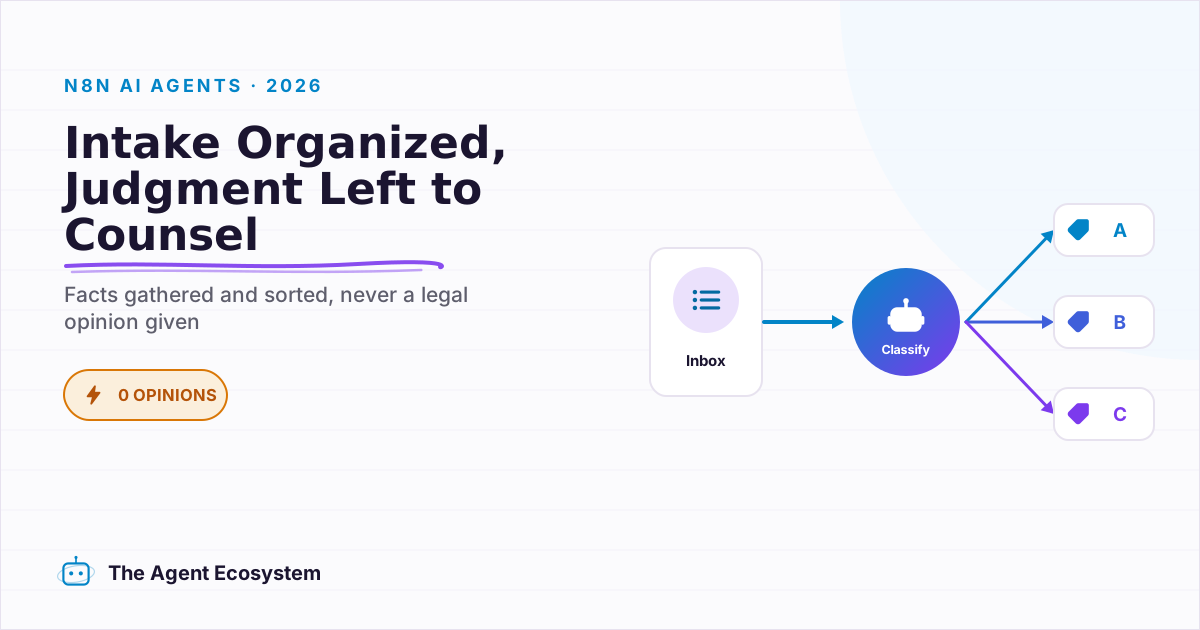
Table of contents
A prospective client fills out a contact form describing their situation, and before an attorney can do anything with it, someone has to read it, figure out which practice area it falls under, check for a conflict of interest, and gather the 4 or 5 basic facts a first call will actually need. Wire an n8n AI agent into that intake, and it can do the sorting and gathering, strictly stopping at the line where anything resembling legal judgment begins.
What can the agent actually do during intake?#
Collect facts, not judgments: what happened, when, who was involved, what documents already exist, and what outcome the person is hoping to achieve, all stated plainly and recorded without the agent interpreting, weighing, or evaluating any of it any further than that.
Sort the inquiry into a practice area, family, personal injury, estate, business, based on the facts stated, and check the named parties against your firm's existing client and matter list for an obvious conflict before anyone on staff spends time on a call.
Write the practice-area categories as concrete fact patterns the agent can match against, the same discipline as routing a support ticket or a maintenance request elsewhere in this series: "mentions divorce, custody, or separation" maps to family law; "mentions an injury from an accident" maps to personal injury. A vague "sounds like it could be several things" case should route to an attorney to sort, not the agent guessing.
Statute-of-limitations urgency is worth flagging as a fact, not evaluating as a deadline. If the inquiry mentions dates that suggest a filing window might be closing soon, flag that timing explicitly for immediate attorney attention rather than calculating whether it is actually still open; that calculation itself is a legal judgment the agent should never make.
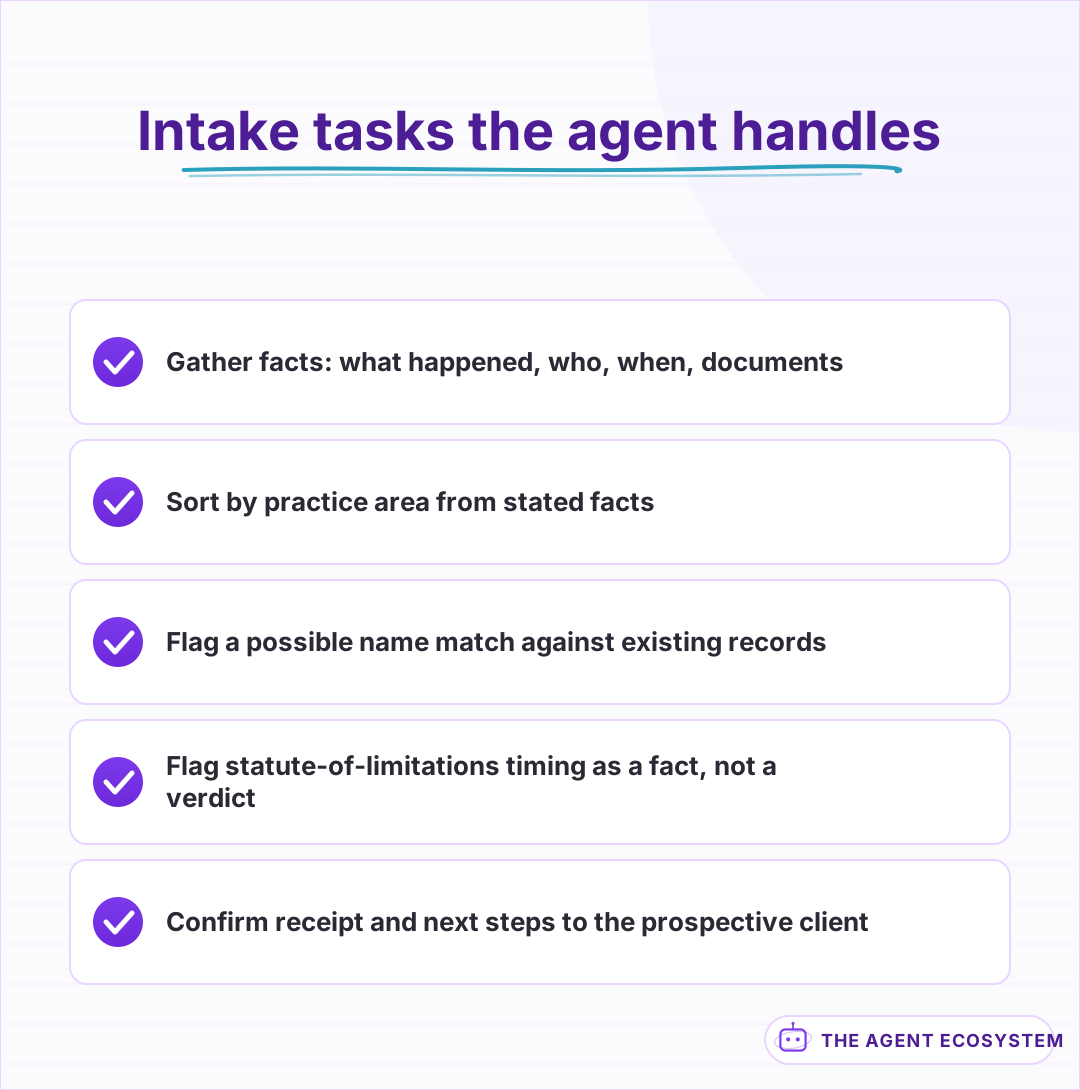 Facts gathered and sorted, never a judgment formed.
How does a conflict check actually work here?#
Match the names the prospective client mentions, themselves, the other party, any company involved, against your firm's existing client and matter records. A match does not mean the agent decides there is a conflict; it means the inquiry gets flagged for an attorney to make that determination before any further contact happens.
| What the agent checks | What it decides | What a person decides |
|---|---|---|
| Named parties vs. existing records | Whether a name match exists | Whether it is an actual conflict |
| Practice area from the facts stated | Which category to route to | Whether to take the case |
| Basic timeline and document list | What is missing for the first call | Legal strategy or advice |
A name that partially matches, a common name, a similar but not identical company name, should flag for a human to check rather than the agent silently deciding it is not a real match. A missed conflict is a serious problem; a flagged non-issue costs someone 2 minutes.
Keep the conflict-check data itself narrowly scoped and access-controlled. The agent needs enough of your client and matter list to compare names against, not full case files or privileged content, and the workflow's credentials should reflect that boundary directly rather than relying on the agent's instructions alone to respect it.
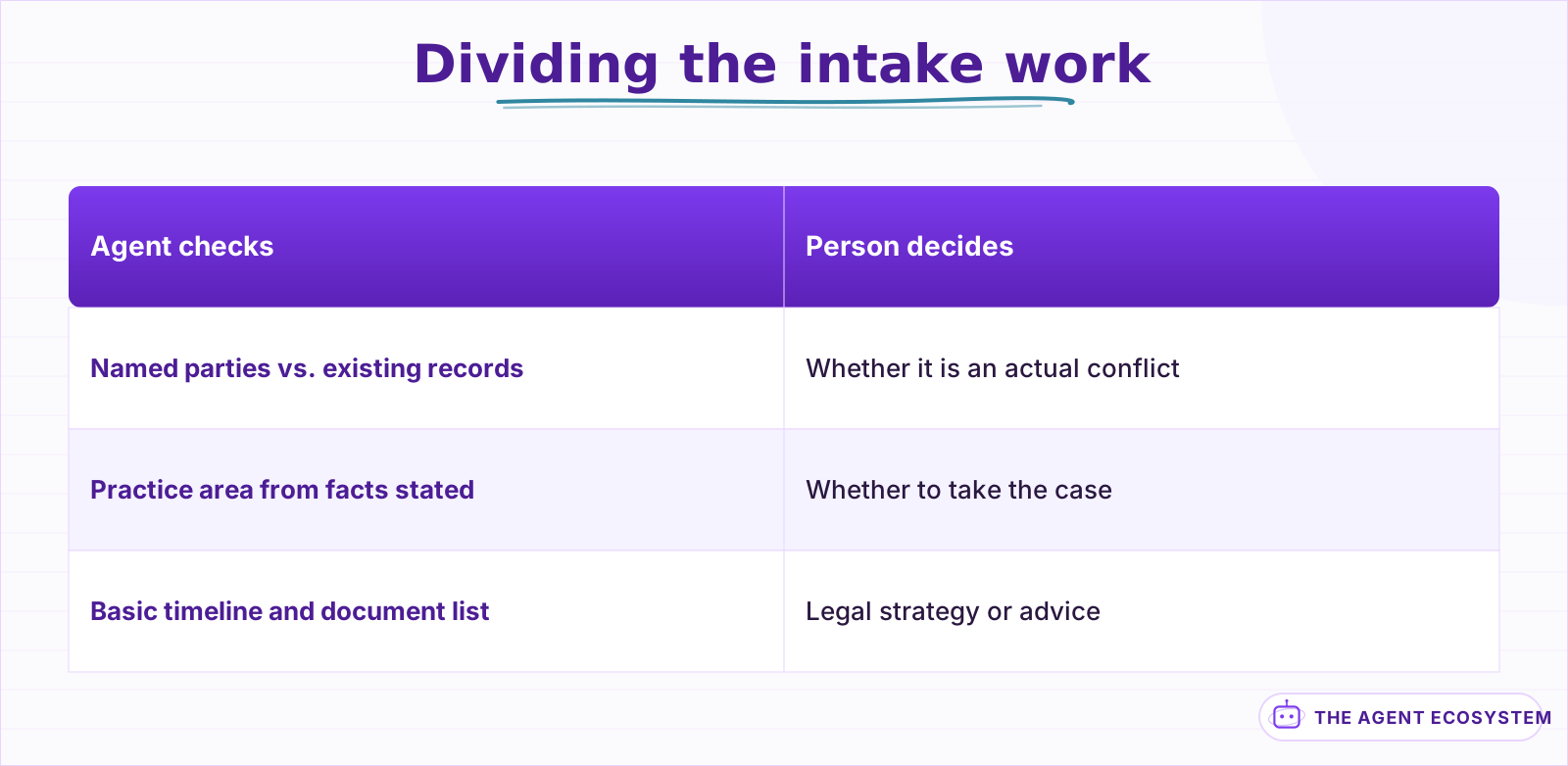 A flagged match is not the same as a confirmed conflict.
What should the agent tell the prospective client?#
Confirm what was received and what happens next, nothing at all about their situation's merits or likely outcome. "Thank you, this has been routed to our family law team, someone will contact you within 1 business day" is a safe, useful confirmation.
"It sounds like you have a strong case" or "that's likely a violation of your rights" is legal analysis, and it is exactly the line this agent must never cross, no matter how confident or reasonable the answer might sound in the moment.
If a prospective client asks a direct legal question during intake, "do I have a case," "what should I do," the agent's only correct answer is that an attorney will address that on the call, not an attempt to be helpful with a partial answer. A partial legal answer from an unqualified source is often worse than no answer at all.
Write the deflection consistently rather than leaving the wording to vary by request. A single, tested response, "an attorney will go over that with you on your call, I can't offer legal advice," used every time a legal question comes up in intake is more reliable than trusting the model to phrase an appropriate deflection fresh each time.
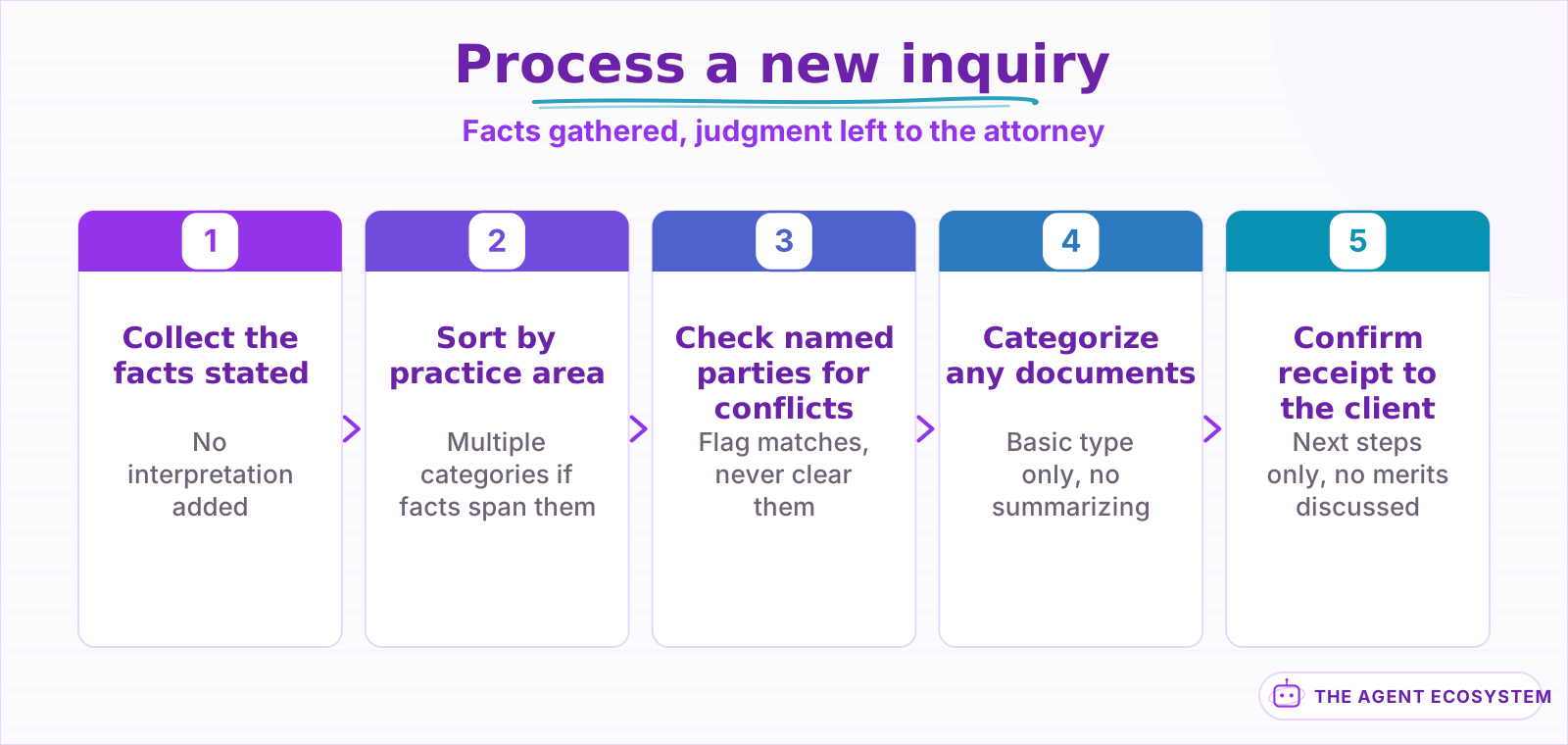 Every step stops short of anything resembling legal judgment.
How does document gathering fit into intake?#
Ask for documents the person is likely to already have, not documents that require them to go find something first: a copy of a contract, photos of an incident, prior correspondence, a police report number if one exists. List what to request as a category-specific checklist, since a personal injury intake and a business dispute intake need genuinely different documents.
Route uploaded documents into your case management system by category and matter, tagged with what the prospective client said each one is, so an attorney's first look at the file is organized instead of starting from a folder of unsorted attachments with no context for what they are.
Never let the agent interpret a document's contents beyond basic categorization. Filing a document as "appears to be a lease agreement" based on its title and format is reasonable; summarizing what a contract's termination clause means for the client's situation is legal analysis, and the agent has no business generating that summary even as a courtesy.
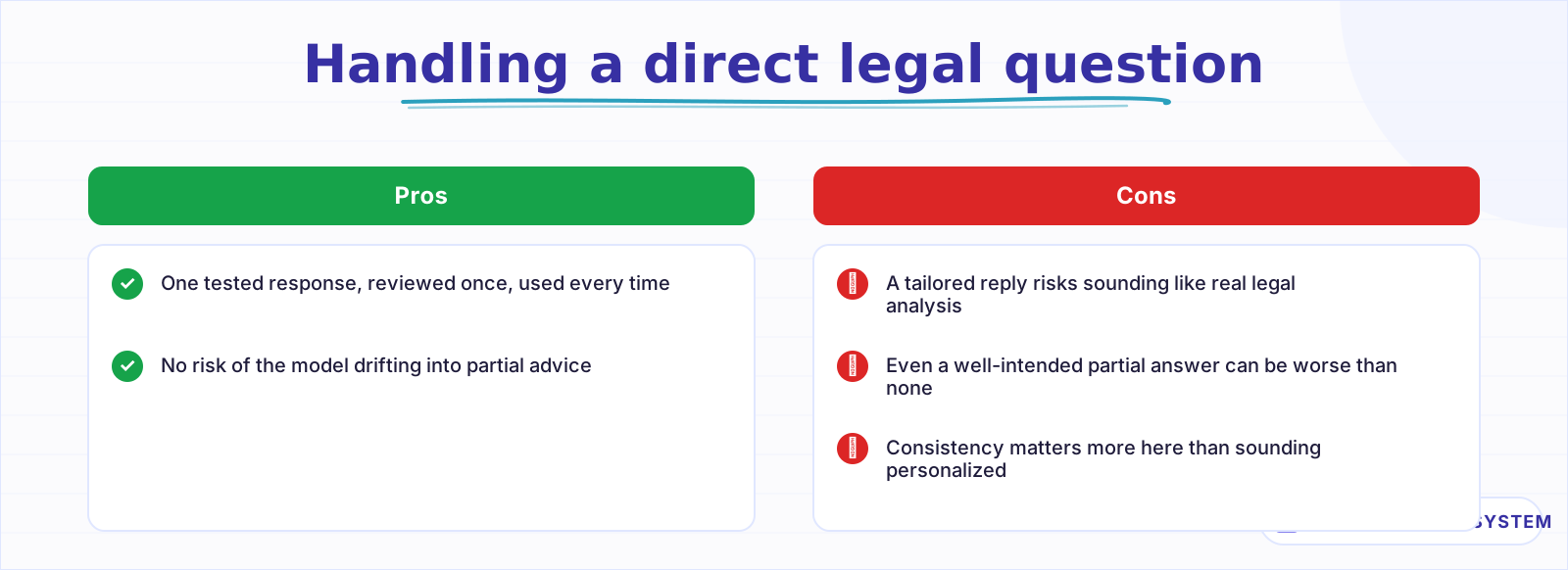 A tested, consistent line is safer than a fresh answer every time.
What breaks, and how do you debug it?#
The most common failure is a fact pattern that touches 2 practice areas at once, an injury that happened during a business dispute, a divorce with a business asset involved, and forcing it into a single category loses information the routing was supposed to preserve.
Let the agent flag multiple categories rather than picking one when the facts genuinely span more than one area of practice.
Turn on Return Intermediate Steps on the AI Agent node and review exactly which facts drove the category and conflict-check decision before assuming the routing logic itself is broken.
Audit a sample of 10 or so intakes each month against what an attorney would have concluded from the same facts; the general agent-not-working checklist covers connection issues, but a wrong category here is more often a fact pattern the routing rules never anticipated.
Is this worth building for a small firm?#
Build it when inquiry volume is high enough that intake triage is genuinely eating attorney or paralegal time that could go toward billable work, a firm getting a steady stream of contact-form inquiries across multiple practice areas. A solo practitioner getting a handful of inquiries a week can likely read each one directly just as fast.
The honest value is speed and consistency on the sorting and gathering, never a substitute for the judgment only a licensed attorney can provide. Every inquiry gets the same conflict check and the same fact-gathering, every time, and the attorney's first call starts from an organized intake instead of a blank slate, with the line between gathering facts and practicing law held firmly throughout.
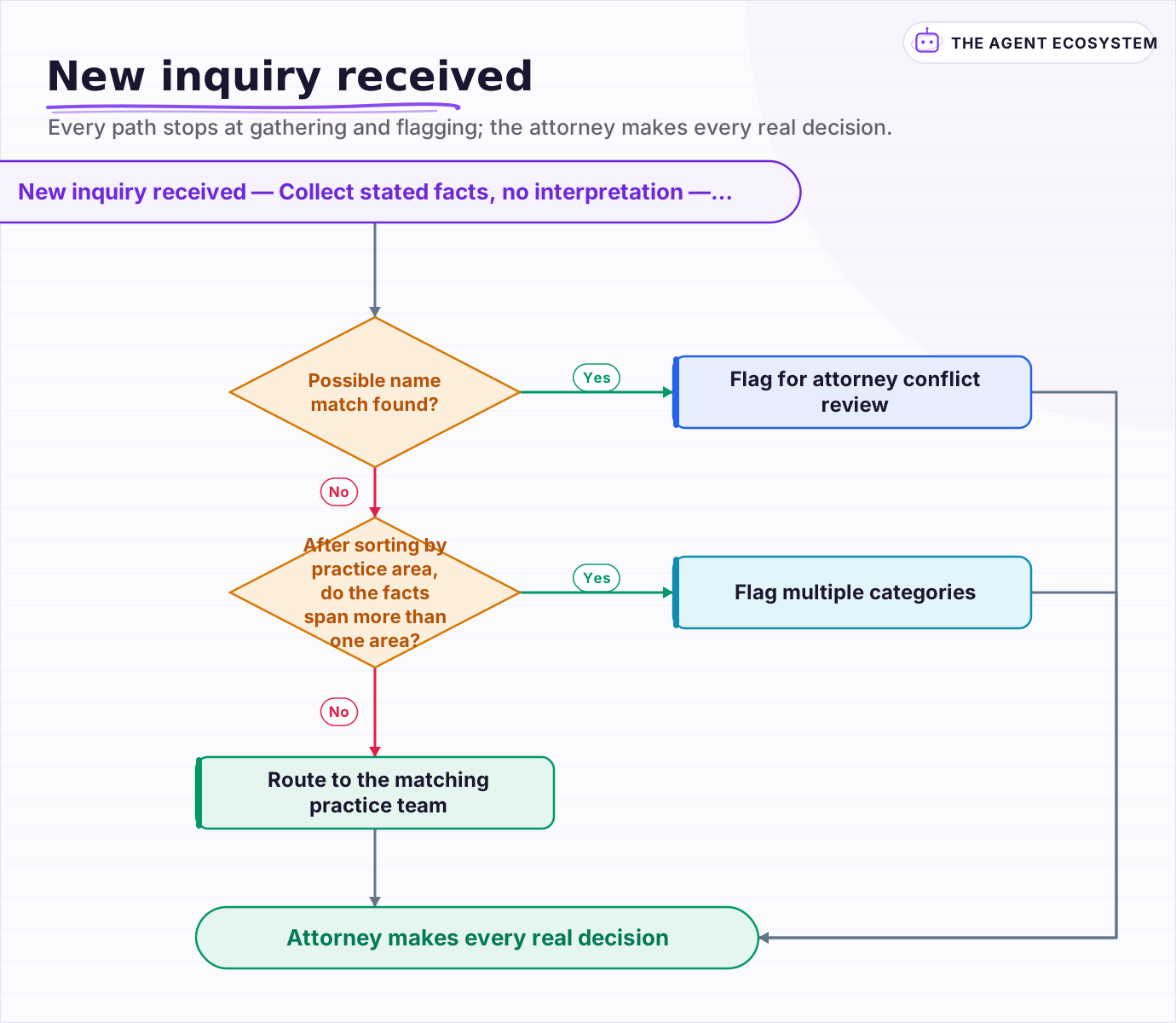 Every path stops at gathering and flagging; the attorney makes every real decision.
Frequently asked questions
Can an n8n AI agent handle legal client intake?
How does an AI agent check for a conflict of interest?
What should a legal intake AI agent say if asked a legal question?
Can an AI agent summarize legal documents during intake?
What breaks most often in an n8n legal intake agent?
Sources
Primary references and vendor documentation used while drafting and reviewing this article.
Written by

Muhammad Qasim Hammad is an AI agent and automation expert and the founder of Cart Gaze LLC (cartgaze.com). He builds product for the love of it: when an idea lands, a working prototype is usually running within hours, built with the same AI agents and automations he sells. He puts his own output at roughly 20× what it was before agents, and the Agentic OS behind this site is the working proof, documented in public with the tools he actually ran and what they really cost.
AI & Automation Services
Want a pipeline like this running in your business?
I'm Qasim — I design and ship AI agents and n8n automations for solo operators and small teams. Tell me what's eating your team's week, and I'll scope a fix.
Related reading
How to Build an n8n AI Agent for Property Management Maintenance Triage
An n8n AI agent can read a tenant's maintenance request the moment it arrives, sort it by real urgency and category, and route it to the right vendor before a property manager opens it. Here is how to build the triage logic, why certain safety issues must always bypass it

n8n Form Trigger + AI Agent: Build a Smart Intake Form
A contact form that sits in an inbox helps nobody. Wire n8n's Form Trigger to an AI agent and every submission gets classified, answered, and routed the moment it arrives.
How to Build an n8n AI Agent for Bookkeeping Categorization
Pulling a vendor and a total off an invoice is the easy half of bookkeeping automation. Deciding which category it belongs to and catching the duplicate that already got entered last month is the harder half. Here is how to build an n8n AI agent for that step, one that flags
n8n Google Drive AI Document Processing: Summarize and Extract Data Automatically
A contract lands in a shared Drive folder and sits unread for three days. An n8n workflow detects the file, extracts the text, runs it through an AI agent, and posts a structured summary with key dates and parties before anyone opens it.
How to Build an n8n AI Agent for Real Estate Lead Qualification
An n8n AI Agent can text a new real estate lead the 1 or 2 questions that actually separate a serious buyer from someone browsing, then route a qualified lead to the right agent within minutes. Here is how to build the qualification logic, why it should ask explicit questions
How to Build an n8n AI Agent for Salesforce Data Hygiene and Case Routing
An n8n AI Agent can read a new Salesforce Lead or Case, decide what a rule engine cannot, and write the fix back through the Salesforce node. Here is how to wire it as a tool, keep it from guessing at fields it cannot infer, and gate every write behind a human check.