How to Build an n8n AI Agent for Recruiting Resume Screening
An n8n AI Agent that sorts resumes into a shortlist, a maybe pile, and a clear no against explicit criteria, with a human deciding every actual outcome.
AI-drafted, reviewed by Muhammad Qasim Hammad on August 16, 2026. See our AI disclosure.
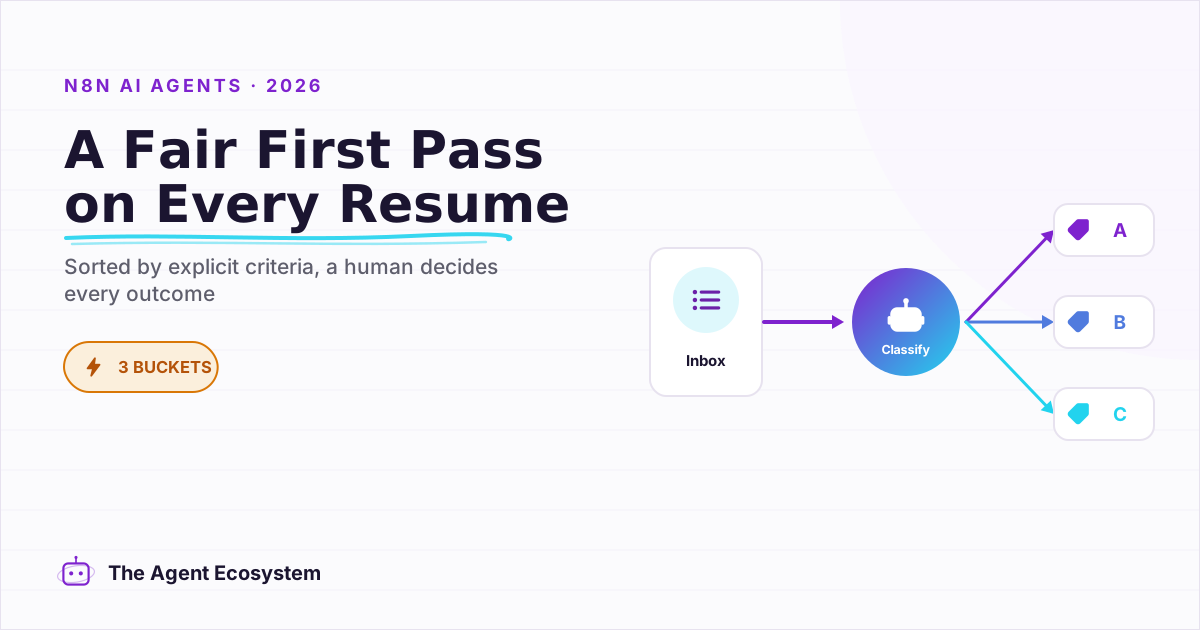
Table of contents
A single job posting can pull in hundreds of resumes, and someone has to open each one, check it against the requirements, and decide who moves to a phone screen. Wire an n8n AI Agent behind your applicant pipeline, and it can do the first read: check each resume against explicit, job-specific criteria and sort candidates into a shortlist, a maybe pile, and a clear no, before a recruiter opens a single one.
What should the agent actually screen for?#
Screen for the things the job posting actually requires: specific years of experience, named tools or certifications, a degree if the role genuinely needs one, and location or work-authorization requirements the role cannot flex on. These are facts a resume states, not judgments about the person behind it.
Write the criteria as a checklist tied to the job posting before you write a single instruction for the agent. "5-plus years in a named role, experience with 2 of these 3 tools, based in one of these states" is something a hiring manager can review and adjust; a vague "find strong candidates" instruction leaves the agent inventing its own definition of strong, which is exactly the failure mode worth avoiding.
Separate hard requirements from preferred ones explicitly, since an agent that treats every listed skill as equally required will screen out strong candidates over a minor gap. Work authorization for the role's location is usually hard; a specific tool listed as "nice to have" in the posting should never carry the same weight as a hard requirement in the agent's scoring.
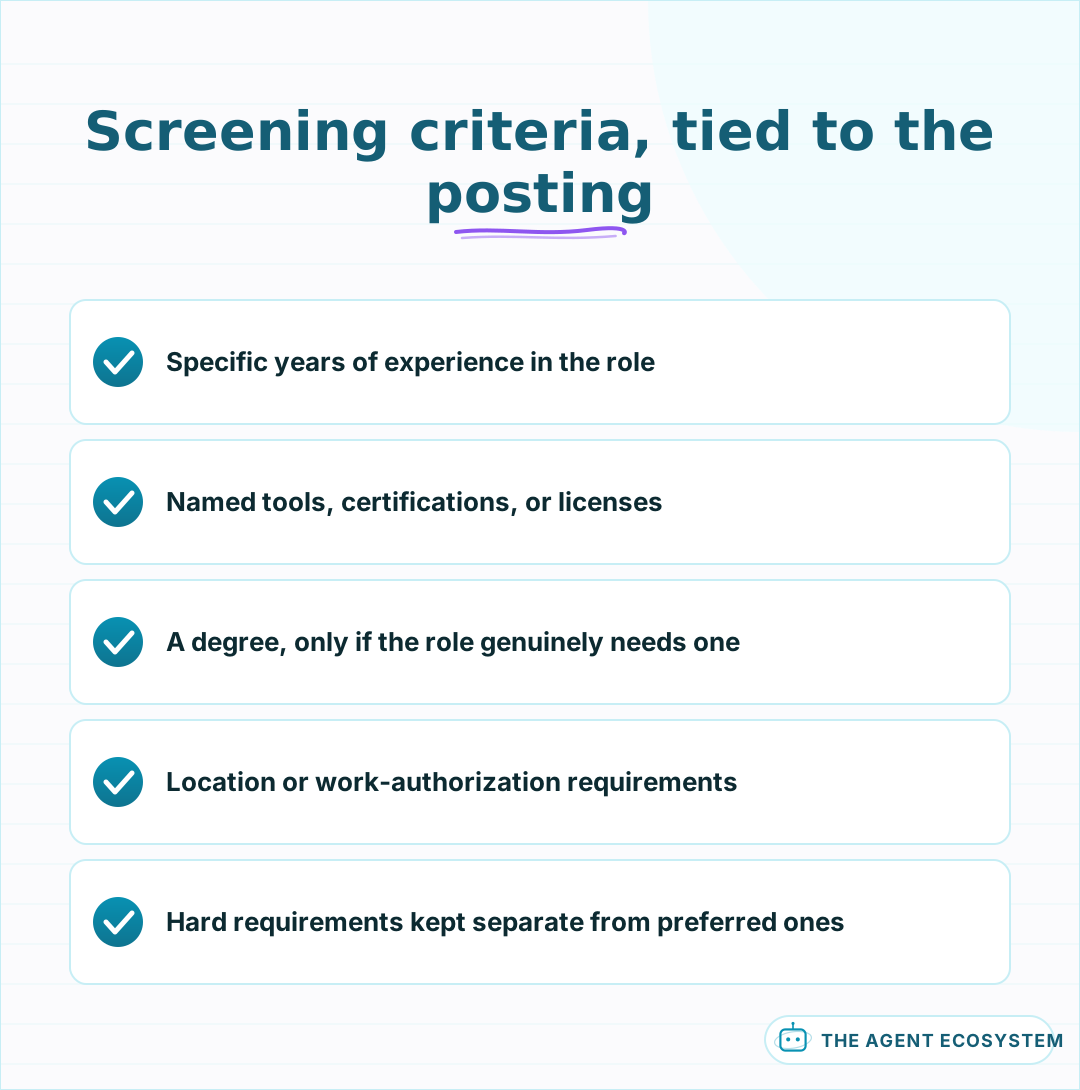 Facts a resume states, tied directly to the job posting.
What must the agent explicitly ignore?#
List the excluded signals as deliberately as you list the required ones. Name, photo, graduation dates, addresses, and anything that reads as a proxy for age, gender, or national origin should never factor into the score, even if the resume includes them.
Strip or ignore these fields before the agent scores anything, rather than trusting an instruction alone to keep it from being influenced by what it still saw on the page.
| What the agent screens for | What it must ignore |
|---|---|
| Years of experience in the role | Age or graduation year as an age proxy |
| Named tools, certs, or licenses | Name, photo, or a name's likely origin |
| Location or work authorization | Neighborhood or address beyond the stated requirement |
| Specific achievements described | Gaps in employment without penalizing them by default |
Employment gaps are worth a specific rule of their own: do not let the agent penalize a gap by default, since caregiving, illness, and layoffs are common, legitimate reasons a resume alone cannot distinguish from anything else.
Career changers deserve the same explicit handling. Someone moving into the field from an adjacent role often has real, transferable experience that does not match a keyword search for the exact job title you posted. If your team wants to consider career changers, say so in the criteria directly, rather than leaving the agent to pattern-match titles and quietly filter out exactly the kind of candidate a broader search was meant to catch.
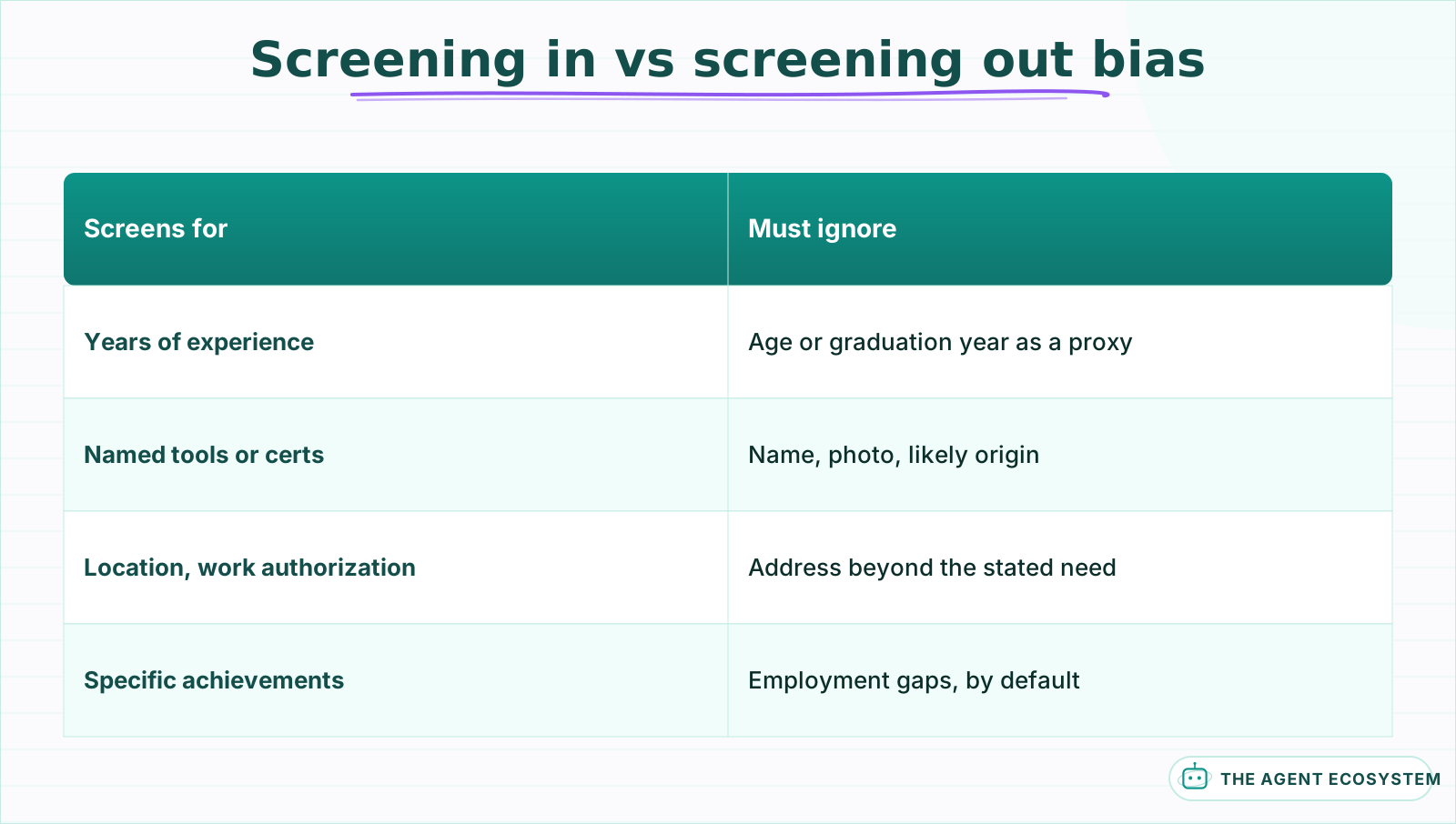 Excluded signals are listed as deliberately as required ones.
How does the agent turn criteria into a shortlist?#
Score each resume against the checklist and sort into 3 buckets: clearly meets the stated requirements, partially meets them and worth a human look, and clearly does not meet a hard requirement like a work-authorization constraint the role cannot flex on.
Three buckets, not a single ranked list, keeps a recruiter's attention on the judgment calls instead of a score they have no easy way to audit.
Log which specific requirement a "does not meet" decision hinges on, the same auditability discipline that matters on a HubSpot lead score or a Salesforce Case routing: "screened out: does not state the required certification" is something a recruiter can verify or override in seconds; a bare rejection is not.
Keep the buckets separate from any suggested ranking within them. It is reasonable for the agent to note that one shortlisted resume states more of the preferred qualifications than another, but resist collapsing that into a single top-to-bottom order recruiters just work down mechanically; the bucket, not a rank number, should drive whose resume gets read first.
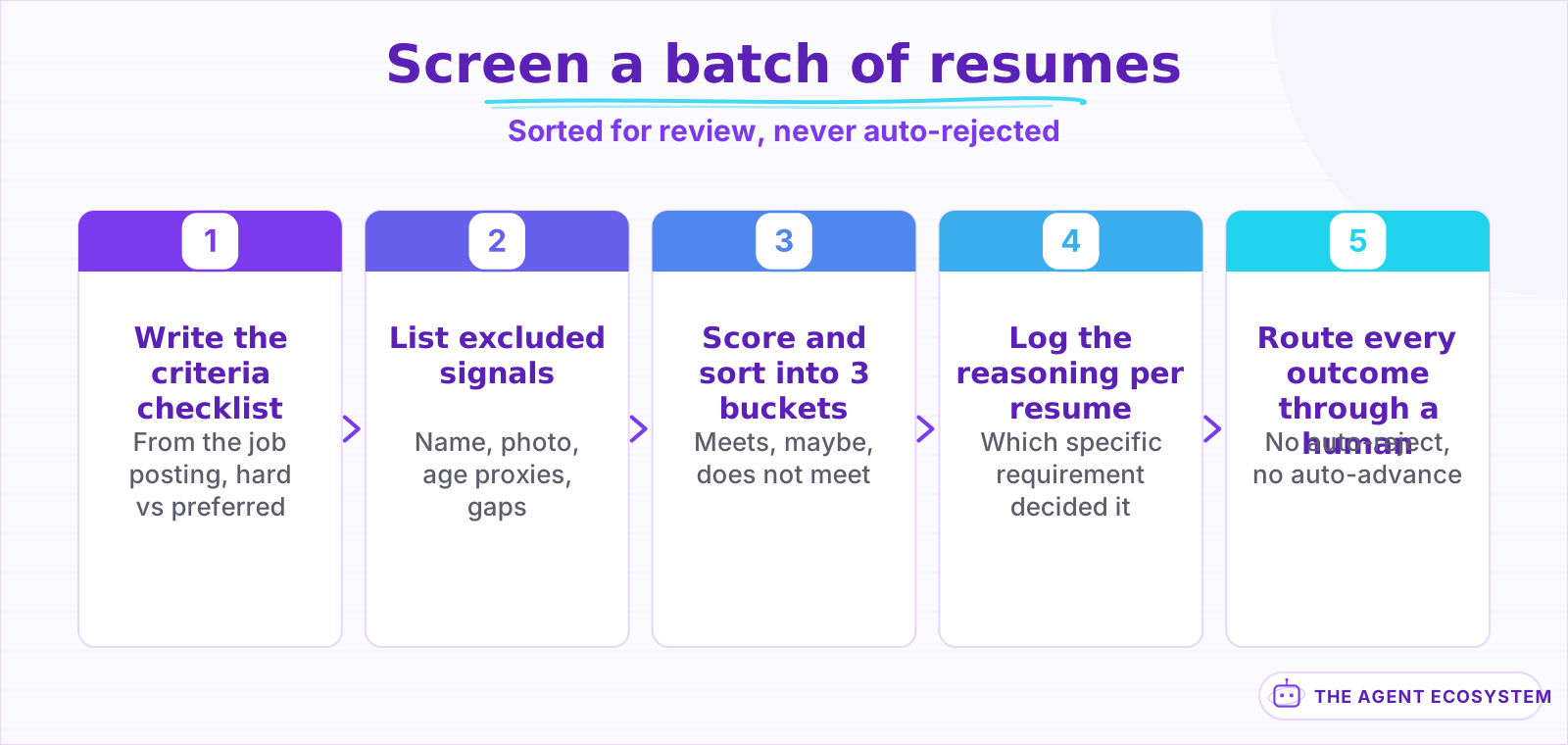 Buckets with logged reasoning, not a single opaque rank.
Should the agent ever reject a candidate on its own?#
No, not on its own, and not ever without a person checking the reasoning first. The agent sorts and surfaces reasoning; a human reviews every "does not meet requirements" decision before anyone is told they were not selected, and a human makes every decision to advance someone to an interview.
The same human-in-the-loop discipline that gates a financial write elsewhere in this series applies here for a different reason: the cost of a wrongly screened-out candidate is not measured in dollars, but it is real, and an appeal or a legal challenge deserves a paper trail showing a person made the call, not an algorithm.
Treat the "clearly does not meet a hard requirement" bucket with particular care. Spot-check a sample of that bucket regularly, not just the ones that get escalated, since a systematic screening error there is the one most likely to go unnoticed precisely because those resumes never reach a human by design.
Build the spot-check into the workflow itself rather than relying on someone remembering to run it. A weekly export of a random sample from the screened-out bucket, sent to whoever owns the hiring process for a quick read, catches a drifting or miscalibrated criterion within days instead of after an entire hiring cycle has already run on it.
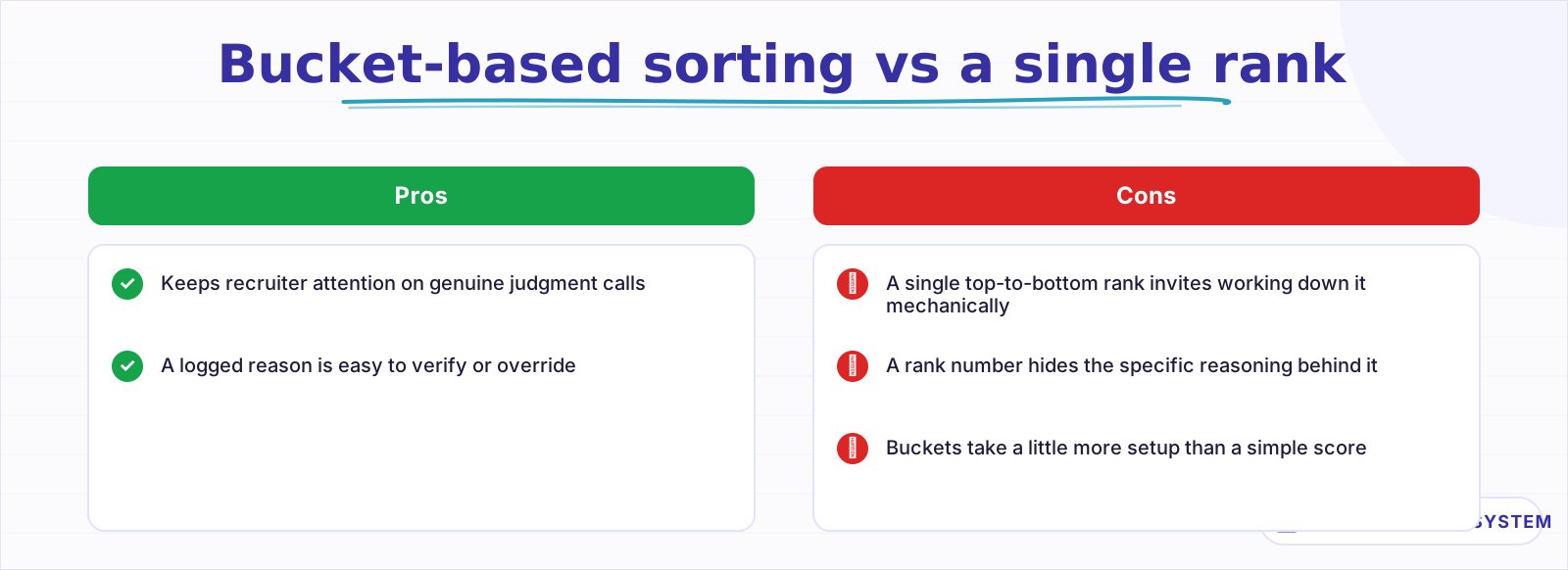 A rank number gets worked down mechanically; a bucket does not.
What breaks, and how do you debug it?#
The most common issue is a criterion that reads as objective but is not. "5 years of experience" sounds precise, but resumes describe experience inconsistently, some by job title, some by a list of responsibilities with no clean date range, and an agent that only pattern-matches job titles will miss someone whose title does not match your industry's naming convention.
Turn on Return Intermediate Steps on the AI Agent node and read exactly which line of a resume the agent's decision hinged on, for both the shortlist and the screened-out pile. Run a periodic audit comparing the agent's shortlist against what a recruiter would have picked from the same batch by hand; a consistent gap between the two is worth investigating for exactly the kind of proxy bias the exclusion list is meant to prevent, before it repeats across hundreds more resumes.
Is this worth building for your hiring process?#
Build it when resume volume is genuinely the bottleneck for your whole team: a role that pulls in 200 applications for one opening, where a first pass by hand eats a full day someone could otherwise spend actually interviewing people.
A role getting a dozen thoughtful applications does not need this; a recruiter can read a dozen resumes faster than it takes to write and test the criteria properly.
The honest value is consistency across a large batch, not a better read on any single candidate than an experienced recruiter would get. Every resume gets checked against the same explicit list, which is both the speed advantage and the safety rail: the same criteria applied the same way, every time, with a human still making the calls that actually decide someone's next job.
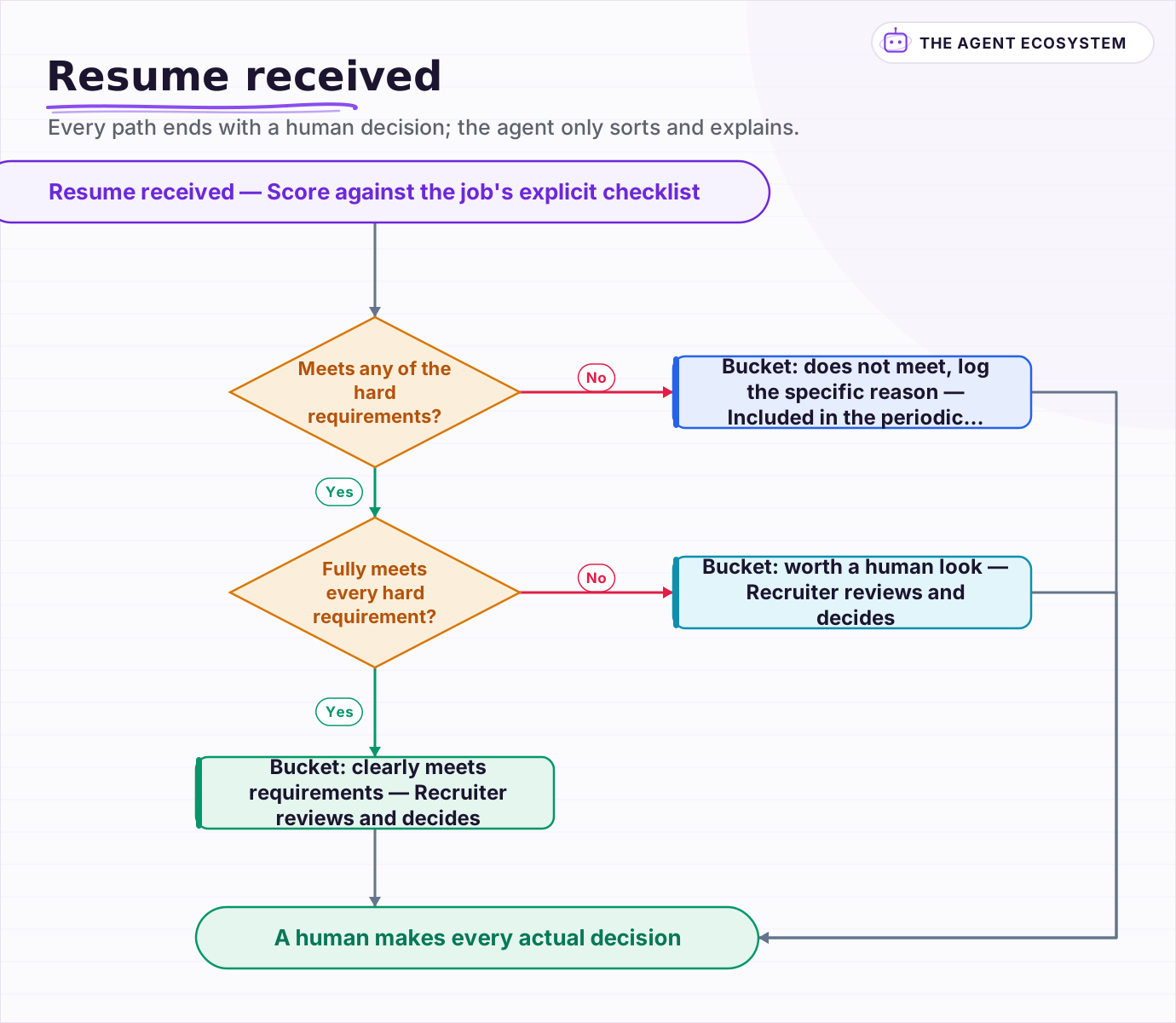 Every path ends with a human decision; the agent only sorts and explains.
Frequently asked questions
Can an n8n AI Agent screen resumes for a job opening?
How do you keep AI resume screening from being biased?
Should an AI agent be allowed to reject job candidates automatically?
What criteria should a recruiting AI agent screen resumes against?
How do you catch a resume-screening AI agent making a systematic mistake?
Sources
Primary references and vendor documentation used while drafting and reviewing this article.
Written by

Muhammad Qasim Hammad is an AI agent and automation expert and the founder of Cart Gaze LLC (cartgaze.com). He builds product for the love of it: when an idea lands, a working prototype is usually running within hours, built with the same AI agents and automations he sells. He puts his own output at roughly 20× what it was before agents, and the Agentic OS behind this site is the working proof, documented in public with the tools he actually ran and what they really cost.
AI & Automation Services
Want a pipeline like this running in your business?
I'm Qasim — I design and ship AI agents and n8n automations for solo operators and small teams. Tell me what's eating your team's week, and I'll scope a fix.
Related reading
How to Build an n8n AI Agent for HubSpot Lead Scoring
An n8n AI Agent can score a new HubSpot lead the moment it arrives, log which rules fired, and route a task to the right rep, all against a rubric your sales team owns. Here is how to wire HubSpot in as a tool and keep the scoring auditable instead of a black box.

How to Build an n8n AI Agent for Real Estate Lead Qualification
An n8n AI Agent can text a new real estate lead the 1 or 2 questions that actually separate a serious buyer from someone browsing, then route a qualified lead to the right agent within minutes. Here is how to build the qualification logic, why it should ask explicit questions
How to Build an n8n AI Agent for Legal Intake and Document Triage
Before an attorney can act on a new inquiry, someone has to sort it by practice area, check for a conflict of interest, and gather the basic facts a first call will need. Here is how to build an n8n AI agent for that intake step, one that never crosses into legal judgment, case
n8n AI Lead Enrichment: Score and Route Every New Lead Automatically
A new lead arrives with nothing but a name and email. An n8n workflow pulls company data, scores the lead with an AI agent against your ICP, and routes it to the right rep or drip sequence before anyone opens a browser tab.
How to Build an n8n AI Agent for Salesforce Data Hygiene and Case Routing
An n8n AI Agent can read a new Salesforce Lead or Case, decide what a rule engine cannot, and write the fix back through the Salesforce node. Here is how to wire it as a tool, keep it from guessing at fields it cannot infer, and gate every write behind a human check.
Build an AI Lead-Generation Agent in n8n (With Real Monthly Cost)
An n8n AI lead generation agent triages every inbound lead the moment it lands: scoring intent, drafting a personalized reply, and pinging you on the hot ones. Real cost: about $5/month for 100 leads on Claude Sonnet 4.6.