n8n AI Agent Hallucinations: How to Ground and Constrain Them
An agent invents answers when it has no grounded source. The fix is real data plus constraints on what it can say, layered in order of leverage.
AI-drafted, reviewed by Muhammad Qasim Hammad on July 26, 2026. See our AI disclosure.
Table of contents
An n8n AI Agent that confidently states a wrong fact, cites a policy that does not exist, or claims a tool returned data it never got is hallucinating. It is not lying on purpose. When the model has no grounded answer, it fills the gap with something plausible. The fix is not a better model, it is giving the agent real data and constraining what it is allowed to say.
This guide covers why agents hallucinate, how to ground them in real sources, and how to constrain the output so a confident guess cannot slip through. If the agent is returning wrong answers from a knowledge base specifically, the RAG chatbot fix is the closer match. This is about the agent itself inventing things.
Why does my n8n AI agent make things up?#
Because a language model always produces a fluent answer, even when it has no grounded source for one. If your agent has no tool to look something up, or the tool returned nothing, the model fills the gap from its training instead of admitting it does not know. A vague prompt and a high temperature both make this worse.
These 5 causes each have a specific fix, and they stack.
| Why it invents | What is missing | The fix |
|---|---|---|
| No source for the answer | Grounding data or a tool | Give it a retrieval or lookup tool |
| Tool returned nothing | A fallback path | Tell it to say so, not guess |
| Vague instructions | A clear boundary | Constrain the task in the system message |
| High randomness | A lower temperature | Lower the temperature for factual work |
| Free-form output | A schema | Require structured output and validate it |
A high temperature setting is the easiest of these to miss, since it makes even a grounded agent phrase things more loosely than a factual task wants. In practice, the first 2 causes, missing grounding and no fallback, account for most of it.
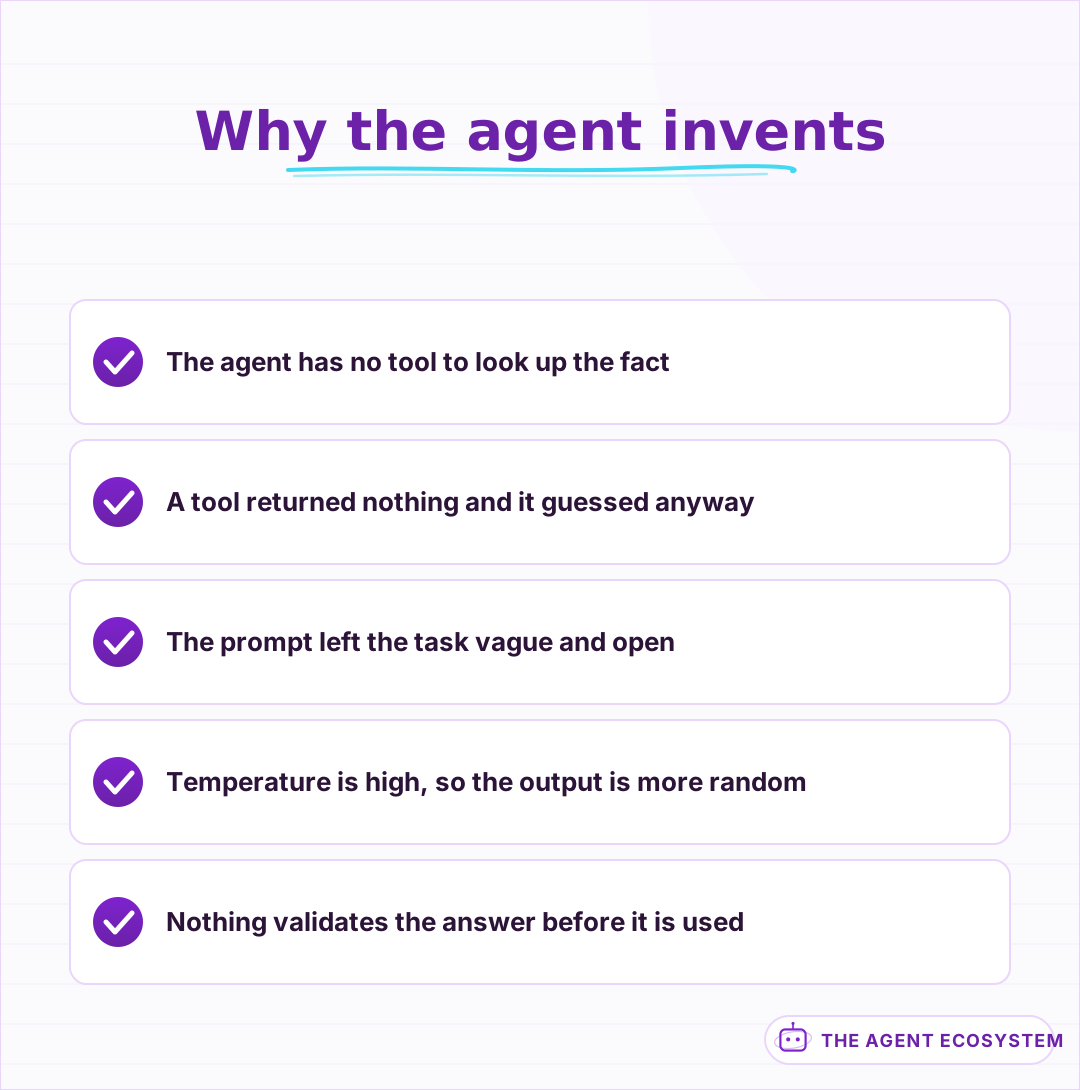 Most hallucinations trace to a gap the model filled: no tool, no fallback, a vague prompt, high randomness, or no check on the output.
Does the agent have real data to answer from?#
This is the root fix. An agent grounded in a tool that fetches real data, a database, an API, or a vector store, has a source to quote instead of a gap to fill. An agent with no tools is answering from memory alone, which is exactly when it invents. Give it a way to look things up first.
Everything else is secondary to this. A model reasoning from its training is guessing, however confident it sounds, so the reliable pattern is to hand the agent a tool that returns real data and instruct it to answer only from what the tool returns. For knowledge-base answers, good retrieval with metadata filtering is what keeps the grounding accurate, and poor retrieval is the usual root of a chatbot giving wrong answers.
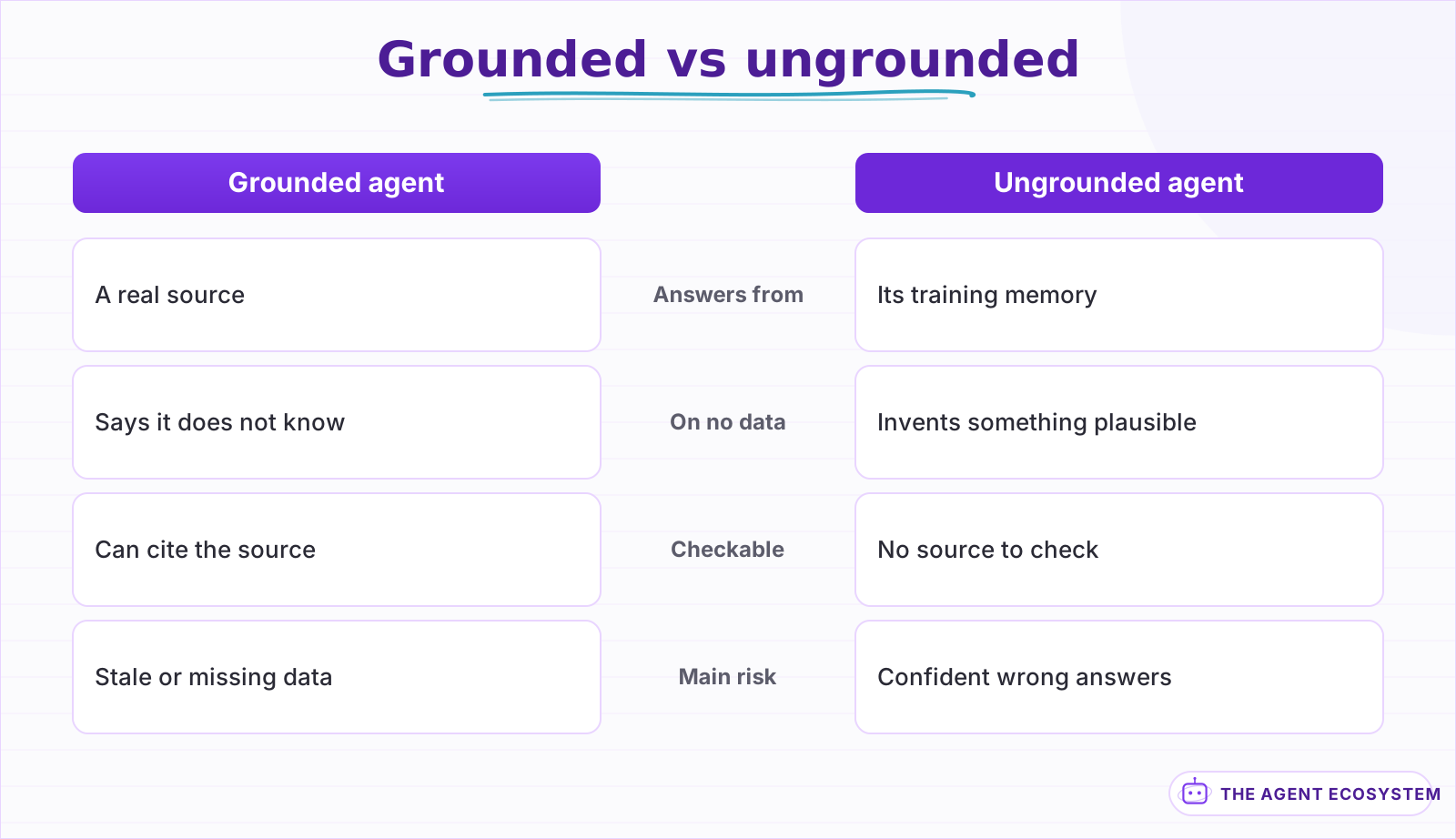 A grounded agent quotes a real source and can admit a gap. An ungrounded agent answers from memory, which is exactly when it invents.
Can you force the agent to use a tool instead of guessing?#
Yes, through the system message. Tell the agent explicitly to use its lookup tool for any factual question, and to reply that it does not know when the tool returns nothing, rather than answering from memory. This turns a silent guess into either a grounded answer or an honest gap, which is far safer in production.
The wording matters. A line like "only answer using the data returned by your tools; if the tools return nothing, say you could not find it" changes behavior more than most prompt tweaks, because it gives the model permission to stop. Pair it with a temperature near 0 for factual work, and confirm the change by reading the agent's intermediate steps to see whether it actually called the tool or answered from memory.
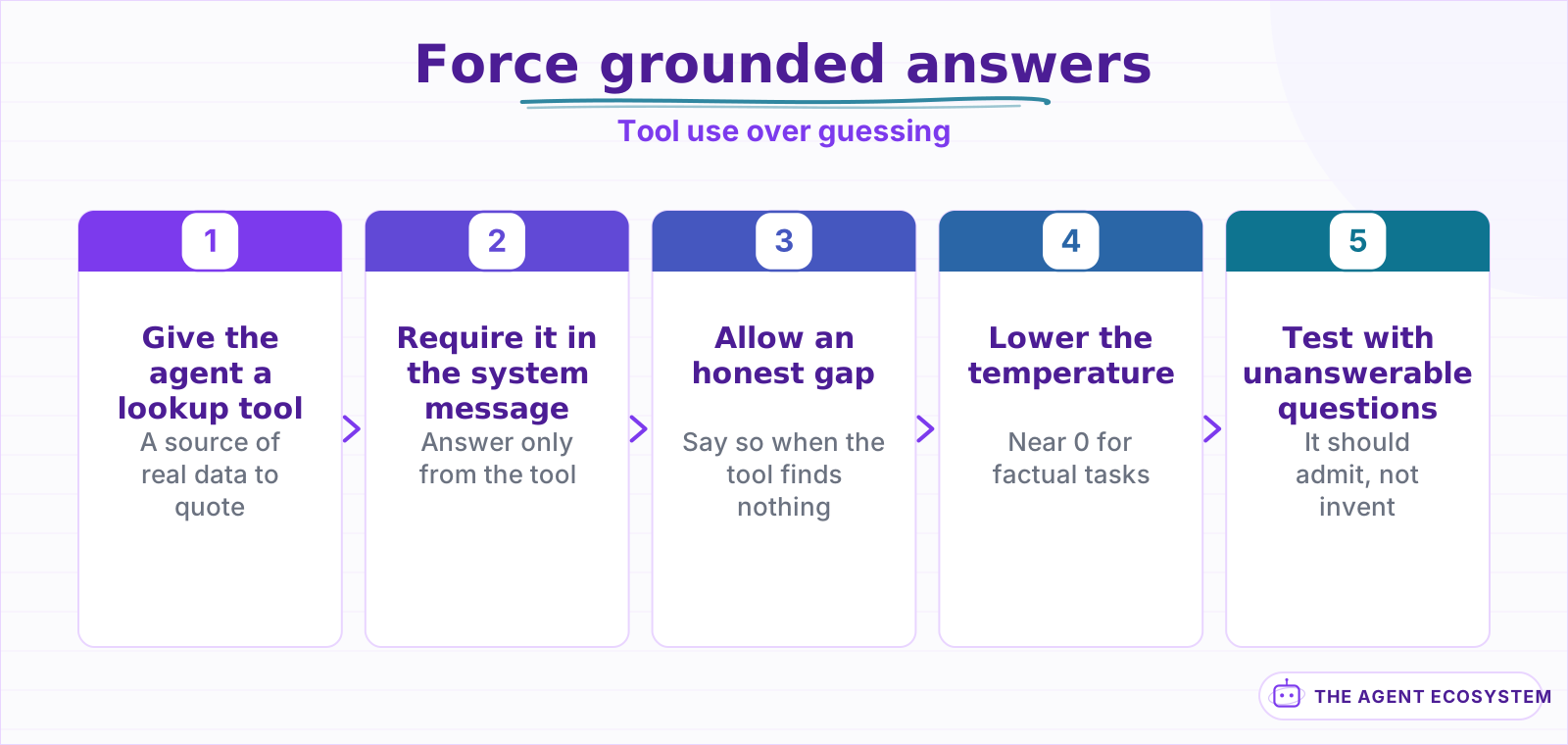 The system message does most of the work: require the tool for facts, and give the agent permission to say it could not find an answer.
Does structured output reduce made-up answers?#
It reduces the shape problem, not the truth problem. A structured output schema forces the agent to return the fields you expect, so it cannot ramble or drop required data, and a validation step can reject a malformed response. But a schema cannot tell whether a value is true. Grounding decides accuracy; structure just makes the output checkable.
Used together they are strong. A structured output schema lets you demand a source field alongside each claim, and a validation node after the agent can reject any response where that field is empty. That does not verify the source is correct, but it does stop a bare, unsourced assertion from flowing downstream, which forces the grounding you set up earlier to actually be used.
When should a human check the agent's answer?#
When a wrong answer is expensive. For low-stakes replies, grounding and validation are enough. But when the agent sends money, emails a customer, or changes a record, add a human approval step so a person confirms before the action runs. It is the cheapest insurance against a confident hallucination reaching the real world.
Match the check to the stakes. A 1% hallucination rate sounds small, but across 1,000 runs that is 10 wrong answers reaching users, and which 10 you cannot predict. A support bot drafting a suggested reply can run unattended, because a human sends the final message anyway. An agent that issues refunds or updates a CRM should pause for human approval on anything irreversible. This is the same instinct behind agent guardrails and prompt-injection defense: the higher the stakes, the less you let the model act alone.
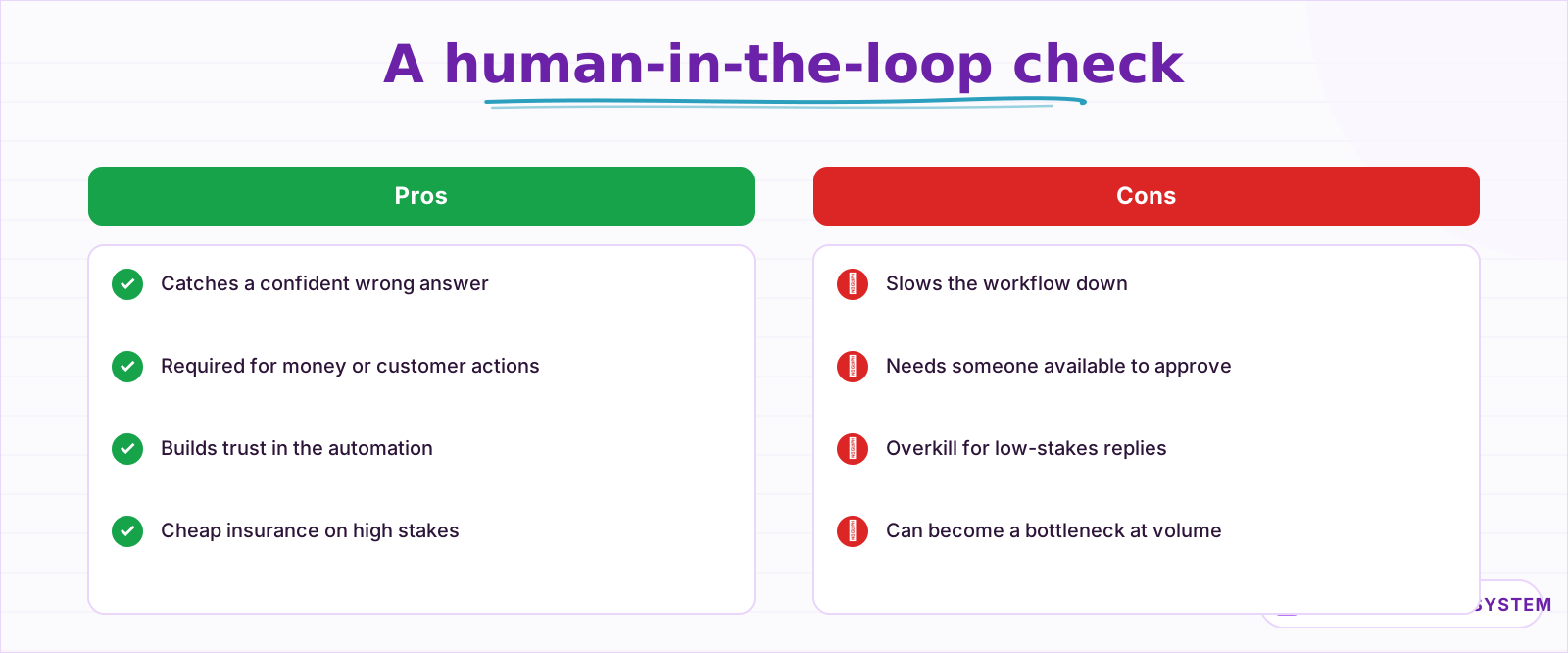 A human gate is cheap insurance on actions that spend money or reach a customer. It is overkill for low-stakes replies a person sends anyway.
How do you stop an n8n agent from hallucinating?#
Layer the 4 defenses in order of leverage. Ground the agent in a real source first, then instruct it to use the tool or admit it does not know, then constrain the output with a schema and validation, and finally gate high-stakes actions behind a human. Each layer catches what the one before it missed.
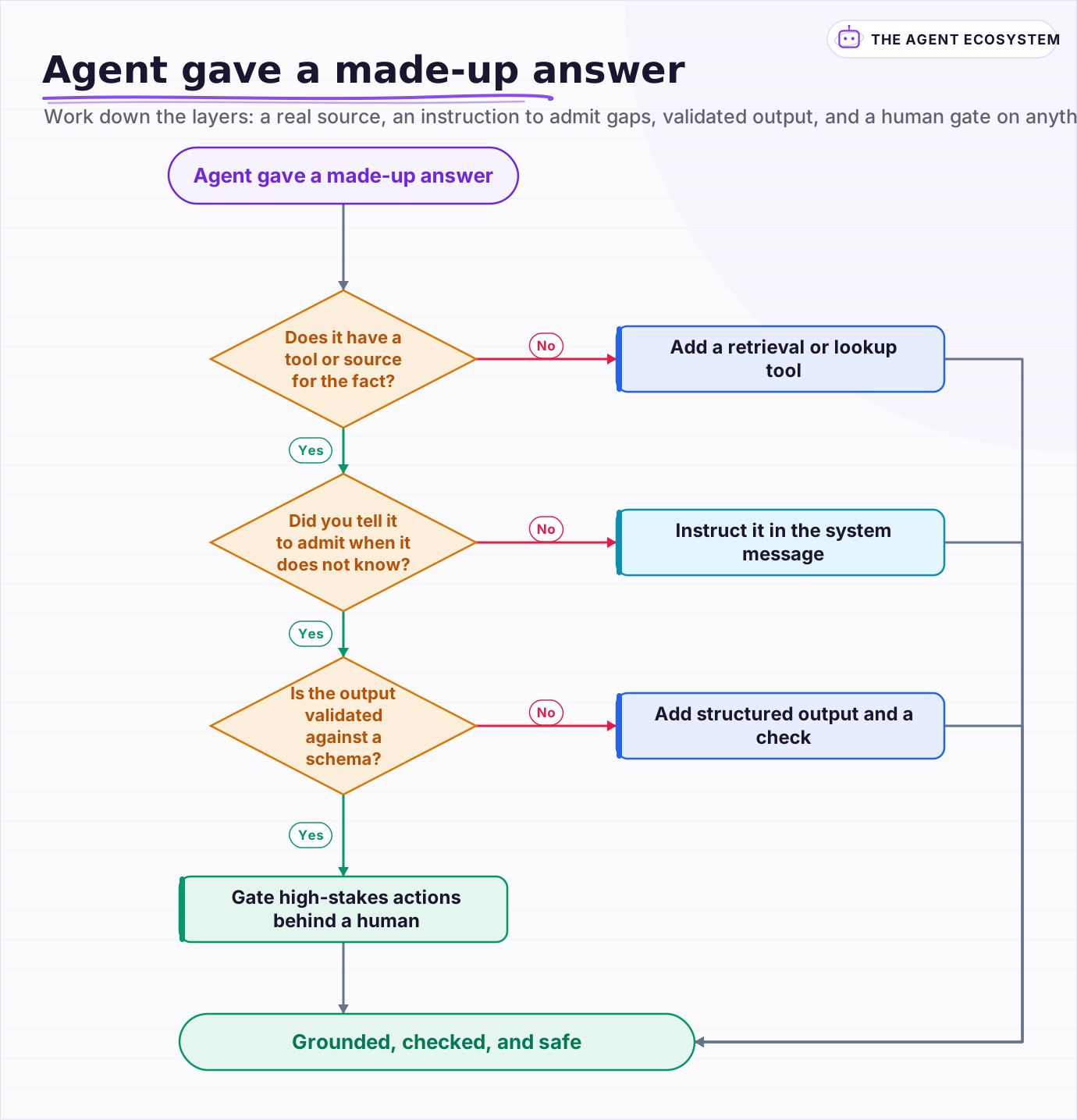 Work down the layers: a real source, an instruction to admit gaps, validated output, and a human gate on anything costly.
Frequently asked questions
Why does my n8n AI Agent hallucinate?
How do I stop an n8n AI Agent from making things up?
Does structured output stop hallucinations?
Should I lower the temperature to reduce hallucinations?
How do I know if my agent is hallucinating or just retrieving badly?
Sources
Primary references and vendor documentation used while drafting and reviewing this article.
Written by

Muhammad Qasim Hammad is an AI agent and automation expert and the founder of Cart Gaze LLC (cartgaze.com). He builds product for the love of it: when an idea lands, a working prototype is usually running within hours, built with the same AI agents and automations he sells. He puts his own output at roughly 20× what it was before agents, and the Agentic OS behind this site is the working proof, documented in public with the tools he actually ran and what they really cost.
AI & Automation Services
Want a pipeline like this running in your business?
I'm Qasim — I design and ship AI agents and n8n automations for solo operators and small teams. Tell me what's eating your team's week, and I'll scope a fix.
Related reading
AI Agent Guardrails: Stop Your n8n Agent From Going Off the Rails
An AI agent is a language model with hands. Without guardrails it can follow a malicious instruction, leak data, loop until your bill spikes, or return output the next node cannot parse. This guide maps the five ways an n8n agent breaks to the exact control that stops each.

Stop Prompt Injection in n8n AI Agents: Practical Defenses
Your n8n agent reads emails, scraped pages, and RAG chunks nobody on your side wrote, and a planted instruction can hijack it. Here is the layered prompt injection defense, mapped to OWASP LLM01 and to nodes you can actually toggle.
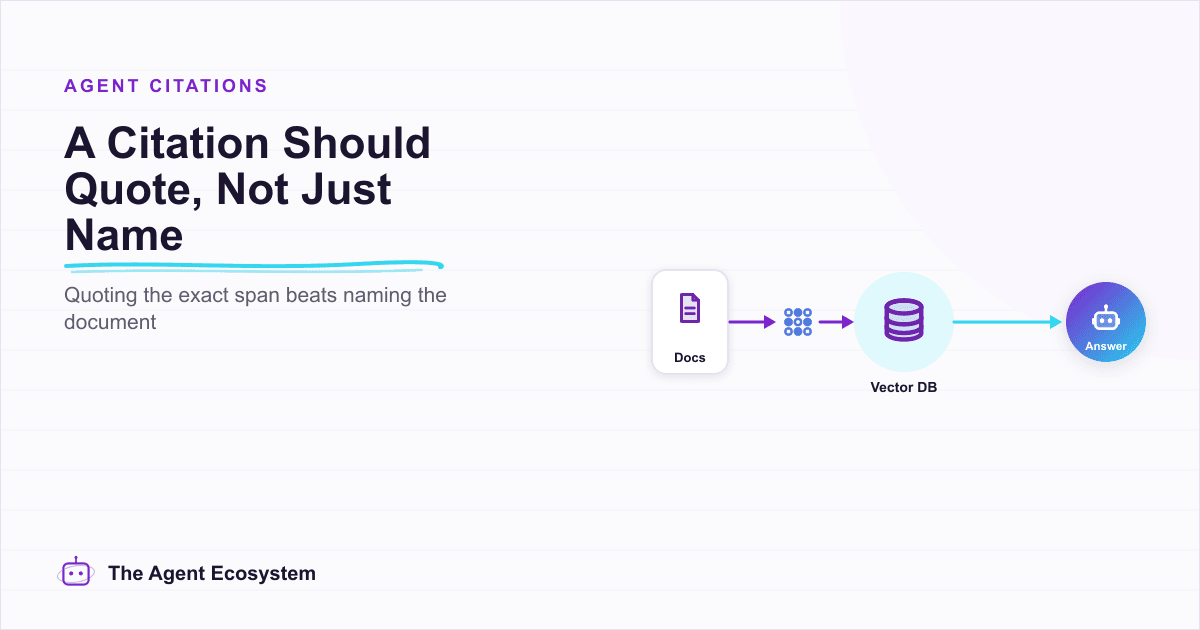
A Real Citation Quotes the Source. Most AI Agents Just Name It.
Naming a document is not the same as quoting it. This is the mechanism behind a real inline citation, the specific difference between a citation that is correct and one that is faithful, and why a confidently-wrong citation does more damage than an honest gap. Citations reduce
Constrained Decoding Sounds Bulletproof. It Only Fixes the Shape.
Constrained decoding is the mechanism behind OpenAI's Structured Outputs and Anthropic's strict tool use: it compiles your JSON Schema into a grammar and masks invalid tokens before they can ever be sampled, so shape failures stop happening. What it cannot do is check that the
Writing AI Agent Tool Descriptions the Model Actually Uses
Your agent keeps calling the wrong tool or passing bad arguments, and you blame the model. The real lever is the tool description and its JSON schema: the model picks and fills every tool from that alone. Here is how to write ai agent tool descriptions like onboarding docs for a
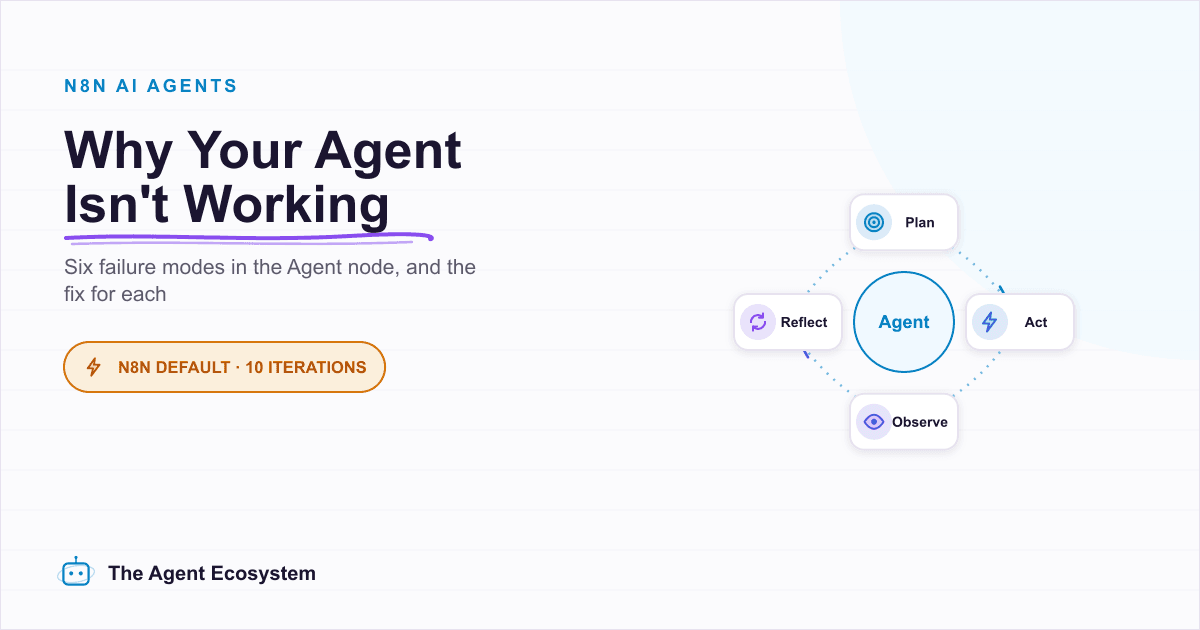
Why Your n8n AI Agent Isn't Working: 6 Failure Modes and Fixes
An n8n AI Agent that finishes without an error but ignores its tools, loops until it quits, or returns the wrong shape is almost always a configuration problem. Here are the 6 failure modes that cover most of them, and the specific node setting behind each fix.