The OpenAI-Compatible API: Swap Models Without a Rewrite
Most models now speak the OpenAI format. Here's how to add or swap one with a base-URL change.
AI-drafted, reviewed by Muhammad Qasim Hammad on July 10, 2026. See our AI disclosure.
Table of contents
A new frontier model seems to land every week now. Muse Spark 1.1 one day, a fresh GPT tier the same day, another release the week before. If each one meant rewriting your integration, you would never ship anything else. The reason you do not have to is a quiet standard almost everyone now follows.
What does an OpenAI-compatible API give you?#
It gives you portability. When a provider exposes an OpenAI-compatible endpoint, its model accepts the same request shape and returns the same response shape as OpenAI's Chat Completions API. So a client you already wrote can reach it by changing two things: the base URL and the API key. No new SDK, no rewrite of your call sites.
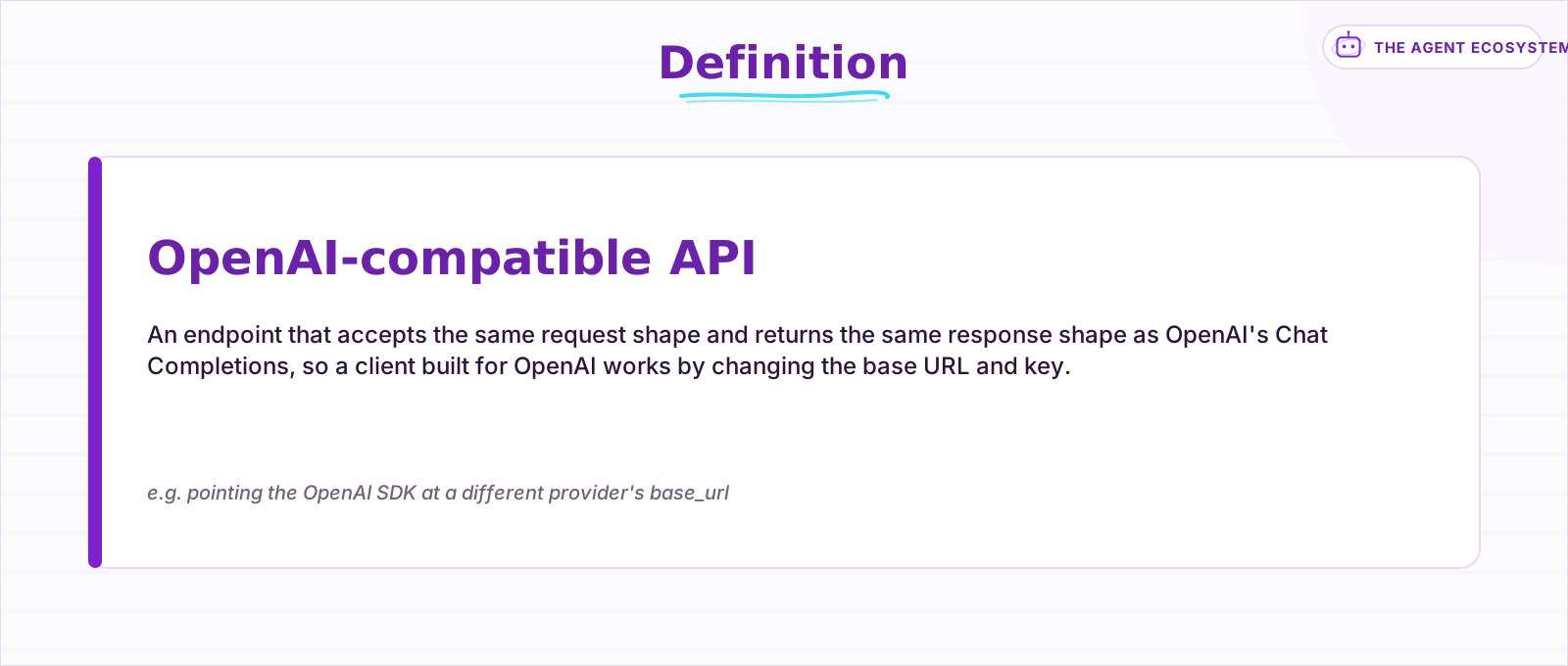 The interface matches; behavior may not. That is what makes a base-URL swap possible in the first place.
This is why the format became a default. Providers adopt it because it drops the switching cost for developers, and developers standardize on it because it keeps their code independent of any single vendor. The result is an ecosystem where the OpenAI request format is the common tongue, even for models that have nothing to do with OpenAI.
Why does this matter now?#
Because a new frontier model lands almost every week, and rewriting your integration each time is a losing game. Meta's Muse Spark 1.1 shipped in July 2026 speaking the OpenAI format, joining most hosts and aggregators that already do. Portability turns each launch into a quick test instead of an engineering project.
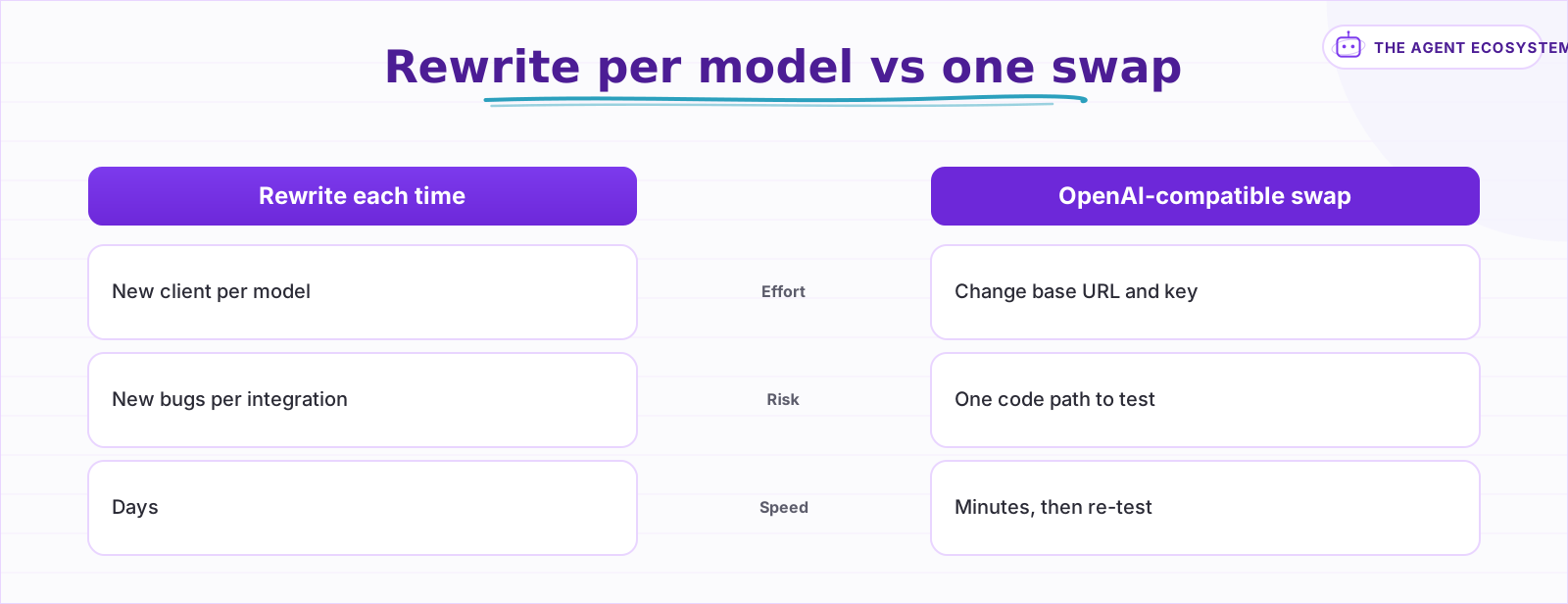 The whole point of the standard: turn a per-model rewrite into a config change you can undo.
The launches back this up. Meta's Muse Spark 1.1 speaks Chat Completions out of the gate, and the wider July 2026 model wave gave builders several new options in days. The economics sharpen the point: moving a step from a premium tier near $10 in and $50 out per 1M to a cheaper one around $1.25 and $4.25 is the same base-URL change, whether the bill drops or a harder task sends it up. If your stack treats a model as swappable, that pace is an opportunity. If it does not, the same pace is a backlog.
How do you swap a model in practice?#
Point your existing OpenAI client at the new provider. Set the base URL to the provider's endpoint, put its key in the environment, and change the model name to the one you want. In n8n, the OpenAI-compatible credential takes a custom base URL, so the same swap works without touching the rest of the workflow.
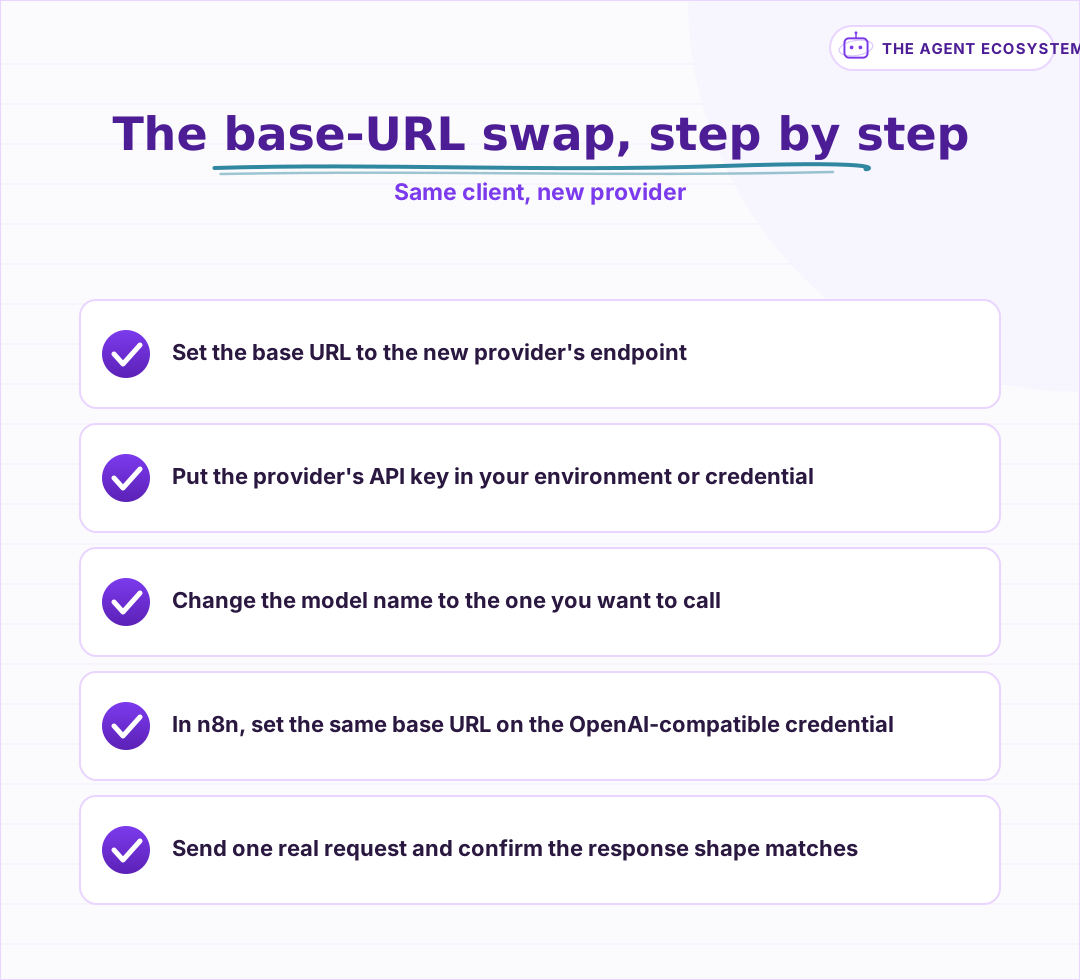 The plain-chat swap is this short; the re-testing after it is where the care goes.
You will find OpenAI-compatible endpoints in three main places, and the swap looks the same in each.
| Source | Example | Swap check |
|---|---|---|
| Frontier vendor | Meta Model API (Chat Completions) | Confirm the exact path and model name |
| Aggregator or host | Multi-model gateways and inference hosts | One key, many models behind it |
| Self-hosted | A local runtime like vLLM | Same client, your own endpoint |
Pair this with a routing layer and you get resilience for free. Our multi-model fallback for n8n shows how to put a cheap default and a premium backup behind one swappable interface.
Where does OpenAI-compatibility leak?#
Compatibility covers the common path, not every corner. Tool-calling schemas, JSON output modes, streaming and stop reasons, and token counting can differ between providers. Provider-only features like prompt caching or extended thinking will not carry over at all. So swap the base URL, then re-test the parts that go beyond a plain chat completion.
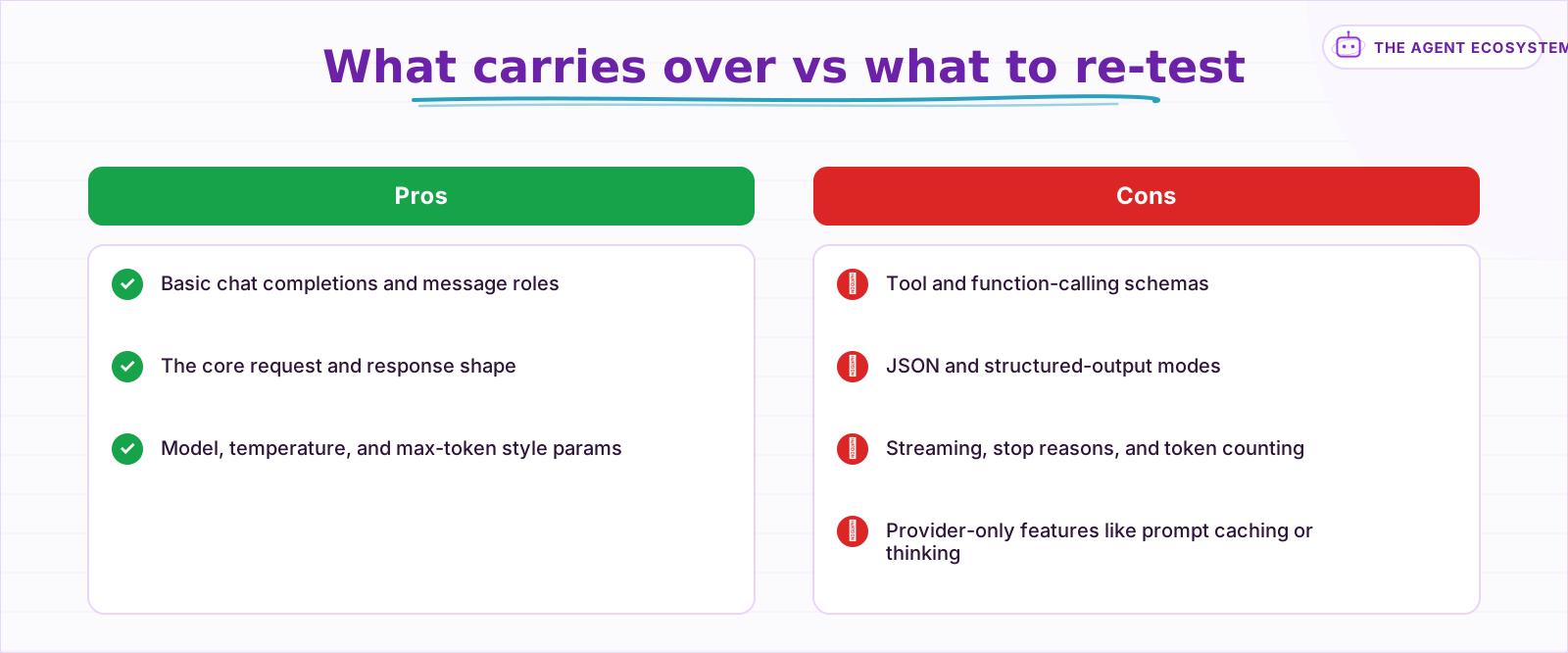 The plain chat path travels well between providers; the corners beyond it are where they diverge.
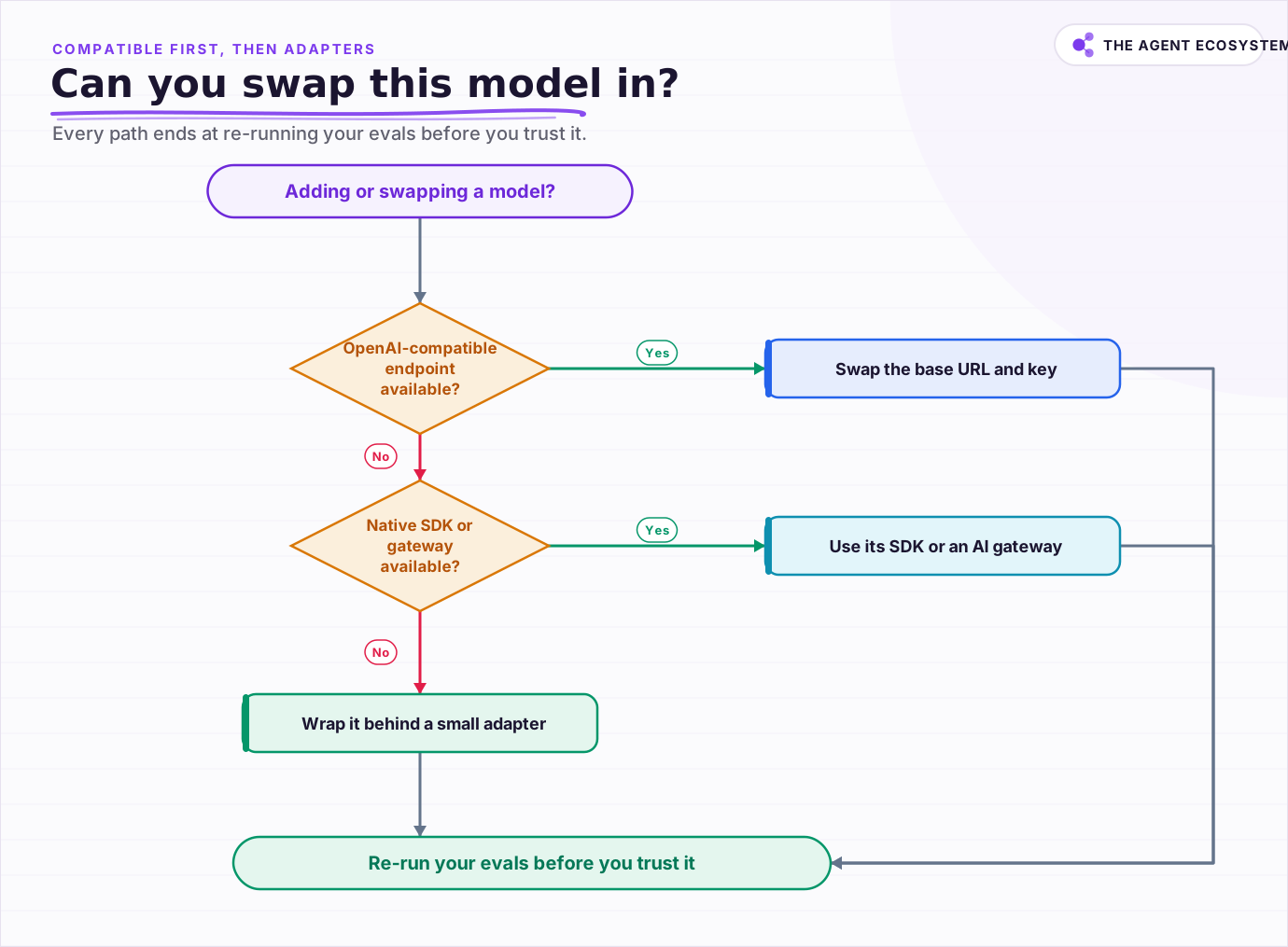 Prefer the compatible endpoint; fall back to an SDK, gateway, or a thin adapter, then re-run your evals.
What is the practical move for builders?#
Build every integration as a model you can swap, and keep your evaluations close by. Standardize on the OpenAI-compatible path, hold the base URL and key in config, and re-run a small eval suite after each swap. Do that once and adopting the next model, from any vendor, is an afternoon, not a project.
The portability is only as good as the discipline around it. Keep the model choice in configuration rather than scattered through your code, treat provider-specific features as things to re-test rather than assume, and let a small eval suite be the gate. Then the weekly model churn stops being a threat to your roadmap and starts being a menu you can order from.
Frequently asked questions
What is an OpenAI-compatible API?
How do I swap one model for another in my code?
Can I use an OpenAI-compatible endpoint in n8n?
Where does OpenAI-compatibility break down?
Is it safe to build only on OpenAI-compatible endpoints?
Sources
Primary references and vendor documentation used while drafting and reviewing this article.
Written by

Muhammad Qasim Hammad is an AI agent and automation expert and the founder of Cart Gaze LLC (cartgaze.com). He builds product for the love of it: when an idea lands, a working prototype is usually running within hours, built with the same AI agents and automations he sells. He puts his own output at roughly 20× what it was before agents, and the Agentic OS behind this site is the working proof, documented in public with the tools he actually ran and what they really cost.
AI & Automation Services
Want a pipeline like this running in your business?
I'm Qasim — I design and ship AI agents and n8n automations for solo operators and small teams. Tell me what's eating your team's week, and I'll scope a fix.
Related reading
Choosing an LLM for Production: The Decisions That Stick
Every model comparison you read was written against someone else's task. Twelve lessons on building the evaluation that produces your answer, pricing the choice properly, and making it reversible before the model changes underneath you.

Kimi K3 in n8n: Using Moonshot's 2.8T Model for AI Agents
Moonshot's Kimi K3 is a 2.8-trillion-parameter model with a 1-million-token context and an OpenAI-compatible API. That last part means it drops into an n8n AI Agent today. Here is how to wire it up, what it costs, and when it beats a frontier model.
AI Labs Are Racing to IPO: What It Means If You Build on Them
Crusoe is reportedly in talks for a big new round, Anthropic hired IPO counsel, and Sonnet 5 shipped as the company races toward a blockbuster IPO. Infra megarounds and public markets mean commercial pressure on the exact APIs your automations depend on. Here is my take on
How to Choose an LLM for Your n8n AI Agent (2026)
Kimi K3, GLM-5.2, DeepSeek V4, Claude, and GPT all plug into an n8n AI Agent, and they are not interchangeable. Here are the 5 questions that decide the pick for your agent, and why the honest answer for most workflows is to route by task, not standardize on one.
Claude vs GPT vs Gemini in n8n: Tested Cost and Speed
There is a 25x cost spread between the cheapest and priciest LLM tier for the exact same n8n AI Agent workflow. This post prices all three providers across 11 model tiers so you can pick the right Chat Model sub-node and stop overpaying.
DeepSeek Model Migration: Replace deepseek-chat Before July 24
DeepSeek is retiring deepseek-chat and deepseek-reasoner on 2026-07-24. Replace them with deepseek-v4-flash or deepseek-v4-pro now using this step-by-step migration checklist for n8n, LangChain, and code configs.