Meta Muse Spark 1.1: A Low-Cost Computer-Use Agent Model
What Meta's first paid developer model does, what it costs, and how to try it.
AI-drafted, reviewed by Muhammad Qasim Hammad on July 10, 2026. See our AI disclosure.
Table of contents
On July 9, 2026, Meta shipped Muse Spark 1.1 and, for the first time, put a frontier-class model behind a paid, self-serve developer API. If you build agents or automations, the model itself is only half the story. The other half is that Meta finally opened the door for you to call it directly.
What is Meta Muse Spark 1.1?#
Muse Spark 1.1 is Meta's multimodal reasoning model built for agentic work, released on July 9, 2026 by Meta Superintelligence Labs. It handles tool use, computer use, and parallel subagents across a 1M-token context, and it is the first Meta model you can call from a paid, self-serve developer API.
Meta describes it as a strong agentic and coding model at a low price, and it also runs in Thinking mode inside the Meta AI app and on meta.ai. The headline capabilities are the ones agent builders care about: it can plan, use tools, and drive a computer. What Meta has not published is an independent benchmark, so the capability claims are the vendor's for now.
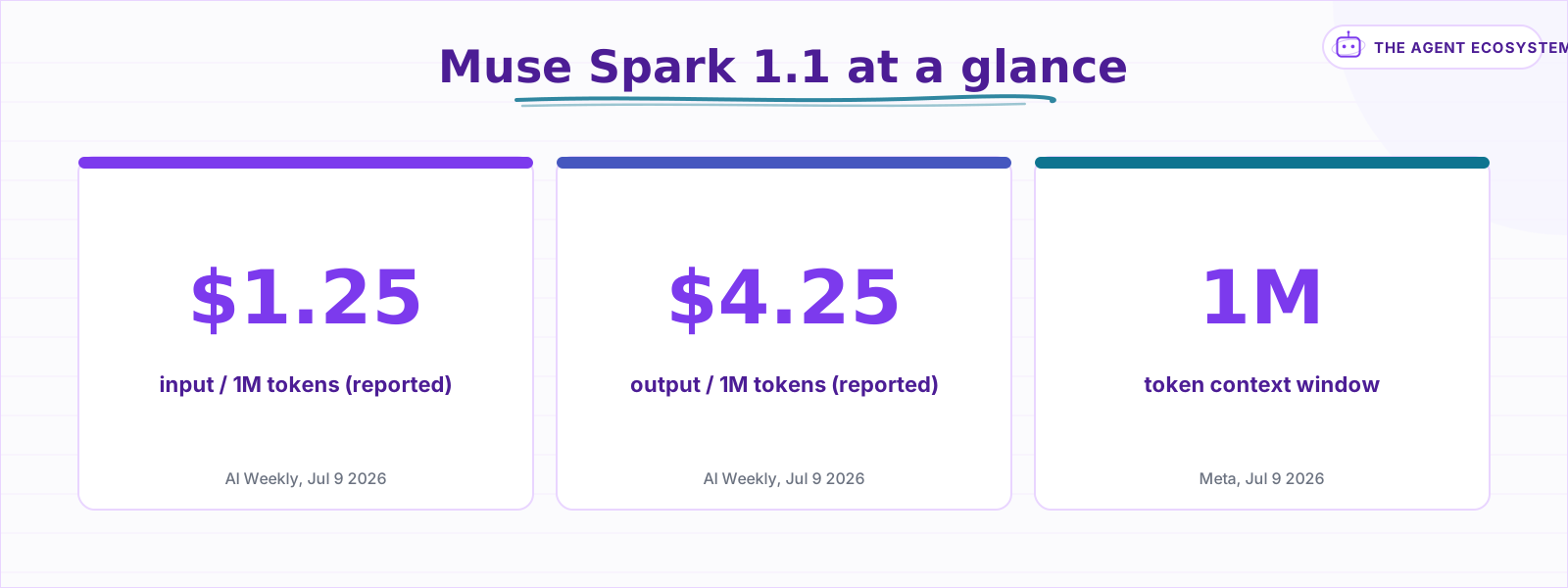 Meta's launch spec and early reported pricing, dated July 9, 2026. Pricing is from reporting, not a Meta price page; verify before relying on it.
Why is the Meta Model API the real story?#
Because access, not raw capability, is what changed. The Meta Model API is a self-serve public preview that speaks the OpenAI format, so you can point an existing client at a new base URL and key. Meta has historically kept its best models inside its own apps, and this reverses that posture.
That matters more than any single spec. A model you cannot call is a press release; a model behind an OpenAI-compatible endpoint is something you can pilot this afternoon. Reporting also says the API accepts the Anthropic Messages format, which widens the set of existing clients that can reach it. The price is the other signal, and it reads like a deliberate move in the ongoing July 2026 model wave.
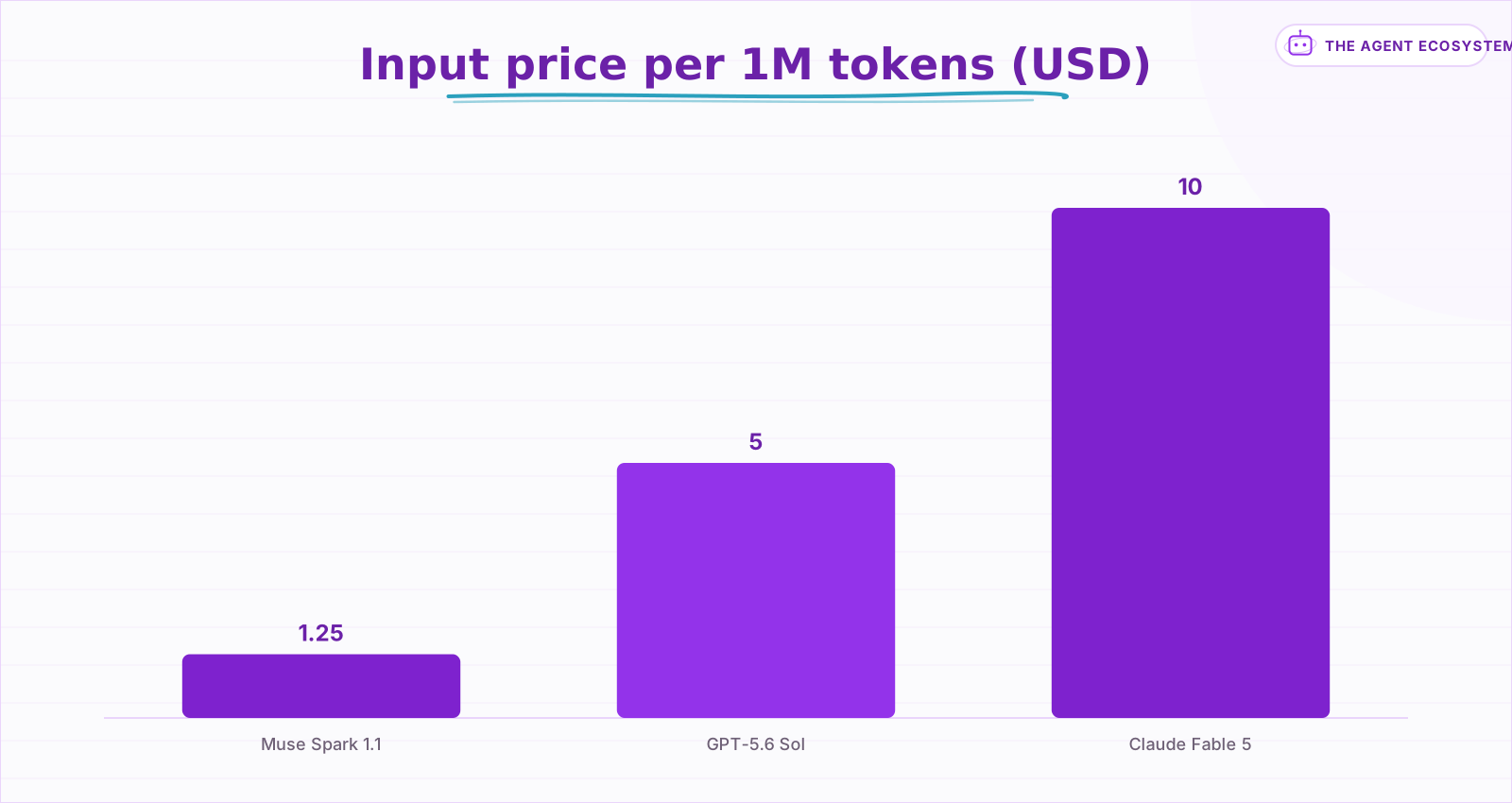 Input price per 1M tokens: Muse Spark 1.1 as reported (AI Weekly); GPT-5.6 Sol and Fable 5 per vendor pages. Dated July 2026, so verify each.
What can a computer-use, subagent model actually do?#
Meta positions Muse Spark 1.1 as an agent foundation, not a chat box. As the main agent it can gather context, make a plan, and delegate work across parallel subagents. Its computer-use mode writes scripts when automation is faster and clicks through interfaces when direct interaction is simpler, across multiple apps.
The interesting claim is orchestration: Meta says the model is trained to run multi-agent systems and optimize end-to-end latency, acting as the planner that farms work out to subagents. If that holds up on real tasks, it fits the plan-and-execute agent pattern directly. The computer-use side is the higher-risk, higher-reward part, because an agent that can click and type in live software needs a sandbox and hard guardrails before it touches anything that matters.
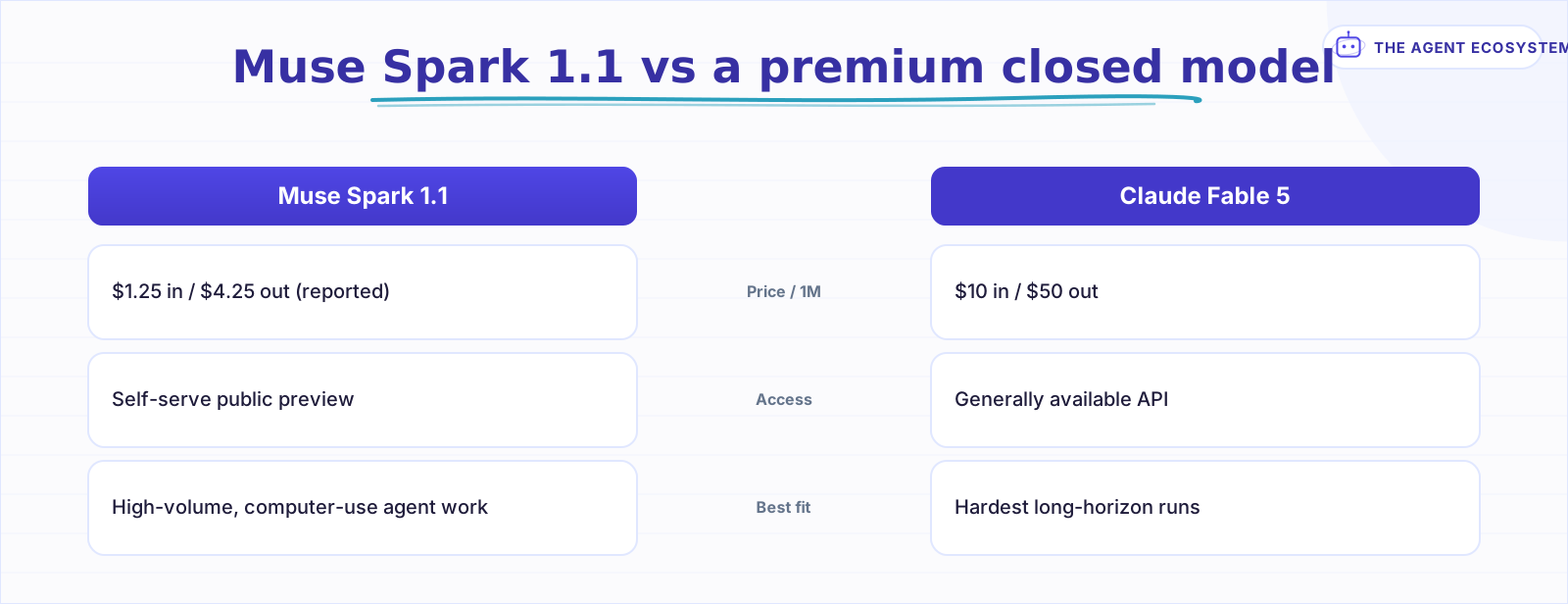 Reported Muse Spark pricing vs Anthropic's published Fable 5 pricing, July 2026. Both are vendor or reported figures; verify before you commit.
How much does Muse Spark 1.1 cost, and what is the catch?#
Early reporting puts the API at about $1.25 per 1M input tokens and $4.25 per 1M output, with $20 in free credits for a new account. That undercuts the premium tier heavily. The catches are real: it is a preview, benchmarks are not independent yet, and Meta has not posted a public price page.
To see why the number is loud, put it next to the models it is chasing. The spread below uses the reported Muse Spark figure against published prices for two frontier tiers; output prices, which dominate most bills, differ even more.
| Model | Price / 1M (in / out) | Access | Best fit |
|---|---|---|---|
| Muse Spark 1.1 | $1.25 / $4.25 (reported) | Self-serve public preview | High-volume, computer-use agents |
| GPT-5.6 Sol | $5 / $30 | Broadening after its launch | Hardest reasoning and agentic coding |
| Claude Fable 5 | $10 / $50 | Generally available | Long-horizon, premium runs |
The access catch is the one to plan around. A public preview can change prices, rate limits, or terms with little notice, and early reports say the preview opened to US developers first. If you want the full three-tier context on the model it is undercutting, our breakdown of GPT-5.6's Sol, Terra, and Luna tiers covers it.
Should you move an agent onto it?#
Treat it as a low-cost pilot, not a migration. Because it speaks the OpenAI format, testing it against your real inputs costs little more than a config change. Keep a generally available model wired as a fallback while the preview stabilizes, and route only workloads where its price and context clearly help.
The workloads that fit first are the ones where price scales with volume or where a long context earns its keep: bulk classification, extraction over large documents, and agent loops that would otherwise burn premium tokens on routine steps. Wire it in the same way you would any new option, as a swappable model behind a fallback, using the routing shape in our multi-model fallback for n8n.
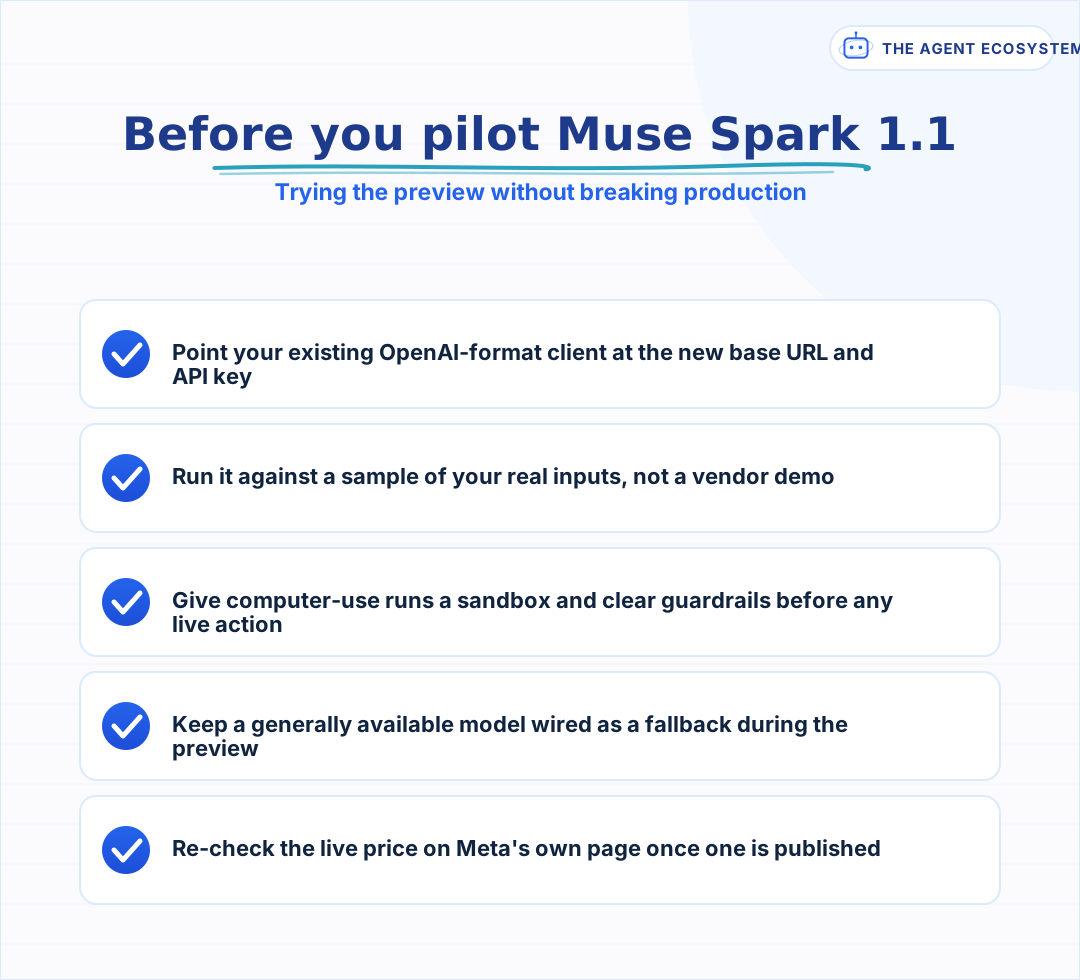 A short pre-flight for trying the preview without betting a production workflow on it.
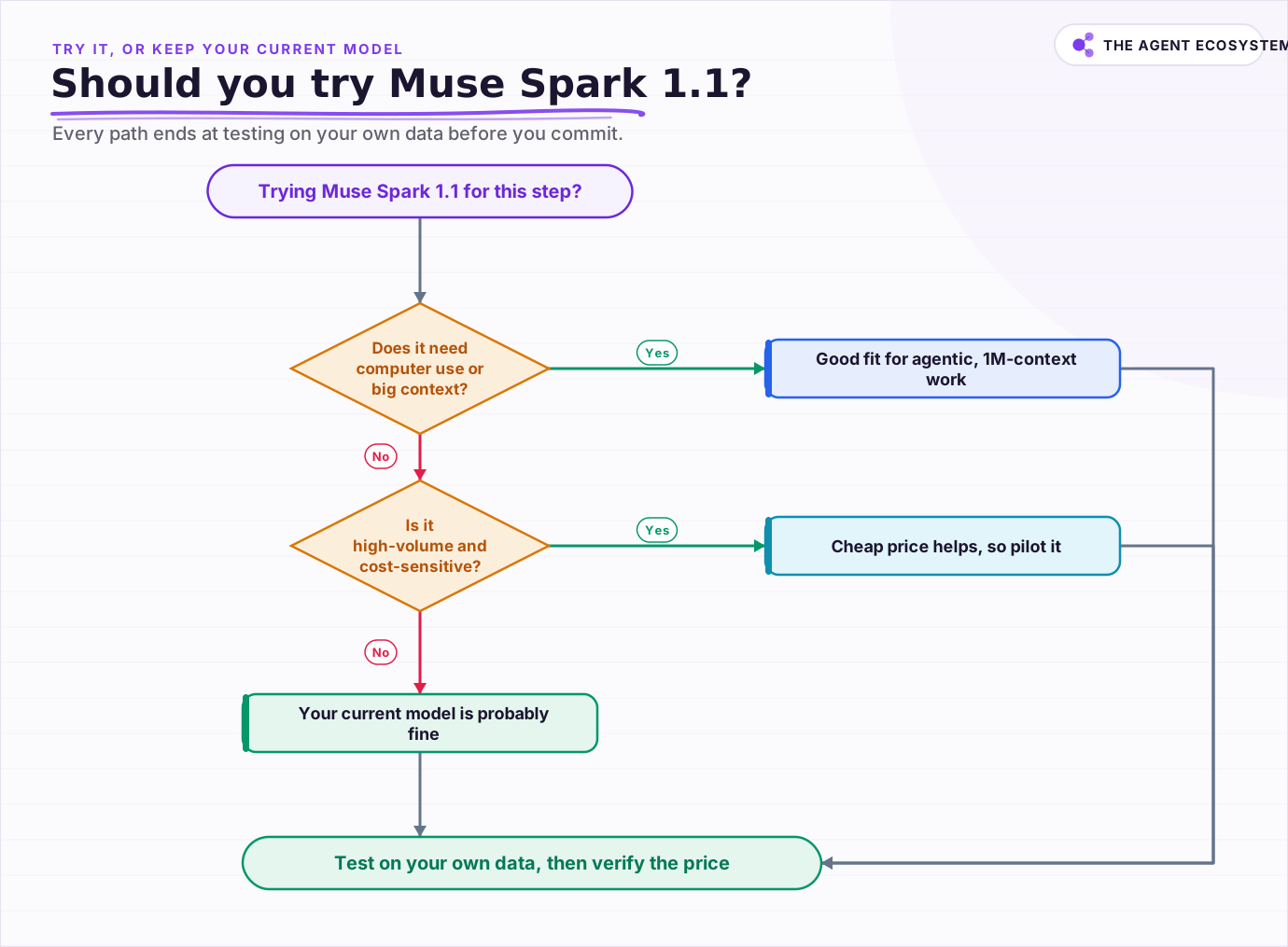 Route by whether the step needs cheap scale or agentic computer use; every path ends at testing on your own data.
What is the practical move for builders?#
Add Muse Spark 1.1 to your shortlist, then let your own tests decide. The price and the OpenAI-compatible API make it cheap to try, and the agentic features fit real automation work. But it is a preview built on vendor claims, so verify the numbers and keep your model choice easy to swap.
None of this is a verdict on the model. It is a read on the moment: Meta priced aggressively, opened a familiar API, and shipped features aimed squarely at agent builders. The disciplined response is to pilot it cheaply, measure it on your data, and treat every figure here as volatile until you confirm it. For the cost habits that make that easy, our seven levers to cut AI API costs still apply, whatever model wins your next test.
Frequently asked questions
What is Meta Muse Spark 1.1?
How much does Muse Spark 1.1 cost?
Can I use Muse Spark 1.1 with my existing OpenAI code?
What makes Muse Spark 1.1 an agentic model?
Should I switch my agents to Muse Spark 1.1?
Sources
Primary references and vendor documentation used while drafting and reviewing this article.
- Meta AI: Introducing Muse Spark 1.1 and the Meta Model API (July 9, 2026)
- MarkTechPost: Meta Superintelligence Labs releases Muse Spark 1.1
- AI Weekly: Meta prices Muse Spark 1.1 API at $1.25/$4.25 per 1M tokens
- The Decoder: Meta's Muse Spark 1.1 API pricing squeezes OpenAI and Anthropic
- DataCamp: Muse Spark 1.1, Meta's agentic model and API
Written by

Muhammad Qasim Hammad is an AI agent and automation expert and the founder of Cart Gaze LLC (cartgaze.com). He builds product for the love of it: when an idea lands, a working prototype is usually running within hours, built with the same AI agents and automations he sells. He puts his own output at roughly 20× what it was before agents, and the Agentic OS behind this site is the working proof, documented in public with the tools he actually ran and what they really cost.
AI & Automation Services
Want a pipeline like this running in your business?
I'm Qasim — I design and ship AI agents and n8n automations for solo operators and small teams. Tell me what's eating your team's week, and I'll scope a fix.
Related reading
One Default Model per Agent Job: the 2026 Frontier Field
In July 2026 you can call five frontier models before lunch, at prices that range tenfold. More choice is not an easier choice. Here is a job-by-job map of which model to default to, with every price dated and a reminder to test on your own data.

GPT-5.6 Is Now Public: What GA Changes for Builders
For two weeks GPT-5.6 was a limited preview most builders could not touch. On July 9, 2026, OpenAI made Sol, Terra, and Luna generally available across the API, Codex, and ChatGPT. Here is what changed for builders, and what to verify before you adopt it.
Computer-Use Agents in 2026: What Works, What Breaks
Computer-use agents, which read the screen and drive mouse and keyboard, went from demo to shipping feature in 2026, and Meta's Muse Spark 1.1 made it a headline capability. Here is what they automate, where they break, and the guardrails that keep them safe.
Claude Sonnet 5: The Agent Model I'd Actually Default To
Anthropic shipped Claude Sonnet 5 on June 30, 2026 as a cheaper way to run agents, the same week the $10/$50 Fable 5 flagship landed. Here is the verified price-and-benchmark picture, plus my honest take: for most real agent work, the Sonnet tier is the model to default to.
Claude Fable 5: Anthropic's Mythos-Class Model, Explained
Anthropic's Claude Fable 5 shipped on June 9, 2026 topping the coding benchmarks it publishes and priced near twice Opus 4.8. Here is an honest read on the reported numbers, the real trade-off, and who should pay the premium.
The 2026 Model Wave: What It Changes for Automation Builders
Three model releases landed in two weeks in June 2026: Fable 5, open-weight GLM-5.2, and limited-preview GPT-5.6. Skip the leaderboard drama. Here is the builder's take on which model belongs on which workflow step, with every price and benchmark dated and attributed.