GPT-5.6 Is Now Public: What GA Changes for Builders
The preview gate is gone. Here's what changed at the July 9 launch, tier by tier.
AI-drafted, reviewed by Muhammad Qasim Hammad on July 10, 2026. See our AI disclosure.
Table of contents
For two weeks, GPT-5.6 was a model you could read about but not run. That ended on July 9, 2026, when OpenAI opened all three tiers to everyone. For builders, the interesting part is not the launch itself. It is that the access excuse is gone, and the choice of whether to adopt it is now yours to make.
What changed when GPT-5.6 went generally available?#
On July 9, 2026, OpenAI moved GPT-5.6 from a gated preview to general availability, opening Sol, Terra, and Luna to everyone through the API and Codex, and across ChatGPT and the new ChatGPT Work. The June preview had been limited to roughly 20 partners under a government safety review, so the blocker for most builders is now gone.
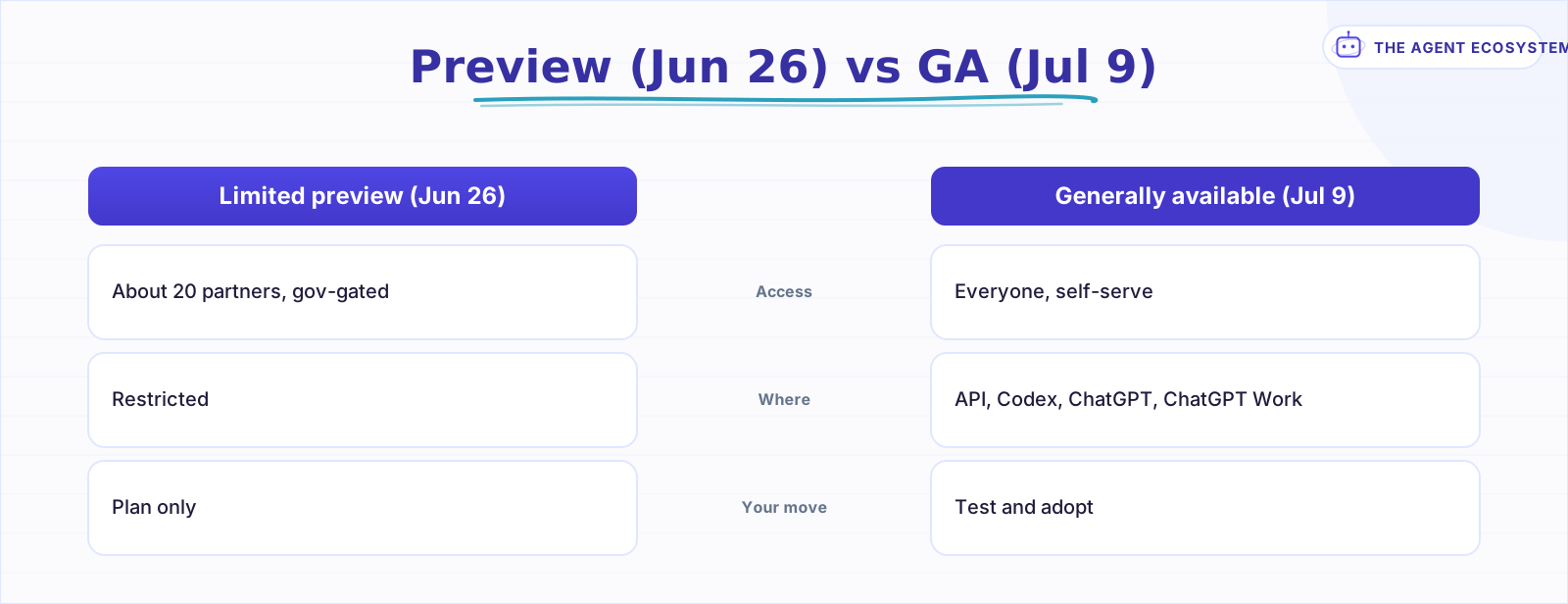 How GPT-5.6 access changed from the June 26 preview to the July 9 launch. Dated July 2026; verify current terms.
The June 26 preview is worth remembering because it explains the mood around this launch. Access was rationed while a safety review ran, which is why so much early coverage was about who could get in rather than what the model did. General availability flips that. The question is no longer whether you can call GPT-5.6, but whether it beats what you already run.
What do the three tiers cost, and which fits?#
Pricing carried over to GA, and the split is by cost and capability. Per 1M tokens, Sol is $5 input and $30 output, Terra is $2.50 and $15, and Luna is $1 and $6. Sol handles the hardest work, Terra matches GPT-5.5-class quality at about half the price, and Luna is the fast, cheap option.
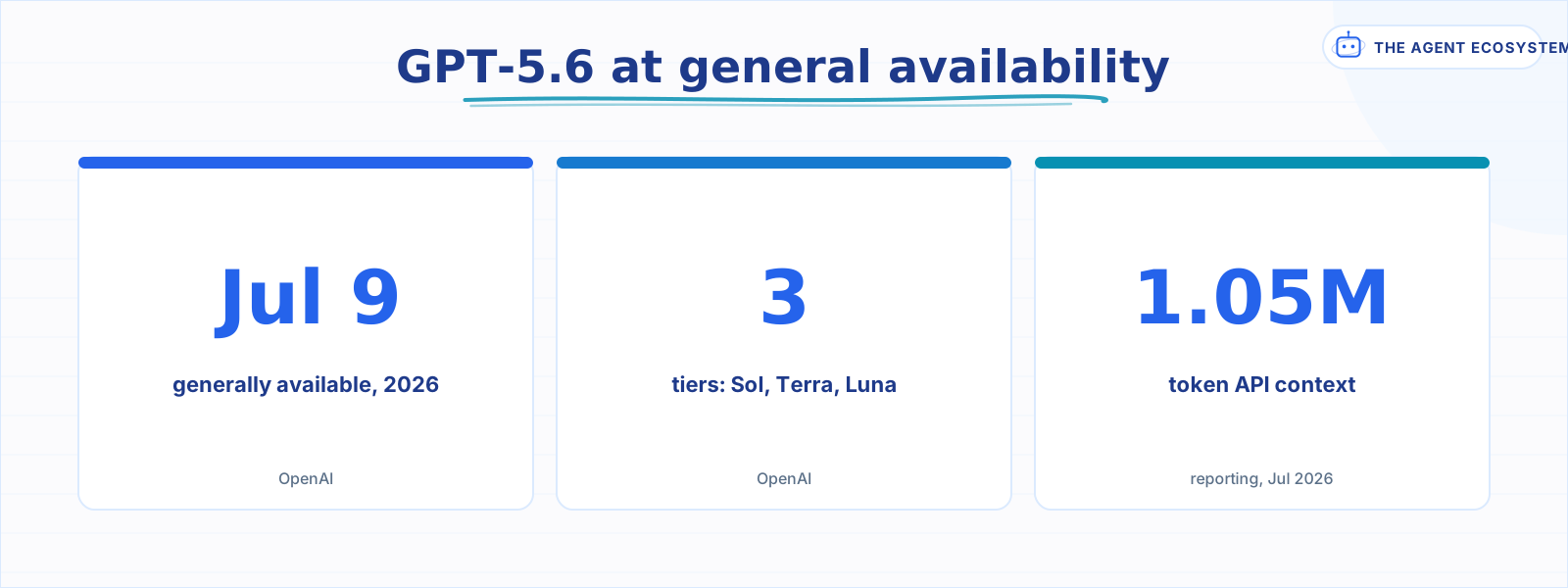 Launch facts as of July 9, 2026 (OpenAI, reporting). Context and limits move, so verify before relying on them.
| Tier | Price / 1M (in / out) | Best fit |
|---|---|---|
| Sol | $5 / $30 | Hardest reasoning and agentic coding |
| Terra | $2.50 / $15 | GPT-5.5-class quality at about half the cost |
| Luna | $1 / $6 | Fast, high-volume, cost-sensitive calls |
The tiering is the whole point: you are meant to route by difficulty, not default everything to the flagship. For the deeper walkthrough of each tier, our full tier and pricing breakdown covers the details, and the July 2026 model wave guide shows how to slot a new model into an existing workflow.
What is new at GA beyond access?#
Two additions matter for agent builders. GPT-5.6 rolls out to ChatGPT Work and Codex, not just the raw API, and reporting describes an Ultra Mode that spawns subagents for harder tasks. Independent evaluators, including METR, have also flagged capability risks, so the release ships with the usual caution attached.
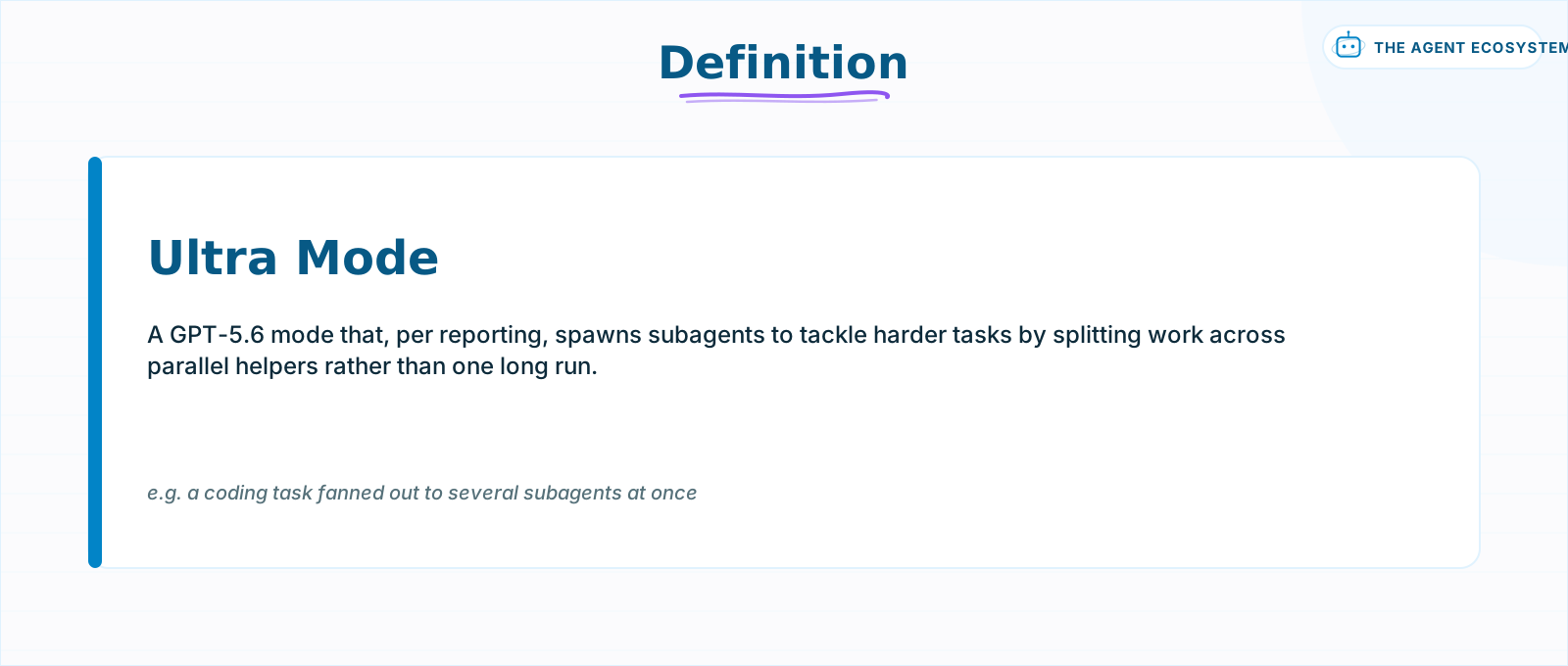 An agentic feature reported at the GA launch. From reporting, not a single official page; verify with OpenAI.
The subagent angle is the one to watch, because it puts GPT-5.6 in the same conversation as this week's other launch, Meta's Muse Spark 1.1, which also leads on parallel subagents. Two frontier vendors shipping agent-orchestration features in the same week is the real signal: the market is competing on agentic behavior now, not just raw benchmark scores.
Now that it is callable, how should you adopt it?#
Treat GA as permission to test, not a mandate to switch. Pick a tier by the job, run it against your current model on real inputs, and wire it as a swappable option behind a fallback. Watch output-token spend, since Sol's $30 per 1M output is where the bill grows fastest.
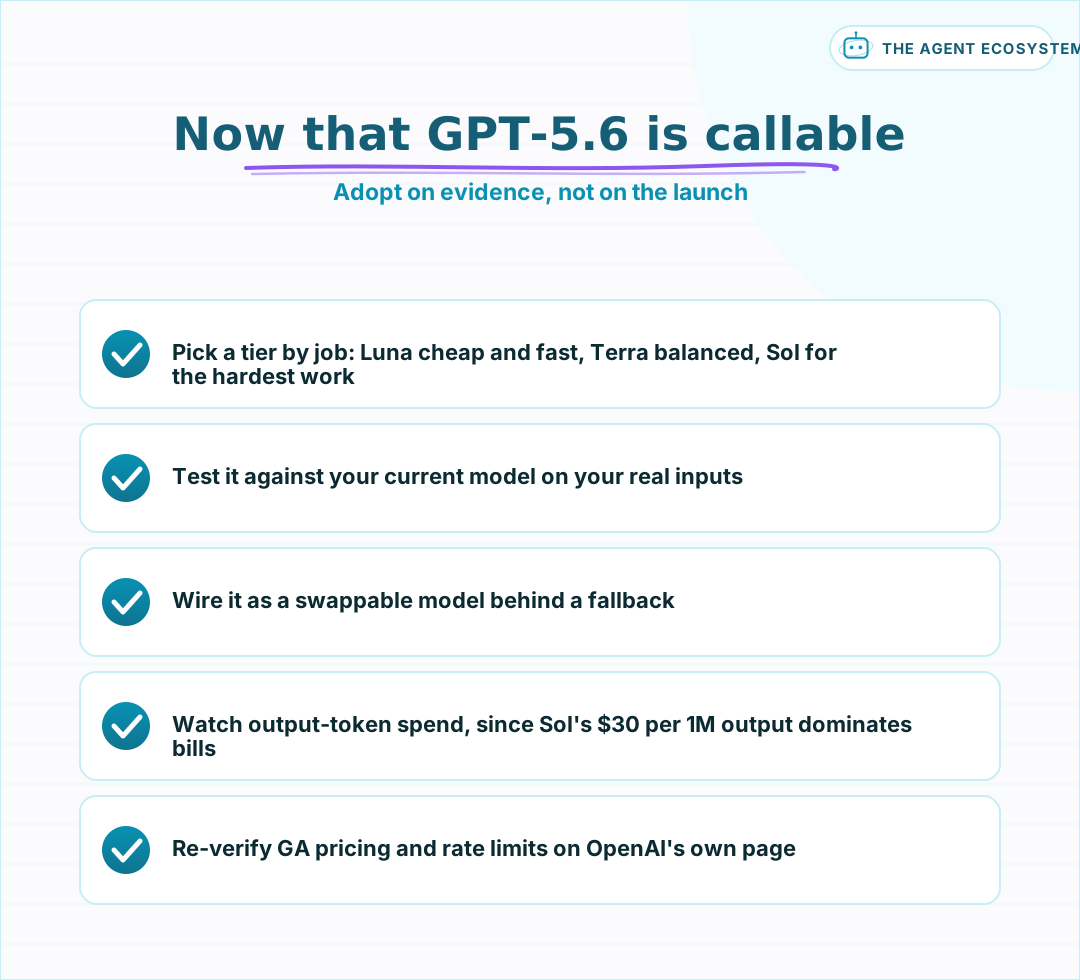 A short adoption checklist for the week GPT-5.6 opened to everyone.
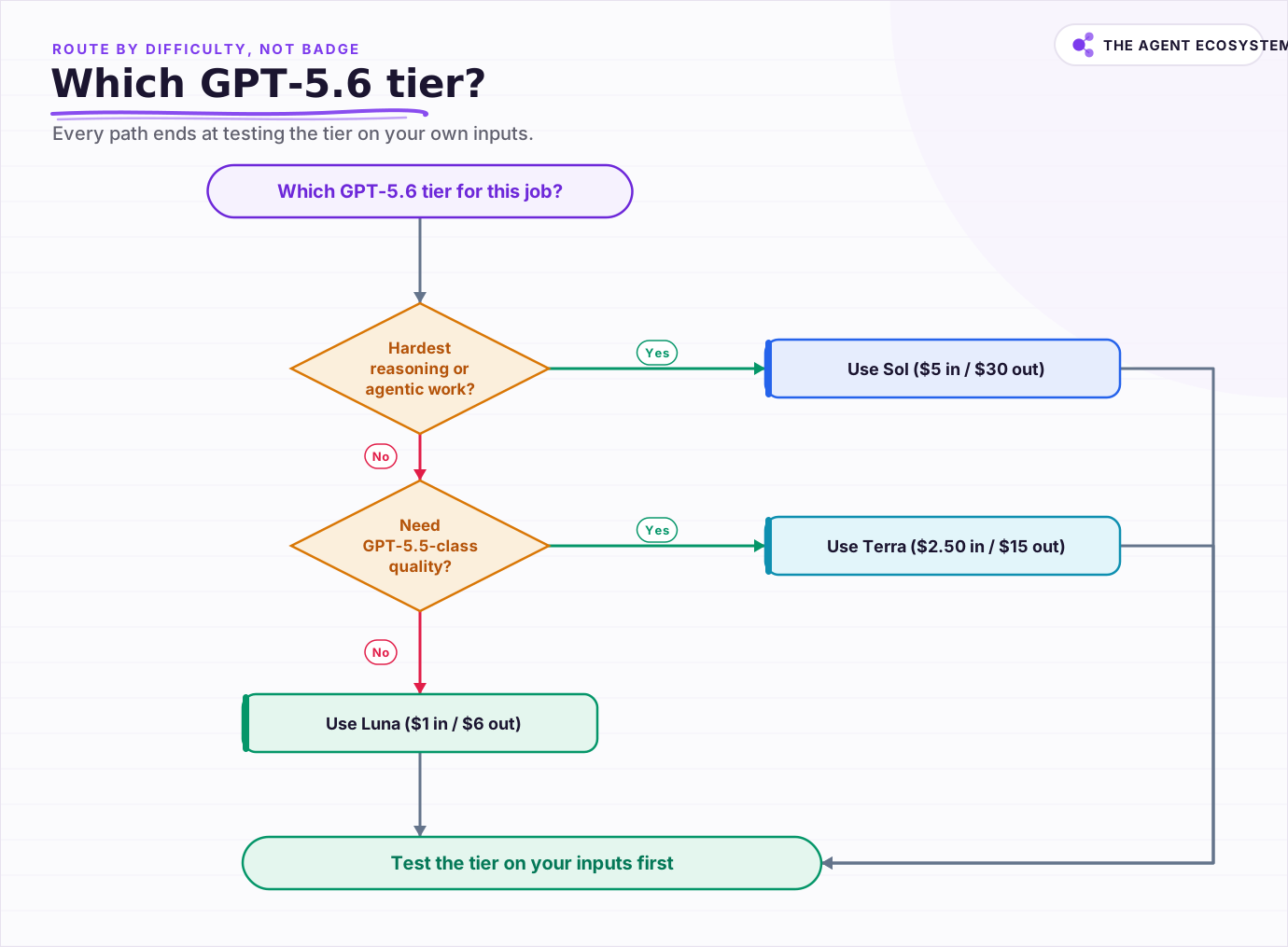 Route each job by difficulty, then test the chosen tier on your own inputs before you standardize.
What is the practical move for builders?#
Add GPT-5.6 to your test bench and let results decide the tier. General availability removes the access excuse, but it does not tell you which model wins on your workload. Compare Luna, Terra, and Sol against what you run today, price the output tokens honestly, and adopt only where the numbers hold.
The week's pattern is the lasting takeaway. Two frontier models reached broad availability with agent features front and center, and prices kept sliding. Wire your stack so swapping a model is a config change, keep your evaluations close to your real inputs, and the next launch becomes an opportunity to test rather than a headline to chase.
Frequently asked questions
Is GPT-5.6 generally available now?
How much does GPT-5.6 cost at general availability?
Which GPT-5.6 tier should I use?
What is new in GPT-5.6 beyond broader access?
Should I switch my workflows to GPT-5.6?
Sources
Primary references and vendor documentation used while drafting and reviewing this article.
Written by

Muhammad Qasim Hammad is an AI agent and automation expert and the founder of Cart Gaze LLC (cartgaze.com). He builds product for the love of it: when an idea lands, a working prototype is usually running within hours, built with the same AI agents and automations he sells. He puts his own output at roughly 20× what it was before agents, and the Agentic OS behind this site is the working proof, documented in public with the tools he actually ran and what they really cost.
AI & Automation Services
Want a pipeline like this running in your business?
I'm Qasim — I design and ship AI agents and n8n automations for solo operators and small teams. Tell me what's eating your team's week, and I'll scope a fix.
Related reading
GPT-5.6 Explained: Sol, Terra, Luna, and a Limited Launch
OpenAI previewed GPT-5.6 on June 26, 2026 in three tiers, Luna, Terra, and Sol, with public per-token prices. The twist is access: launch was limited to roughly 20 partners at the behest of the U.S. government, with general availability promised in the coming weeks. Here is the

Fable 5 vs GLM 5.2 vs GPT-5.6: The 2026 Frontier Landscape
Three frontier models landed in June 2026: Claude Fable 5, Z.ai's open-weight GLM-5.2, and OpenAI's limited-preview GPT-5.6. The numbers do not all measure the same thing, so here is an honest, dated comparison on coding score, price, and openness.
The 2026 Model Wave: What It Changes for Automation Builders
Three model releases landed in two weeks in June 2026: Fable 5, open-weight GLM-5.2, and limited-preview GPT-5.6. Skip the leaderboard drama. Here is the builder's take on which model belongs on which workflow step, with every price and benchmark dated and attributed.
One Default Model per Agent Job: the 2026 Frontier Field
In July 2026 you can call five frontier models before lunch, at prices that range tenfold. More choice is not an easier choice. Here is a job-by-job map of which model to default to, with every price dated and a reminder to test on your own data.
Meta Muse Spark 1.1: A Low-Cost Computer-Use Agent Model
On July 9, 2026, Meta put a frontier-class model behind a paid, self-serve API for the first time. Muse Spark 1.1 is agentic, handles computer use and parallel subagents, and undercuts GPT-5.6 and Fable 5 on price. An honest, dated read for builders.
Claude Sonnet 5: The Agent Model I'd Actually Default To
Anthropic shipped Claude Sonnet 5 on June 30, 2026 as a cheaper way to run agents, the same week the $10/$50 Fable 5 flagship landed. Here is the verified price-and-benchmark picture, plus my honest take: for most real agent work, the Sonnet tier is the model to default to.