GPT-5.6 Explained: Sol, Terra, Luna, and a Limited Launch
OpenAI's three-tier June 2026 preview: real prices, but a gated launch most builders can't touch yet.
AI-drafted, reviewed by Muhammad Qasim Hammad on July 22, 2026. See our AI disclosure.
Table of contents
OpenAI put a new number on the board, and the headline is not really the benchmarks. It is who gets to touch it. On June 26, 2026 the company previewed a three-tier family and then, unusually, held the gate mostly shut at launch.
As of early July 2026, these figures are moving fast, so verify each one on OpenAI's own pages before you rely on it.
What is GPT-5.6 and why does the gpt-5.6 launch matter?#
GPT-5.6 is OpenAI's June 26, 2026 model family with three tiers, Luna, Terra, and Sol, and the gpt-5.6 launch matters less for raw scores than for access. According to OpenAI's preview announcement, the models went live in a limited release, so pricing is public but hands-on use is not yet broadly available.
The naming maps to a familiar ladder. Luna is positioned as the fastest and cheapest option, Terra as the balanced middle, and Sol as the frontier flagship for reasoning and long-horizon agentic work. OpenAI's GPT-5.6 Sol preview frames the release around advances in coding, scientific reasoning, and agentic workflows, with specific improvements cited in biology and cybersecurity. Those are the company's own claims, dated to the June 26, 2026 preview, and worth treating as such until independent testing lands.
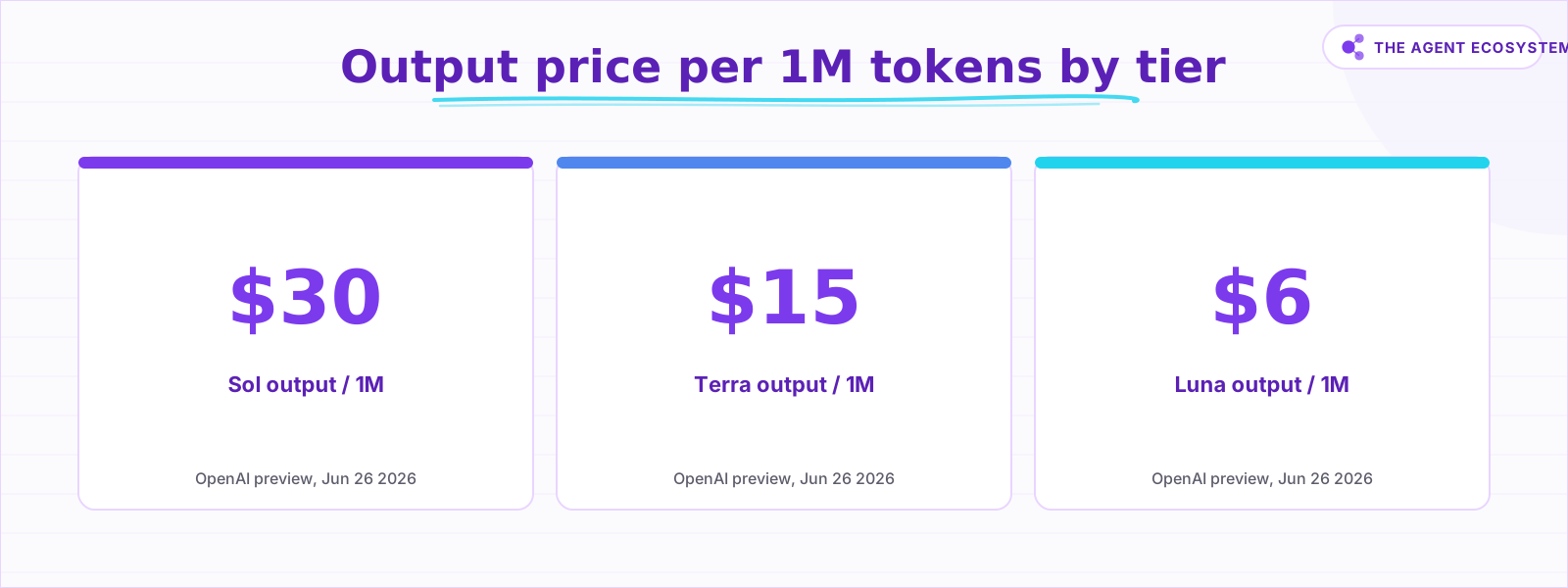 Output price per 1M tokens by tier. Source: OpenAI GPT-5.6 preview pricing, dated June 26, 2026; verify before relying on it.
The number to sit with is not a benchmark. It is that this is a preview, not a general release. You can read the price list, but you probably cannot yet write code against it, and that gap is the real story here.
What does each GPT-5.6 tier cost?#
Per OpenAI's June 26, 2026 preview pricing, the three tiers are priced per one million tokens as follows: Sol at 5 dollars input and 30 dollars output, Terra at 2.50 dollars input and 15 dollars output, and Luna at 1 dollar input and 6 dollars output. Terra is pitched near GPT-5.5-class quality at roughly half the cost.
The table below lists the published per-tier prices and the intended use for each. Prices come from OpenAI's Sol, Terra, and Luna help article and are dated to the June 26, 2026 preview.
| Tier | Price in / out per 1M | Best for |
|---|---|---|
| Luna | $1 / $6 | Fastest, cheapest, high-volume calls |
| Terra | $2.50 / $15 | Balanced; ~GPT-5.5-class quality at ~2x lower cost |
| Sol | $5 / $30 | Frontier reasoning, long-horizon agentic work |
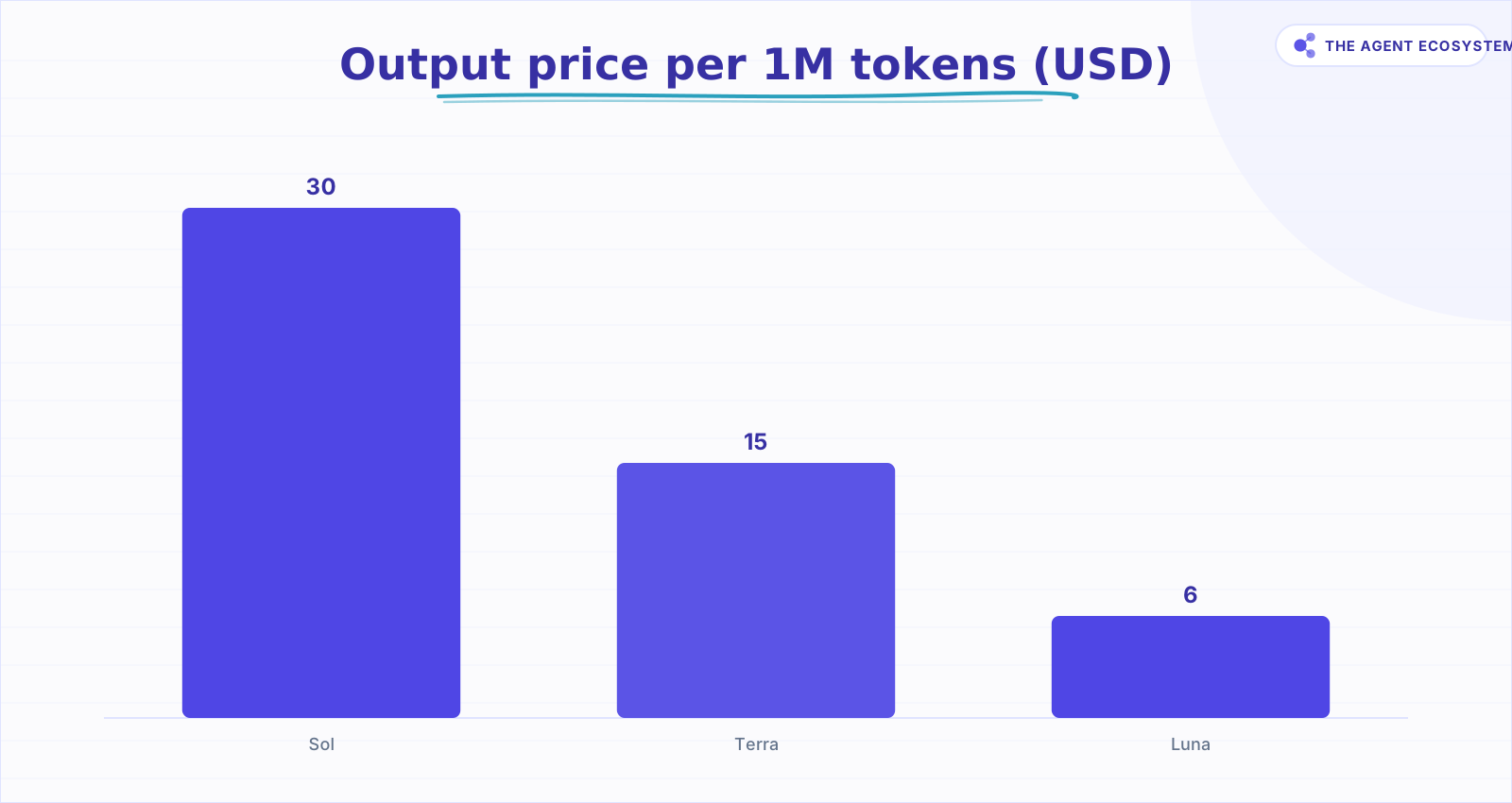 Output tokens dominate most bills, and Sol costs five times Luna. Source: OpenAI GPT-5.6 preview pricing, June 26, 2026.
Read the output column, not the input column, because output tokens dominate most real bills. Sol's 30 dollars per million out is five times Luna's 6, so the tier you pick is a cost decision as much as a capability one. If model spend is your main worry, our guide to the cheapest AI API in 2026 applies the same dated-pricing discipline across providers.
Which GPT-5.6 tier should you pick?#
Pick the tier by the job, not by the flagship badge, because output pricing spreads five to one across the family. Luna suits high-volume, latency-sensitive calls where cost per token rules. Terra fits general production work at roughly GPT-5.5-class quality. Sol is for genuinely hard reasoning or long-horizon agent runs where the tier's ceiling earns its price.
The trap is defaulting to Sol for everything because it is the headline model. Most routine calls, such as classification, extraction, and short generations, run fine on Luna or Terra at a fraction of the output cost. Reserve Sol for the tasks that visibly benefit from deeper reasoning. To size real spend, our 7 levers to reduce AI API costs covers routing cheap-first and other moves that stack on top of tier choice.
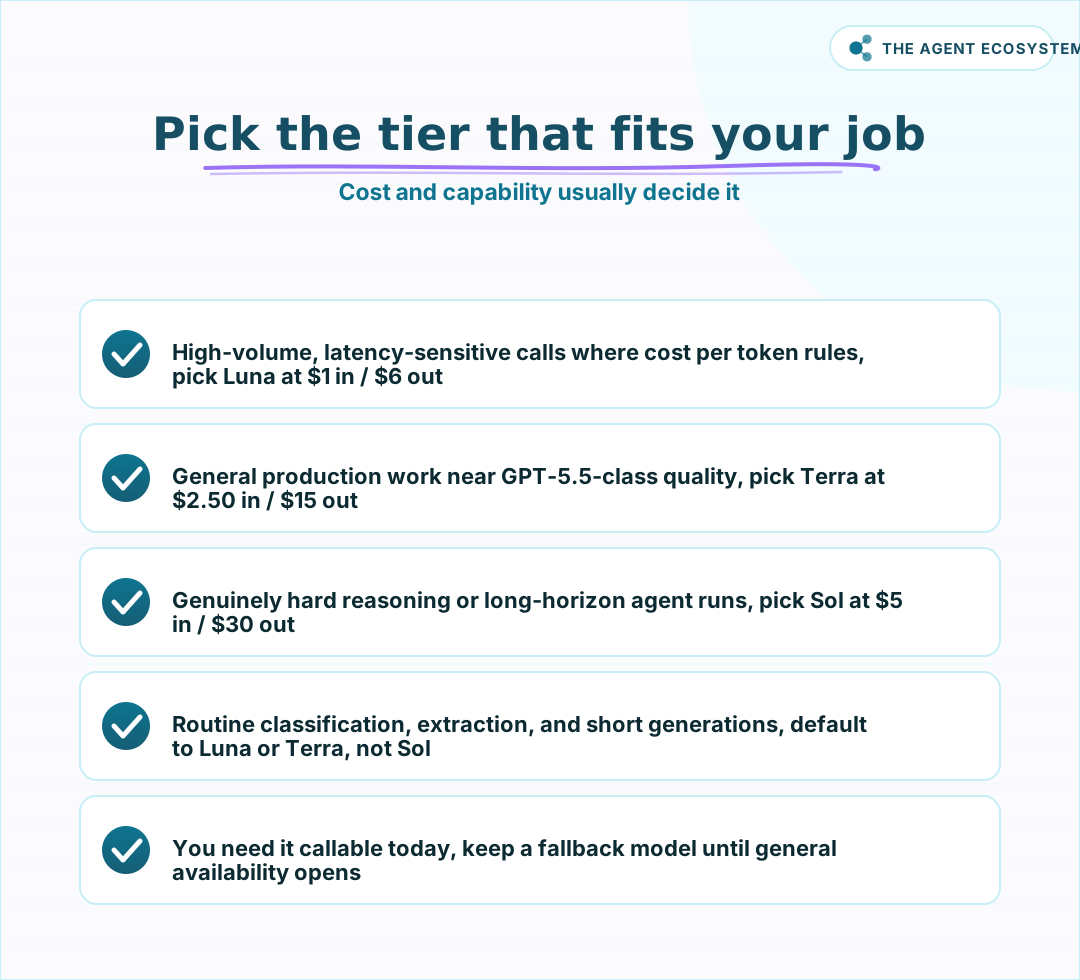 Match the tier to the task, then re-check prices when general availability opens.
None of this is testable yet for most teams, so treat tier selection as planning, not a purchase. Model the workload against the published prices, then re-check the numbers when general availability actually opens.
Why can't most builders use GPT-5.6 yet?#
Because the June 26, 2026 launch was deliberately narrow. Per OpenAI's preview and reporting from Axios and VentureBeat, access was restricted to roughly 20 approved companies and partners at launch, described as being done "at the behest of the U.S. government," with general availability promised "in the coming weeks." So the price list is public, but the model is not.
That framing is unusual for a commercial model launch, and it is the reason a benchmark roundup would mislead here. Notably, OpenAI has not published a SWE-bench Pro score for GPT-5.6, so any number you see quoted for it is not official; do not treat an estimate as fact. The honest read, per VentureBeat's coverage and Axios, is that this is a gated preview with a promised, but not dated, wider rollout.
 The access story, not the specs, is the headline. Source: OpenAI preview plus Axios and VentureBeat reporting, June 26, 2026.
If you build on models, the practical move is to plan for GPT-5.6 without committing to it. Keep a fallback on a model you can actually call today, and revisit when general availability arrives. In the meantime, an open-weights option like the ones in our best free AI IDE for 2026 roundup keeps you shipping.
What should you take away from the GPT-5.6 preview?#
Take away that GPT-5.6 is real, priced, and mostly out of reach at launch, and that the access story outweighs the specs for now. Sol, Terra, and Luna give a clear cost ladder from 6 to 30 dollars per million output tokens, but the limited preview means planning beats buying until general availability lands.
The disciplined path is simple. Model your workload against the published tier prices, keep a fallback you can call today, and re-verify every figure when the wider rollout opens, because this space re-prices and re-scopes fast. When general availability does arrive, compare Sol, Terra, and Luna on your own tasks rather than on OpenAI's launch framing.
Frequently asked questions
What are the three GPT-5.6 tiers?
How much does GPT-5.6 cost?
Why can't most people use GPT-5.6 yet?
What is GPT-5.6's SWE-bench Pro score?
Which GPT-5.6 tier should I choose?
Sources
Primary references and vendor documentation used while drafting and reviewing this article.
Written by

Muhammad Qasim Hammad is an AI agent and automation expert and the founder of Cart Gaze LLC (cartgaze.com). He builds product for the love of it: when an idea lands, a working prototype is usually running within hours, built with the same AI agents and automations he sells. He puts his own output at roughly 20× what it was before agents, and the Agentic OS behind this site is the working proof, documented in public with the tools he actually ran and what they really cost.
AI & Automation Services
Want a pipeline like this running in your business?
I'm Qasim — I design and ship AI agents and n8n automations for solo operators and small teams. Tell me what's eating your team's week, and I'll scope a fix.
Related reading
GPT-5.6 Is Now Public: What GA Changes for Builders
For two weeks GPT-5.6 was a limited preview most builders could not touch. On July 9, 2026, OpenAI made Sol, Terra, and Luna generally available across the API, Codex, and ChatGPT. Here is what changed for builders, and what to verify before you adopt it.

Fable 5 vs GLM 5.2 vs GPT-5.6: The 2026 Frontier Landscape
Three frontier models landed in June 2026: Claude Fable 5, Z.ai's open-weight GLM-5.2, and OpenAI's limited-preview GPT-5.6. The numbers do not all measure the same thing, so here is an honest, dated comparison on coding score, price, and openness.
The 2026 Model Wave: What It Changes for Automation Builders
Three model releases landed in two weeks in June 2026: Fable 5, open-weight GLM-5.2, and limited-preview GPT-5.6. Skip the leaderboard drama. Here is the builder's take on which model belongs on which workflow step, with every price and benchmark dated and attributed.

The Government Wants 30 Days With Frontier Models: My Take
A June 2, 2026 US executive order invites frontier-model developers to voluntarily hand the government up to 30 days of pre-release access for security review. It is not a license mandate, but paired with GPT-5.6's gated launch it hints at a world where builders get the best
One Default Model per Agent Job: the 2026 Frontier Field
In July 2026 you can call five frontier models before lunch, at prices that range tenfold. More choice is not an easier choice. Here is a job-by-job map of which model to default to, with every price dated and a reminder to test on your own data.
Open-Weight vs Closed LLMs in 2026: Cost, Quality, Control
Should you call a closed API like Claude or GPT, or self-host an open-weight model like DeepSeek or Qwen? Skip the hot takes. This is a four-axis framework (cost, quality, control, privacy) plus a decision flowchart, using dated June 2026 facts.