One Default Model per Agent Job: the 2026 Frontier Field
Five frontier models are callable today. Here's the one to default to per job.
AI-drafted, reviewed by Muhammad Qasim Hammad on July 10, 2026. See our AI disclosure.
Table of contents
A year ago, picking a model meant choosing between two or three. In July 2026 you can call five frontier models before lunch, at prices that range tenfold. More choice is not the same as an easier choice. The useful question is not which model is best, but which one should be your default for each kind of job.
What models can you actually call in mid-2026?#
Five frontier models are self-serve callable as of July 2026: OpenAI's GPT-5.6 (Luna, Terra, Sol), Anthropic's Sonnet 5 and premium Fable 5, xAI's Grok 4.5, and Meta's Muse Spark 1.1. Prices per 1M tokens range from about $1 input on the cheapest tier to $10 on Fable 5, a tenfold spread that makes the default you pick matter.
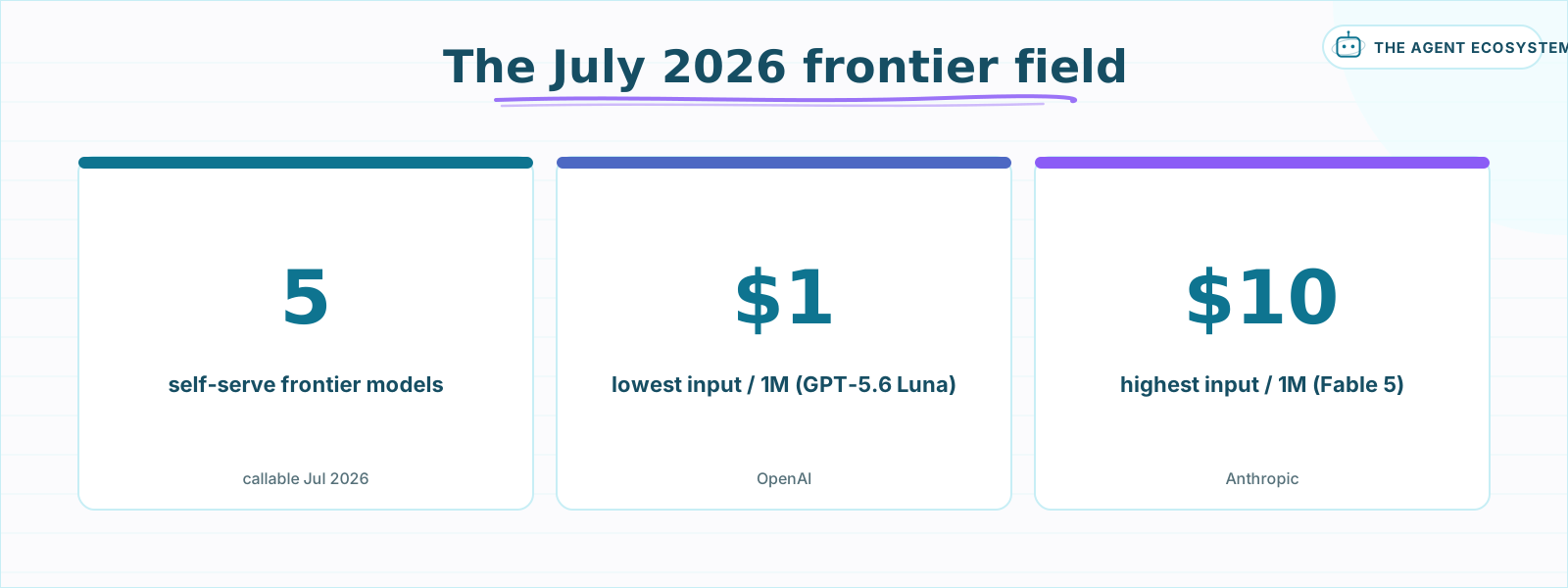 The callable field and its price spread, per vendor pages, July 2026. Verify before you standardize on a default.
That spread is the whole reason to think in defaults. When the cheapest capable model costs a tenth of the flagship, sending every call to the flagship is a budget decision disguised as a quality one. Meta's Muse Spark 1.1 is the newest of the five, and its arrival is a good prompt to revisit whatever default you set last month.
How should you map jobs to models?#
Match each job to the cheapest model that clears its bar, and reserve premium tiers for the work that needs them. Routine bulk goes to a cheap model, general production to a mid tier, and only the hardest reasoning to a flagship. The point is a portfolio of defaults, not one winner for everything.
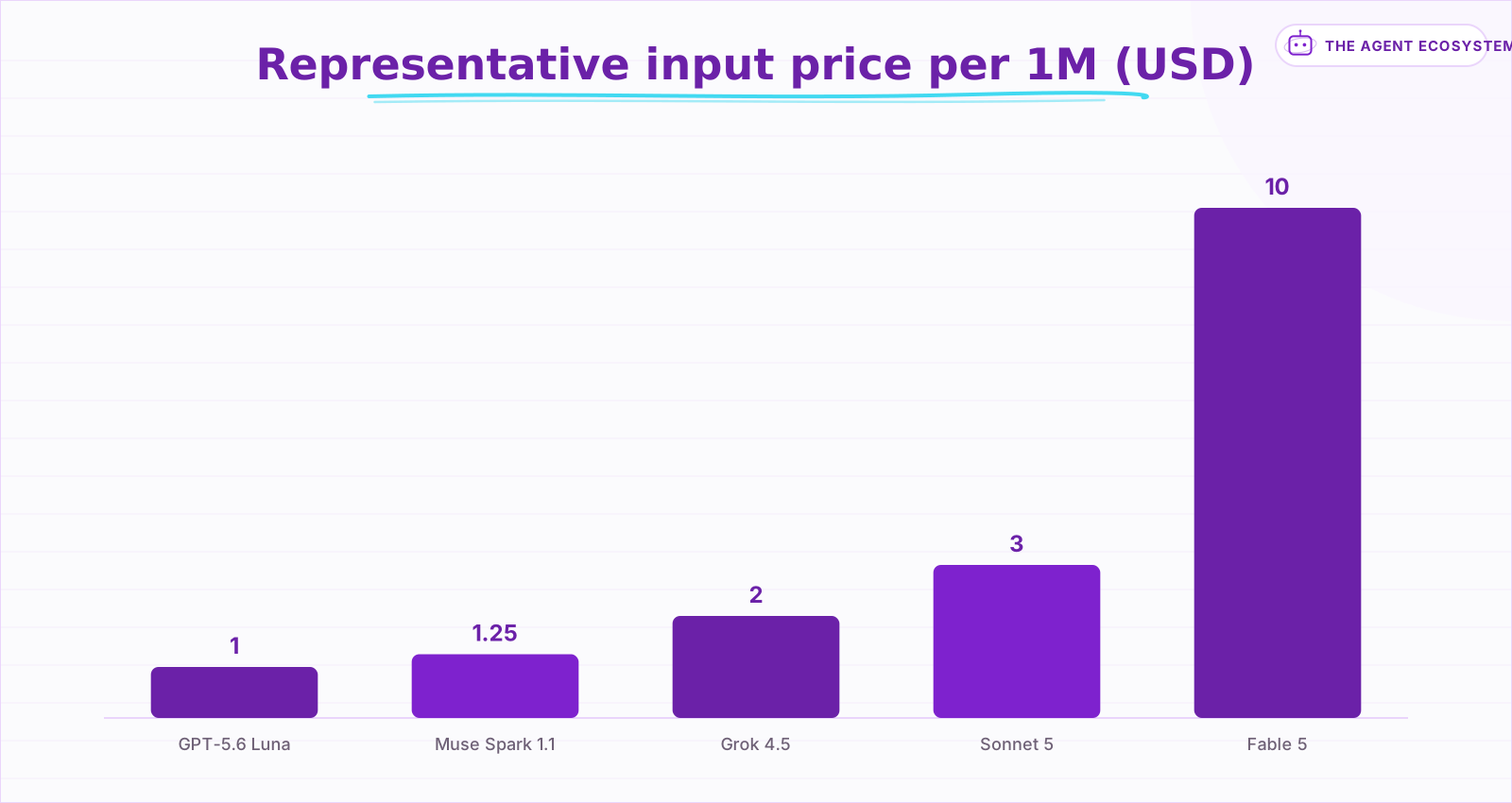 Representative input price per 1M by model, cheapest tier where tiered. Vendor pages, Jul 2026; output prices differ, so verify.
Here is a starting map for the five callable models, by job. Read the "consider" column as a reminder to test, not a ranking; real quality depends on your prompts and data, so treat this as a hypothesis to check against your own evals.
| Job | Default | Also consider | Why |
|---|---|---|---|
| Cheap, high-volume bulk | GPT-5.6 Luna | Muse Spark 1.1 | Lowest cost per call clears routine bars |
| General production turns | Sonnet 5 | GPT-5.6 Terra, Grok 4.5 | Balanced quality at a mid price |
| Hardest reasoning / coding | Fable 5 | GPT-5.6 Sol | Highest ceiling for long-horizon work |
| Computer use / long context | Muse Spark 1.1 | (few peers) | Built for subagents and a 1M context |
| Cost-sensitive coding agent | Grok 4.5 | GPT-5.6 Luna | Low price plus a cached-input discount |
Which model for the hardest work?#
For the hardest reasoning and long-horizon coding, default to a flagship: Anthropic's Fable 5 at $10 in and $50 out per 1M, or GPT-5.6 Sol at $5 and $30. They cost the most per token, so they earn their place only where a weaker model fails and forces expensive human cleanup. Everywhere else, a cheaper tier clears the bar.
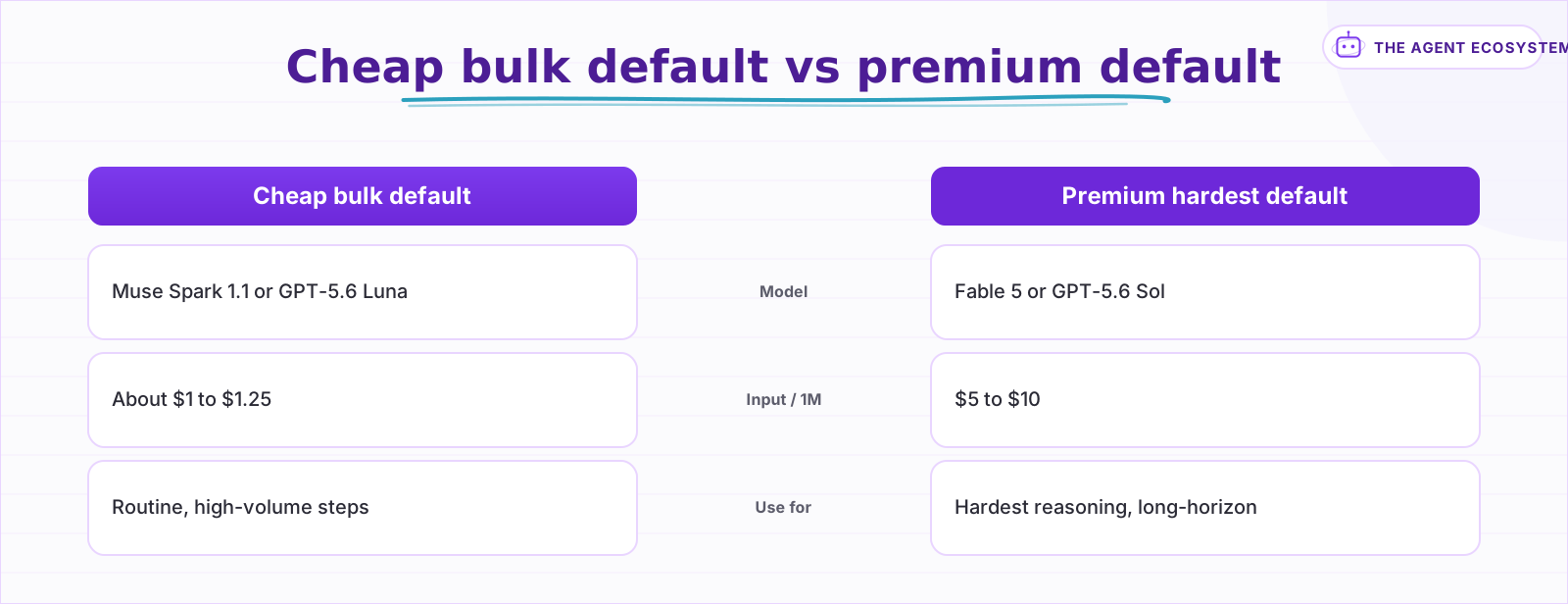 Two ends of the portfolio; most jobs sit between them. Prices dated July 2026, verify before relying on them.
The discipline is to make the flagship a conditional escalation, not the default path. Route the bulk of a workflow to a mid tier like Sonnet 5, a sensible agent default, and reach for Fable 5 or Sol only on the steps that genuinely stall a cheaper model. That keeps a surprise bill off your routine calls while still buying the ceiling where it counts.
Which model for cheap bulk and computer use?#
For high-volume bulk work, default to the cheapest capable tier: GPT-5.6 Luna at $1 in, Muse Spark 1.1 near $1.25, or Grok 4.5 at $2 with a cached-input discount. When a job needs computer use, parallel subagents, or a very long context, Muse Spark 1.1 is the natural default, since those are the capabilities Meta built it around.
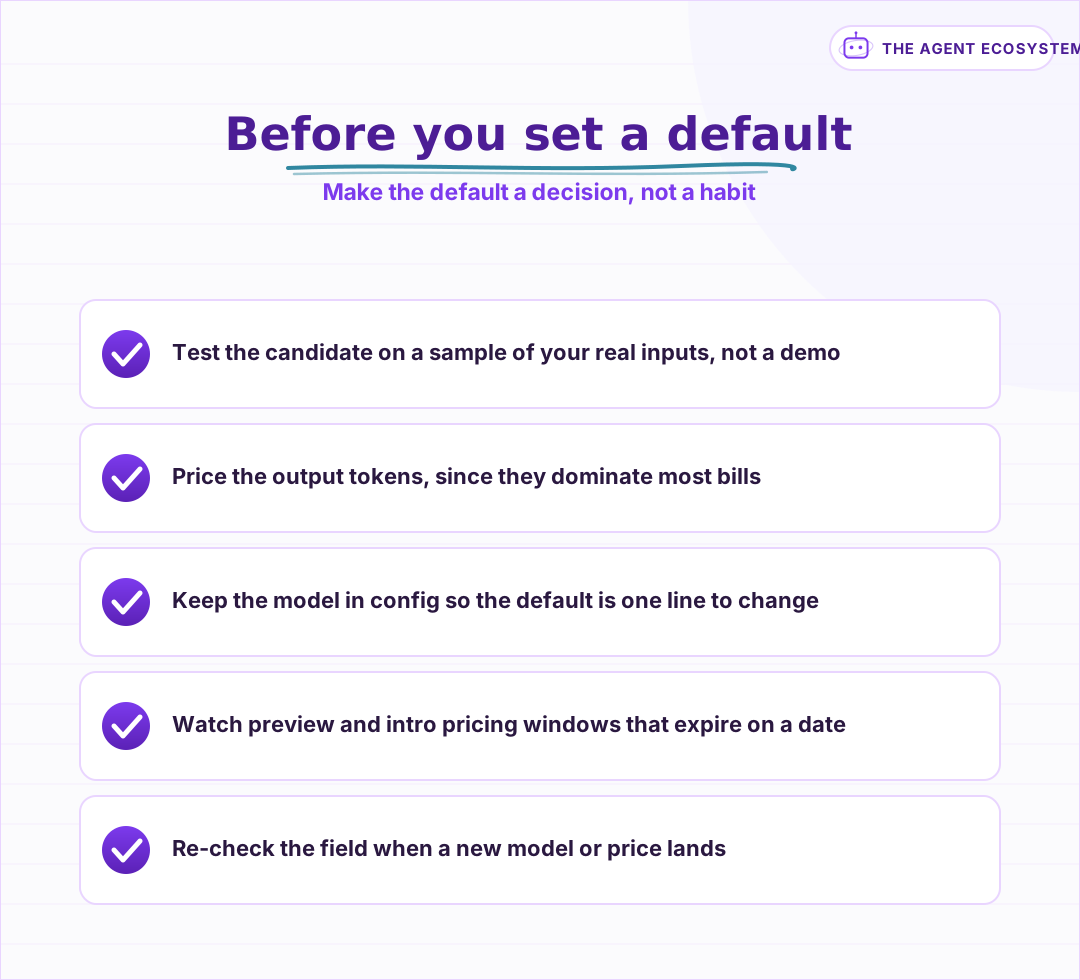 A default is only as good as the eval behind it; re-confirm when the field moves.
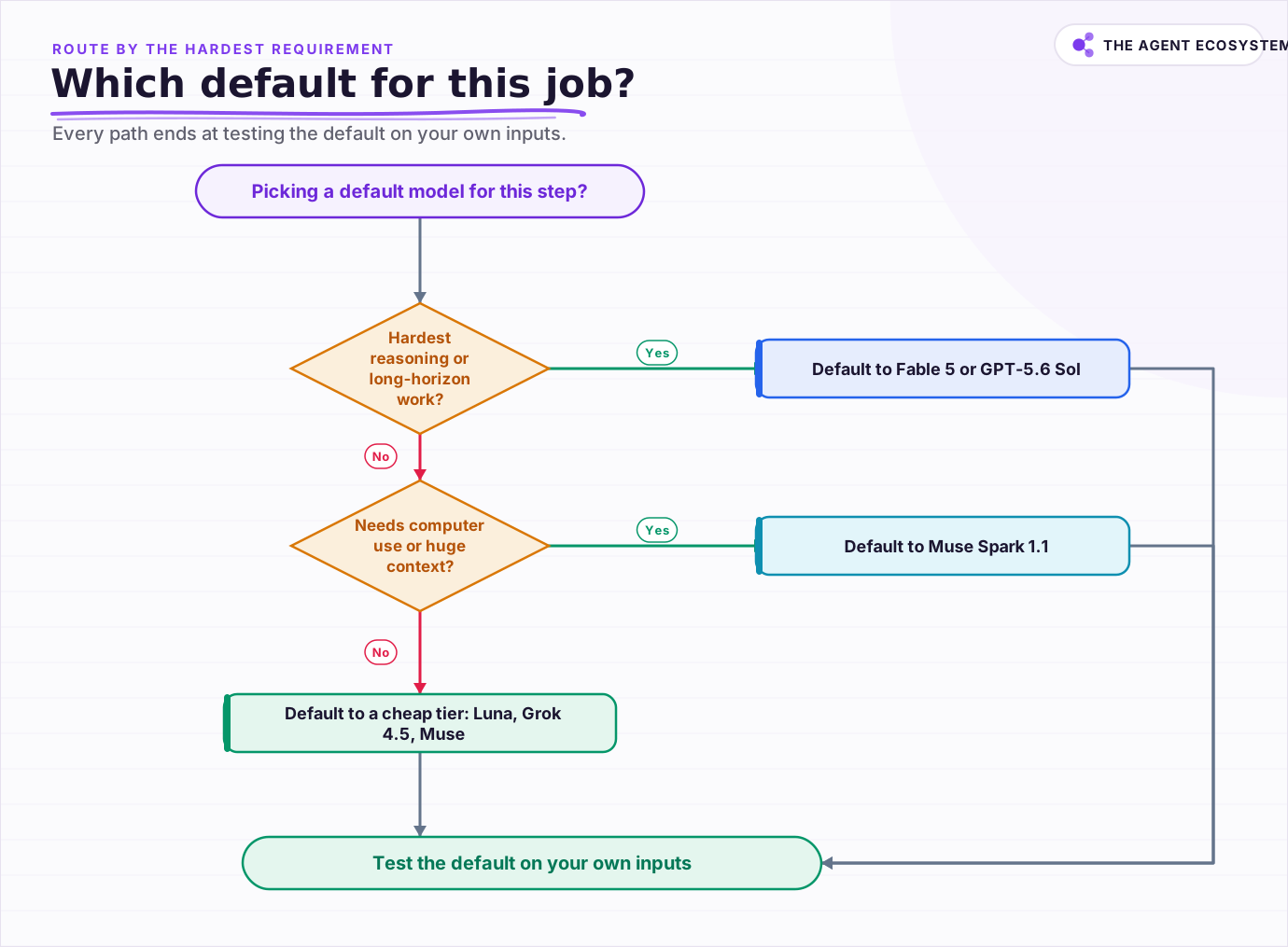 Route each job by its hardest requirement, then test the default on your own inputs before you commit.
What is the practical move for builders?#
Set one default per job, keep every model swappable, and let your own evals confirm the pick. The prices here will move, and a new model will land next week, so treat this as a starting map, not a ruling. Standardize on defaults you can change in config, and re-test whenever the field shifts.
None of these five is the answer on its own. The answer is a small set of defaults, each matched to a job and each cheap to change. Wire your stack that way and the July 2026 model wave, and whatever lands next, becomes a routine re-test instead of a rebuild.
Frequently asked questions
Which frontier models can I actually call in July 2026?
What is the cheapest capable model for bulk work?
When is a premium model like Fable 5 worth it?
Which model should I default to for computer use or long context?
How often should I revisit my default models?
Sources
Primary references and vendor documentation used while drafting and reviewing this article.
Written by

Muhammad Qasim Hammad is an AI agent and automation expert and the founder of Cart Gaze LLC (cartgaze.com). He builds product for the love of it: when an idea lands, a working prototype is usually running within hours, built with the same AI agents and automations he sells. He puts his own output at roughly 20× what it was before agents, and the Agentic OS behind this site is the working proof, documented in public with the tools he actually ran and what they really cost.
AI & Automation Services
Want a pipeline like this running in your business?
I'm Qasim — I design and ship AI agents and n8n automations for solo operators and small teams. Tell me what's eating your team's week, and I'll scope a fix.
Related reading
Claude Sonnet 5: The Agent Model I'd Actually Default To
Anthropic shipped Claude Sonnet 5 on June 30, 2026 as a cheaper way to run agents, the same week the $10/$50 Fable 5 flagship landed. Here is the verified price-and-benchmark picture, plus my honest take: for most real agent work, the Sonnet tier is the model to default to.

The 2026 Model Wave: What It Changes for Automation Builders
Three model releases landed in two weeks in June 2026: Fable 5, open-weight GLM-5.2, and limited-preview GPT-5.6. Skip the leaderboard drama. Here is the builder's take on which model belongs on which workflow step, with every price and benchmark dated and attributed.
Meta Muse Spark 1.1: A Low-Cost Computer-Use Agent Model
On July 9, 2026, Meta put a frontier-class model behind a paid, self-serve API for the first time. Muse Spark 1.1 is agentic, handles computer use and parallel subagents, and undercuts GPT-5.6 and Fable 5 on price. An honest, dated read for builders.
GPT-5.6 Is Now Public: What GA Changes for Builders
For two weeks GPT-5.6 was a limited preview most builders could not touch. On July 9, 2026, OpenAI made Sol, Terra, and Luna generally available across the API, Codex, and ChatGPT. Here is what changed for builders, and what to verify before you adopt it.
Fable 5 vs GLM 5.2 vs GPT-5.6: The 2026 Frontier Landscape
Three frontier models landed in June 2026: Claude Fable 5, Z.ai's open-weight GLM-5.2, and OpenAI's limited-preview GPT-5.6. The numbers do not all measure the same thing, so here is an honest, dated comparison on coding score, price, and openness.
How to Choose an LLM for Your n8n AI Agent (2026)
Kimi K3, GLM-5.2, DeepSeek V4, Claude, and GPT all plug into an n8n AI Agent, and they are not interchangeable. Here are the 5 questions that decide the pick for your agent, and why the honest answer for most workflows is to route by task, not standardize on one.