AI Labs Are Racing to IPO: What It Means If You Build on Them
Infra megarounds and public-market pressure change the APIs your automations quietly depend on.
AI-drafted, reviewed by Muhammad Qasim Hammad on July 30, 2026. See our AI disclosure.
Table of contents
- What is the AI lab IPO 2026 signal, really?
- Why does this matter if you just call an API?
- The commercial pressures, named and dated
- My take: treat every provider as swappable
- What portability actually looks like
- Be fair: the funding wave has a real upside
- Are you over-exposed to one lab?
- Where I land on this
You wired an automation to one model API months ago, it works, and you stopped thinking about the vendor behind it. That is exactly when the ground starts moving. The labs you build on are chasing infrastructure megarounds and public markets, and that changes the commercial pressure on the APIs your automations quietly depend on.
What is the AI lab IPO 2026 signal, really?#
The ai lab ipo 2026 signal is a set of reported, mid-2026 moves toward public markets and large infrastructure funding. As of early July 2026, VentureBeat reports Crusoe in talks to raise about $3B at a valuation near $30B, Anthropic hired UK firm Freshfields on its IPO, and Sonnet 5 shipped 2026-06-30.
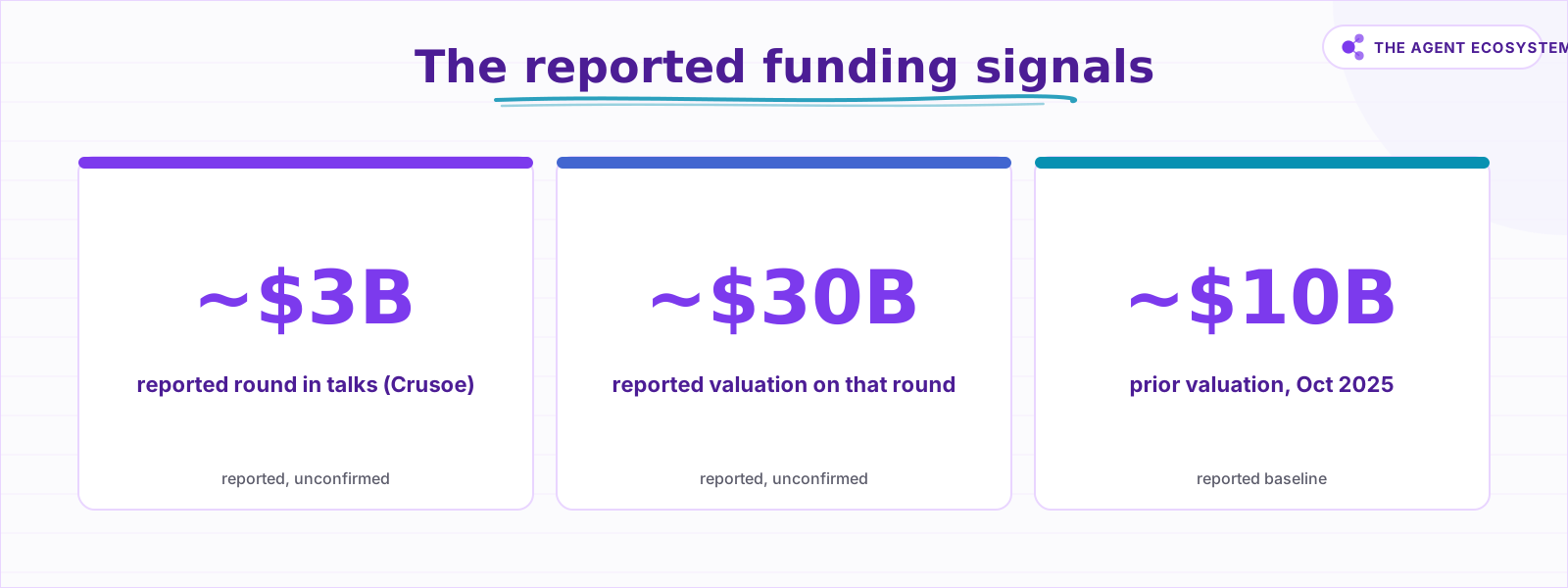 Reported and unconfirmed figures for Crusoe as of early July 2026 (VentureBeat; llm-stats.com). In talks, not closed.
None of these are done deals, and that distinction matters. Crusoe, an AI-infrastructure company, is in talks, per VentureBeat and llm-stats.com, to raise roughly $3B at a valuation around $30B, up from about $10B in October 2025. Anthropic's bankers hiring Freshfields is a step toward an IPO, not a filing. And VentureBeat framed Sonnet 5's 2026-06-30 launch as arriving "as the company races toward a blockbuster IPO." Read all three as direction, not destination.
Why does this matter if you just call an API?#
It matters because the API you casually call is the product a capital-hungry or soon-public company has to monetize. Once a lab faces public-market scrutiny or heavy infrastructure spend, you should rationally expect more frequent pricing changes, quarter-by-quarter roadmap shifts, model deprecations, and features that deepen lock-in. That is ordinary vendor behavior, not villainy.
Think about what a public company owes its shareholders: predictable revenue and margin. The cheapest path to both is often raising prices on the customers least able to leave, sunsetting the models that are expensive to serve, and nudging you toward the proprietary features that make switching painful. If your production workflow hardcodes one provider's SDK, one model ID, and one prompt dialect, you are the customer least able to leave. That is a design choice you made, and it is one you can unmake.
The commercial pressures, named and dated#
The pressures split into four concrete risks, each already visible in the 2026 record: price changes, roadmap-by-quarter churn, deprecations, and lock-in. As of early July 2026, the signals below are reported or in-talks, not closed, so treat the table as a starting map you re-verify against each primary source before you plan around it.
| Signal (mid-2026) | Reported figure | Source | Status |
|---|---|---|---|
| Crusoe funding round | ~$3B raise being discussed | VentureBeat; llm-stats.com | In talks, unconfirmed |
| Crusoe valuation | ~$30B, up from ~$10B (Oct 2025) | VentureBeat; llm-stats.com | Reported, unconfirmed |
| Anthropic IPO counsel | Hired Freshfields to advise | VentureBeat | Reported step, no filing |
| Sonnet 5 launch | Shipped 2026-06-30 amid IPO race | VentureBeat; Anthropic | Confirmed launch, IPO reported |
Table: mid-2026 AI lab IPO and funding signals, compiled from VentureBeat, llm-stats.com, and Anthropic, as of early July 2026. Figures marked reported or in-talks are unconfirmed and volatile; verify each before relying on it.
The pattern across the row is what I want you to notice. Big infrastructure capital and public-market ambition both reward monetizing the thing you depend on. You do not need to predict which lever moves first to prepare for all of them.
My take: treat every provider as swappable#
Here is where I land. My take is that you should treat any single provider as swappable by default, keep a fallback model wired from a different vendor, and design for portability before the pricing or roadmap moves under you. I am not predicting a specific price hike; I am saying build so one does not hurt.
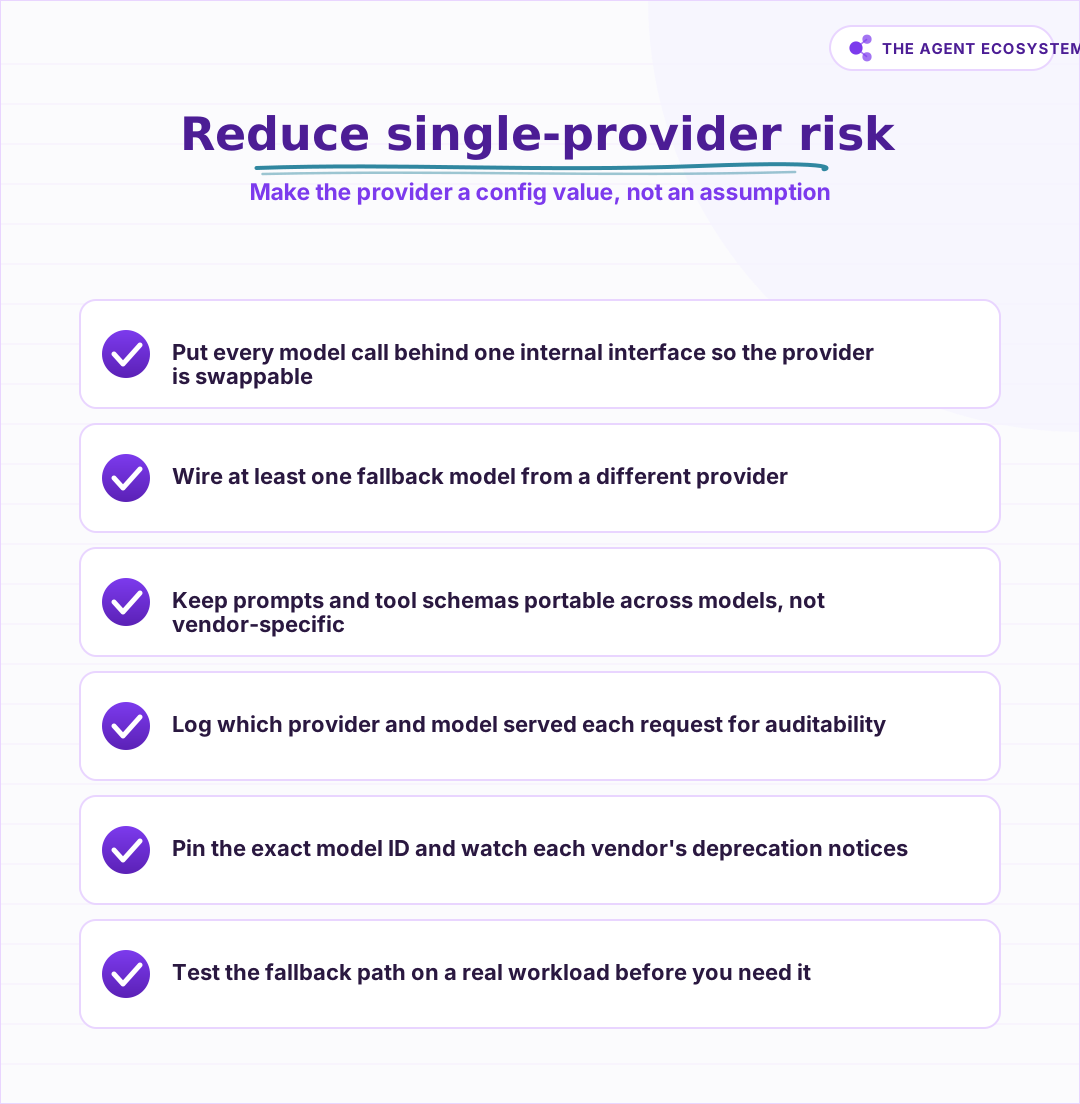 How I would harden an automation against provider pricing and roadmap changes.
I want to be fair to the other side, because there genuinely is one. Standardizing on a single provider is simpler, cheaper to start, and lets you use that vendor's best proprietary features without a lowest-common-denominator abstraction. If you are shipping a weekend prototype or your whole business is one internal tool, the portability tax may not be worth paying yet. That is a legitimate call, and I would not lecture anyone out of it for a small, low-stakes build.
But once an automation is load-bearing in production, my read flips hard. The cost of an abstraction layer is a few hours up front. The cost of a rushed rewrite the week a model you depend on gets deprecated, or repriced, is your evenings and your reliability. I would rather pay the small tax on my own schedule than the large one on the vendor's. For the mechanics of wiring a second model as a fallback, our guide to an n8n multi-model fallback walks the pattern step by step.
What portability actually looks like#
Portability is not a rewrite; it is a boundary. It means every model call goes through one internal interface, the provider and model ID are config values, prompts stay generic enough to run on more than one model, and a fallback from a second vendor is wired and tested. Then the day terms change, you flip a value.
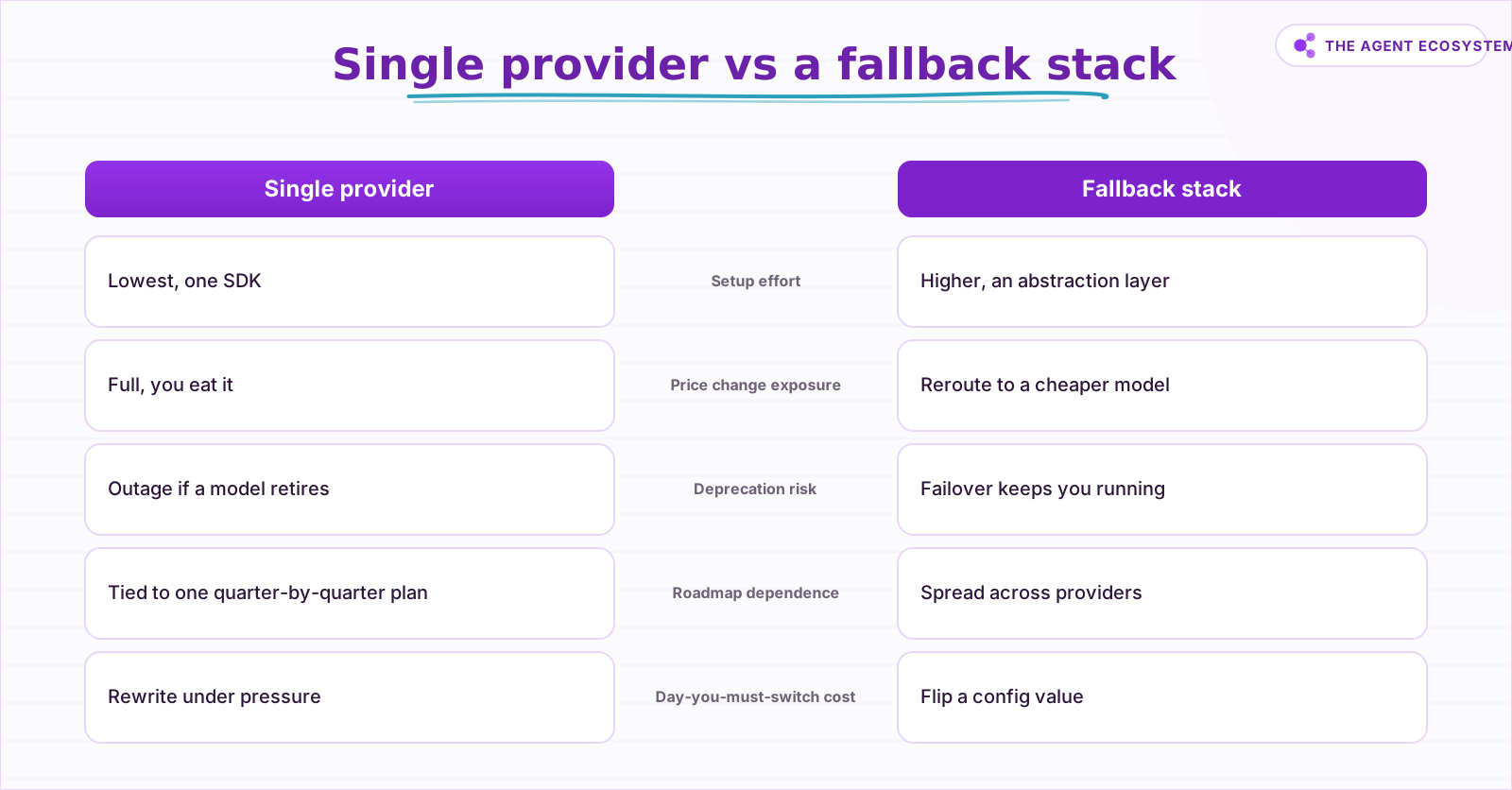 The trade you are actually making when one provider is load-bearing.
The comparison above is the honest trade. A single-provider setup wins on day-one simplicity; a fallback stack wins on every day after something changes. Note the last row especially: the cost of the day you must switch. With one provider hardcoded, that day is an emergency rewrite. With a fallback stack, it is a config edit you already tested. That asymmetry is the whole argument, and it is why I default to the abstraction for anything I actually rely on.
Be fair: the funding wave has a real upside#
I do not want to only sell the caution, because the same capital wave has a real upside for builders. More money chasing AI infrastructure has been pushing capable models cheaper and more agentic. Sonnet 5, launched 2026-06-30 at an intro $2 / 1M input and $10 / 1M output through 2026-08-31 (Anthropic), is a fair example.
That is the tension worth holding honestly. The commercial forces making your terms less stable are the same ones making the models better and, for now, cheaper. Anthropic put Sonnet 5's agentic-coding benchmark at 63.2% against Opus 4.8 at 69.2% and Sonnet 4.6 at 58.1% (Anthropic launch), which is a capable mid-tier workhorse at a lower price. So enjoy the cheaper, stronger models. Just do not let any one of them become the load-bearing wall of your system. If cost is your main lens, our seven levers to reduce AI API costs pairs well with a portable design.
Are you over-exposed to one lab?#
Ask one question to find out: is a single lab load-bearing in your production stack right now? If yes, and your calls are not behind one interface, or you have no tested fallback, you are more exposed than the convenience suggests. The flowchart below turns that into a short, honest self-audit you can run today.
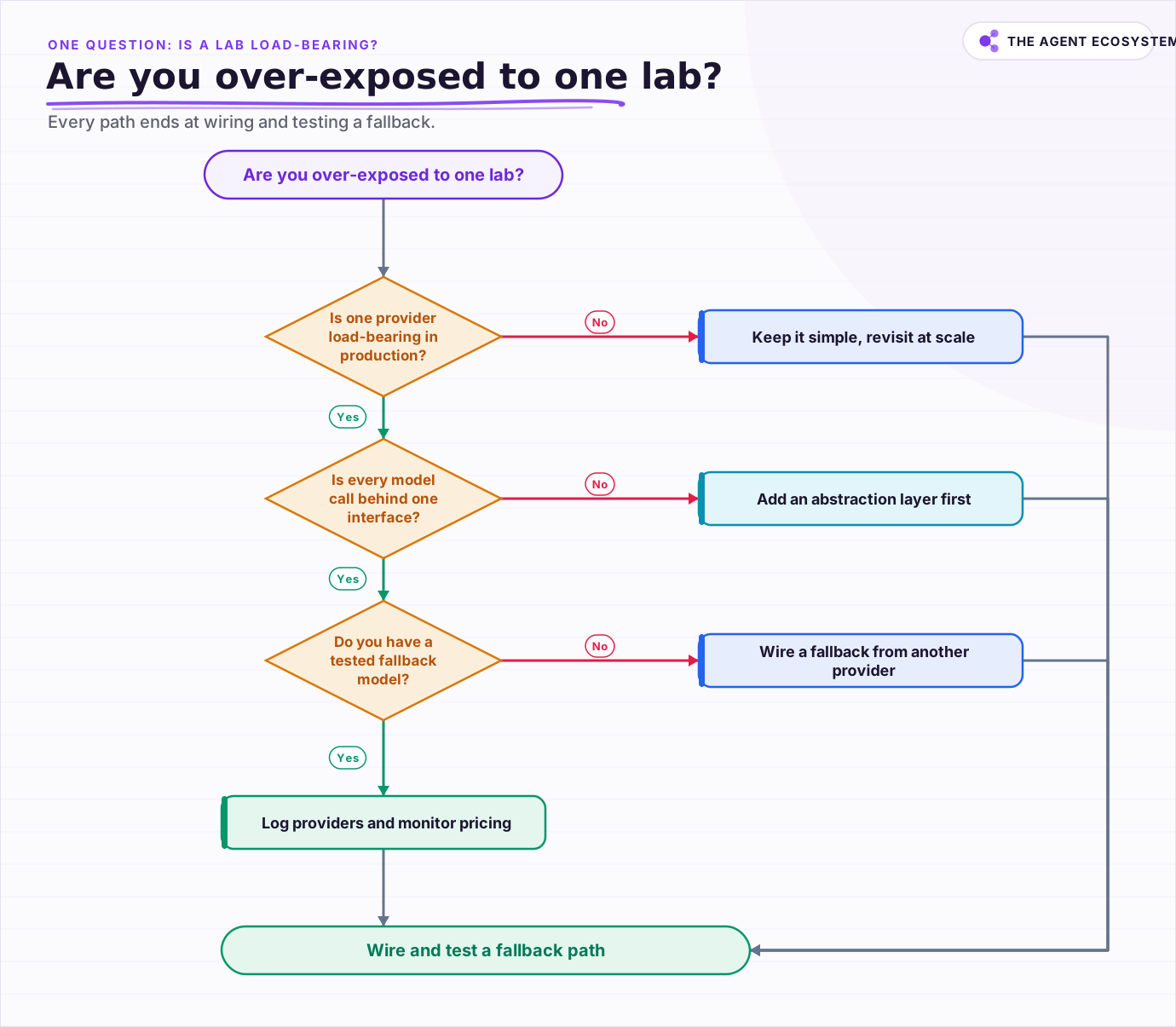 Start from one question: is a single lab load-bearing in production? Every path ends at wiring a fallback.
Where I land on this#
My final read is simple: build as if the terms will change, because the incentives say they will. The ai lab ipo 2026 signals are reported and unconfirmed as of early July 2026, but the direction is clear enough to design around. Keep a fallback wired, keep prompts portable, and verify each figure here on its source.
The move this week is small and concrete. Pick your most load-bearing automation, check whether a single provider can break it, and if so, put one abstraction layer and one tested fallback behind it. You do not need to predict the next price change to be ready for it. You just need to make sure no single vendor is a wall you cannot move.
Frequently asked questions
What are the AI lab IPO signals in 2026?
Is the Crusoe round or the Anthropic IPO confirmed?
Why does an AI lab IPO matter if I just call an API?
How do I reduce single-provider risk on my automations?
Is the funding wave good or bad for small builders?
Sources
Primary references and vendor documentation used while drafting and reviewing this article.
Written by

Muhammad Qasim Hammad is an AI agent and automation expert and the founder of Cart Gaze LLC (cartgaze.com). He builds product for the love of it: when an idea lands, a working prototype is usually running within hours, built with the same AI agents and automations he sells. He puts his own output at roughly 20× what it was before agents, and the Agentic OS behind this site is the working proof, documented in public with the tools he actually ran and what they really cost.
AI & Automation Services
Want a pipeline like this running in your business?
I'm Qasim — I design and ship AI agents and n8n automations for solo operators and small teams. Tell me what's eating your team's week, and I'll scope a fix.
Related reading
The 2026 Model Wave: What It Changes for Automation Builders
Three model releases landed in two weeks in June 2026: Fable 5, open-weight GLM-5.2, and limited-preview GPT-5.6. Skip the leaderboard drama. Here is the builder's take on which model belongs on which workflow step, with every price and benchmark dated and attributed.

The OpenAI-Compatible API: Swap Models Without a Rewrite
A new frontier model lands every week, and rewriting your integration each time is a losing game. Because most providers now speak the OpenAI API format, swapping a model is usually a base-URL and key change. Here is the portability pattern, and where it breaks.
Claude Sonnet 5: The Agent Model I'd Actually Default To
Anthropic shipped Claude Sonnet 5 on June 30, 2026 as a cheaper way to run agents, the same week the $10/$50 Fable 5 flagship landed. Here is the verified price-and-benchmark picture, plus my honest take: for most real agent work, the Sonnet tier is the model to default to.
LLM Gateways Sound Smart. Most Routing Is Just a Fallback Chain.
An LLM gateway is a proxy layer that gives your app one stable endpoint across several model providers, then decides which one answers each request. Most of what ships as "smart routing" is really 2 jobs, automatic fallback and cost-based rules, not model choice driven by
Everyone's Selling AI Agent Factories. You Just Need n8n.
HPE and NVIDIA's AI Factory, NVIDIA's Vera CPU and Agent Toolkit, and NAVER's coming platform are real enterprise agent infrastructure. For a small team, they are mostly noise. Here is where the heavy stack earns its keep, and why I would still default to n8n and one API.
Choosing an LLM for Production: The Decisions That Stick
Every model comparison you read was written against someone else's task. Twelve lessons on building the evaluation that produces your answer, pricing the choice properly, and making it reversible before the model changes underneath you.