Claude Fable 5 Switches to Usage Credits on July 12
Fable 5 stops being included in your subscription. What changes, and how to prepare.
AI-drafted, reviewed by Muhammad Qasim Hammad on July 10, 2026. See our AI disclosure.
Table of contents
Anthropic spent early July giving paid Claude subscribers a free taste of Fable 5. That taste has an expiry date. On July 12, 2026, the model leaves your subscription allowance and starts billing as prepaid usage credits, and anyone who wove it into a daily workflow needs a plan before then.
What is changing with Claude Fable 5 on July 12?#
Starting July 12, 2026, Claude Fable 5 stops being included in paid subscriptions and moves to prepaid usage credits. Anthropic made it complimentary on Pro, Max, Team, and select Enterprise plans from July 1, for up to 50% of weekly usage limits, and reporting says the window was pushed from July 7 to July 12.
The model itself is not changing. This is a billing and access change, not a downgrade. During the window you can lean on Fable 5 inside your existing plan; after it, the same calls draw down a prepaid balance. For the full picture of the model and whether it earns its premium, see our read on what Fable 5 is and whether it is worth 2x Opus.
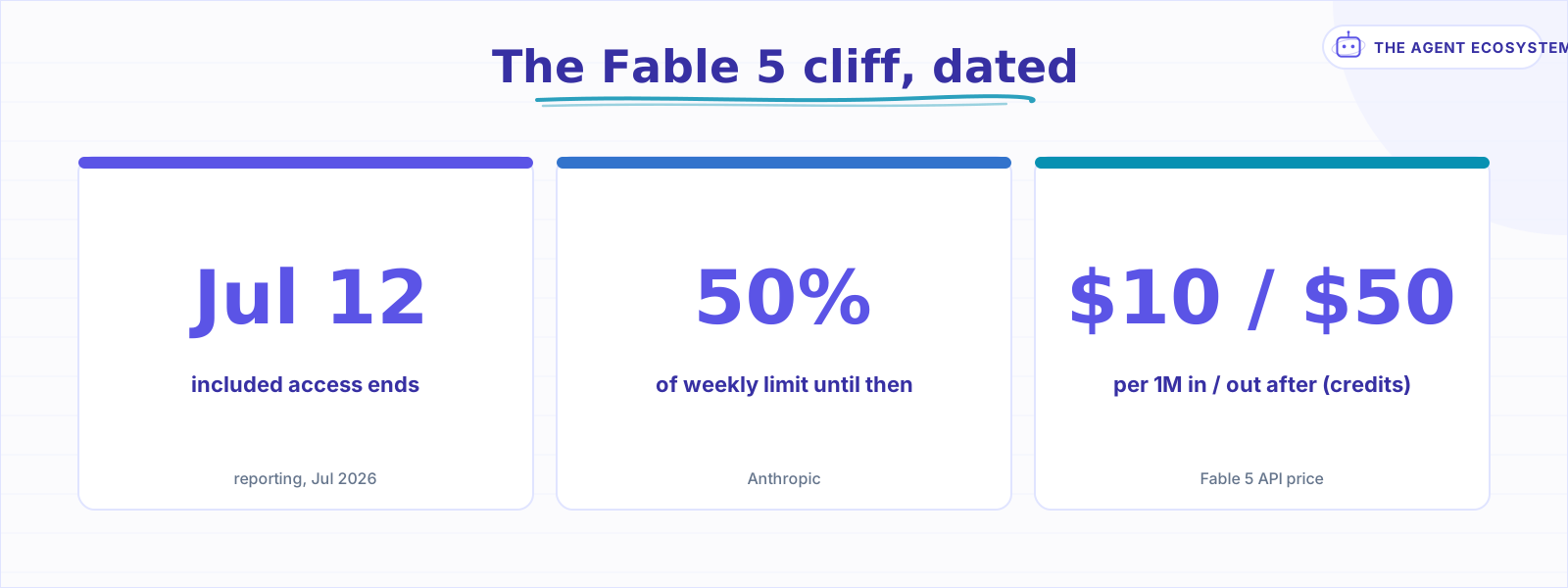 The included window and post-cutoff usage-credit price, dated July 2026. The July 12 extension is per reporting; verify on Anthropic's page.
Why does the switch to usage credits matter?#
Because the price does not change, but who pays it does. During the included window, Fable 5 draws from your subscription, capped at 50% of weekly limits. After July 12, the same work bills as prepaid credits at $10 per 1M input and $50 per 1M output, so a habit formed for free suddenly has a meter.
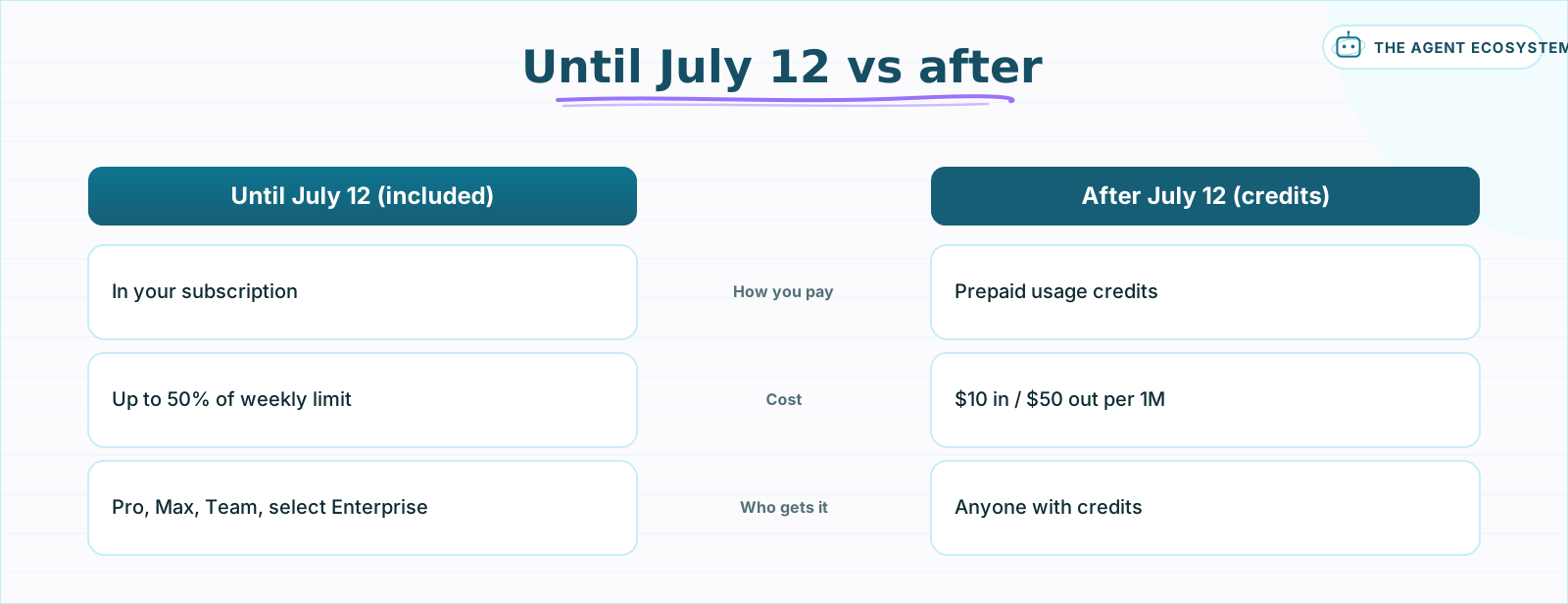 How Fable 5 access changes at the July 12 cutoff. Terms dated July 2026; verify before relying on them.
Here is what that meter looks like once credits kick in. These are worked examples at the $10 input and $50 output rate per 1M tokens, not a bill you will receive; your real usage sets the number.
| Daily usage on one step | Usage-credit cost per day |
|---|---|
| 1M input + 200K output | $10 + $10 = $20 |
| 5M input + 1M output | $50 + $50 = $100 |
| 200K input + 50K output | $2 + $2.50 = $4.50 |
The lesson is not that Fable 5 is expensive. It is that output tokens dominate the bill, and a model you used casually all week can turn into a real line item the moment it leaves the subscription.
Who is affected, and how long do you have?#
Anyone leaning on subscription Fable 5 should plan now. Pro, Max, and Team plans get it included through July 12, along with select Enterprise seats; standard Enterprise seats use credits instead, per Anthropic's terms. The 50% weekly cap means heavy users may already hit the ceiling before the date arrives.
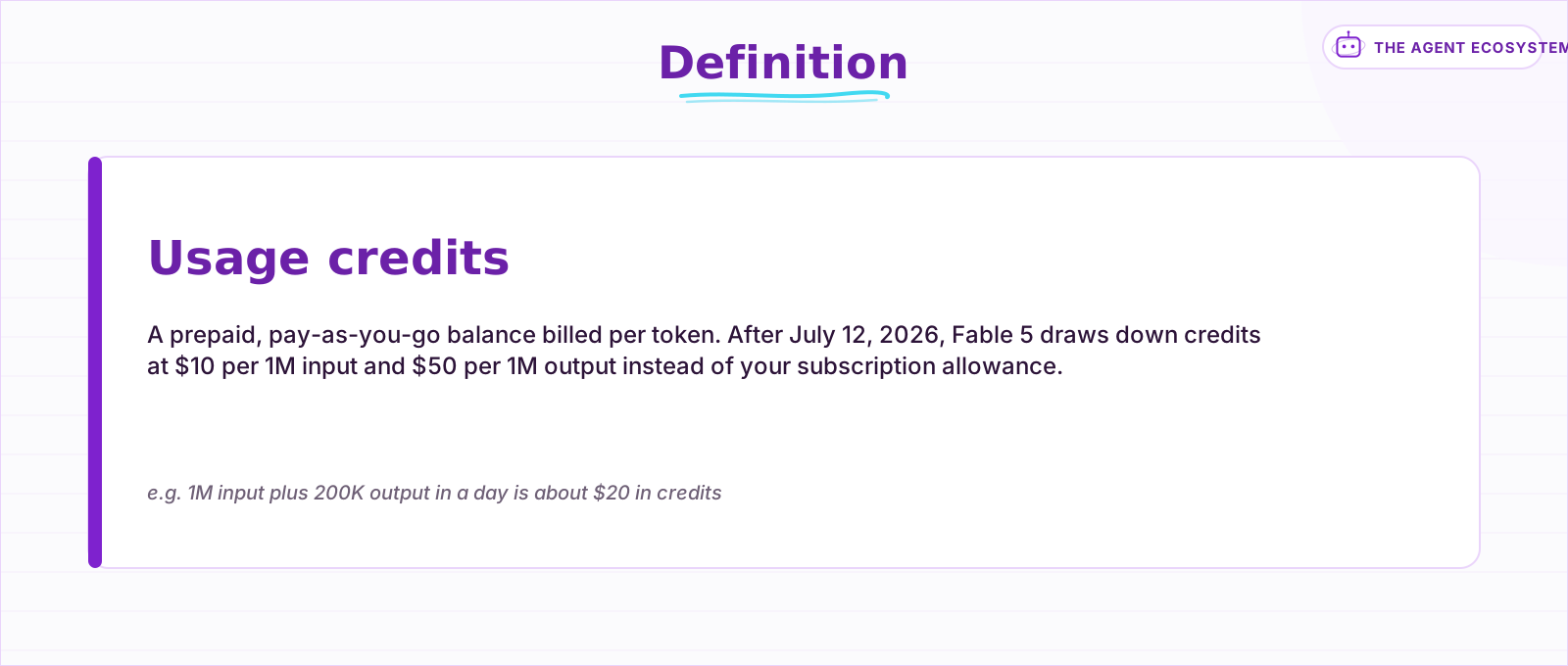 The billing model that replaces included access after the cutoff. Rate is the standard Fable 5 API price; verify it.
The timeline is short. Fable 5 launched on June 9, 2026 at the $10 and $50 API price. Anthropic redeployed it to paid plans on July 1, first through July 7, then, per reporting, through July 12. Anthropic has also said it hopes to bring Fable 5 back as a standard subscription offering when capacity allows, so treat July 12 as the current deadline rather than a permanent verdict.
How should you prepare before the cliff?#
Sort your Fable 5 usage into must-have and nice-to-have, then act on each. Keep the hardest long-horizon steps on Fable 5 and budget prepaid credits for them. Move routine steps to a cheaper model and test the output on your own inputs. Wire a fallback so a spend cap never breaks a live run.
The cost levers you already know still apply, and they matter more once every token is metered. Prompt caching cuts the input side hard, and batching trims the rest; our guide to prompt caching to cut the bill and the seven levers to cut AI API costs both stack cleanly on top of a credit budget.
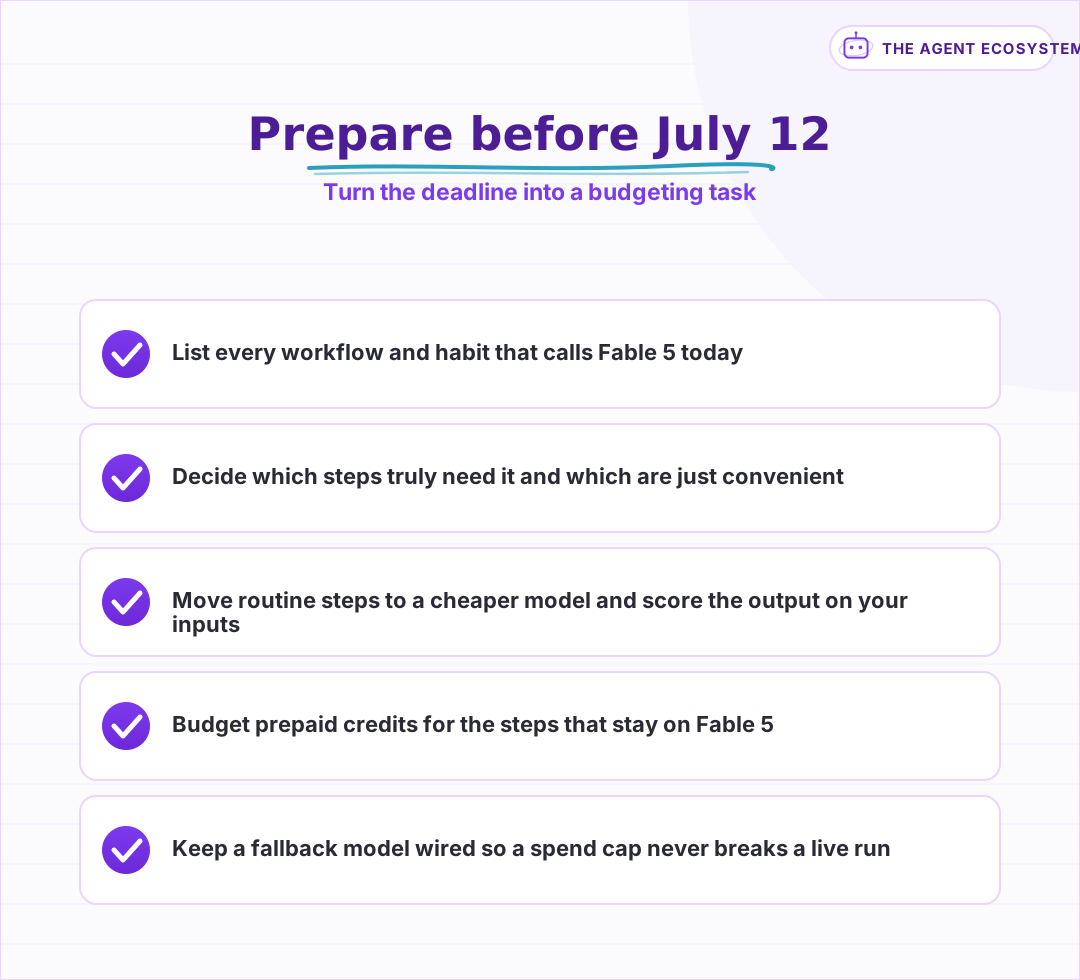 A short checklist to reach July 12 with your costs under control.
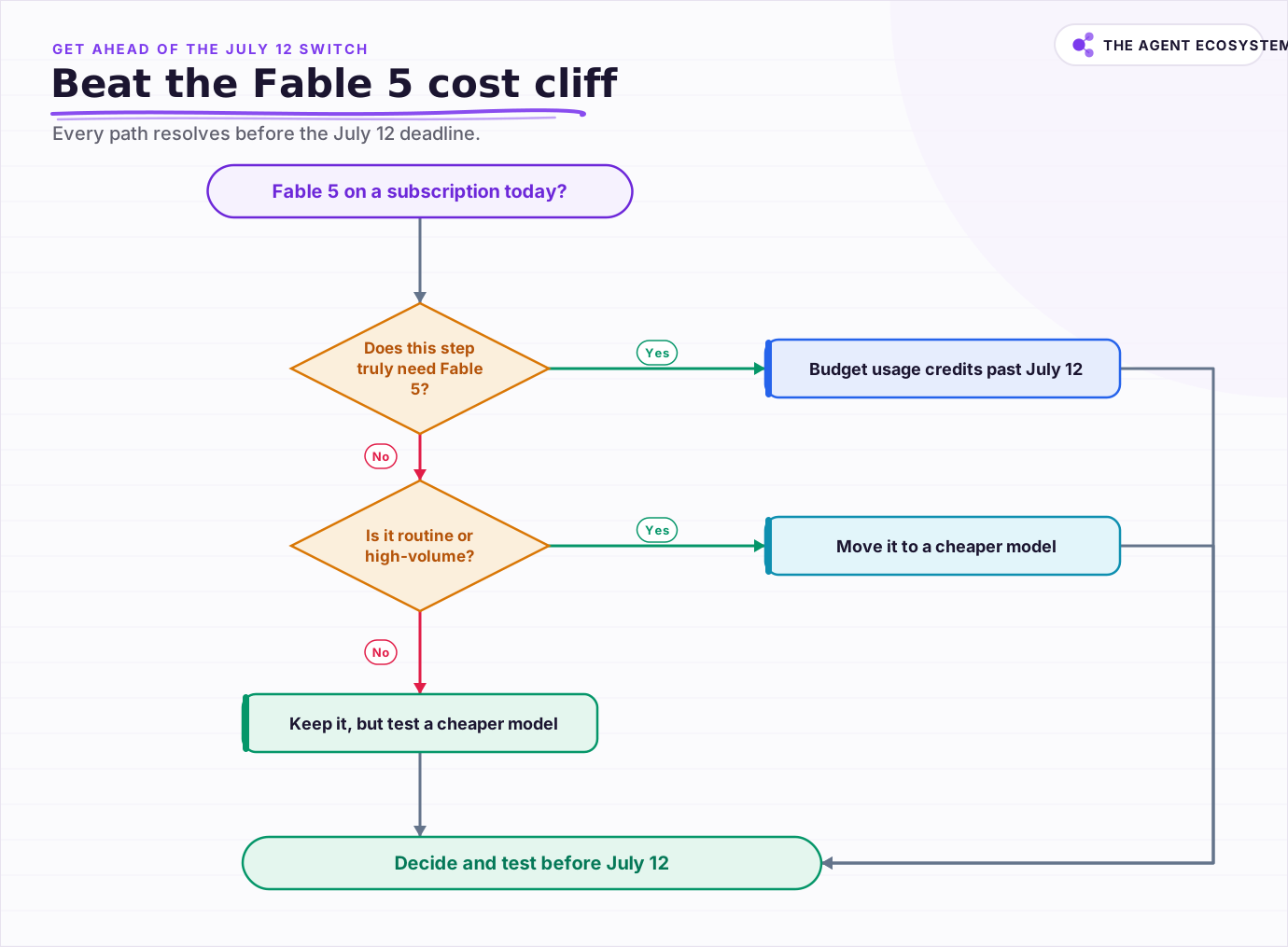 Route each step by whether it truly needs Fable 5; every path resolves before the July 12 deadline.
What is the practical move?#
Treat July 12 as a budgeting deadline, not a crisis. The price of Fable 5 is unchanged, so nothing about its quality shifts; what changes is that casual use now shows up on a bill. Decide what deserves the premium, tier the rest down, and confirm your plan before the window closes.
The habit worth keeping is the one this deadline forces: know which model each step actually needs, and pay premium prices only where they earn their keep. Do that once and the next pricing change, from any vendor, is a budgeting note instead of a scramble.
Frequently asked questions
What is changing with Claude Fable 5 on July 12, 2026?
How much will Claude Fable 5 cost after the cutoff?
Which plans get Fable 5 included until July 12?
Why did Anthropic extend the Fable 5 deadline?
How should I prepare for the switch to usage credits?
Sources
Primary references and vendor documentation used while drafting and reviewing this article.
Written by

Muhammad Qasim Hammad is an AI agent and automation expert and the founder of Cart Gaze LLC (cartgaze.com). He builds product for the love of it: when an idea lands, a working prototype is usually running within hours, built with the same AI agents and automations he sells. He puts his own output at roughly 20× what it was before agents, and the Agentic OS behind this site is the working proof, documented in public with the tools he actually ran and what they really cost.
AI & Automation Services
Want a pipeline like this running in your business?
I'm Qasim — I design and ship AI agents and n8n automations for solo operators and small teams. Tell me what's eating your team's week, and I'll scope a fix.
Related reading

Claude Fable 5: Anthropic's Mythos-Class Model, Explained
Anthropic's Claude Fable 5 shipped on June 9, 2026 topping the coding benchmarks it publishes and priced near twice Opus 4.8. Here is an honest read on the reported numbers, the real trade-off, and who should pay the premium.

Claude Sonnet 5: The Agent Model I'd Actually Default To
Anthropic shipped Claude Sonnet 5 on June 30, 2026 as a cheaper way to run agents, the same week the $10/$50 Fable 5 flagship landed. Here is the verified price-and-benchmark picture, plus my honest take: for most real agent work, the Sonnet tier is the model to default to.
The 2026 Model Wave: What It Changes for Automation Builders
Three model releases landed in two weeks in June 2026: Fable 5, open-weight GLM-5.2, and limited-preview GPT-5.6. Skip the leaderboard drama. Here is the builder's take on which model belongs on which workflow step, with every price and benchmark dated and attributed.
5 Claude API Changes That Cut Agent Workflow Cost
Five recent Claude API updates can reduce wasted tokens and lower your bill in n8n agents and custom pipelines. Here is exactly what changed, why it matters, and what to test before changing production workflows.
Fable 5 vs GLM 5.2 vs GPT-5.6: The 2026 Frontier Landscape
Three frontier models landed in June 2026: Claude Fable 5, Z.ai's open-weight GLM-5.2, and OpenAI's limited-preview GPT-5.6. The numbers do not all measure the same thing, so here is an honest, dated comparison on coding score, price, and openness.
One Default Model per Agent Job: the 2026 Frontier Field
In July 2026 you can call five frontier models before lunch, at prices that range tenfold. More choice is not an easier choice. Here is a job-by-job map of which model to default to, with every price dated and a reminder to test on your own data.