Claude Fable 5: Anthropic's Mythos-Class Model, Explained
What Fable 5 scores, what it costs, and whether it is worth 2x Opus 4.8.
AI-drafted, reviewed by Muhammad Qasim Hammad on July 22, 2026. See our AI disclosure.
Table of contents
On June 9, 2026, Anthropic shipped a model that tops the coding charts it publishes and charges roughly twice what its previous flagship did. If you already run agents on Opus 4.8, the real question is not whether the new model scores higher, but whether the gap is worth paying double for on your workload.
What is Claude Fable 5 and why does it matter?#
Claude Fable 5 is Anthropic's June 9, 2026 frontier release, launched with a sibling called Mythos 5, and it matters because Anthropic reports it leading the coding benchmarks it publishes while pricing it near twice Opus 4.8. The trade-off, not the top score, is the story for teams already spending on agents.
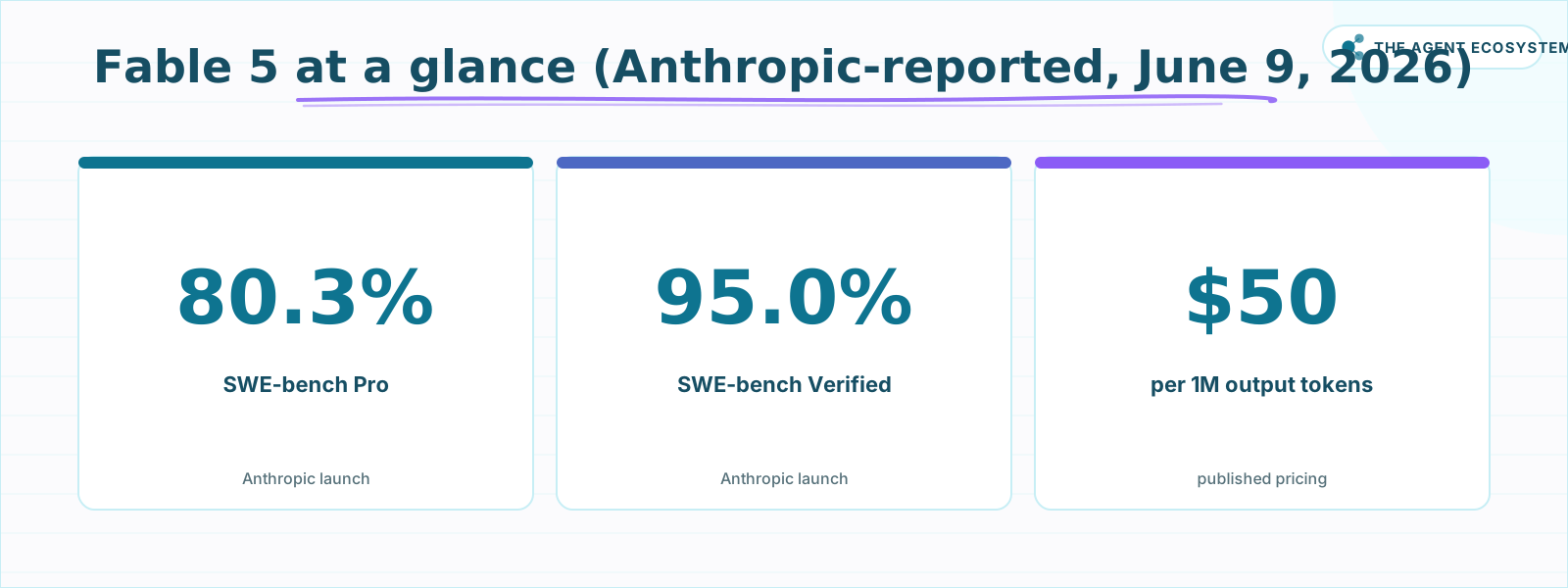 Anthropic's own launch figures as of June 9, 2026; the output price is per 1M tokens. Verify before relying on them.
Per Anthropic's June 9, 2026 launch announcement, Fable 5 posted 80.3% on SWE-bench Pro, which the company frames as roughly 11 points ahead of the next frontier model, and 95.0% on SWE-bench Verified. Independent developer Simon Willison covered the same launch on June 9, 2026. Treat these as vendor-reported figures pending your own testing, not settled facts. The point of this piece is to weigh those numbers against the price, because both move fast in 2026.
How does Fable 5 score on the benchmarks Anthropic published?#
On the scores Anthropic released at launch, Fable 5 led every coding benchmark the company cited. Anthropic reported 80.3% on SWE-bench Pro and 95.0% on SWE-bench Verified, plus the highest score on Cognition's FrontierBench eval and the first result above 90% on Anthropic's own core analytics benchmark, roughly 10 points over Opus 4.8.
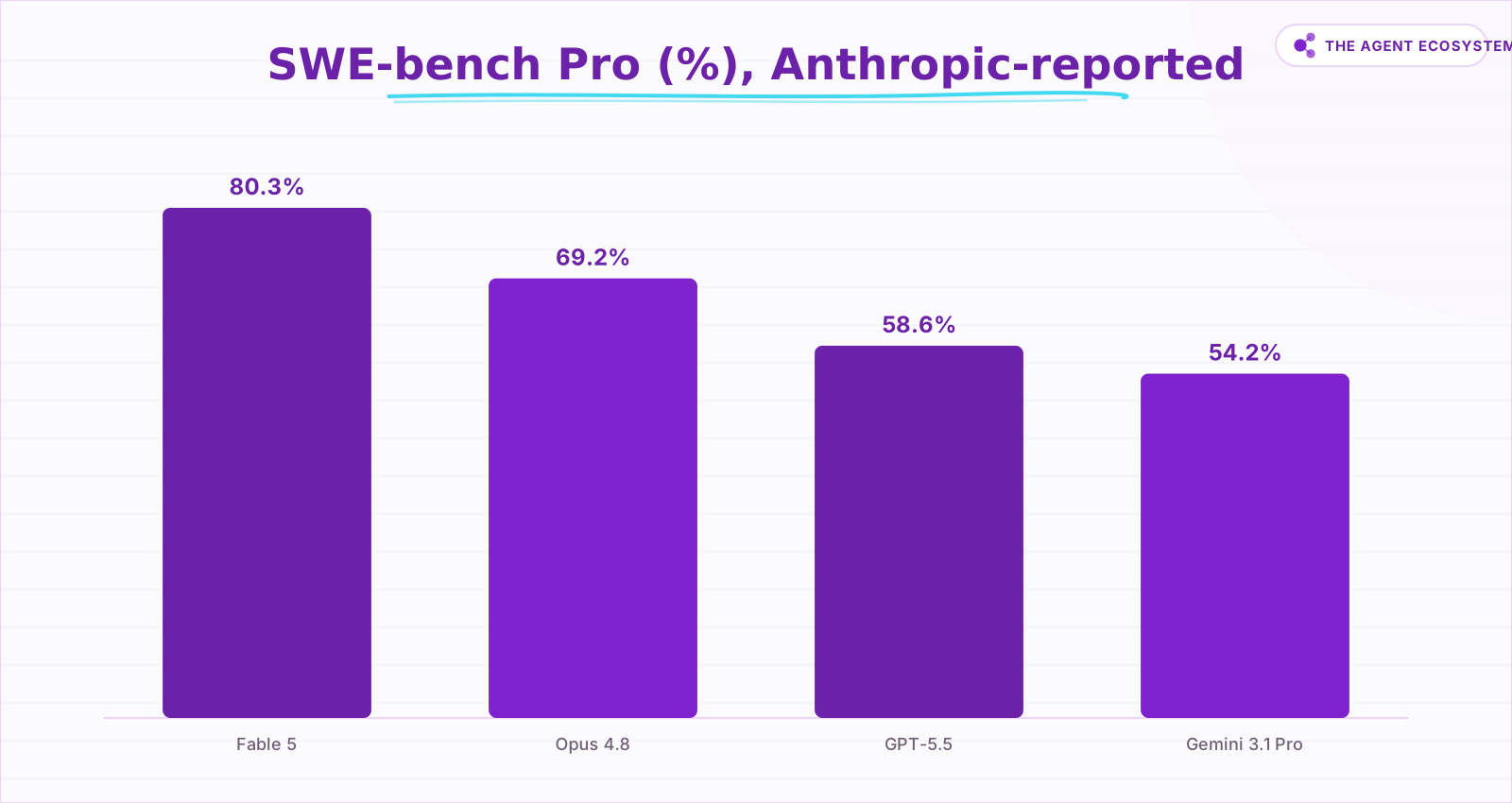 SWE-bench Pro scores per Anthropic's June 9, 2026 launch. Vendor-reported; verify before relying on them.
The SWE-bench Pro spread is the headline. As of Fable 5's June 9, 2026 launch, Anthropic reported it at 80.3% against Opus 4.8 at 69.2%, GPT-5.5 at 58.6%, and Gemini 3.1 Pro at 54.2%. On SWE-bench Verified the same source put Fable 5 at 95.0%, ahead of Opus 4.8 at 88.6% and GPT-5.5 at 82.6%. Anthropic also claimed the top FrontierBench score and the first 90%-plus on its analytics benchmark. Read all of these as Anthropic's launch figures, not as independent results. They are the strongest evidence for the model and also the least neutral, which is exactly why the price matters as a counterweight.
What does Claude Fable 5 cost, and what are its limits?#
Fable 5 costs 10 dollars per million input tokens and 50 dollars per million output tokens, which Forbes and Anthropic both place at about twice Opus 4.8. The existing 90% prompt-caching discount on input still applies. It ships with a 1M-token context window and up to 128,000 output tokens per request.
Pricing and specs reported at the June 9, 2026 launch; verify before relying on them.
| Attribute | Claude Fable 5 (reported) |
|---|---|
| Input price | $10 / 1M tokens |
| Output price | $50 / 1M tokens |
| Price vs Opus 4.8 | About 2x |
| Prompt-caching discount | 90% off cached input |
| Context window | 1,000,000 tokens |
| Max output per request | 128,000 tokens |
| Availability | Generally available |
The output price is where a bill grows fastest, since agentic runs generate far more tokens than a single chat turn. Forbes reported on June 10, 2026 that the pricing lands near double Opus 4.8, and Anthropic's model documentation lists the 1M context and 128k output limits. If token spend is your constraint, our guide to cutting AI API costs with seven levers and our walkthrough on API cost control for agent workflows both apply here, and caching does real work at these rates.
Is Fable 5 worth 2x Opus 4.8 for your workload?#
It depends on whether the benchmark gap shows up in your work. Fable 5 leads Anthropic's reported coding scores, but at double the price the value case rests on how much that lead translates into fewer failed agent runs, less human cleanup, and shipped work you would otherwise redo. For light or price-sensitive workloads, Opus 4.8 stays the pragmatic default.
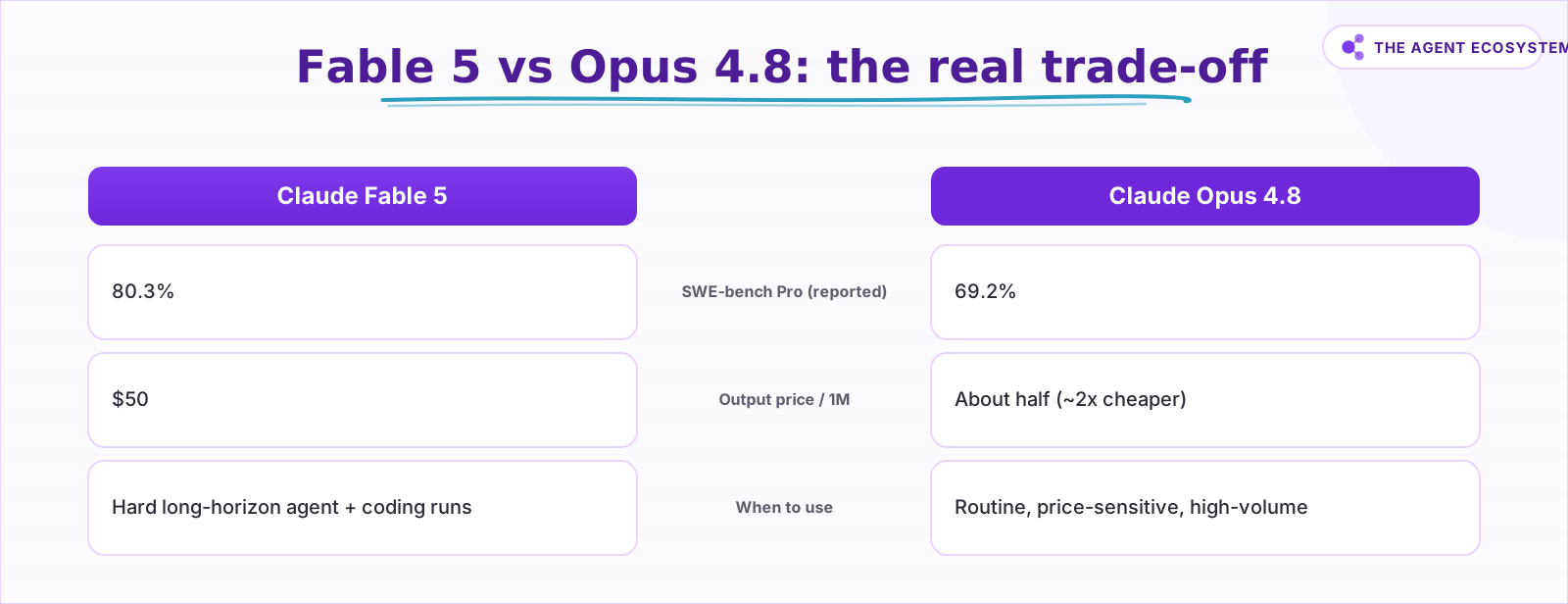 Fable 5 leads Anthropic's reported scores; Opus 4.8 is cheaper. Figures as of the June 9, 2026 launch.
The honest framing is that the strongest scores here are Anthropic's own figures, while the 2x price is a hard number you pay every month. A benchmark lead does not automatically pay for itself. It earns the premium only when a task is hard enough that Opus 4.8 stalls or produces work you have to fix by hand, and where finishing correctly the first time is worth more than the extra tokens cost. Long-horizon agent runs and complex multi-file coding are the clearest candidates. Short prompts, routine drafting, and high-volume batch jobs usually are not.
When do the safeguards send you back to Opus 4.8?#
Anthropic built a routing safeguard into Fable 5: some queries are answered with Opus 4.8 instead of the newer model. Per Anthropic's launch materials, these safeguards trigger on average in fewer than 5% of sessions, so most traffic reaches Fable 5, but a minority is rerouted. That behavior is worth knowing before you assume every call runs on the flagship.
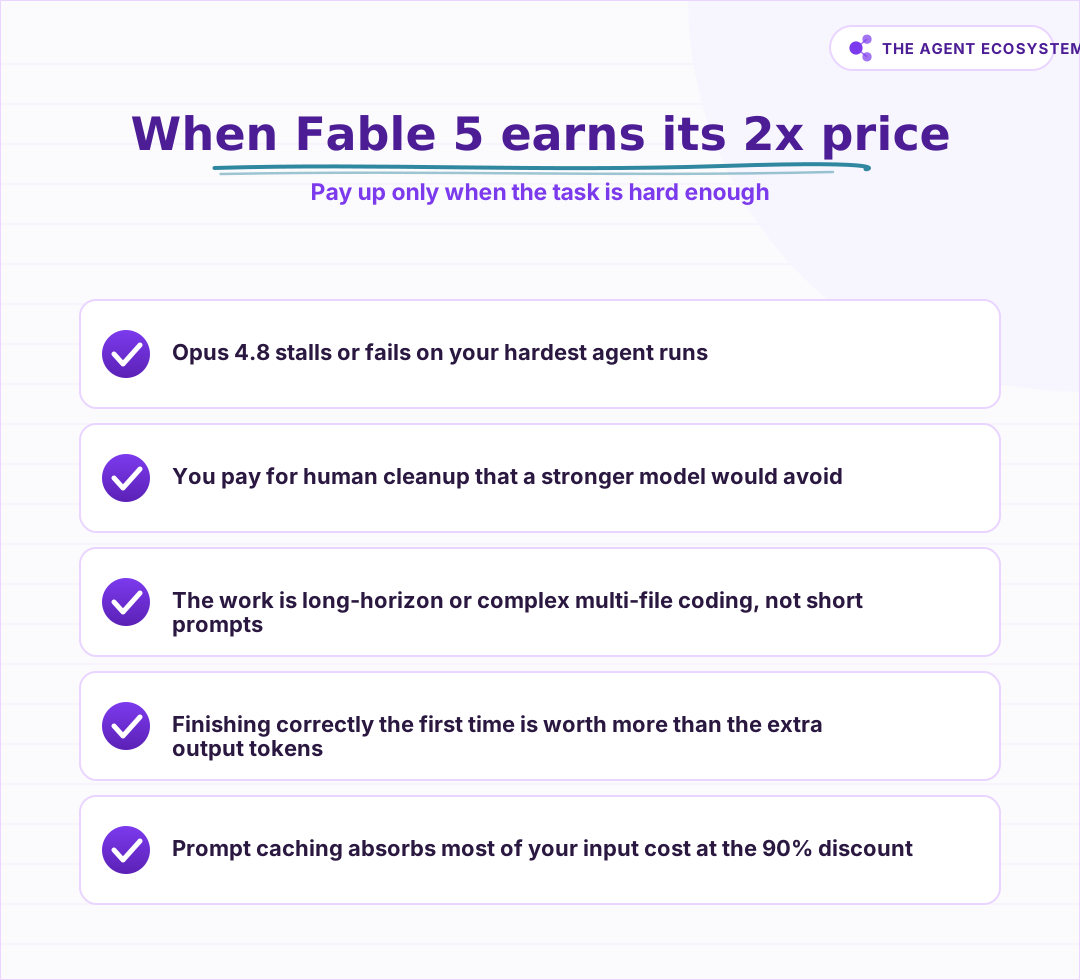 If several of these hold, the premium can pay for itself; if not, Opus 4.8 is the pragmatic default.
For most teams this reroute is a footnote rather than a blocker, since it affects a small share of sessions. Still, if you are benchmarking Fable 5 against Opus 4.8 on your own prompts, it is a variable to hold in mind: a fraction of your calls may quietly be served by Opus 4.8, which can blur a like-for-like comparison. Track it in logging if your evaluation depends on knowing which model actually answered.
The bottom line on Claude Fable 5#
Claude Fable 5 leads the coding benchmarks Anthropic published on June 9, 2026, and costs about twice Opus 4.8, so this is a value judgment, not a scoreboard read. Pay the premium where a hard task justifies it, and keep Opus 4.8 for routine work. Re-verify every figure against Anthropic's live pricing first.
Frequently asked questions
What is Claude Fable 5?
How much does Claude Fable 5 cost?
What benchmarks did Anthropic report for Fable 5?
What are Claude Fable 5's context and output limits?
Is Claude Fable 5 worth 2x the price of Opus 4.8?
Sources
Primary references and vendor documentation used while drafting and reviewing this article.
Written by

Muhammad Qasim Hammad is an AI agent and automation expert and the founder of Cart Gaze LLC (cartgaze.com). He builds product for the love of it: when an idea lands, a working prototype is usually running within hours, built with the same AI agents and automations he sells. He puts his own output at roughly 20× what it was before agents, and the Agentic OS behind this site is the working proof, documented in public with the tools he actually ran and what they really cost.
AI & Automation Services
Want a pipeline like this running in your business?
I'm Qasim — I design and ship AI agents and n8n automations for solo operators and small teams. Tell me what's eating your team's week, and I'll scope a fix.
Related reading
Claude Sonnet 5: The Agent Model I'd Actually Default To
Anthropic shipped Claude Sonnet 5 on June 30, 2026 as a cheaper way to run agents, the same week the $10/$50 Fable 5 flagship landed. Here is the verified price-and-benchmark picture, plus my honest take: for most real agent work, the Sonnet tier is the model to default to.

Fable 5 vs GLM 5.2 vs GPT-5.6: The 2026 Frontier Landscape
Three frontier models landed in June 2026: Claude Fable 5, Z.ai's open-weight GLM-5.2, and OpenAI's limited-preview GPT-5.6. The numbers do not all measure the same thing, so here is an honest, dated comparison on coding score, price, and openness.
Claude Fable 5 Switches to Usage Credits on July 12
Anthropic gave paid Claude plans a taste of Fable 5, then set a deadline. On July 12, 2026 the included window closes and Fable 5 moves to prepaid usage credits at $10/$50 per 1M tokens. Here is the cost cliff, who it hits, and how to prepare before the switch.
The 2026 Model Wave: What It Changes for Automation Builders
Three model releases landed in two weeks in June 2026: Fable 5, open-weight GLM-5.2, and limited-preview GPT-5.6. Skip the leaderboard drama. Here is the builder's take on which model belongs on which workflow step, with every price and benchmark dated and attributed.
One Default Model per Agent Job: the 2026 Frontier Field
In July 2026 you can call five frontier models before lunch, at prices that range tenfold. More choice is not an easier choice. Here is a job-by-job map of which model to default to, with every price dated and a reminder to test on your own data.
5 Claude API Changes That Cut Agent Workflow Cost
Five recent Claude API updates can reduce wasted tokens and lower your bill in n8n agents and custom pipelines. Here is exactly what changed, why it matters, and what to test before changing production workflows.