GLM-5.2: Open-Weight Frontier Coding at a Fraction of the Cost
Z.ai's MIT-licensed GLM-5.2 trades blows with the closed frontier on coding benchmarks, at a reported one-sixth of GPT-5.5's cost.
AI-drafted, reviewed by Muhammad Qasim Hammad on July 22, 2026. See our AI disclosure.
Table of contents
For most of 2026 the assumption held that if you wanted frontier-grade coding you paid frontier-grade prices to a closed lab. Then Z.ai (Zhipu AI) shipped GLM-5.2 with open weights, and the gap between an MIT-licensed model you can host yourself and the closed leaders narrowed to something you have to argue about rather than dismiss.
What is GLM-5.2 and why does it matter?#
GLM-5.2 is the glm 5.2 release most worth your attention this cycle: an open-weight, MIT-licensed coding model from Z.ai. It matters because it posts frontier-adjacent coding scores while shipping weights you can download and run yourself, which shifts the buy-versus-host math for the first time in a while.
The architecture is a Mixture-of-Experts with roughly 744B total parameters and about 40B active per token, per Z.ai's 13 June 2026 launch reporting. That sparse design is why a model this large can be served affordably: only a fraction of the parameters fire on any given token. It ships with a 1M-token context window and up to 131,072 output tokens.
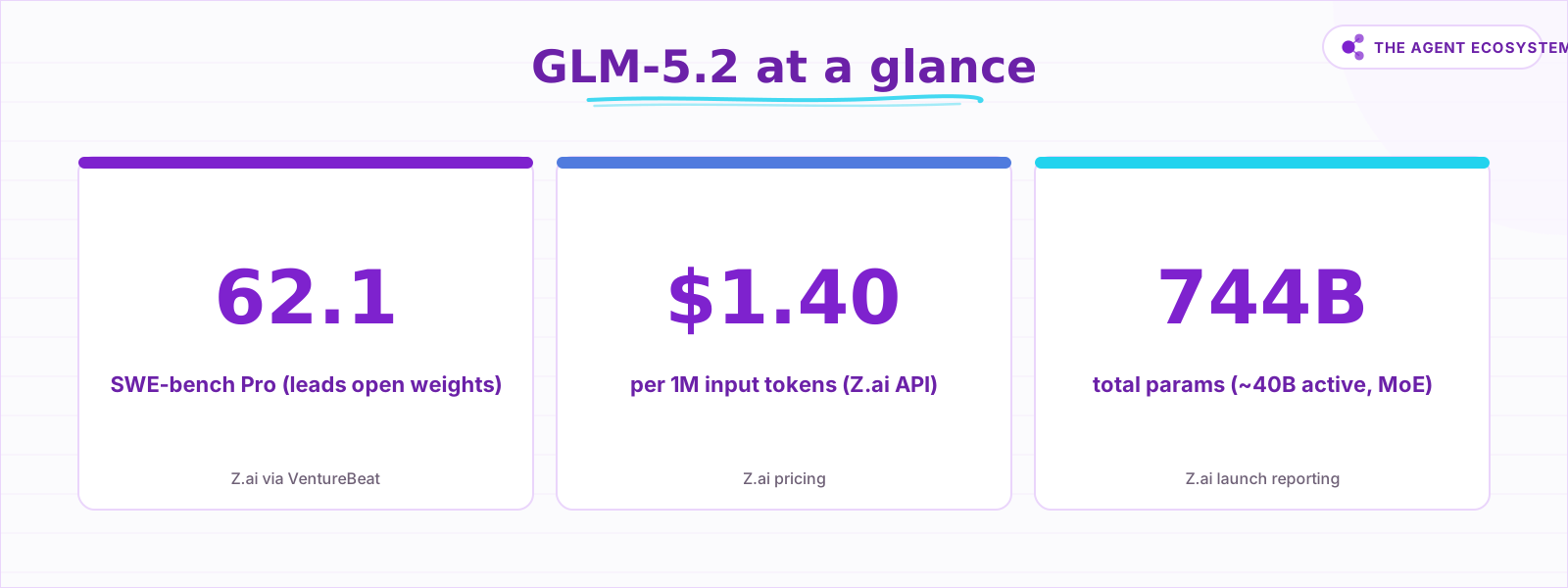 GLM-5.2 headline figures per Z.ai's 13 June 2026 launch, reported by VentureBeat. As of early July 2026, verify before relying on them.
The headline number, as reported by VentureBeat on Z.ai's benchmarks, is a SWE-bench Pro score of 62.1, which leads the open-weight field and edges past GPT-5.5's 58.6. That is the claim that makes GLM-5.2 more than a cost story. It is not the top of the overall leaderboard, but it is the top of the open-weight one.
How does GLM-5.2 score on coding benchmarks?#
On the coding evals its backers highlight, GLM-5.2 sits near the closed frontier rather than a tier below it. As of its 13 June 2026 launch, Z.ai's reported figures put it at 62.1 on SWE-bench Pro, 74.4% on FrontierSWE, and 77.0 on MCP-Atlas, leading open weights on the first and effectively tying Anthropic's Opus 4.8 on the other two.
The FrontierSWE (Dominance) result is the most striking. VentureBeat reports GLM-5.2 at 74.4%, ahead of GPT-5.5 at 72.6% and a near-tie with Claude Opus 4.8 at 75.1%. On MCP-Atlas, an agentic tool-use benchmark, the reported 77.0 sits just under Opus 4.8's 77.8 and above GPT-5.5's 75.3.
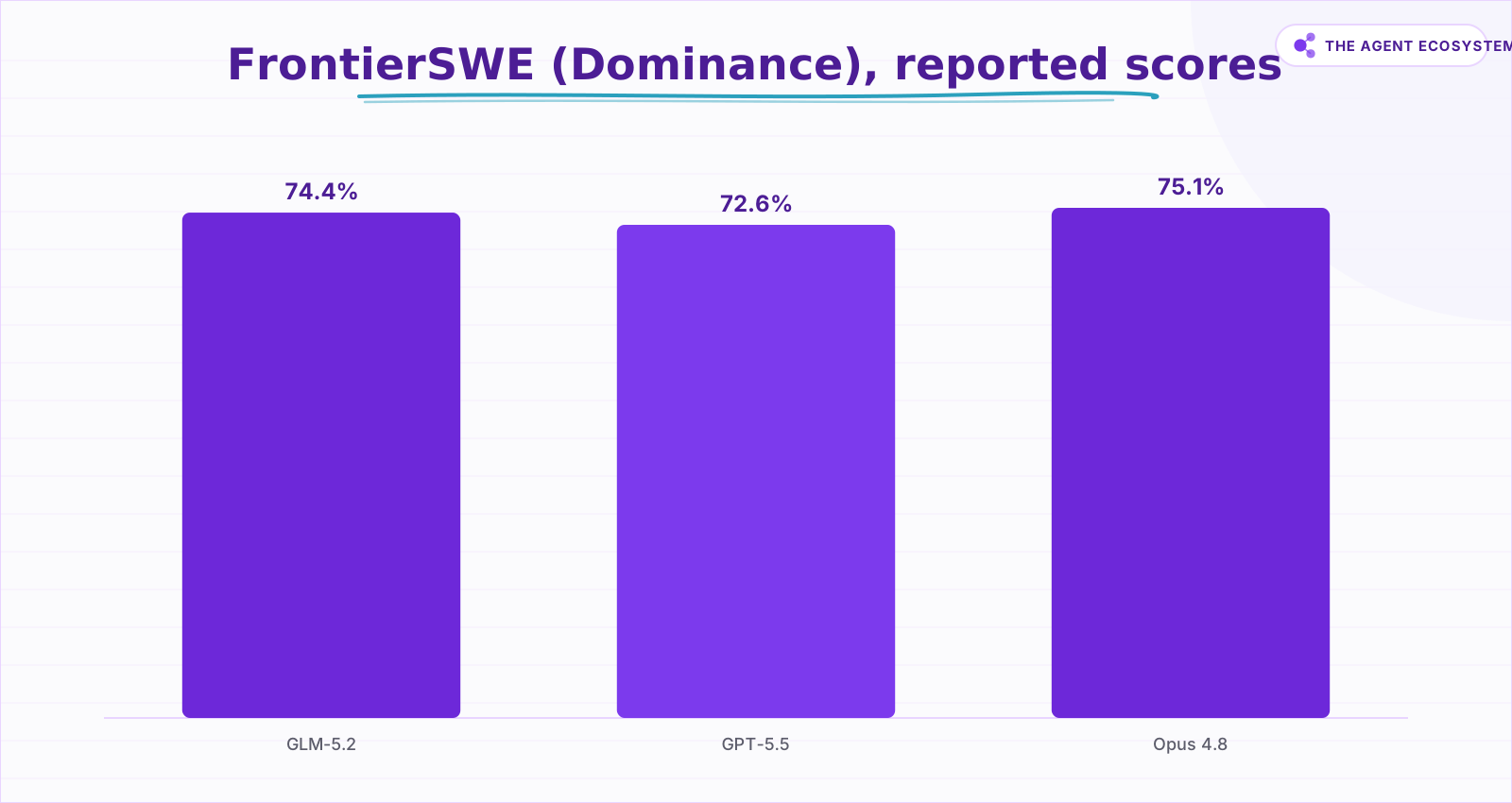 Reported FrontierSWE (Dominance) scores per VentureBeat, as of GLM-5.2's 13 June 2026 launch. Vendor-and-analyst reported, not independently re-run, so verify
Zoom out and the picture holds. Artificial Analysis places GLM-5.2 at 51 on its Intelligence Index v4.1, ahead of open peers like MiniMax-M3 (44), DeepSeek V4 Pro (44), and Kimi K2.6 (43). Treat all of these as vendor-and-analyst reported, not independently re-run, and verify before you standardize on them.
Here is the reported spec-and-benchmark sheet. Source: VentureBeat and Technology.org reporting on Z.ai's figures, as of GLM-5.2's 13 June 2026 launch; verify before you rely on these.
| Metric | GLM-5.2 | GPT-5.5 | Opus 4.8 |
|---|---|---|---|
| SWE-bench Pro | 62.1 | 58.6 | not the focus here |
| FrontierSWE (Dominance) | 74.4% | 72.6% | 75.1% |
| MCP-Atlas | 77.0 | 75.3 | 77.8 |
| Intelligence Index v4.1 | 51 | not listed | not listed |
| Input price / 1M | $1.40 | ~6x GLM blended | not listed |
| Output price / 1M | $4.40 | ~6x GLM blended | not listed |
What does GLM-5.2 cost to run?#
On price, GLM-5.2 is the clear outlier. The Z.ai API lists $1.40 per 1M input tokens and $4.40 per 1M output, which VentureBeat frames as roughly one-sixth of GPT-5.5's blended cost as of the 13 June 2026 launch. Because the weights are open, self-hosting can push the marginal cost lower still, at the price of running the infrastructure yourself.
That one-sixth figure is a blended comparison, so your real ratio depends on your input-to-output token mix. Still, the direction is unambiguous: a model reported to lead open weights on SWE-bench Pro is priced well under the closed leaders. If cost is your whole question, our roundup of the cheapest AI API in 2026 applies the same dated-pricing discipline across providers.
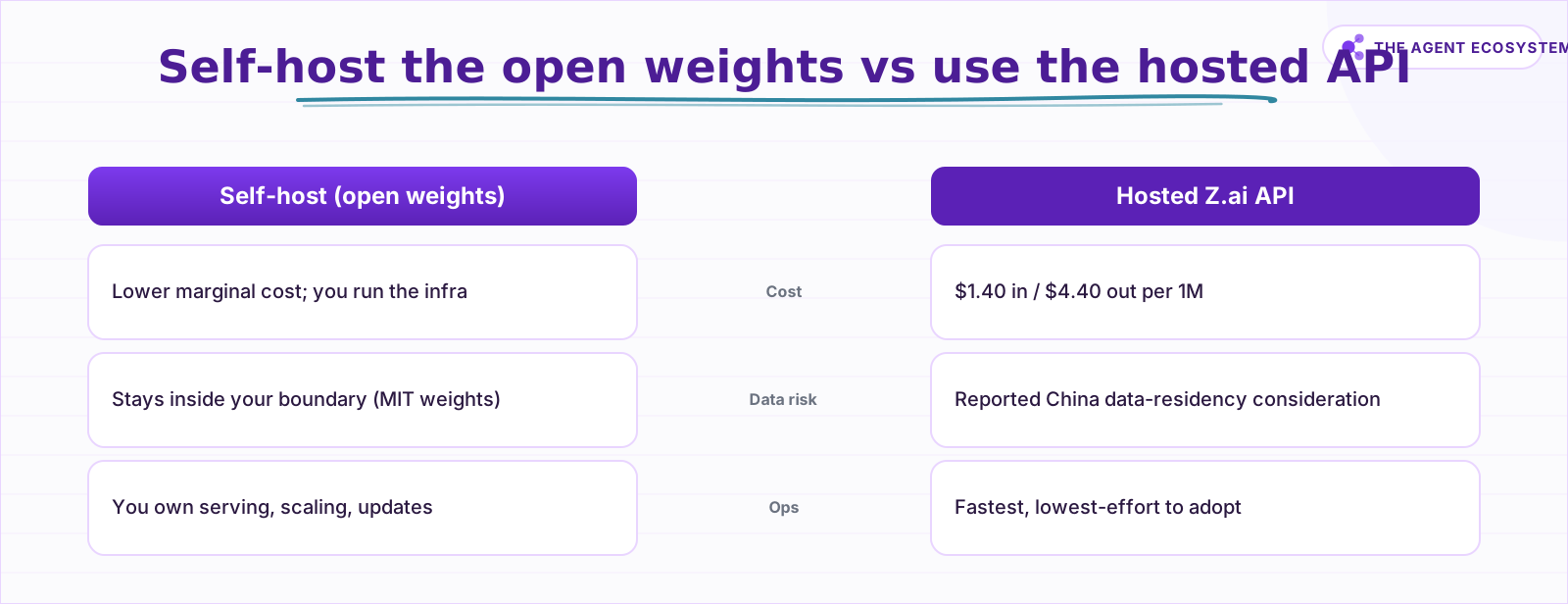 The real fork for GLM-5.2: self-hosting the MIT-licensed weights versus the hosted Z.ai API. Data-residency caveat per TechTimes, June 2026.
The honest wrinkle is data governance, not capability. Reporting flags that using the hosted Z.ai API carries a China data-residency and privacy consideration, per TechTimes coverage from June 2026. Self-hosting the open weights is the documented way to avoid that path entirely, which is the whole point of an MIT-licensed release. That choice is a real fork, so weigh it deliberately.
Should you self-host GLM-5.2 or use the API?#
Choose by which risk you can least afford to carry. The hosted Z.ai API is the fastest, lowest-effort path and posts the lowest sticker price, but it routes your data through the vendor with the reported China data-residency consideration attached. Self-hosting the open weights removes that governance question and can cut marginal cost, at the price of real operational overhead.
If you handle regulated or sensitive code, the data-residency reporting alone can settle it toward self-hosting, since MIT weights let you keep everything inside your own boundary. If you are prototyping or your data is not sensitive, the API's speed and low price are hard to beat. For a private, fully local pattern, our guide to running local LLMs with Ollama, LM Studio, and Jan covers the tooling that makes self-hosting practical.
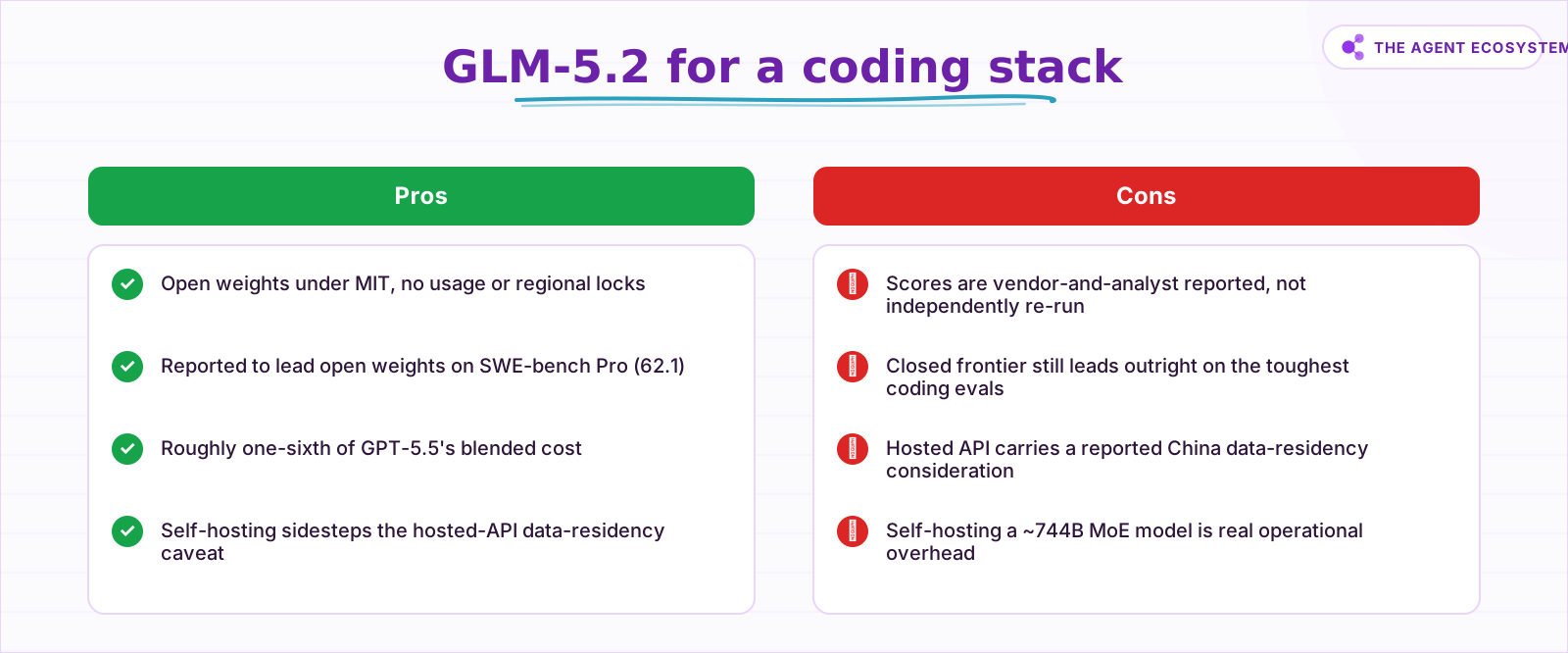 Trade-offs of standardizing on GLM-5.2, based on Z.ai's reported figures as of early July 2026, verify before relying on them.
Where does GLM-5.2 leave the open-weight vs closed debate?#
GLM-5.2 does not end the debate, but it moves it. As of early July 2026, an MIT-licensed model reportedly leads the open-weight field on SWE-bench Pro (62.1) and trades blows with Opus 4.8 on FrontierSWE and MCP-Atlas, at a reported one-sixth of GPT-5.5's blended cost. That is a genuine shift, not hype.
The caveats stay real. These scores are vendor-and-analyst reported rather than independently re-run, the closed frontier still leads outright on the toughest coding evals, and the hosted API carries a data-governance consideration you have to reckon with. The practical takeaway is that open weights are now a serious line item in a coding-stack decision, not an afterthought. Verify the live numbers this week before you commit.
Frequently asked questions
What is GLM-5.2?
How does GLM-5.2 compare to GPT-5.5 and Opus 4.8 on coding?
How much does GLM-5.2 cost?
Is there a privacy risk with GLM-5.2?
Can you self-host GLM-5.2?
Sources
Primary references and vendor documentation used while drafting and reviewing this article.
- VentureBeat: Z.ai's open-weights GLM-5.2 beats GPT-5.5 on multiple long-horizon coding benchmarks for 1/6th the cost
- Technology.org: Zhipu's GLM-5.2 rivals Opus 4.8 on coding benchmarks at a fifth of the cost
- TechTimes: GLM-5.2 open weights live and top coding benchmark, but API use carries China data risk
Written by

Muhammad Qasim Hammad is an AI agent and automation expert and the founder of Cart Gaze LLC (cartgaze.com). He builds product for the love of it: when an idea lands, a working prototype is usually running within hours, built with the same AI agents and automations he sells. He puts his own output at roughly 20× what it was before agents, and the Agentic OS behind this site is the working proof, documented in public with the tools he actually ran and what they really cost.
AI & Automation Services
Want a pipeline like this running in your business?
I'm Qasim — I design and ship AI agents and n8n automations for solo operators and small teams. Tell me what's eating your team's week, and I'll scope a fix.
Related reading
Fable 5 vs GLM 5.2 vs GPT-5.6: The 2026 Frontier Landscape
Three frontier models landed in June 2026: Claude Fable 5, Z.ai's open-weight GLM-5.2, and OpenAI's limited-preview GPT-5.6. The numbers do not all measure the same thing, so here is an honest, dated comparison on coding score, price, and openness.

Open-Weight vs Closed LLMs in 2026: Cost, Quality, Control
Should you call a closed API like Claude or GPT, or self-host an open-weight model like DeepSeek or Qwen? Skip the hot takes. This is a four-axis framework (cost, quality, control, privacy) plus a decision flowchart, using dated June 2026 facts.
The 2026 Model Wave: What It Changes for Automation Builders
Three model releases landed in two weeks in June 2026: Fable 5, open-weight GLM-5.2, and limited-preview GPT-5.6. Skip the leaderboard drama. Here is the builder's take on which model belongs on which workflow step, with every price and benchmark dated and attributed.
DeepSeek V4 Is '8 Months Behind' the Frontier. That's Fine.
An official US evaluation says DeepSeek V4 Pro lags the frontier by about eight months. It gets quoted as a verdict. My take: for most real coding and automation work, an open-weight model that is eight months behind at a fraction of the price is not a compromise, it is the
How to Choose an LLM for Your n8n AI Agent (2026)
Kimi K3, GLM-5.2, DeepSeek V4, Claude, and GPT all plug into an n8n AI Agent, and they are not interchangeable. Here are the 5 questions that decide the pick for your agent, and why the honest answer for most workflows is to route by task, not standardize on one.
Claude Code vs Codex vs Gemini CLI: Terminal AI Agents Compared
Three terminal AI coding agents compete in 2026: Claude Code, OpenAI's Codex CLI, and Google's new Antigravity CLI after Gemini CLI retired on 18 June. This honest comparison covers the model behind each, MCP and sandbox support, and what the usable tier really costs.