DeepSeek V4 Is '8 Months Behind' the Frontier. That's Fine.
An open-weight model eight months behind the leaders, at a fraction of the price, is the correct default for most work.
AI-drafted, reviewed by Muhammad Qasim Hammad on August 1, 2026. See our AI disclosure.
Table of contents
You keep seeing the same line quoted as if it settles the debate: an official US evaluation found DeepSeek V4 Pro lags the frontier by about eight months. It gets repeated as a verdict, a reason to stay closed-only. My read is the opposite: for the vast majority of real coding and automation work, an open-weight model that is roughly eight months behind at a fraction of the price is not a compromise, it is the correct default.
What is DeepSeek V4 and why does the deepseek v4 debate matter?#
DeepSeek V4 is an open-weight, MIT-licensed mixture-of-experts family released 24 April 2026 (Morph LLM). V4-Pro runs 1.6T total parameters with 49B active; V4-Flash runs 284B total with 13B active. Both offer a 1M-token context window and up to 384K output tokens, with weights published on Hugging Face.
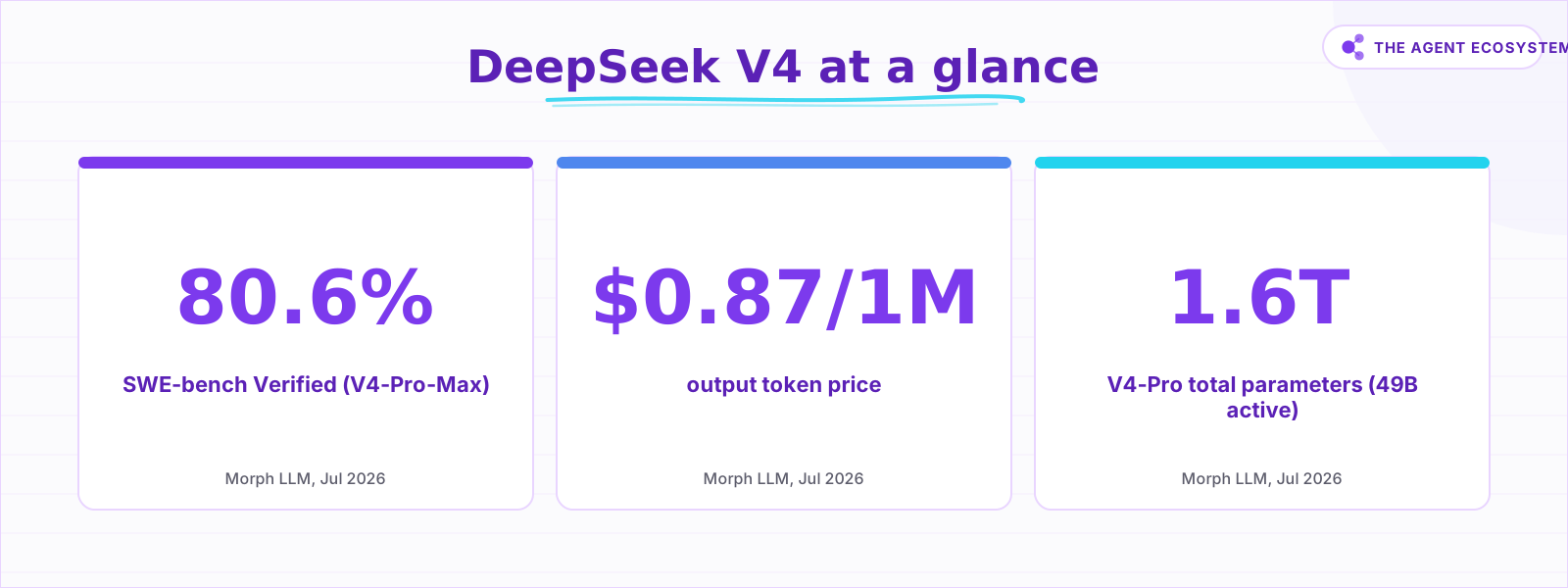 DeepSeek V4-Pro-Max headline figures. Source: Morph LLM, as of early July 2026. Verify before relying.
The reason it matters is the collision of two facts. On paper it posts frontier-adjacent numbers at open-weight prices, yet an official US evaluation planted a flag saying it trails the leaders. Both things are true at once, and how you weigh them decides whether you reach for a hosted flagship or a cheap open model on your next build.
How good is DeepSeek V4 on the benchmarks?#
On the headline coding benchmark it is genuinely strong. DeepSeek-V4-Pro-Max scores 80.6% on SWE-bench Verified, which Morph LLM reports as the highest of any open-weight model and a tie with Gemini 3.1 Pro. On the GDPval-AA aggregate it posts 1554, leading the open-weight field by a clear margin over its nearest rivals.
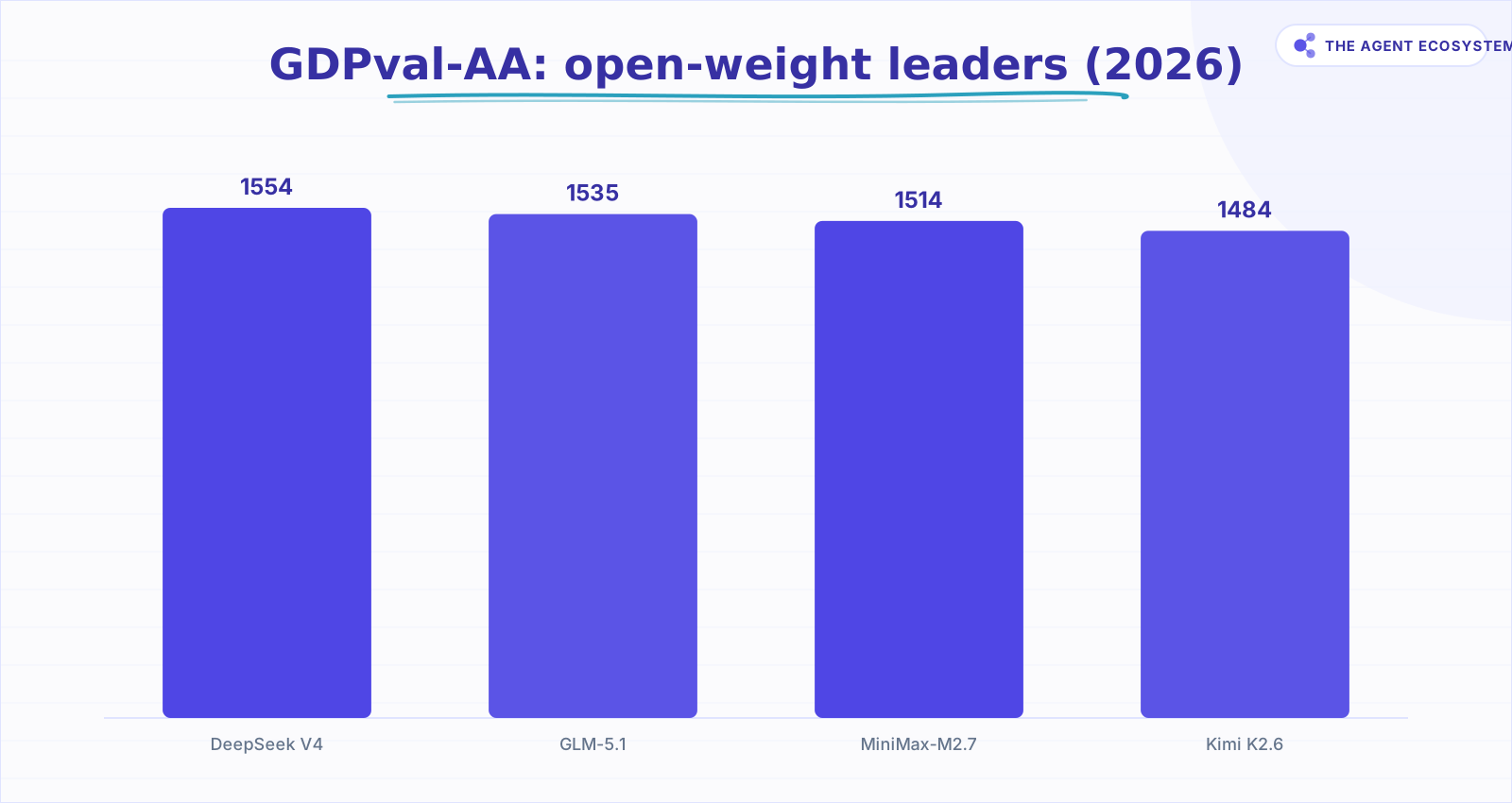 GDPval-AA aggregate: DeepSeek V4 leads the open-weight field. Source: Morph LLM, as of early July 2026. Verify before relying.
Numbers deserve a caveat, and I will give it plainly. A high SWE-bench score is a signal, not a guarantee for your codebase, and aggregate scores hide the specific tasks where a model quietly falls apart. The point is not that DeepSeek V4 wins every test. It is that "open-weight" and "frontier-adjacent on the tests that matter to builders" now sit in the same sentence, which was not true a year ago.
What did the CAISI evaluation actually say?#
The counterweight is real and worth stating fairly. A NIST/CAISI evaluation from April 2026 found that DeepSeek V4 Pro's capabilities lag the frontier by about eight months. That is a genuine gap, not marketing, and on the hardest frontier-only problems it will show up as failures a top closed model would not make.
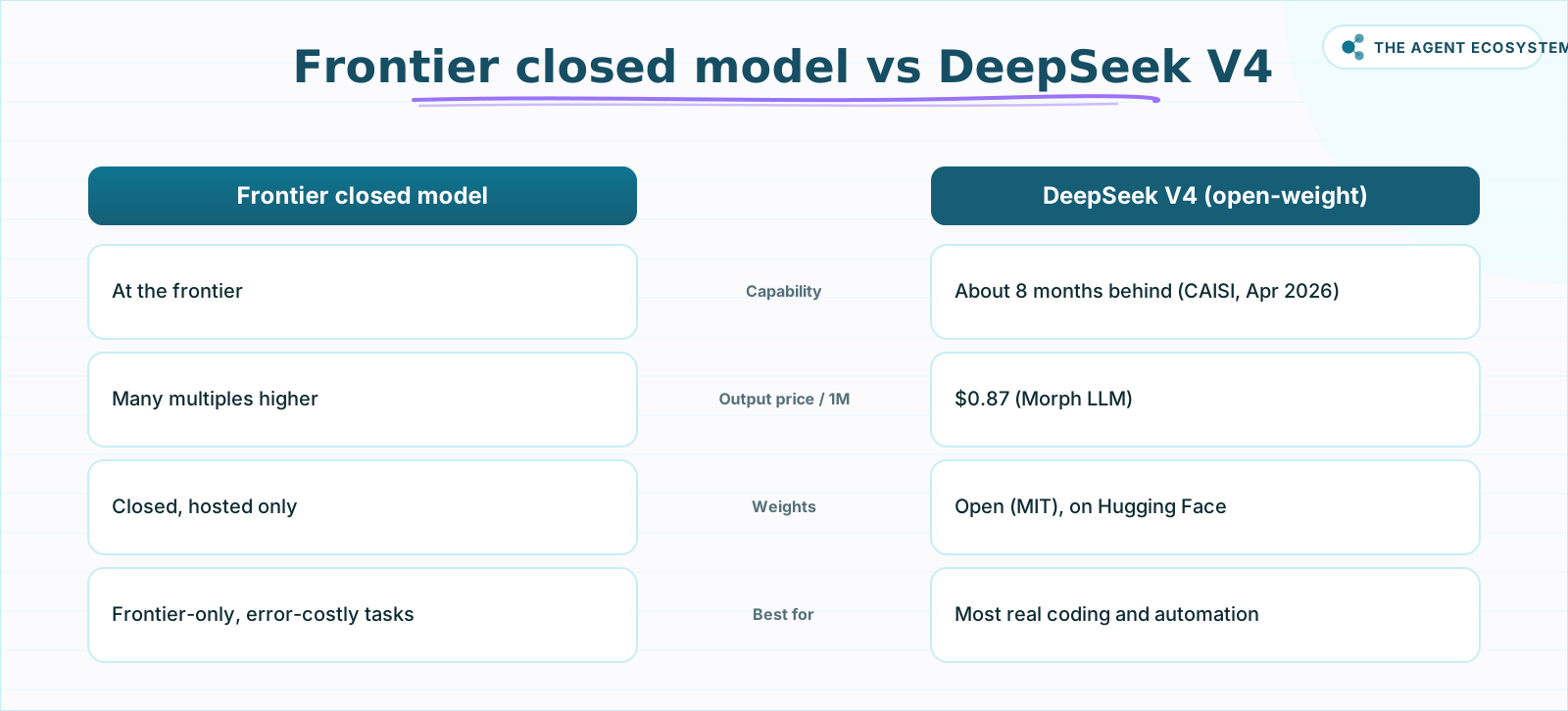 For a typical coding or automation task: the capability gap against the price gap. Source: Morph LLM and NIST/CAISI, as of early July 2026. Verify before
Here is where I part ways with how the line gets used. "Eight months behind the frontier" is doing a lot of rhetorical work when people wield it as "don't bother." Eight months behind today's frontier is roughly where the frontier itself sat eight months ago, and most teams shipped perfectly good software on that. The gap is honest. Treating it as disqualifying is not.
The table below puts the specs, the top benchmark, the price, and the CAISI caveat in one place so you can weigh them together rather than one headline at a time.
| Attribute | DeepSeek V4 (verified figure) | Source, dated |
|---|---|---|
| Release + license | Open-weight (MIT), MoE family, 24 Apr 2026 | Morph LLM, as of early Jul 2026 |
| V4-Pro size | 1.6T total / 49B active params | Morph LLM, as of early Jul 2026 |
| Context / output | 1M context, up to 384K output | Morph LLM, as of early Jul 2026 |
| SWE-bench Verified | 80.6% (V4-Pro-Max; tied Gemini 3.1 Pro) | Morph LLM, as of early Jul 2026 |
| Price (per 1M tokens) | $0.435 input / $0.87 output | Morph LLM, as of early Jul 2026 |
| Frontier gap | About 8 months behind the frontier | NIST/CAISI, Apr 2026 |
Table: DeepSeek V4 spec, top benchmark, price, and the CAISI caveat. Sources: Morph LLM and NIST/CAISI, as of early July 2026. Verify before relying.
My take: is being 8 months behind actually a problem?#
For most of the work I see solopreneurs and small teams doing, no. My honest view is that the frontier premium buys headroom the average automation, refactor, or scripting job never touches. At $0.87 per 1M output tokens against flagship tiers many multiples higher, an eight-months-behind model is the default I would reach for first.
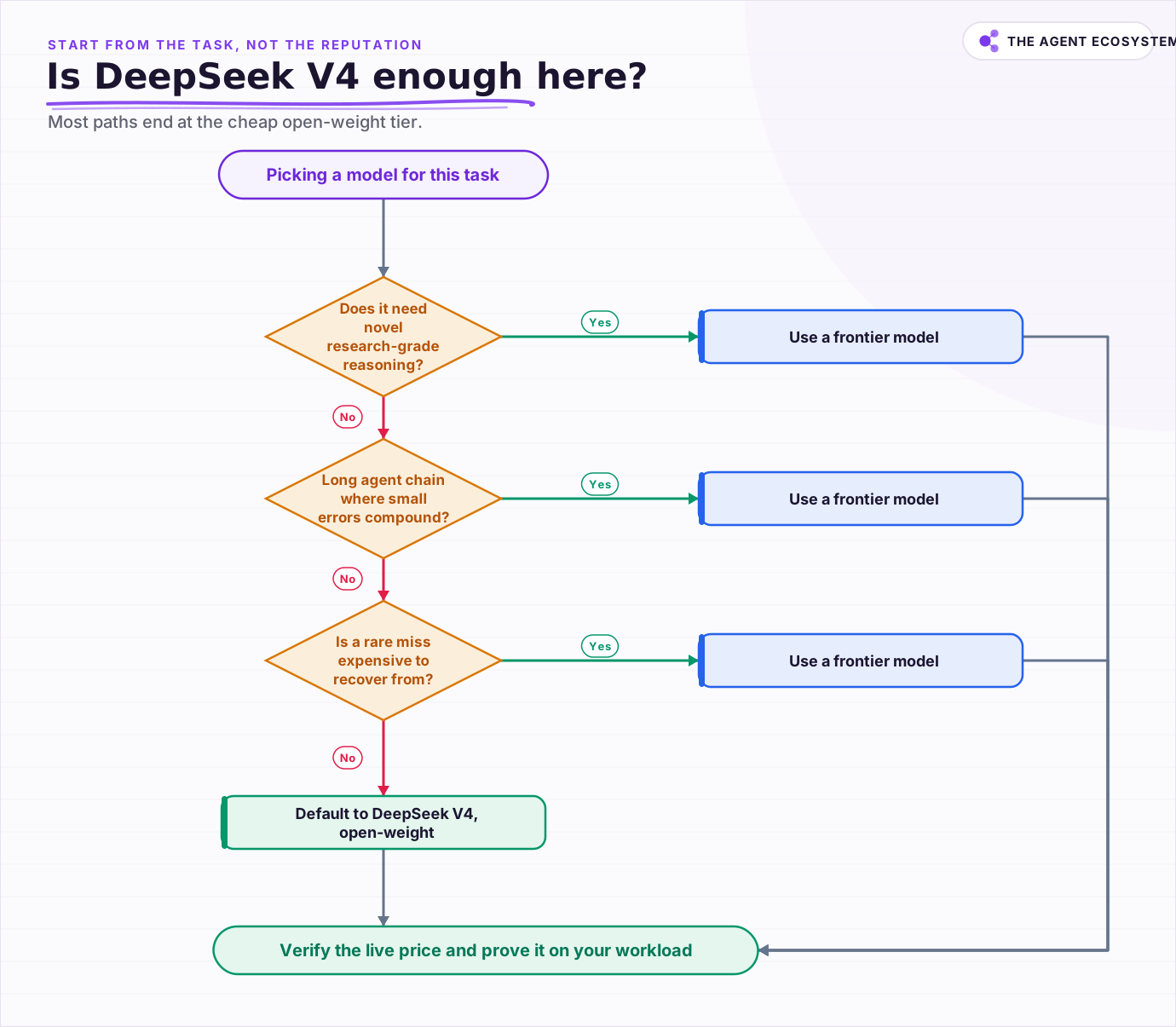 Start from the task, not the reputation; most paths end at the cheap open-weight tier.
I want to be fair to the other side, because it is not empty. Some work does need the frontier: novel research-grade reasoning, long agent chains where small error rates compound, and edge cases where one missed step is expensive. The CAISI gap is real there, and self-hosting a 1.6T model is not free either, so the honest comparison is not "open beats closed" but hosted-vs-self-host on your actual volume. For a lot of teams the cheapest path is still a hosted API call to a small model, and our cheapest AI API in 2026 roundup applies the same dated-pricing discipline to that choice.
Where I land: pick by whether the task genuinely needs frontier capability, and most tasks do not. Start from the cheap open-weight tier, prove it fails on your real workload, and only then pay the frontier premium. That order is where the value lives, and it is the opposite of defaulting to the most expensive model because a headline told you eight months was too far behind.
Where does DeepSeek V4 fit in your stack?#
It fits as your default coding and automation workhorse, with a frontier model kept in reserve for the few tasks that earn it. Verify the live price and license terms yourself first, since open-weight economics and hosted rates both move fast, and the figures here are dated to early July 2026.
The practical next step is to route by task, not by reputation. Send the bulk of your coding and automation calls to the cheap tier, escalate only the jobs that measurably need more, and keep an eye on where the open-weight frontier lands next. If you want to run models on your own machine to cut cost further, our guide to Ollama vs LM Studio vs Jan for local LLMs is the honest starting point.
Frequently asked questions
What is DeepSeek V4?
Does '8 months behind the frontier' mean DeepSeek V4 is bad?
How much does DeepSeek V4 cost?
How does DeepSeek V4 score on SWE-bench?
Should I use DeepSeek V4 or a closed frontier model?
Sources
Primary references and vendor documentation used while drafting and reviewing this article.
Written by

Muhammad Qasim Hammad is an AI agent and automation expert and the founder of Cart Gaze LLC (cartgaze.com). He builds product for the love of it: when an idea lands, a working prototype is usually running within hours, built with the same AI agents and automations he sells. He puts his own output at roughly 20× what it was before agents, and the Agentic OS behind this site is the working proof, documented in public with the tools he actually ran and what they really cost.
AI & Automation Services
Want a pipeline like this running in your business?
I'm Qasim — I design and ship AI agents and n8n automations for solo operators and small teams. Tell me what's eating your team's week, and I'll scope a fix.
Related reading
Open-Weight vs Closed LLMs in 2026: Cost, Quality, Control
Should you call a closed API like Claude or GPT, or self-host an open-weight model like DeepSeek or Qwen? Skip the hot takes. This is a four-axis framework (cost, quality, control, privacy) plus a decision flowchart, using dated June 2026 facts.

Fable 5 vs GLM 5.2 vs GPT-5.6: The 2026 Frontier Landscape
Three frontier models landed in June 2026: Claude Fable 5, Z.ai's open-weight GLM-5.2, and OpenAI's limited-preview GPT-5.6. The numbers do not all measure the same thing, so here is an honest, dated comparison on coding score, price, and openness.
Cheapest AI API in 2026: DeepSeek vs Claude vs GPT vs Gemini
The cheapest AI API by published token rate in June 2026 is DeepSeek V4 Flash, but the lowest sticker rate is rarely the lowest bill. Here is a dated, source-linked price table for DeepSeek, Gemini, GPT, and Claude, the cost-per-task math that output tokens dominate, and the
GLM-5.2: Open-Weight Frontier Coding at a Fraction of the Cost
Z.ai's GLM-5.2 ships open weights under MIT and reportedly leads the open-weight field on SWE-bench Pro while trading blows with Opus 4.8 on FrontierSWE and MCP-Atlas, at roughly one-sixth of GPT-5.5's blended cost. The catch is a hosted-API data-residency caveat.
How to Choose an LLM for Your n8n AI Agent (2026)
Kimi K3, GLM-5.2, DeepSeek V4, Claude, and GPT all plug into an n8n AI Agent, and they are not interchangeable. Here are the 5 questions that decide the pick for your agent, and why the honest answer for most workflows is to route by task, not standardize on one.
The 2026 Model Wave: What It Changes for Automation Builders
Three model releases landed in two weeks in June 2026: Fable 5, open-weight GLM-5.2, and limited-preview GPT-5.6. Skip the leaderboard drama. Here is the builder's take on which model belongs on which workflow step, with every price and benchmark dated and attributed.