The EU AI Act Reaches Agents on August 2: A Builder Primer
A dated, jargon-free orientation to the 2 August 2026 milestone for anyone shipping agents on a small team.
AI-drafted, reviewed by Muhammad Qasim Hammad on July 4, 2026. See our AI disclosure.
Table of contents
You are shipping agents on a small team, and a date in the calendar keeps showing up in governance write-ups: 2 August 2026. It is a real EU AI Act milestone, not a marketing scare, and it is worth understanding before it arrives rather than after a customer asks you a compliance question you cannot answer.
This is not legal advice. It is a builder's orientation. The exact rules that bind you depend on your use case and risk tier, the Act applies on staggered dates, and you should verify everything against the current EU AI Act text and your own counsel before you rely on it.
What does the EU AI Act mean for agents on August 2?#
The eu ai act agents question matters because 2 August 2026 is a dated milestone when a major set of obligations takes effect, per AI Governance Weekly (3 July 2026) and artificialintelligenceact.eu. Organizations deploying AI, agents included, fall under transparency duties, and higher-risk uses face stricter requirements (as of early July 2026, verify first).
The important nuance is that the Act does not flip a single switch. It applies on staggered dates, so 2 August 2026 is one known checkpoint rather than the whole law arriving at once. What actually binds you depends on your use case and where it sits on the risk ladder, which is exactly why blanket claims that "agents are now regulated" overstate the picture.
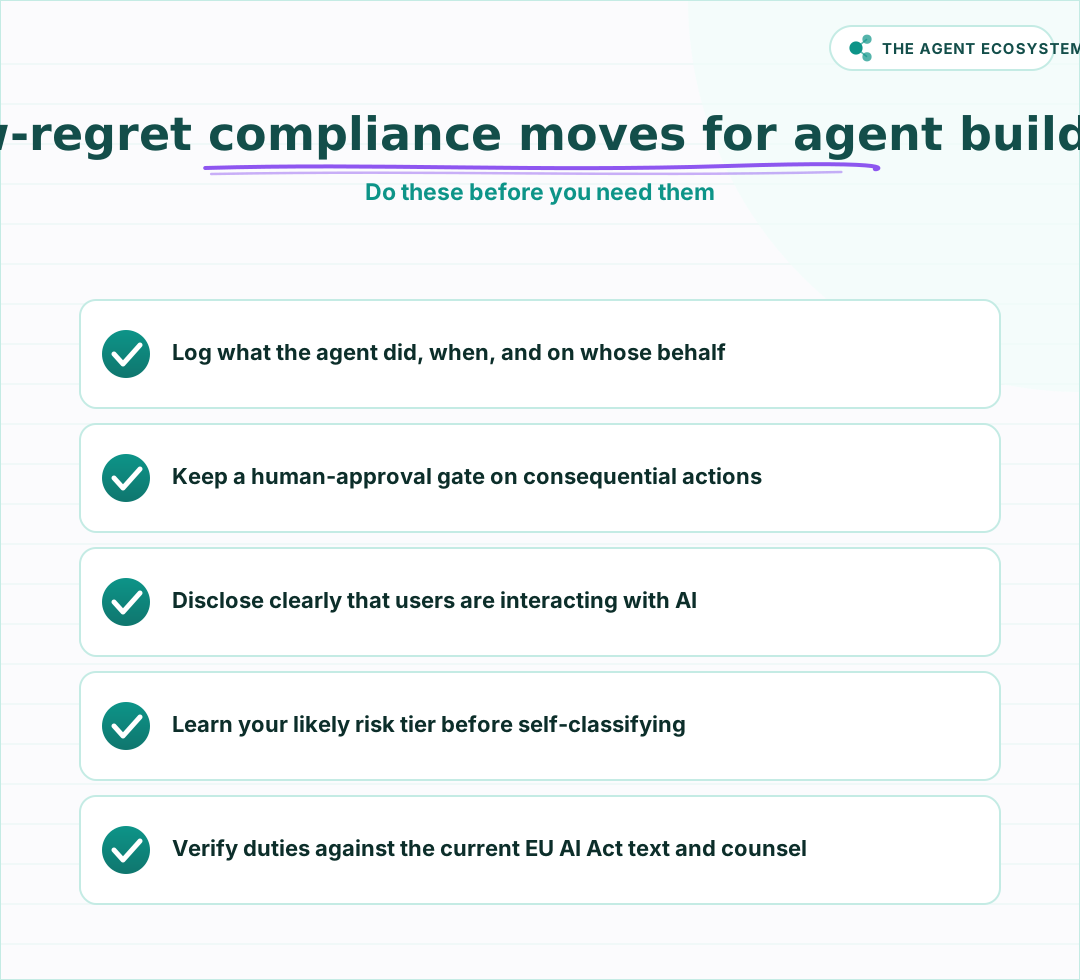 Moves a serious agent needs anyway, framed against the EU AI Act's transparency and oversight expectations (artificialintelligenceact.eu, as of early July
For a small team, the honest reading is that transparency and human-oversight expectations move from best practice toward the thing an auditor or enterprise buyer can ask you about. Agentic systems that act on their own are widely expected to stress-test the Act's human-oversight language, so the low-regret work is to make your agent's behavior legible before anyone requests it.
What counts as a transparency obligation or human oversight?#
A transparency obligation, in plain terms, means telling people that they are interacting with an AI system and being clear about what it does, rather than passing an agent off as a human. Human oversight means a person can understand, supervise, and step in on the system's decisions, per artificialintelligenceact.eu (as of early July 2026, verify with counsel).
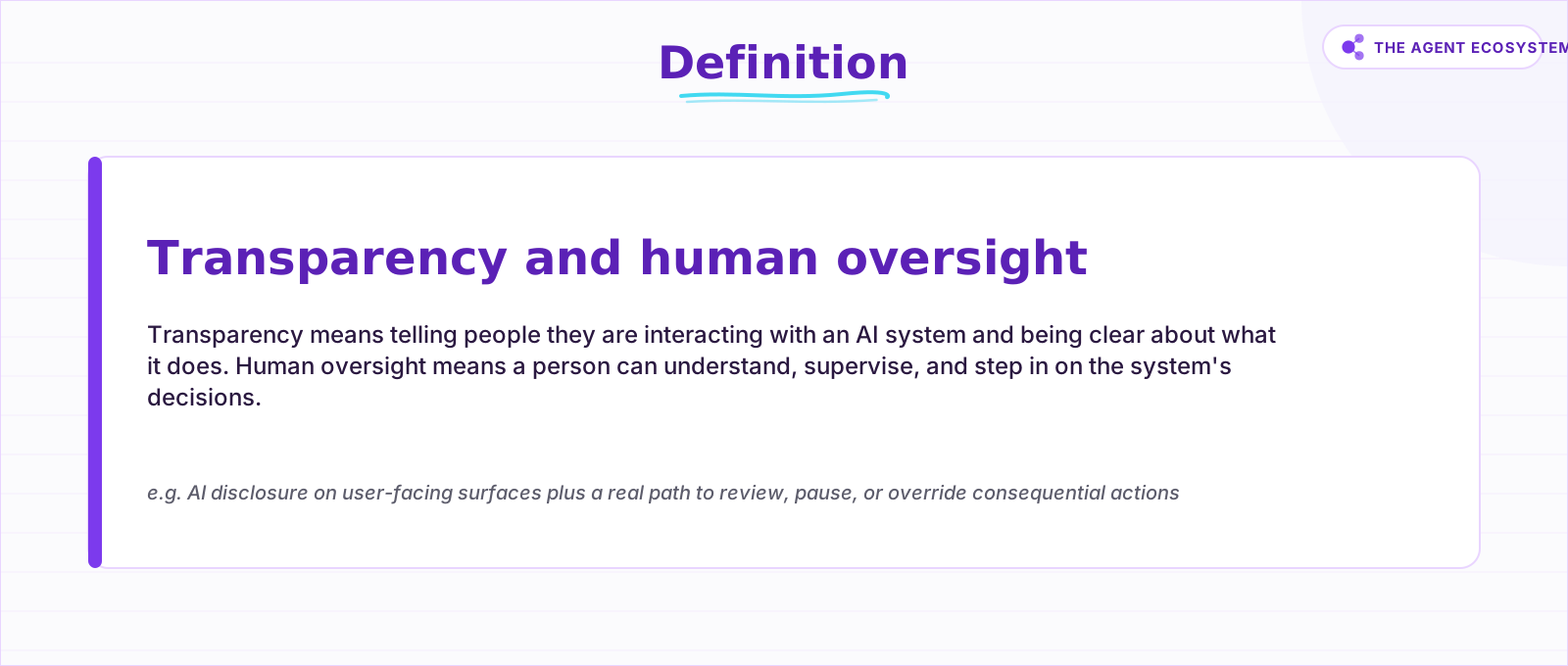 How the EU AI Act frames transparency and oversight, in plain terms (artificialintelligenceact.eu, as of early July 2026, verify with counsel).
These two ideas do most of the work for an agent builder. Transparency is largely about disclosure and legibility: users should know they are talking to a bot, and you should be able to explain what the agent is allowed to do. Human oversight is about control: a person needs a real path to review, pause, or override consequential actions, not a checkbox that nobody watches.
Agentic AI is where these expectations get tested hardest, because the whole appeal of an agent is that it acts without a human in the loop for every step. That is precisely why AI Governance Weekly (3 July 2026) frames agents as a stress test for the Act's oversight language. Designing for legibility and a real override path now is cheaper than retrofitting it later.
How do lower-risk and higher-risk agent uses differ?#
Lower-risk and higher-risk agent uses differ mainly in how much the Act asks of you. A lower-risk use, like an internal drafting helper, leans on transparency and sensible oversight. A higher-risk use, like agents touching health, hiring, or safety-critical decisions, can trigger stricter requirements, per artificialintelligenceact.eu (as of early July 2026).
| Item | Detail | Source |
|---|---|---|
| Key milestone | A major set of obligations takes effect 2 August 2026 | AI Governance Weekly, 3 Jul 2026 |
| Who is covered | Organizations deploying AI, including agents | AI Governance Weekly, 3 Jul 2026 |
| Baseline duty | Transparency: disclose AI interaction and behavior | artificialintelligenceact.eu |
| Higher-risk uses | Face stricter requirements beyond transparency | AI Governance Weekly, 3 Jul 2026 |
| Application pattern | Staggered dates, not a single switch | artificialintelligenceact.eu |
| Standing caveat | Not legal advice; verify with the current text and counsel | artificialintelligenceact.eu |
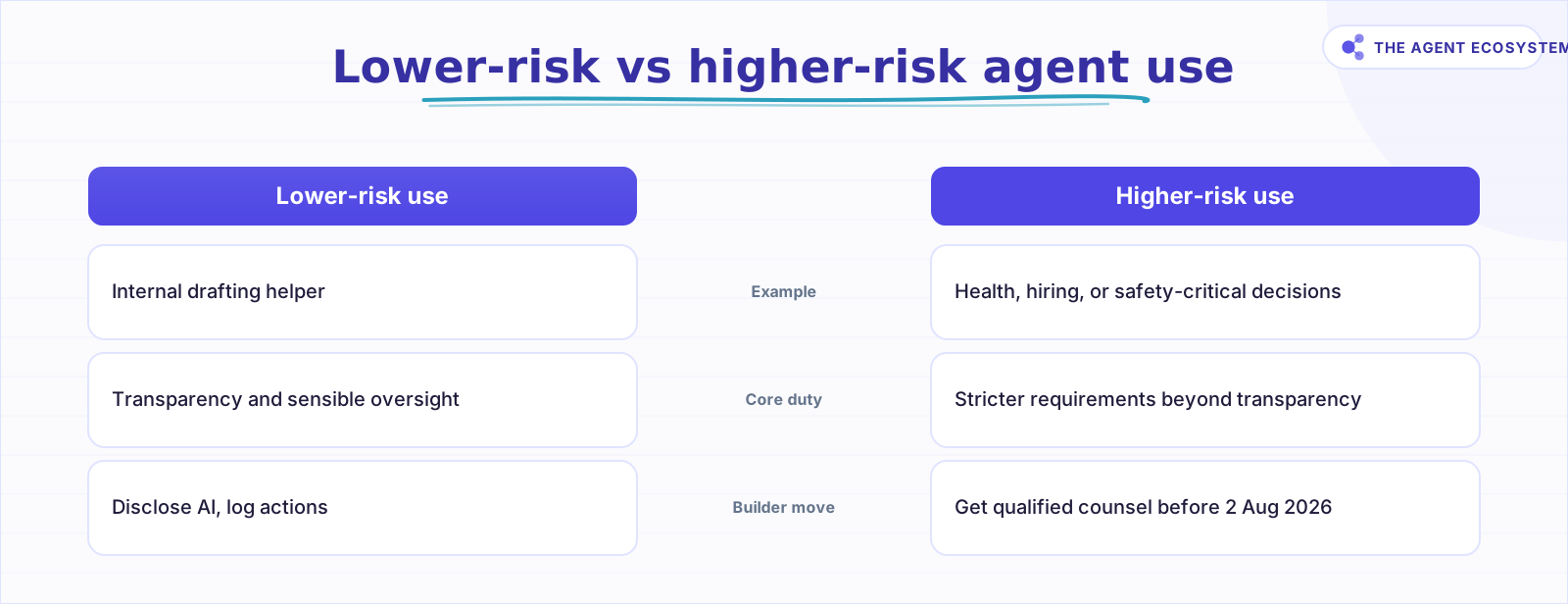 How duties scale by use case; do not self-classify your tier from a blog post (artificialintelligenceact.eu, as of early July 2026, verify with counsel).
The practical takeaway is not to self-classify your risk tier from a blog post. The Act's tiers hinge on the specific domain and impact of your use case, and getting that wrong in either direction is costly. What you can safely do without a lawyer is assume transparency applies broadly, keep a human-approval gate on anything consequential, and treat any health, hiring, credit, or safety use as a signal to get proper advice before 2 August 2026.
Does the EU AI Act likely touch your agent use?#
Whether the Act likely touches your agent use depends on a few concrete questions: do you serve or operate in the EU, does a person interact with the agent, and does the agent take consequential actions? If yes to those, transparency and oversight expectations plausibly apply, per artificialintelligenceact.eu (as of early July 2026, verify with counsel).
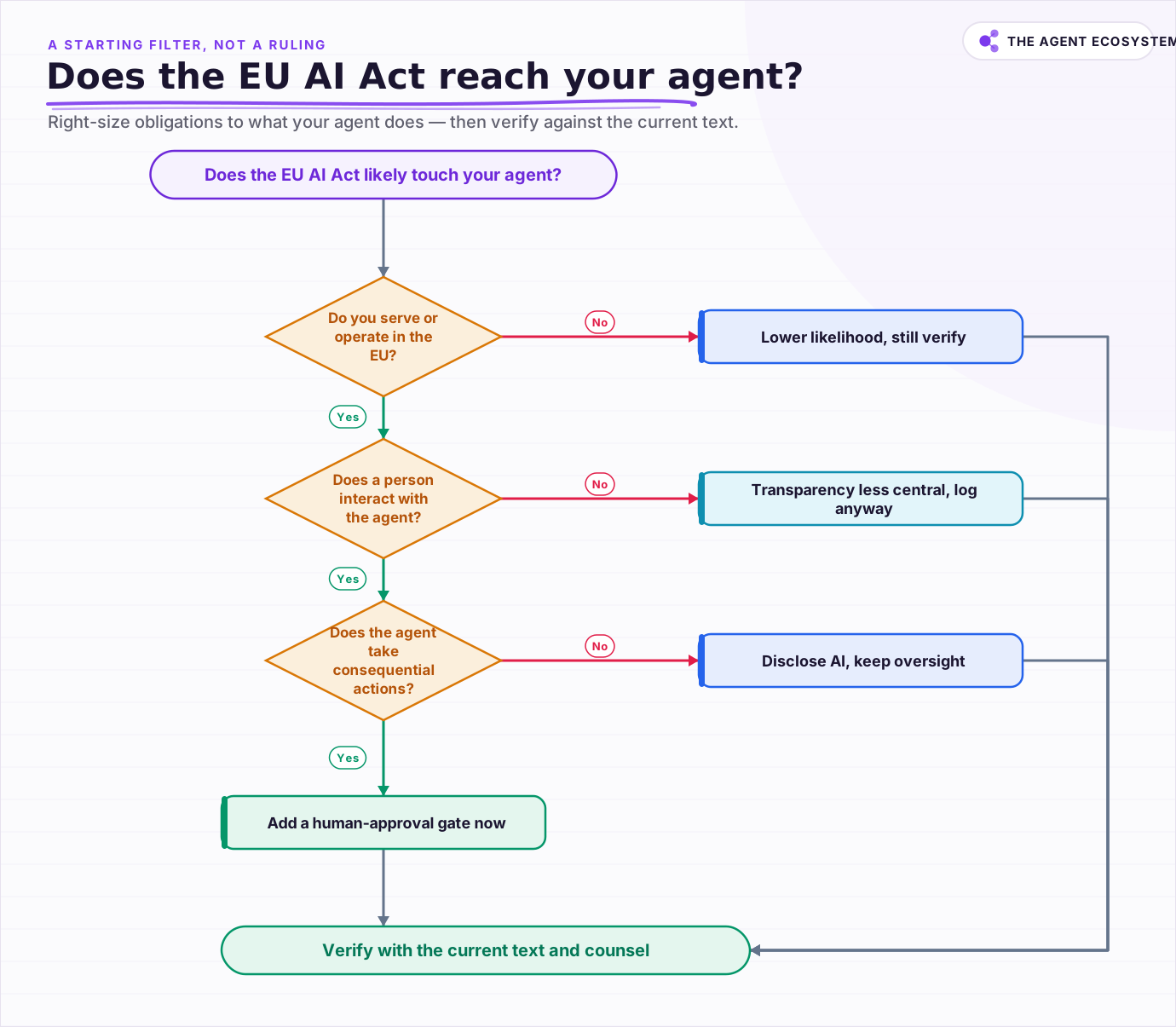 A starting filter, not a ruling; every path ends at verify with the current EU AI Act text and counsel (artificialintelligenceact.eu, as of early July 2026).
Walk the questions honestly rather than optimistically. EU reach is broader than "we have an office in Europe," so if your users or their data sit in the EU, assume you are in scope until counsel says otherwise. If a human interacts with the agent, disclosure is the safe default. If the agent can act, spend money, send messages, or change records, that is the zone where a human-approval gate earns its keep. The flowchart is a starting filter, not a ruling.
None of this should stall your roadmap. The low-regret moves below are things you would want in a serious agent anyway, and building an approval step is a well-trodden pattern. Our walkthrough of a human-in-the-loop approval gate in n8n shows one concrete way to add that pause on consequential actions, and reliable error handling for agent workflows makes the whole thing auditable.
What should a small team do before the date?#
Before 2 August 2026, do the low-regret work that a serious agent needs anyway: log what your agent does, keep a human gate on consequential actions, disclose that users are talking to AI, and learn your likely risk tier, per artificialintelligenceact.eu and AI Governance Weekly (3 July 2026), then verify with counsel.
Start with logging, because everything else rests on it. If you cannot reconstruct what an agent did and why, you cannot demonstrate oversight or transparency to anyone. From there, add an approval gate on the consequential paths, wire clear AI disclosure into user-facing surfaces, and make a short honest note of where your use case might fall on the risk ladder. Connecting tools to your agent safely fits the same logging-and-oversight discipline.
Treat 2 August 2026 as a prompt to get your house in order, not a cliff to panic at. The Act's staggered timeline means this is one checkpoint among several, and the moves that make you defensible are the same moves that make an agent trustworthy. Do them now, keep the paper trail, and reconfirm the specifics with the current EU AI Act text and your own counsel.
Frequently asked questions
What happens on 2 August 2026 under the EU AI Act?
Does the EU AI Act apply to AI agents specifically?
What is a transparency obligation for an agent?
What is human oversight and why does it matter for agents?
What should a small team do before 2 August 2026?
Sources
Primary references and vendor documentation used while drafting and reviewing this article.
Written by

Muhammad Qasim Hammad is an AI agent and automation expert and the founder of Cart Gaze LLC (cartgaze.com). He builds product for the love of it: when an idea lands, a working prototype is usually running within hours, built with the same AI agents and automations he sells. He puts his own output at roughly 20× what it was before agents, and the Agentic OS behind this site is the working proof, documented in public with the tools he actually ran and what they really cost.
AI & Automation Services
Want a pipeline like this running in your business?
I'm Qasim — I design and ship AI agents and n8n automations for solo operators and small teams. Tell me what's eating your team's week, and I'll scope a fix.
Related reading
Who Is Liable When an AI Agent Makes a Mistake in 2026?
An agent you deployed emailed a customer the wrong refund amount. The answer is always a person or a company, never the software, and which one is decided long before the incident.

Everyone's Selling AI Agent Factories. You Just Need n8n.
HPE and NVIDIA's AI Factory, NVIDIA's Vera CPU and Agent Toolkit, and NAVER's coming platform are real enterprise agent infrastructure. For a small team, they are mostly noise. Here is where the heavy stack earns its keep, and why I would still default to n8n and one API.
AI Agent Audit Log Requirements: What to Record and Why
Somebody asks what your agent did on 14 March for one specific customer. Most teams find out the answer is no on the day the question is asked, not the day the log was designed.
Coding Agents Have 4 Autonomy Levels. Most Teams Never Leave Level 2.
The tool you pick is not what decides the risk, the autonomy level is. This is a tool-agnostic, 4-level framework for how much a coding agent should actually be allowed to do, from a diff that waits for your approval to a merge and deploy with no human step at all, grounded in
What Is an AI Agent? A Plain-English Guide for Builders
An AI agent is a language model running in a loop that decides its own next action, not a chatbot and not a chain. Here is how the perceive-decide-act-observe loop works, how an agent differs from a chatbot, chain, and workflow, and a checklist for when you actually need one.
Background Agents vs Chat Copilots: Picking the Right Agent UX
Same model, same tools, same prompt, 2 different machines: one answers when you type, the other triages your inbox at 6am and escalates what it couldn't handle. The difference is supervision, and removing it changes everything: latency stops mattering, durable state starts, and