n8n AI Agent Pricing: What It Really Costs to Run
Two bills, one workflow: the flat n8n fee and the per-run token cost.
AI-drafted, reviewed by Muhammad Qasim Hammad on July 12, 2026. See our AI disclosure.
Table of contents
You wired an AI Agent node in n8n, it works, and now someone wants a number for the monthly bill. The confusing part is that the price tag has two halves that behave nothing alike. One is a flat platform fee you can read straight off a pricing page. The other is a per-run token bill that moves every time you change a model or a memory setting.
What does an n8n AI agent actually cost to run?#
Two separate bills. The first is the n8n platform: €0 if you self-host the Community edition, or from €20 per month on n8n Cloud. The second is LLM tokens, billed per run by whichever model you call. At any real volume the token bill dominates, so size it first.
The platform fee is the easy half because it is a published, flat number. The token bill is the half people miss, because it hides inside each execution and only surfaces once traffic grows. A quick agent that runs 50 times a day feels free. The same agent at 50,000 runs a month is where the model provider, not n8n, writes your invoice.
Put real, modeled numbers on it. An internal agent at 300 conversations a day is roughly 9,000 runs a month, which fits n8n Cloud's Pro tier at €50 and, on Claude Haiku 4.5, about $50 in tokens. The two halves are comparable there. Scale the same agent to 100,000 runs a month and you would self-host on a small server for around $20, while the Haiku token line climbs to roughly $550, or about $1,650 on Claude Sonnet 4.6. That is the pattern: the platform fee flattens, the token bill keeps climbing. Here are the anchors both halves start from.
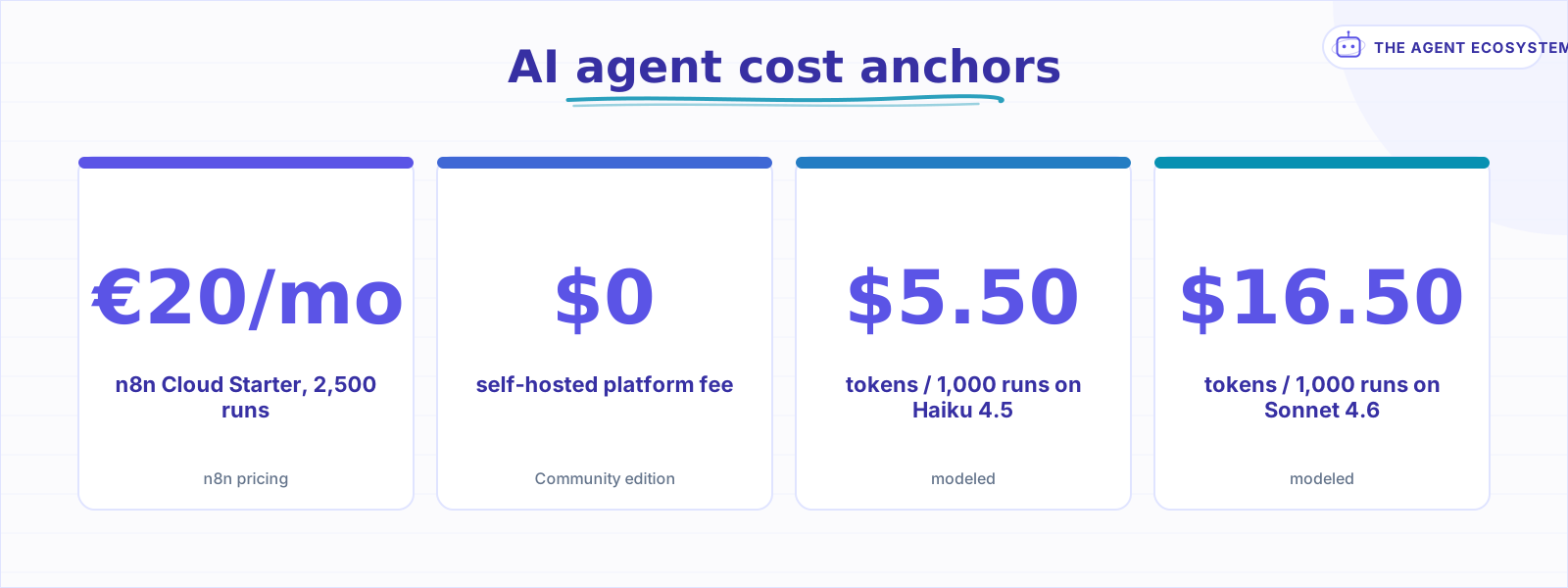 The platform fee is flat and small; the modeled token lines are the part that grows with traffic.
What do you pay n8n itself?#
Less than most people expect. Self-hosting the fair-code Community edition costs €0 in platform fees; you only rent the server it runs on. n8n Cloud starts at €20 per month for 2,500 executions and scales to 10,000 and 40,000 on higher tiers. One execution is a full workflow run, no matter how many steps it contains.
That execution definition matters more for agents than for any other workflow. An AI Agent that reasons, calls a tool, reads the result, and answers might make 3 model calls, but n8n still counts the whole run as 1 execution. So the n8n meter barely notices how chatty your agent is, while the model provider's meter notices every single call.
The tiers climb in executions, not in features you cannot live without at the start: Starter at 2,500 runs, Pro at 10,000, Business at 40,000, then Enterprise on custom terms. If you blow past a tier's execution count you either move up a plan or self-host. Self-hosting is not free in the literal sense; a small always-on VM runs perhaps $5 to $20 a month, plus your time to update and back it up. What it removes is the execution ceiling and the per-run platform charge, which is why high-volume agents tend to land there. The Make and Zapier cost comparison shows why n8n's per-run pricing stays cheaper than per-task platforms once volume climbs.
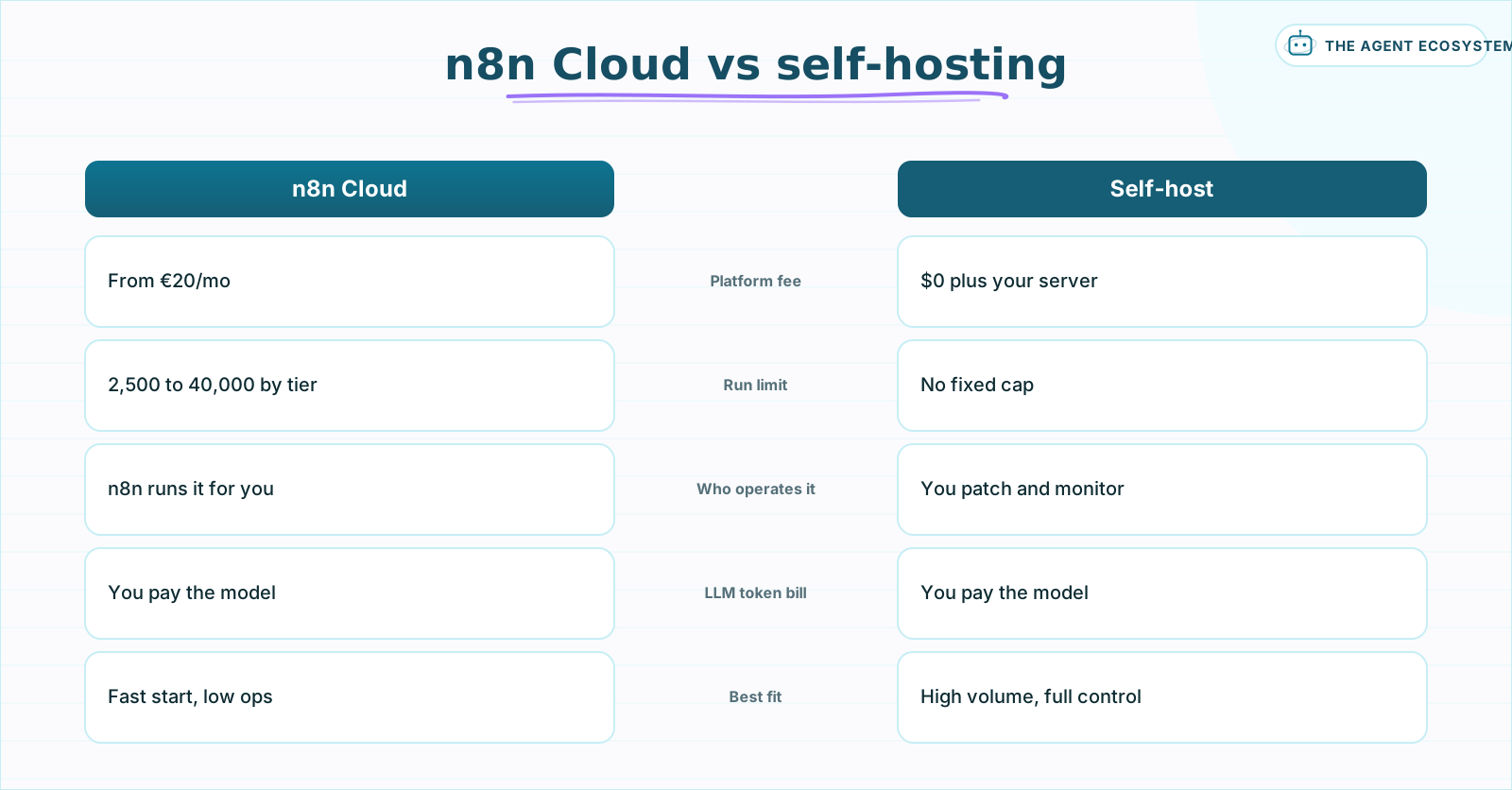 Cloud trades a monthly fee for zero ops; self-hosting trades your time for no platform charge. Both still pay the token bill.
What do the LLM tokens cost per agent run?#
This is the bill that scales. Model one agent run as 2 model calls, roughly 3,000 input tokens and 500 output tokens. On Claude Haiku 4.5 at $1 and $5 per million tokens, that is about $5.50 per 1,000 runs. Every number here is modeled from published prices, not measured.
The per-run cost is just the input tokens times the input price plus the output tokens times the output price. The same 3,000-in, 500-out run costs very different amounts depending on the model you point the agent at:
| Model | Input $/MTok | Output $/MTok | Modeled $ / 1,000 runs |
|---|---|---|---|
| Gemini 2.5 Flash | $0.30 | $2.50 | $2.15 |
| GPT-5.4 mini | $0.75 | $4.50 | $4.50 |
| Claude Haiku 4.5 | $1.00 | $5.00 | $5.50 |
| Claude Sonnet 4.6 | $3.00 | $15.00 | $16.50 |
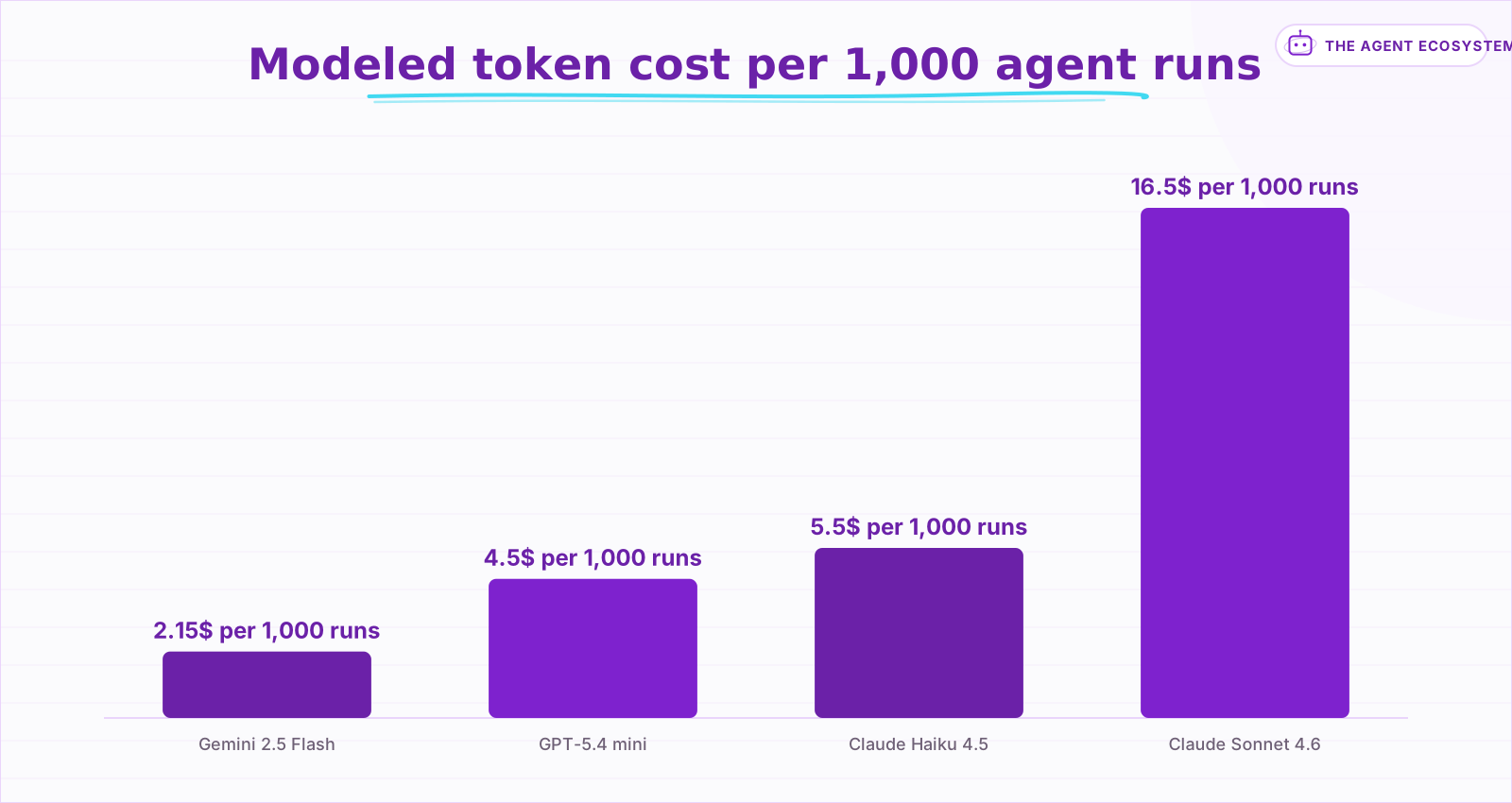 The same 3,000-in, 500-out run on each model. Modeled from published prices, not measured.
The spread is close to 8x from the cheapest small model to a mid-tier one, on identical traffic. That is the single biggest cost decision you make, and it happens in one dropdown on the agent node. Output tokens are where it gets slippery: they cost 5x the input rate on both Claude models, so an agent that writes long answers or a reasoning model that thinks out loud can flip the ratio. A verbose summarizer that returns 1,500 output tokens per run roughly doubles the Haiku figure on its own, before you touch the model choice.
As a monthly figure, an agent at 30,000 runs costs about $65 on Gemini 2.5 Flash, $165 on Claude Haiku 4.5, or $495 on Claude Sonnet 4.6, all on the same 3,000-in, 500-out shape. Nothing about the workflow changed; only the model did. The token math walkthrough turns your own prompt into these numbers, and the Claude, GPT, and Gemini bake-off weighs the quality you trade away when you drop to the bottom of the table.
How do memory and tools multiply the bill?#
Both inflate the input side of every call. A memory node re-sends the last N turns on each run, so a longer window can sharply raise the input tokens on every call. Tool schemas are sent too: every tool description the agent carries is input tokens on each call, whether it fires or not.
Take the modeled run above. If a Context Window Length of 10 pushes input from 3,000 to 6,000 tokens, the Haiku figure moves from $5.50 toward roughly $8.50 per 1,000 runs, and Sonnet moves far more because its input price is 3x higher. The window is the lever, not the storage backend behind it. Tools stack on top: 6 verbose tool definitions can add several hundred input tokens to every call, paid even on runs where the agent never touches them. In a real chatbot the pain shows up over time, because a fresh conversation starts cheap and gets pricier as the window fills; each new turn re-sends the growing history until the window cap kicks in and starts dropping the oldest turns.
Caching is the counter-move. The system prompt and tool schemas are identical on every call, so providers let you cache them and pay a fraction on repeats. On Claude, a cache read costs 10% of the input price, so the static block that costs full rate on the first call costs a tenth after that. For an agent whose input is mostly a fixed system prompt plus tool definitions, caching takes a real bite out of the input half of every run, which is exactly the half that memory and tools inflate. The 7 levers for lower API bills go deeper on what to cache and what to trim.
How do you keep n8n AI agent costs down?#
Attack the token bill, not the platform fee. Cap the memory window so fewer turns are re-sent, route simple steps to a cheaper model, and cache the static system prompt and tool schemas. Self-host once your run volume outgrows a Cloud tier. These levers move real dollars; the platform tier rarely does.
The order matters. Reaching for a bigger n8n plan when your bill hurts usually solves the wrong problem, because the plan is €20 or €50 while the tokens are the four-figure line. Start by metering one real run, read the token counts from the model's usage output, then pull the levers that touch input tokens first. Model choice and window size are worth more than every other change combined. Routing is the highest-leverage move: send classification and short lookups to Gemini 2.5 Flash or GPT-5.4 mini, and reserve Sonnet 4.6 for the runs that genuinely need the deeper reasoning. A two-model setup often lands most traffic on the cheap tier while keeping quality where it counts. If your runs are not time-sensitive, the Batch API on Claude and similar batch modes elsewhere cut token prices in half, which turns a $550 monthly Haiku line into roughly $275 for work that can wait.
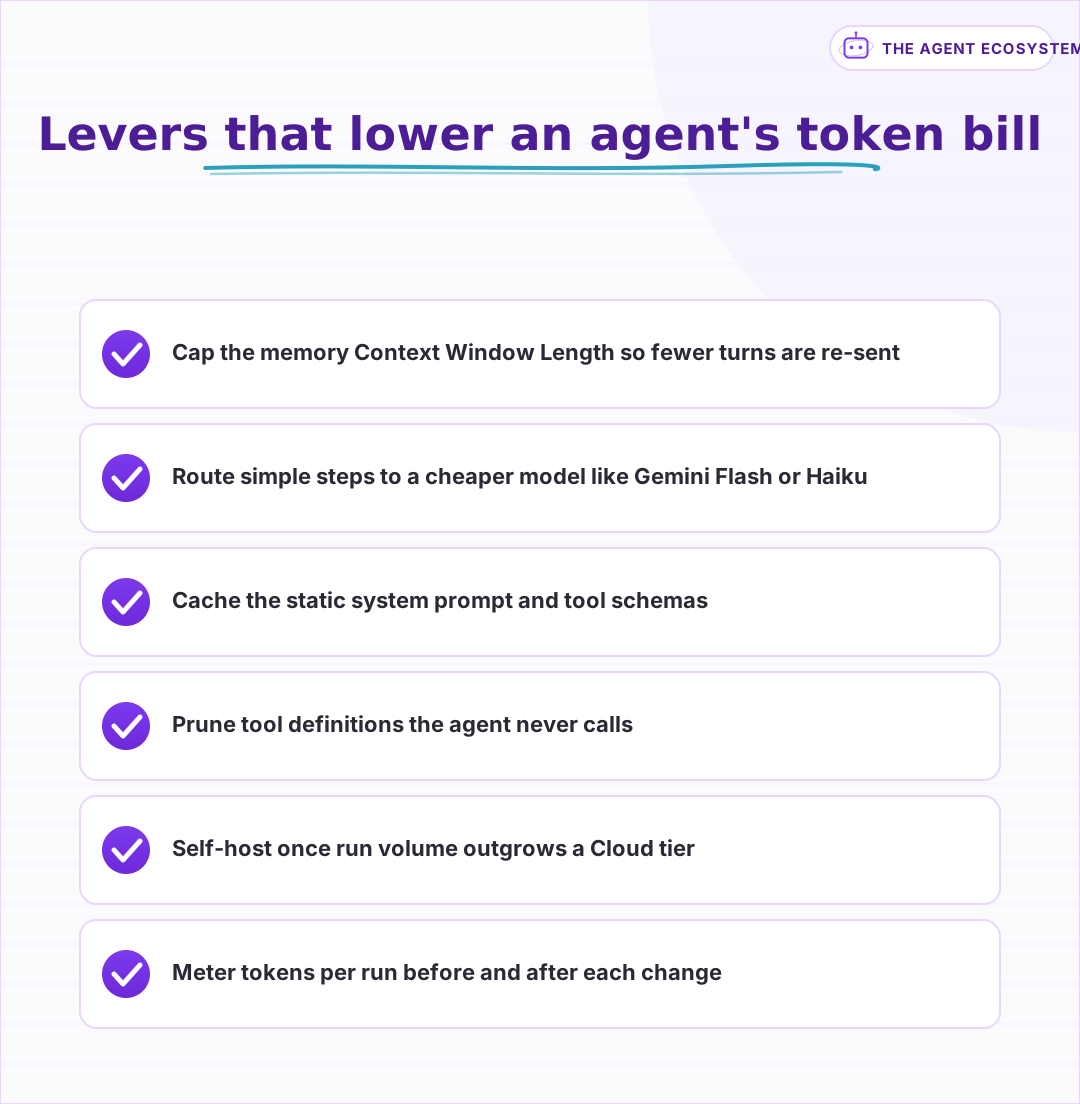 Pull these in order; the first two move the most money.
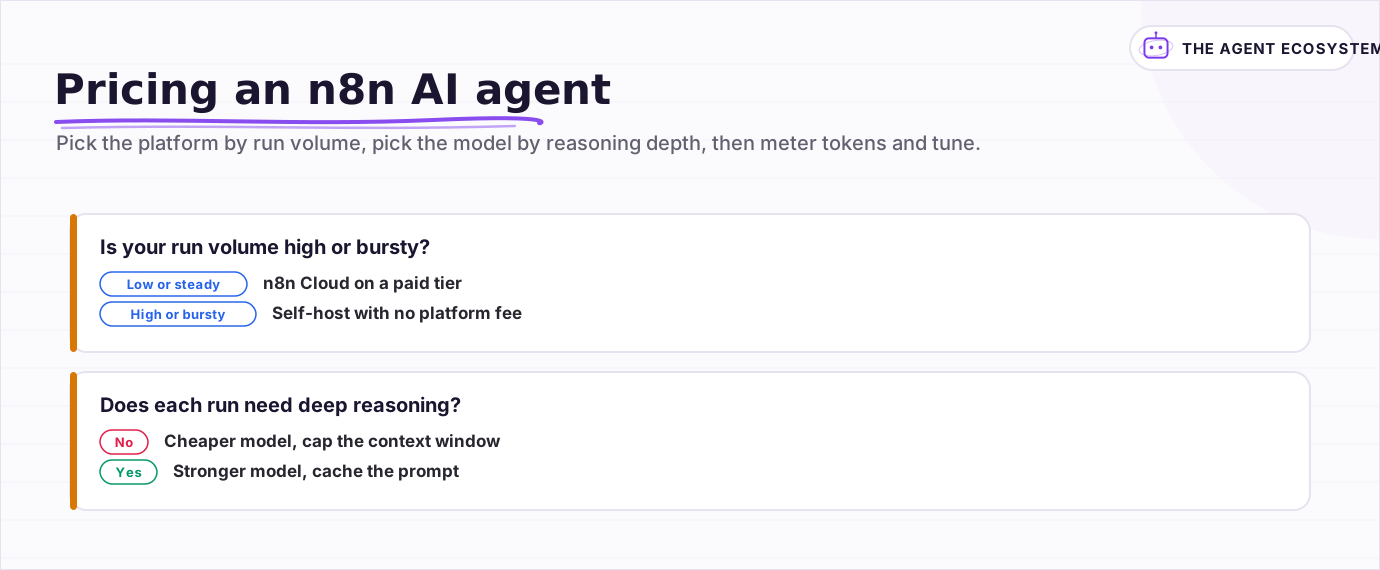 Pick the platform by run volume, pick the model by reasoning depth, then meter tokens and tune.
Frequently asked questions
How much does an n8n AI agent cost to run?
Is n8n free for AI agents?
What counts as an execution in n8n?
Which model is cheapest for an n8n agent?
How do I lower my n8n AI agent bill?
Sources
Primary references and vendor documentation used while drafting and reviewing this article.
Written by

Muhammad Qasim Hammad is an AI agent and automation expert and the founder of Cart Gaze LLC (cartgaze.com). He builds product for the love of it: when an idea lands, a working prototype is usually running within hours, built with the same AI agents and automations he sells. He puts his own output at roughly 20× what it was before agents, and the Agentic OS behind this site is the working proof, documented in public with the tools he actually ran and what they really cost.
AI & Automation Services
Want a pipeline like this running in your business?
I'm Qasim — I design and ship AI agents and n8n automations for solo operators and small teams. Tell me what's eating your team's week, and I'll scope a fix.
Related reading
Claude vs GPT vs Gemini in n8n: Tested Cost and Speed
There is a 25x cost spread between the cheapest and priciest LLM tier for the exact same n8n AI Agent workflow. This post prices all three providers across 11 model tiers so you can pick the right Chat Model sub-node and stop overpaying.

Estimate Any LLM Bill Before You Build: Token Math for n8n Builders
A single LLM call costs a fraction of a cent, until you multiply by 10,000 runs a month. Here is the reproducible token math: chars over 4 for tokens, the input and output rates, and the per-run times volume multiply, with one support-reply run priced across five models.
How to Choose an LLM for Your n8n AI Agent (2026)
Kimi K3, GLM-5.2, DeepSeek V4, Claude, and GPT all plug into an n8n AI Agent, and they are not interchangeable. Here are the 5 questions that decide the pick for your agent, and why the honest answer for most workflows is to route by task, not standardize on one.
How to Build an AI Agent: The 80% That Survives Week Two
Most tutorials get you a working agent in ten minutes and skip what breaks it in week two. Sixteen lessons covering the loop, tool descriptions, memory, fallbacks, guardrails, evaluation, and the cost levers that decide your bill.
Cheapest AI API in 2026: DeepSeek vs Claude vs GPT vs Gemini
The cheapest AI API by published token rate in June 2026 is DeepSeek V4 Flash, but the lowest sticker rate is rarely the lowest bill. Here is a dated, source-linked price table for DeepSeek, Gemini, GPT, and Claude, the cost-per-task math that output tokens dominate, and the
Cut Your AI API Bill: 7 Levers That Actually Work
To reduce AI API costs you need levers that change the bill by a verifiable mechanism, not vague advice. This hub names all seven, right-size the model, prompt caching, the Batch API, routing and fallback, local versus API, token discipline, and RAG over long-context, with a